
To find a window shade that fits your specific Mercedes-Benz model, you must identify your vehicle’s exact chassis code, generation, and body style, then verify these details against the shade manufacturer’s compatibility database or take precise physical measurements of your glass. Because Mercedes-Benz vehicles feature highly specialized windshield designs, advanced driver-assistance systems (ADAS) housings, and unique side window profiles, relying on generic sizing often leads to poor fitment, light leakage, or sensor interference. Taking a systematic approach to verification ensures you select an interior accessory that protects your cabin from intense tropical heat while maintaining full vehicle functionality and compliance with local road safety regulations.
Identify Your Exact Mercedes Model, Generation, and Year
Locating the precise specifications of your vehicle is the first and most critical step in finding a matching window shade. Mercedes-Benz categorizes its vehicles not just by marketing names like C-Class or E-Class, but by specific alphanumeric chassis codes. For example, a C-Class Sedan built between 2014 and 2021 is designated as the W205, while the subsequent generation is the W206. You can find this chassis code on your vehicle’s identification plate, typically located on the driver’s side door pillar, or by referencing your official vehicle registration documents.
Identifying the exact production year is equally important because of mid-cycle facelifts. Manufacturers often update interior trim, rearview mirror housings, and even glass specifications halfway through a model’s lifecycle. A shade designed for a pre-facelift model may not clear the updated sensor housing of a later version within the same generation.
Products mentioned in this guide
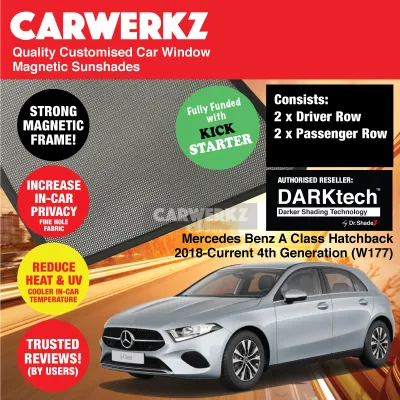
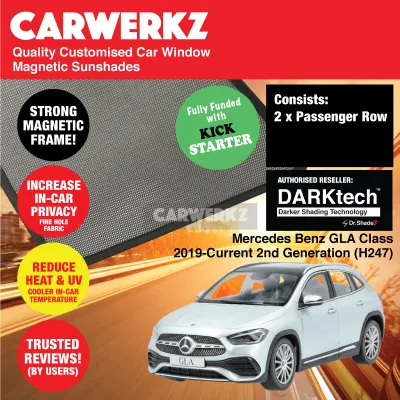
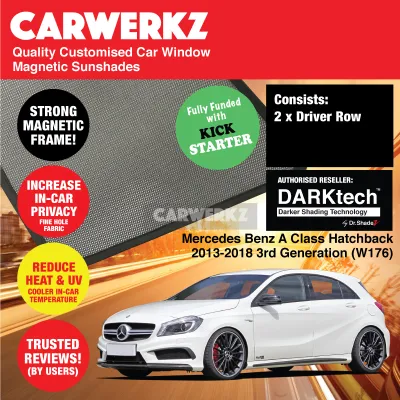
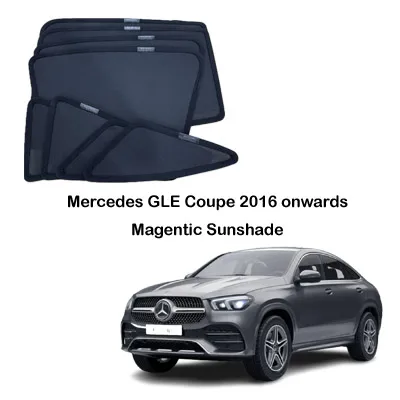
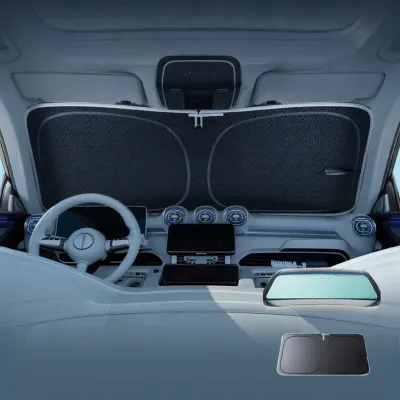
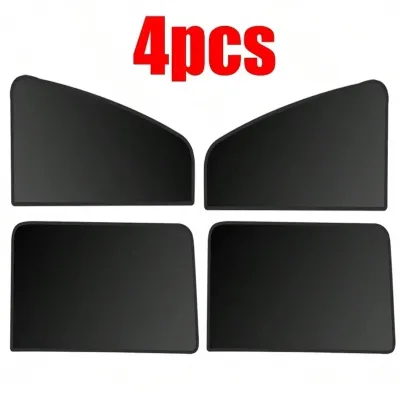
Prices are valid at publication and may change. Please refer to the product page for the latest price.
Additionally, you must distinguish between different body styles within the same model class. A C-Class Sedan (W205), a C-Class Coupe (C205), and a C-Class Estate (S205) share similar front-end styling but have completely different side window profiles and rear glass dimensions. Always verify that the accessory you choose is explicitly rated for your specific body style rather than just the general model name.
Understand Windshield vs. Side Window Shade Dimensions
Front windshields and side windows require entirely different design considerations due to their shape, curvature, and placement. Mercedes-Benz windshields feature a complex, aerodynamic curvature that slopes steeply toward the hood. Furthermore, the top center of the windshield houses a bulky assembly containing rain sensors, automatic headlight sensors, and active safety cameras. A compatible front sunshade must feature a deep, precise cutout or a flexible fastening strap to wrap securely around this housing without putting physical pressure on the rearview mirror mount.

Side windows present a different set of challenges depending on the door design of your specific model. Coupe and cabriolet models often feature frameless doors, where the glass has no metal border when the door is open. Standard sedans and SUVs, on the other hand, feature traditional framed doors. This structural difference dictates how a side window shade can be mounted and how much coverage it can realistically provide.
Material requirements also differ between the front and side glass. Front windshield shades are designed primarily for maximum thermal rejection while the vehicle is parked, requiring thick, rigid, multi-layered reflective materials. Side window shades, particularly for rear passengers, are often made of flexible, semi-transparent mesh. These mesh shades are designed to block glare and UV rays while still allowing passengers to see outside and permitting the window to be rolled down safely.
How to Measure Your Windows for a Custom or Universal Fit
When custom-fit shades are not readily available for your specific Mercedes-Benz generation, taking manual measurements allows you to find a close universal match. To do this accurately, you will need a flexible steel measuring tape for straight edges and a soft tailor’s measuring tape to follow the natural curvature of the glass. Avoid using plastic rulers or estimating the dimensions, as even a minor error can result in a shade that sags or fails to stay in place.
To measure the front windshield, measure the maximum width along the bottom edge near the dashboard, the width along the top edge near the headliner, and the vertical height from the center of the dash to the top of the glass. For side windows, measure the longest horizontal width and the tallest vertical height. Be sure to measure only the visible glass area, excluding the rubber weatherstripping, gaskets, and interior plastic trim. Measuring the trim instead of the glass will result in a shade that is too large to sit flush.
Once you have these dimensions, compare them against the detailed sizing charts provided by aftermarket accessory manufacturers on online marketplaces. If your measurements fall between two universal sizes, it is generally safer to select the slightly larger size for flexible wire-frame shades, as they can flex slightly to fit the opening. For rigid shades, however, you must choose a size that does not exceed your measured dimensions.
Verify Compatibility and Mounting Mechanisms
Before purchasing any window shade, you must evaluate how it attaches to your vehicle. Common mounting mechanisms include suction cups, static cling, tension-fit wire frames, and custom magnetic frames. Suction cups are highly portable but can leave unsightly rings on the glass and tend to lose suction under intense heat. Static cling shades offer a clean look but require a perfectly clean glass surface to remain secure.
For side windows, custom magnetic shades are highly popular because they snap directly onto the metal frame of the door, allowing you to roll the window down while keeping the shade in place. However, you must perform a quick physical check before buying magnetic shades: many modern Mercedes-Benz models utilize aluminum door structures rather than steel to reduce vehicle weight. Because magnets do not adhere to aluminum, you should test your door frame with a simple household magnet to confirm its material before ordering magnetic accessories.
Additionally, ensure that the mounting mechanism does not interfere with your vehicle’s interior features. The shade should not press against ambient lighting strips along the door panels, block the deployment path of side curtain airbags, or obstruct the driver’s view of the side mirrors. Always check the product packaging or manufacturer documentation for explicit compatibility statements rather than relying on generic fitment claims.
Common Sizing and Fitment Mistakes to Avoid
One of the most frequent mistakes Mercedes owners make is assuming that all vehicles within a single model line share identical window dimensions across different generations. A shade that fits a W204 C-Class perfectly will be far too small for a W206 C-Class, as vehicle dimensions generally increase with each new generation. Always cross-reference the specific chassis code of your vehicle rather than relying on the model year alone, as transition years can feature overlapping generations.
Another common oversight is failing to account for specialized factory options. If your Mercedes is equipped with a panoramic sunroof, the interior cabin temperature can rise significantly even with high-quality windshield shades in place. You may need to look for specialized tension-fit mesh screens designed specifically for the panoramic roof panels. Additionally, models equipped with optional acoustic comfort glass may have slightly different tolerances along the window channels, affecting how tightly custom-fit side shades slide into place.
Finally, you must ensure that your window shades comply with local traffic regulations in Singapore. The Land Transport Authority (LTA) maintains strict guidelines regarding light transmittance for vehicle glass, requiring at least 70% light transmission for the front windscreen and front side windows. While you can use highly reflective or opaque shades while parked, driving with any physical shade that obstructs the driver’s view through the front side windows or windshield is illegal and highly dangerous. Ensure any semi-permanent mesh shades installed on the front side windows are fully removed before operating the vehicle on public roads.
Frequently Asked Questions (FAQ)
Can I use a universal window shade on my Mercedes?
Yes, you can use a universal window shade as a temporary solution, but it is unlikely to provide a perfect fit. Because Mercedes-Benz windows feature highly specific angular cuts, curved glass profiles, and large sensor housings, universal shades often leave significant gaps along the edges. These gaps allow heat and UV rays to enter the cabin and can cause the shade to sag, slip, or interfere with your interior trim.
Do window shades interfere with Mercedes safety sensors?
They can if they are not designed with the proper cutouts. The area behind your Mercedes-Benz rearview mirror houses critical driver-assistance systems, including rain sensors, automatic headlight sensors, and active safety cameras. A compatible front windshield shade must feature a dedicated cutout that fits cleanly around this sensor pod. Never force a solid, uncut shade behind the rearview mirror, as the physical pressure can damage the mounting bracket or disrupt the calibration of your safety systems.

Community discussion
Share your experience or ask a question. Comments are reviewed before publication.