
Selecting the right car bag holder for your dashboard requires balancing your daily storage needs with your vehicle’s specific interior layout and environmental conditions. Because dashboard surfaces, cabin temperatures, and safety clearances vary significantly between car models, a universal fit does not exist. To find a suitable option, you must evaluate how a holder mounts to your dashboard, ensure it does not interfere with critical safety systems like airbags, and verify that its materials can withstand the high-heat environment of a parked car in Singapore.
Assessing Your Car's Dashboard Layout and Mounting Options
Evaluating your vehicle’s physical dashboard conditions is the first step in determining which mounting methods are viable and safe. Dashboard surfaces generally fall into two categories: smooth, flat plastics or glass, and textured, leather-wrapped, or soft-touch materials. Suction cups and standard adhesive pads require a completely smooth, non-porous surface to create a reliable vacuum or bond, whereas textured surfaces often require specialized dashboard pads, mechanical clips, or weighted friction bases.
Safety clearance zones must take absolute priority when planning where to install your car bag holder. The passenger airbag deployment zone, typically located on the upper dashboard panel, must remain entirely unobstructed. Consult your vehicle’s owner’s manual to identify the exact deployment paths of all cabin airbags, as placing any accessory in these zones can cause severe injury during an inflation event.
Products mentioned in this guide
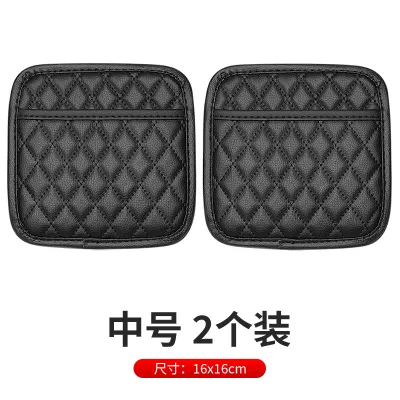
Prices are valid at publication and may change. Please refer to the product page for the latest price.
Driver controls and physical movement pathways require equal clearance. A dashboard holder must not block your access to the steering wheel, gear shifter, turn signals, or central infotainment screen. Ensure that even when a bag is fully loaded and hanging from the holder, it does not swing into the path of your hands or knees while you are steering or braking.
Preserving your driving sightline is both a safety necessity and a legal requirement. Any accessory mounted on top of the dashboard must not block your view of the road ahead, the side mirrors, or the instrument cluster. When testing a potential mounting position, sit in your normal driving posture to verify that the holder and its contents do not create a blind spot or distract your attention from traffic.
Key Features to Evaluate in a Car Bag Holder
Structural integrity and weight capacity are critical features that determine how well a holder performs when your vehicle is in motion. A quality car bag holder must remain stable during sudden stops, sharp turns, and drives over speed bumps. Look for products with reinforced joints, robust mounting brackets, or wide adhesive bases that distribute weight evenly to prevent the unit from tipping or collapsing.

Compartment configurations should match the specific items you carry on your daily commute. If you frequently handle small essentials like cash cards for the Electronic Road Pricing (ERP) system, parking tokens, sunglasses, or charging cables, look for holders with dedicated slots or small zippered pockets. Well-designed compartments keep these items from sliding around and generating distracting rattles while you drive.
Material durability and heat resistance are vital for accessories used in tropical climates. When parked in the sun, cabin temperatures can rise significantly, causing low-grade plastics to warp, discolor, or become brittle over time. Opt for holders made from high-grade ABS plastic, polycarbonate, or heat-resistant silicone, which maintain their structural shape and grip despite prolonged exposure to intense sunlight.
An effective anti-slip base is essential for holders that rely on friction rather than permanent adhesives. Silicone or rubberized bases help grip the dashboard surface, but they must be kept clean to remain effective. Dust and lint can quickly reduce their friction coefficient, so choose designs that can be easily washed with water to restore their original grip.
Accessibility is the final usability check. You should be able to place a bag into the holder or retrieve your phone with one hand without having to stretch, lean, or take your eyes off the road. If a holder requires two hands to operate or forces you to alter your driving posture, it is not a practical choice for daily use.
Matching Holder Types to Your Daily Storage Needs
Compact, low-profile holders are highly suited for drivers who only need to secure a few small, lightweight items. These minimalist designs, such as simple adhesive hooks or small magnetic trays, take up very little dashboard space and preserve the clean aesthetic of your car’s interior. They are excellent for holding a single set of keys, a lightweight pouch, or a charging cable.
Multi-tier or expandable organizers are better suited for drivers who carry a wider variety of accessories, documents, and personal items. These units offer multiple compartments and adjustable dividers, allowing you to categorize your gear. However, because they occupy a larger physical footprint on the dashboard, you must carefully measure your available space to ensure they do not block air conditioning vents or central displays.
Hybrid designs combine bag holding with other functional accessories, such as integrated phone mounts or cable management clips. These multi-functional units help reduce dashboard clutter by consolidating several individual mounts into a single attachment point. When choosing a hybrid model, verify that the combined weight of your phone, cables, and bag does not exceed the manufacturer’s specified weight limit for the mount.
Every holder design involves a trade-off between storage capacity and dashboard space consumption. While a large, multi-pocket organizer holds more items, it can restrict airflow from your dashboard vents or create unwanted reflections on the windscreen during bright afternoons. Assess your actual daily cargo to avoid buying a larger holder than your cabin can comfortably and safely accommodate.
Safety and Installation Checks Before Use
Proper surface preparation is essential to ensure a secure and lasting bond for adhesive or suction-based mounts. Begin by cleaning the target area of your dashboard with a mild, manufacturer-approved cleaner to remove dust, oils, and interior dressings. Allow the surface to dry completely before applying the mount, as any remaining moisture or cleaning residue will severely compromise the adhesive’s effectiveness.
Perform a manual stress test before placing any valuable items or heavy bags into the holder. Once the adhesive has cured according to the manufacturer’s instructions—or after securing the suction cup—gently pull and wiggle the mount from different angles. If the base lifts, slides, or peels, remove it immediately and re-evaluate the mounting surface or the adhesive pad.
Establish a routine inspection schedule to check the stability of your holder. High cabin heat can degrade adhesives and cause suction cups to lose their vacuum seal over time. Every few weeks, inspect the mount for signs of peeling, cracking, or warping, and press down on suction levers to ensure the vacuum seal remains tight.
Be prepared to remove or reposition the holder immediately if you observe any signs of failure or safety hazards. If the holder begins to wobble while driving, blocks your view under changing light conditions, or interferes with your physical control of the vehicle, stop using it. Prioritize road safety and interior preservation over storage convenience by addressing mounting issues as soon as they arise.
Frequently Asked Questions (FAQ)
Will a dashboard bag holder damage my car's interior?
Adhesive mounts carry a risk of leaving sticky residue or, in some cases, peeling delicate dashboard surfaces like leather, vinyl, or soft-touch plastics during removal. Suction cups and non-slip silicone mats are generally safer options, though they can still leave faint rings or cause localized discoloration due to uneven UV exposure over time. Always check your vehicle owner’s manual for specific dashboard material care instructions, and use gentle heat from a hairdryer along with a plastic pry tool to safely soften and lift adhesive mounts without scratching the surface.
Can I use a dashboard bag holder on a textured surface?
Standard suction cups and basic adhesive pads often fail on textured, porous, or curved dashboards because they cannot form an airtight seal or achieve full surface contact. If your dashboard has a heavy texture, consider alternative mounting solutions such as mechanical clips that attach securely to air conditioning vents, visor-mounted organizers, or weighted friction mats that sit on the dash without adhesives. Always verify the holder manufacturer’s specified surface requirements and compatibility guidelines before making a purchase.

Community discussion
Share your experience or ask a question. Comments are reviewed before publication.