
Choosing the right tyre pressure sensor for your car requires verifying your vehicle’s exact make, model, production year, and transmission frequency. Because tyre pressure monitoring systems (TPMS) communicate directly with your car’s Engine Control Unit (ECU), installing an incompatible sensor will leave you with a persistent dashboard warning light and unmonitored tyres. To ensure a seamless match, you must determine whether your car uses a direct or indirect system, identify the correct operating frequency, and select a sensor type that aligns with your installation preferences and budget.
Never assume a sensor is compatible simply because it is labeled as a generic car tyre pressure sensor or fits a certain wheel size. Compatibility is highly specific and dictated by your vehicle’s onboard software and receiver hardware. Before making any purchase, you must cross-reference the sensor’s technical specifications with your vehicle’s official documentation to ensure safe and legal road operation.
Understand Your Vehicle's TPMS Requirements
To select the correct replacement hardware, you must first identify whether your vehicle uses a direct or indirect TPMS. Direct TPMS uses physical sensors mounted inside each wheel to measure pressure and temperature in real time. Indirect TPMS, on the other hand, relies on the anti-lock braking system (ABS) wheel speed sensors to detect rotational differences caused by under-inflation. If your car uses an indirect system, you do not have physical sensors inside the tyres, meaning you do not need to purchase replacement sensor hardware.
Products mentioned in this guide
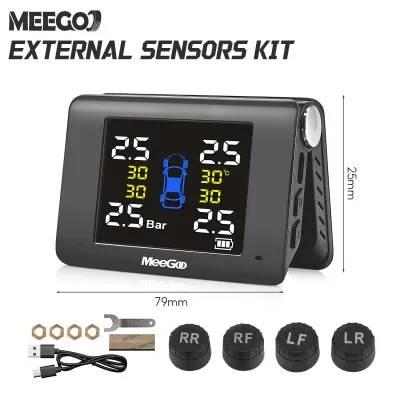
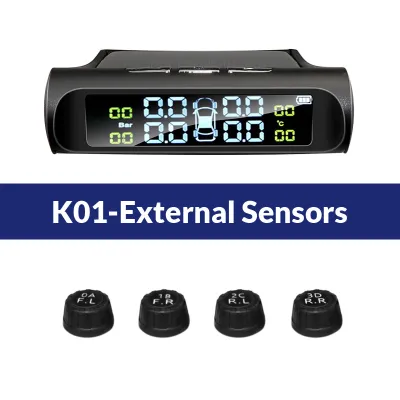

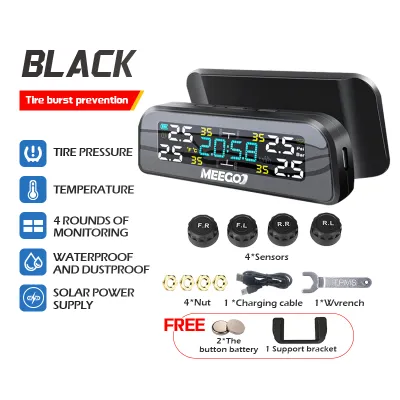
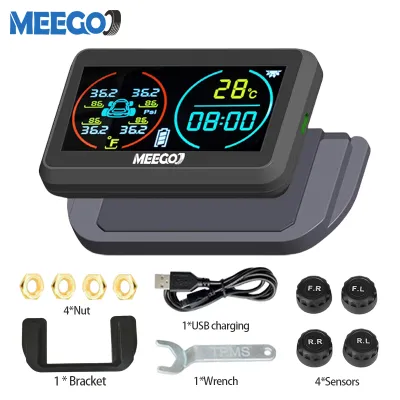
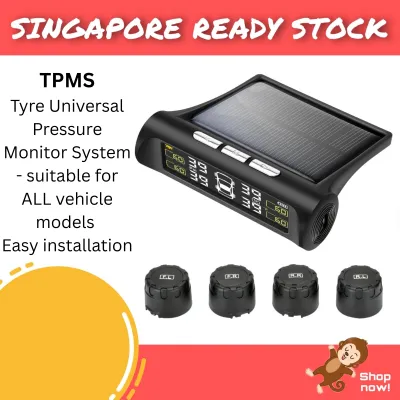
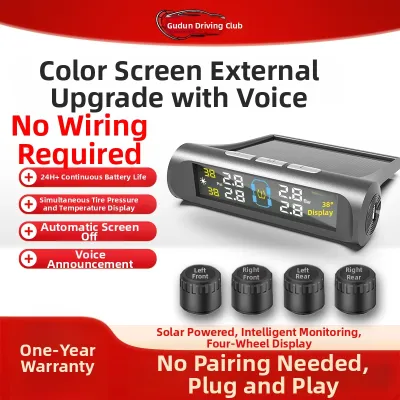
Prices are valid at publication and may change. Please refer to the product page for the latest price.
For vehicles equipped with direct systems, finding the original equipment manufacturer (OEM) part number is the most reliable way to guarantee compatibility. You can often find this number printed on the casing of your existing sensor, though this requires dismounting the tyre from the wheel. Alternatively, consulting your vehicle owner’s manual, contacting an authorized dealership with your vehicle details, or checking manufacturer parts databases will yield the correct OEM specification.
Operating frequency is another critical factor that varies by region and vehicle origin. Most passenger vehicles use either 315 MHz or 433 MHz frequencies to transmit data to the receiver. These frequencies are heavily regulated; for instance, cars manufactured for the European market typically operate on 433 MHz, while older North American models often use 315 MHz. Installing a sensor with the wrong frequency means your car’s receiver will remain completely blind to its signals.
Match the Sensor to Your Make, Model, and Year
Using the Vehicle Identification Number (VIN) is the most precise method to filter compatible sensors. The VIN contains encoded information about your car’s specific production date, assembly plant, and trim level, which can sometimes dictate mid-year changes in TPMS specifications. When searching online databases or consulting a local parts supplier, always have your VIN ready to avoid purchasing a part that fits the correct model year but the wrong production batch.

Physical compatibility also extends to the valve stem assembly. You must choose between rubber snap-in valves and metal clamp-in valves. Rubber snap-in valves are common on standard passenger cars, cost less, and are easier to replace, but they have lower speed ratings. Metal clamp-in valves are typically required for high-performance vehicles, larger wheel sizes, or aftermarket alloy wheels because they resist high centrifugal forces and extreme temperatures more effectively.
Beyond physical fit, you must verify how the sensor communicates with your car’s computer. Some sensors are pre-programmed for specific vehicle profiles, while others arrive completely blank and require specialized software to write the correct protocol. Before purchasing, check the manufacturer’s documentation to confirm if the sensor is ready to install out of the box or if it requires a specific programming step before it can be recognized by your vehicle’s ECU.
Decide Between OEM, Programmable, and Clone Sensors
OEM direct replacements are built specifically for your vehicle’s make and model. They come pre-programmed with the exact communication protocol your car expects, meaning they are ready for immediate installation and relearning. While OEM sensors offer the most straightforward compatibility and high reliability, they generally carry a premium price tag, which can significantly increase the total cost of replacing a full set.
Programmable universal sensors are designed to fit a wide range of vehicle makes and models. These sensors are shipped blank and must be configured using a compatible TPMS programming tool before they are installed in the wheel. This option is highly versatile and often more affordable than OEM parts, but it requires access to specialized diagnostic equipment. If you purchase programmable sensors online, you must ensure your chosen tyre workshop has the specific tool required to program that brand of sensor.
Clone sensors offer a unique solution by copying the exact identification (ID) code of your existing, failing sensor onto a new, programmable unit. Because the vehicle’s ECU already recognizes the old sensor ID, cloning eliminates the need for the car to undergo a new electronic relearn procedure. This is particularly useful for drivers who swap between seasonal wheel setups or aftermarket rims, as the car cannot tell the difference between the original and the cloned set.
Verify Installation and Relearn Requirements
Once a new sensor is physically installed, your car must learn its new unique ID through a relearn procedure. Depending on your vehicle’s manufacturer, this process can be automatic, manual, or require an OBD-II connection. Auto-relearn systems require you to drive the car at a specific speed for a set duration to let the ECU automatically detect the new sensors. Manual systems require a sequence of dashboard button presses or ignition key turns, while OBD-II systems require a technician to physically plug a diagnostic tool into the car’s port to write the new IDs.
Because replacing a tyre pressure sensor requires breaking the tyre bead, removing the tyre from the rim, and rebalancing the wheel, this is not a standard do-it-yourself job. Attempting to dismount a tyre without professional equipment can easily damage the tyre bead, scratch your alloy rims, or crush the new sensor itself. It is highly recommended to visit a professional tyre workshop in Singapore. A qualified technician will have the necessary tyre changers, wheel balancers, and TPMS diagnostic tools to complete the installation safely and calibrate the system correctly.
After the installation is complete, perform a thorough safety check before driving long distances. Ensure the technician has balanced the wheels to prevent vibrations at highway speeds. Start the vehicle and verify that the TPMS dashboard warning light turns off after the initial system check or after completing the specified relearn drive. Finally, manually verify the tyre pressures with a reliable hand-held gauge to ensure the digital readings displayed on your dashboard match the actual physical pressure in each tyre.
Frequently Asked Questions (FAQ)
Can I drive with a faulty tyre pressure sensor?
Yes, you can physically drive the vehicle, but doing so compromises your safety and situational awareness. A faulty sensor will trigger a persistent warning light on your dashboard, making it impossible for the system to alert you if a genuine, rapid pressure loss occurs in that tyre. If you must drive with a malfunctioning sensor, you should manually check your tyre pressures using a reliable hand-held pressure gauge before every journey. Additionally, a persistent TPMS warning light may cause your vehicle to fail periodic roadworthiness inspections, so it is best to resolve the issue promptly.
Do I need to replace all four sensors if one fails?
While you are not strictly required to replace all four sensors at once, it is often the most practical and cost-effective approach. TPMS sensors are powered by small, non-replaceable lithium batteries sealed inside the unit. Because all four sensors were installed at the same time, their batteries have experienced the same operating conditions and are likely to fail around the same time. While replacing all four sensors at once requires a higher upfront investment in S$, it saves you from paying repeated labor and wheel balancing fees at a Singapore workshop shortly after to replace the remaining units.
How long do car tyre pressure sensors typically last?
Car tyre pressure sensors typically last between five to ten years, depending on driving habits and environmental conditions. The lifespan is dictated by the internal lithium battery, which cannot be replaced or recharged. Frequent driving accelerates battery drain because the sensors transmit signals more often when the wheels are in motion. Extreme temperatures, such as prolonged exposure to intense tropical heat, can also degrade battery chemistry faster. Physical damage from tyre changes, road debris, or corrosion on metal valve stems can also shorten a sensor’s operational life before the battery fully depletes.

Community discussion
Share your experience or ask a question. Comments are reviewed before publication.