
Selecting the right tyre pressure gauge for your vehicle in Singapore requires matching the tool’s measurement style, accuracy level, and physical design to your specific vehicle type and routine driving habits. Maintaining correct tyre inflation is one of the most straightforward yet critical aspects of vehicle maintenance, directly impacting safety, handling, fuel efficiency, and tyre longevity. While public air pumps are widely available, having a reliable personal gauge ensures you can take accurate, consistent readings whenever and wherever necessary.
Why Regular Tyre Pressure Checks Matter in Singapore's Climate
Singapore’s tropical climate, characterized by high ambient temperatures and sudden, torrential downpours, places unique demands on vehicle tyres. Daily temperatures regularly exceed 30 degrees Celsius, and road surface temperatures can climb significantly higher under direct sunlight. According to basic physics, air expands when heated and contracts when cooled. This temperature variation means that tyre pressures fluctuate constantly throughout the day, making regular monitoring essential to prevent driving on under-inflated or over-inflated tyres.
During heavy tropical rainstorms, road surfaces quickly become slick, and water pools in low-lying areas of expressways like the PIE, KPE, or AYE. Under-inflated tyres suffer from excessive sidewall flex, which alters the tyre’s contact patch with the road. This reduced contact patch compromises the tread’s ability to channel water away, significantly increasing the risk of aquaplaning—a dangerous situation where the tyre loses contact with the asphalt and glides on a thin film of water. Conversely, over-inflated tyres have a smaller contact patch, which reduces overall grip and leads to uneven tread wear down the center of the tyre.
Products mentioned in this guide

Prices are valid at publication and may change. Please refer to the product page for the latest price.
To get a true representation of your tyre pressure, you must always measure when the tyres are “cold.” A cold reading means the vehicle has been parked for at least three hours or has been driven for less than 1.6 kilometres at moderate speeds. Driving generates significant friction and heat within the tyre carcass, causing the internal air to expand and deliver an artificially high pressure reading on your gauge. If you adjust your tyre pressure immediately after a long drive, you will likely under-inflate your tyres once they cool down to ambient temperatures.
While many drivers rely on the air towers at local petrol stations, these public pumps are heavily utilized, frequently dropped, and rarely calibrated to precise standards. The constant wear and tear on public equipment can lead to inaccurate readings, sometimes off by several PSI. Furthermore, driving to a petrol station heats up your tyres, making it impossible to get an accurate cold reading. Investing in a personal, high-quality tyre pressure gauge allows you to check your tyres at home in your driveway or HDB car park before starting your journey.
Key Features to Look for When Buying a Tyre Pressure Gauge
When shopping for a tyre pressure gauge, understanding the core specifications will help you select a tool that delivers reliable performance over years of use.

Measurement Range
A pressure gauge is engineered to be most accurate in the middle third of its overall measurement scale. For a standard passenger car, hatchback, or sedan that typically requires between 30 and 35 PSI, a gauge with a maximum range of 60 PSI is ideal. Using a heavy-duty gauge designed for commercial trucks that reads up to 160 PSI to measure a standard car tyre can result in less precise readings because the increments are highly compressed. Ensure the gauge’s range aligns closely with your vehicle’s requirements.
Pressure Units
Vehicle manufacturers specify tyre pressures in different units depending on the origin of the vehicle. The three most common units are PSI (Pounds per Square Inch), Bar, and kPa (Kilopascals). In Singapore, you will encounter all three units on various vehicle placards. Selecting a gauge that supports the specific unit listed on your vehicle’s door jamb sticker—or a digital gauge that can easily toggle between all three—eliminates the need for manual mathematical conversions, reducing the risk of inflation errors.
Accuracy and Increments
The resolution of the gauge’s display determines how precisely you can adjust your tyre pressure. Look for a gauge that displays measurements in 0.5 or 1 PSI increments. Gauges that only feature 2 or 5 PSI markings lack the detail needed to fine-tune your tyres for optimal fuel efficiency and even wear. High-quality analogue gauges are often certified to recognized standards, such as ASME B40.100, which guarantees a specific level of accuracy across the gauge’s scale.
Build Quality and Ergonomics
A tyre pressure gauge is a functional workshop tool that must withstand the rigors of garage environments. Look for gauges constructed with solid metal bodies, such as brass or stainless steel fittings, which resist corrosion and wear over time. Ergonomic features, such as textured rubberized grips or a protective rubber bumper around the dial face, are highly beneficial. These features protect the delicate internal mechanisms from severe shock if the gauge is accidentally dropped onto a concrete car park floor.
Readability
Consider the lighting conditions of your typical maintenance environment. Many drivers in Singapore perform routine checks in covered multi-storey HDB car parks, basement residential parking bays, or outdoor areas at night. Under these conditions, a digital gauge with a bright, backlit LCD screen or an analogue gauge with high-contrast, glow-in-the-dark markings is essential. Clear displays prevent eye strain and ensure you do not misread a decimal point or dial marker.
Digital vs. Analogue vs. Pencil Gauges: Which Type Suits Your Needs?
Tyre pressure gauges generally fall into three distinct categories, each offering unique advantages and trade-offs depending on your lifestyle, storage preferences, and technical comfort.
Digital Tyre Pressure Gauges
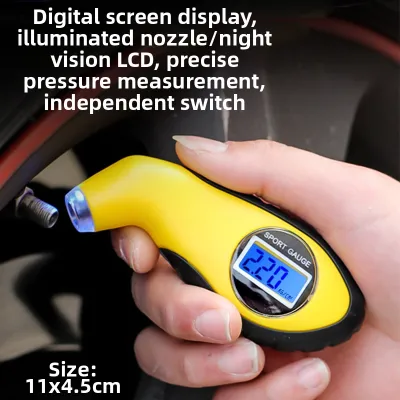
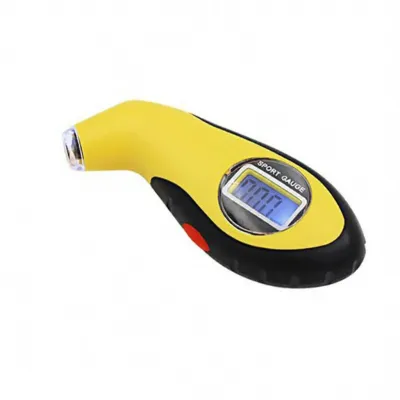
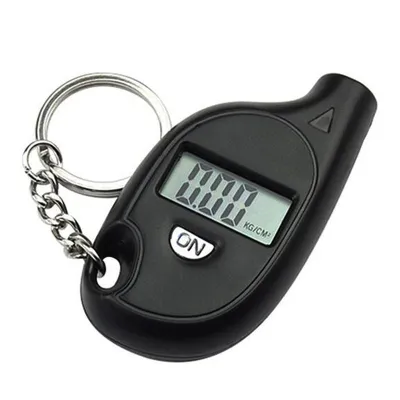
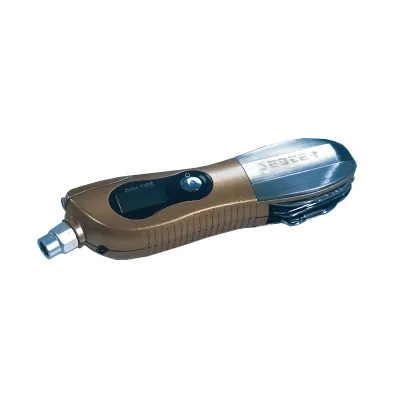
Digital tyre pressure gauges utilize electronic strain gauges or piezoelectric sensors to measure the air pressure inside the tyre, converting the physical force into a digital readout on an LCD screen. These gauges are highly popular for their straightforward operation, completely eliminating the subjective guesswork of reading a needle on a dial or a sliding scale. Many digital models feature integrated LED work lights to illuminate the valve stem in dark environments, automatic shut-off functions to conserve battery life, and ergonomic designs that fit comfortably in the hand.
Despite their convenience, digital gauges are entirely dependent on battery power to function. If you store a digital gauge in your vehicle’s cabin or glovebox, the intense heat of Singapore’s climate can accelerate battery drainage or, in worse cases, cause battery leakage that ruins the internal electronic circuitry. Additionally, over several years of use, the electronic sensors can experience calibration drift, which cannot easily be corrected without professional recalibration equipment.
This type of gauge is best suited for daily commuters, urban drivers, and tech-conscious car owners who want quick, highly legible, and hassle-free readings during routine monthly checks in covered residential parking structures.
Analogue (Dial) Tyre Pressure Gauges
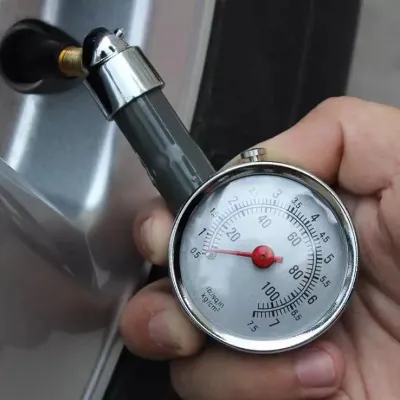
Analogue dial gauges operate on purely mechanical principles, most commonly using a Bourdon tube—a curved bronze or copper tube that straightens slightly when pressurized. This movement is transferred through a delicate gear-and-pinion system to rotate a physical needle across a calibrated dial face. Because they are entirely mechanical, analogue gauges do not require batteries, ensuring they are always operational whenever you need them. They are highly regarded for their consistent accuracy, long-term calibration stability, and immunity to extreme temperature fluctuations.
The primary drawbacks of analogue dial gauges are their physical bulk and sensitivity to mechanical shocks. Dropping a dial gauge onto a hard surface can easily bend the internal gears or knock the needle out of alignment, permanently ruining its accuracy. Furthermore, reading a dial gauge requires looking at the face directly from the front; viewing the needle from an angle can lead to parallax errors, where you misinterpret the actual pressure value.
This type is the ideal choice for automotive enthusiasts, DIY mechanics, and track-day participants who store their tools in dedicated, padded toolboxes and appreciate robust, battery-free mechanical precision.
Pencil (Stick) Tyre Pressure Gauges
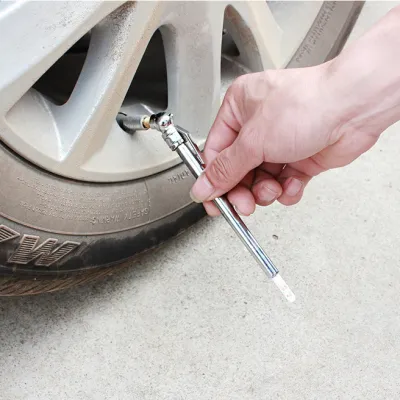
Pencil gauges are the traditional, pocket-sized tools that resemble a pen. They operate using a simple spring-and-piston mechanism housed inside a cylindrical metal sleeve. When pressed onto a valve stem, the pressurized air pushes a piston against an internal calibrated spring, which in turn forces a calibrated plastic or metal scale bar out of the bottom of the sleeve. Pencil gauges are incredibly compact, lightweight, highly affordable, and require absolutely no batteries.
However, pencil gauges are the most difficult to read accurately due to the small, tightly packed markings on the sliding scale bar. The physical mechanism is also highly sensitive to environmental contamination; any dirt, grit, or moisture that enters the metal sleeve can increase friction on the piston, resulting in highly inaccurate readings. They are also easily bent or damaged if stepped on or stored under heavy tools.
This type is best utilized as a compact emergency backup tool or for motorcycle and scooter riders with extremely limited storage space who need a basic, highly portable option.
How to Match the Gauge to Your Vehicle and Driving Habits
Selecting the right tyre pressure gauge involves matching the tool’s physical specifications and accessories to the specific vehicle you drive and how you intend to use it.
Standard Sedans and Hatchbacks
For standard daily passenger cars, a compact digital gauge or a small analogue dial gauge with a 0-60 PSI range is highly sufficient. These vehicles typically require tyre pressures between 30 and 36 PSI, allowing a 60 PSI gauge to operate in its most accurate middle-range zone. Look for a compact form factor that can be stored easily in your glove compartment, door pocket, or center console for convenient access during routine monthly checks.
SUVs, 4x4s, and Light Trucks
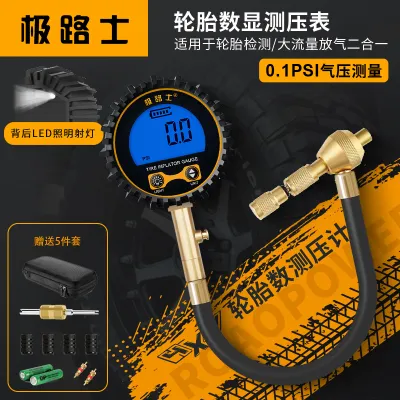
Larger vehicles, especially those used for carrying heavy loads or towing, often require higher tyre pressures. For these vehicles, a robust gauge with a 0-100 PSI range is more appropriate. If you enjoy off-road driving or frequently travel on unpaved terrain, look for a gauge equipped with an integrated bleed valve (or deflator valve). This feature allows you to quickly and precisely release excess air from your tyres to increase traction on loose surfaces, and then monitor the pressure as you reinflate them for highway driving.
Motorcycles and Scooters
Two-wheelers present unique physical clearance challenges when it comes to checking tyre pressure. The valve stems on motorcycles and scooters are often short, rigid, and tightly tucked behind large brake discs, drive chains, spokes, or exhaust components. A standard straight-head gauge is incredibly difficult to align properly, often leading to air leaks or bent valve stems. For motorcycles, choose a gauge equipped with a flexible rubber hose and a 90-degree angled chuck or a 360-degree swivel head. This design allows you to secure a firm, airtight seal on the valve stem from almost any angle.
Track or Off-Road Enthusiasts
If you participate in performance track days or competitive driving, tyre pressure is a critical tuning variable that directly impacts lap times and handling balance. For these scenarios, a high-precision, professional-grade analogue dial gauge with 0.5 PSI increments and a built-in bleed valve is indispensable. This setup allows you to monitor heat-induced pressure build-up immediately after a track session and bleed off exact amounts of air to maintain your target hot-pressure profile.
When shopping for a gauge on e-commerce platforms or brand official stores, always review the detailed product descriptions. Pay close attention to the hose length, chuck angle, and connector style (such as press-on versus clip-on) to ensure the gauge is fully compatible with your vehicle’s wheel design and clearance limits.
How to Use and Maintain Your Gauge for Consistent Accuracy
To ensure your tyre pressure gauge provides accurate readings and lasts for years, you must practice proper measurement techniques and follow basic maintenance guidelines.
Finding the Correct Pressure
Before taking any measurements, locate your vehicle’s manufacturer-recommended tyre pressures. This information is typically printed on a placard located on the driver’s side door jamb (B-pillar), inside the fuel filler flap, or within the owner’s manual. Safety Warning: Never inflate your tyres to the “Max Press” (maximum pressure) number molded into the tyre sidewall. This figure represents the maximum pressure the tyre can safely hold under maximum load, not the recommended daily operating pressure for your specific vehicle. Over-inflating to this limit will result in a harsh ride, reduced traction, and accelerated center-tread wear.
Proper Technique
To get an accurate reading, remove the dust cap from your tyre’s valve stem. Press the chuck of your tyre pressure gauge firmly and squarely onto the valve stem. You must create a complete, airtight seal. If you hear a hissing sound of escaping air, the gauge is not seated correctly, which will result in a false low reading. Press down harder and adjust the angle until the hissing stops completely, then hold it for a second or two until the reading stabilizes. Repeat the process at least twice to ensure consistency.
Maintenance and Storage
To preserve the accuracy of your gauge, treat it as a precision instrument. Avoid dropping it, as mechanical shocks can ruin the calibration of analogue dials and damage the delicate sensors in digital models. Store the gauge in a clean, dry location. Avoid leaving it on your car’s dashboard or rear parcel shelf under direct Singapore sunlight, as extreme cabin heat can degrade digital screens, melt internal seals, and cause battery leakage.
Before performing any tyre maintenance, adjustments, or pressure changes, always consult your vehicle’s owner’s manual and the tyre manufacturer’s specific guidelines. If you are unsure of your vehicle’s specifications, or if you notice uneven tyre wear, physical damage, or persistent pressure loss, consult a qualified tyre specialist or professional mechanic.
Frequently Asked Questions (FAQ)
How often should I check my tyre pressure in Singapore?
You should check your tyre pressure at least once a month and always before embarking on long-distance road trips, such as driving up north to Malaysia. Tyres naturally lose pressure over time through microscopic permeation of air through the rubber. Additionally, the intense tropical heat in Singapore accelerates this process, making regular checks essential for safety and fuel economy.
Can I use a standard car tyre pressure gauge for my motorcycle?
Yes, the internal pressure measurement mechanism is identical for both cars and motorcycles. However, the physical layout of motorcycle wheels often makes standard rigid car gauges impractical. The clearance around motorcycle valve stems is highly restricted by brake rotors and spokes. To avoid bending the valve stem or getting inaccurate readings due to a poor seal, it is highly recommended to use a gauge with a flexible hose and an angled chuck.
What is the difference between PSI, Bar, and kPa?
These are different units of measurement for pressure. PSI (Pounds per Square Inch) is the most common unit used by drivers in Singapore. Bar is a metric unit widely used by European car manufacturers, where 1 Bar is approximately equal to 14.5 PSI. kPa (Kilopascals) is the metric system’s standard unit of pressure, with 100 kPa equaling 1 Bar. To prevent calculation errors, simply look at your vehicle’s door jamb placard and match the unit directly to the display setting on your gauge.
Community discussion
Share your experience or ask a question. Comments are reviewed before publication.