
To secure a smartphone on a vehicle’s dashboard without the permanent commitment of adhesives or the bulk of mechanical vent clamps, a high-quality car anti-slip pad relies on surface friction, material compliance, and structural design. Choosing the right pad requires balancing the physical dimensions of your phone, the texture of your dashboard, and the local driving environment. In Singapore, where high humidity and intense solar heat can rapidly degrade interior accessories, selecting a pad with the correct material composition and thermal tolerance is essential for long-term reliability. A well-chosen pad keeps your device within safe viewing distance, prevents distracting slides during sudden braking, and protects your dashboard from residue or physical damage. While these accessories are highly affordable, typically costing under S$15 on online marketplaces, choosing the wrong material can lead to costly dashboard discoloration or a phone that slips at the first sharp turn.
Essential Grip and Sizing Criteria for Your Smartphone
To ensure your smartphone remains stationary during daily commutes, you must first evaluate the physical relationship between your device and the anti-slip pad. This begins with a direct comparison of your phone’s total weight—including its protective case—against the pad’s usable surface area. Modern smartphones, especially larger models with heavy camera modules or rugged protective cases, exert significant lateral force during cornering and braking. If a pad’s surface area is too small, the concentrated weight can easily overcome the static friction between the pad and the phone, causing the device to slide off.
When reviewing product specifications, look for the manufacturer’s stated dimensions and compare them directly to your phone’s length and width. The pad should ideally be wider and longer than your phone to provide a stable foundation. Additionally, consider the back surface of your phone or its case. Smooth, non-porous materials like glass, polished metal, or hard polycarbonate interact differently with anti-slip surfaces than textured materials like leather, fabric, or heavily ribbed silicone. A flat friction mat relies entirely on microscopic surface contact to create grip; therefore, a smooth phone back paired with a clean, flat silicone pad yields the highest coefficient of friction. If your phone case has pronounced ridges, card slots, or a matte texture, a flat mat may not provide sufficient contact area, making a different structural design necessary.
Products mentioned in this guide
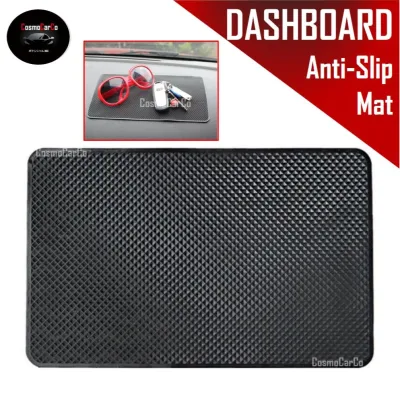
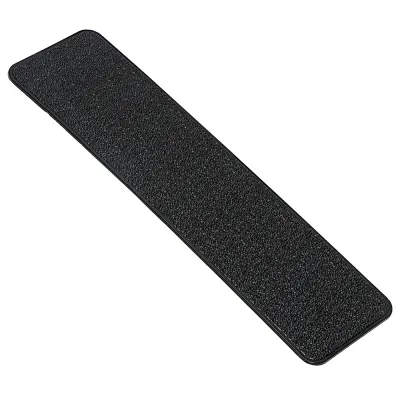
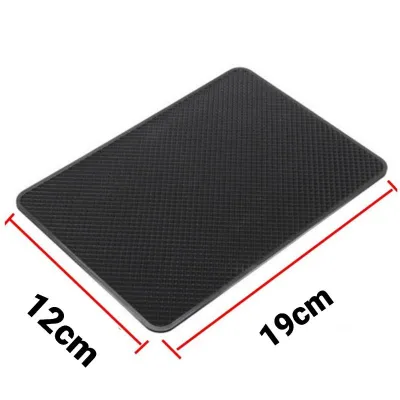
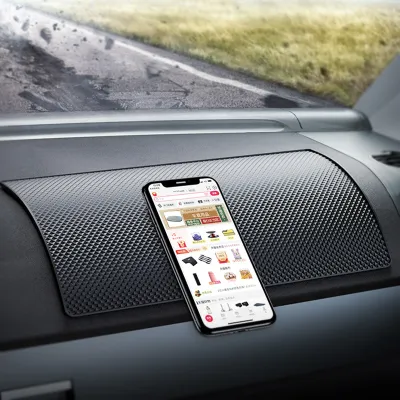
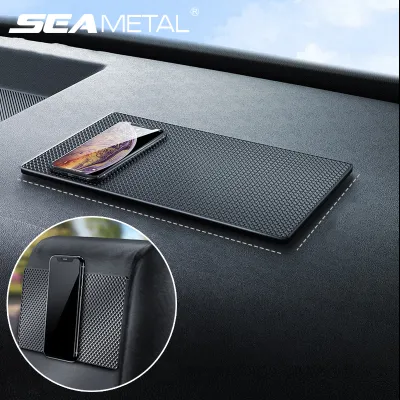
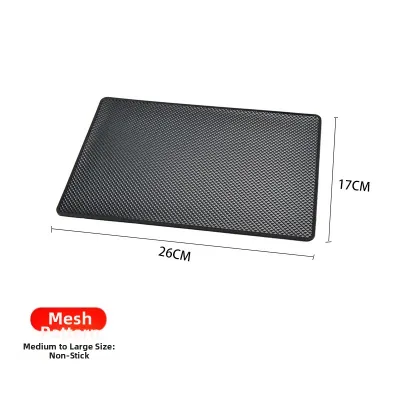
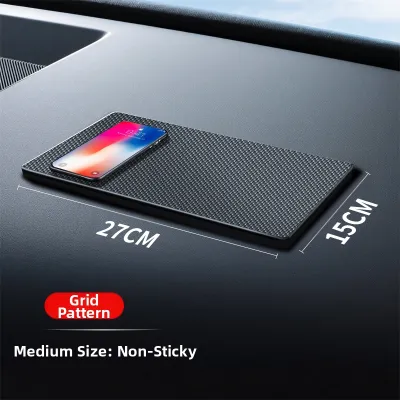
Prices are valid at publication and may change. Please refer to the product page for the latest price.
This is where the distinction between flat friction mats and raised-lip containment trays becomes critical for lateral stability. A flat mat relies solely on friction to hold the phone in place. While this keeps the dashboard profile low and allows you to place the phone at any angle, it offers no physical barrier against lateral forces. In contrast, a containment tray features raised outer edges or integrated slots designed to hold the phone upright or flat within a recessed border. These physical barriers provide mechanical containment, ensuring that even if the phone momentarily loses frictional grip during a sharp turn or sudden stop, the raised lip physically prevents it from sliding onto the floorboard or into the footwell. For drivers who frequently navigate winding roads or stop-and-go traffic, a tray design offers an extra layer of physical security that flat mats cannot match.
Material and Design Profiles: Matching Pad Types to Your Needs
Car anti-slip pads are generally categorized by their structural designs and material compositions, each offering distinct advantages depending on your vehicle’s interior layout and your usage habits. Understanding these profiles allows you to interpret manufacturer specifications accurately rather than relying on vague marketing claims of universal compatibility.

The three primary structural designs are flat mats, recessed trays, and multi-compartment organizers. Flat mats are highly versatile, easily conforming to curved dashboard surfaces, and can be cut to size if necessary. However, they offer the least physical containment. Recessed trays provide a dedicated, shallow well for your phone, which is excellent for keeping the device flat and secure but limits the placement angle. Multi-compartment organizers often combine a phone slot with smaller compartments for keys, parking cards, or loose change. While highly functional, these larger organizers require a significant amount of flat dashboard space, which may not be available in compact vehicles or cars with highly contoured dashboards.
Equally important is the material composition of the pad, which directly dictates its durability, grip strength, and resistance to environmental factors. The most common materials used are polyvinyl chloride (PVC), silicone, and polyurethane (PU) gel.
Polyvinyl chloride (PVC) pads are often the most affordable and are widely available on online marketplaces. They can be molded into intricate patterns and colors. However, PVC has a lower thermal tolerance compared to other materials. Under intense sunlight and high cabin temperatures, PVC can become sticky, potentially transferring plasticizers or residue to your dashboard or phone case.
Silicone pads offer excellent thermal stability, remaining flexible and non-sticky even when exposed to direct sunlight through the windshield. They do not rely on chemical adhesives to grip the dashboard; instead, their natural compliance allows them to conform to microscopic surface imperfections, creating a strong vacuum-like grip. Silicone is also highly resistant to UV degradation, making it a durable choice for long-term use.
Polyurethane (PU) gel pads, often referred to as sticky pads, provide exceptionally high initial grip. They can adhere to vertical or steeply sloped surfaces. However, this extreme stickiness is achieved through a soft, tacky surface that easily attracts dust, lint, and hair. Over time, this debris coats the pad, drastically reducing its effectiveness until it is thoroughly cleaned.
When evaluating these materials, always read the manufacturer’s product labels for specific temperature tolerances and care instructions. High-quality manufacturers will explicitly state the maximum temperature their pads can withstand without melting or deforming. Maintenance features are another key consideration; look for pads labeled as washable and reusable. This indicates that the material’s grip is physical rather than chemical, meaning a simple wash can restore its original friction properties without degrading the pad itself.
Dashboard Safety, Placement, and Interior Protection
Selecting the right anti-slip pad is only half the battle; proper placement on your dashboard is critical to maintaining vehicle safety and protecting your car’s interior. Before placing any accessory on your dashboard, you must consult your vehicle’s owner’s manual to identify the exact locations of the passenger airbag deployment zones. Airbags deploy with immense force in milliseconds. Placing an anti-slip pad, or the phone itself, within or near these deployment trajectories turns your device into a dangerous projectile in the event of a collision. Never place a pad on the steering wheel boss, the passenger-side dashboard fascia where the airbag is housed, or any surface marked with “SRS Airbag.”
Beyond airbag safety, you must ensure the pad and phone do not obstruct your line of sight. The phone should be positioned low enough on the dashboard so that it does not block your view of the road, side mirrors, or the vehicle’s instrument cluster. In Singapore, traffic regulations strictly prohibit any modifications or accessories that impair the driver’s clear view of the road ahead. Position the pad in a location where you can glance at your navigation screen quickly without taking your eyes off the road for more than a split second, and ensure it does not interfere with your physical reach to essential vehicle controls.
Finally, consider the compatibility of the pad material with your dashboard’s surface. Modern vehicle interiors utilize a wide variety of materials, including soft-touch plastics, textured vinyl, synthetic leather, and genuine leather. Some non-adhesive pads can react chemically with these surfaces, especially when subjected to high heat and UV exposure. Plasticizers in low-grade PVC pads can migrate into the dashboard material, causing permanent discoloration, sticky spots, or warping. To prevent this, always perform an inconspicuous spot test before full installation. Place the pad on a hidden area of the dashboard for a few days, then remove it to check for any signs of discoloration, residue, or texture changes. If your vehicle features a genuine leather dashboard, extra caution is required, as leather is highly susceptible to pressure marks and moisture trapping.
Pre-Purchase Checklist and Fitment Verification
Before finalizing your purchase on any online marketplace, use this structured checklist to verify that the anti-slip pad is fully compatible with your smartphone and vehicle interior.
First, cross-reference the pad’s physical specifications with your device. Measure your phone with its case on and compare these dimensions to the pad’s usable surface area. If you are choosing a tray-style pad with integrated slots, ensure the slot width is sufficient to accommodate the thickness of your phone case. Many rugged or wallet-style cases are too thick for standard slots, which can cause the phone to tilt forward or fall out during acceleration.
Second, verify the seller’s fitment and return policies. Because dashboard textures vary wildly between vehicle makes and models, a pad that grips perfectly on a smooth vinyl dashboard may slide on a heavily textured or matte-finished surface. Ensure the seller offers a clear return or exchange policy in case the pad fails to adhere to your specific dashboard texture upon initial installation.
Third, plan a thorough inspection of the product immediately upon delivery. Before placing the pad in your vehicle, conduct a visual and olfactory check. Look for any signs of warping, uneven edges, or manufacturing defects that could prevent the pad from laying completely flat. Additionally, check for strong chemical or plastic odors. A strong, pungent smell often indicates high levels of volatile organic compounds (VOCs) or low-grade plasticizers, which are more likely to degrade and leave sticky residues on your dashboard when exposed to cabin heat. If the pad exhibits any of these issues, return it immediately rather than risking damage to your vehicle’s interior.
Frequently Asked Questions (FAQ)
How do I clean and restore the grip of a dirty anti-slip pad?
Over time, dust, lint, and cabin debris will accumulate on the surface of your anti-slip pad, significantly reducing its frictional grip. To restore its effectiveness, remove the pad from the dashboard and rinse it thoroughly under lukewarm running water. If the pad is particularly dirty or greasy, apply a small drop of mild, non-moisturizing dish soap and gently massage the surface with your fingers; avoid using abrasive sponges or harsh chemical cleaners that can degrade the material. Once clean, shake off the excess water and allow the pad to air dry completely on a clean, lint-free surface. Do not use paper towels or cloth to dry it, as they will transfer fibers back onto the sticky surface. Reinstall the pad only when it is entirely dry, as residual moisture will act as a lubricant and cause the pad to slide. If the material remains slick or brittle after a thorough wash, the polymer has degraded, and the pad must be replaced.
Will a non-adhesive anti-slip pad damage my leather dashboard?
While non-adhesive pads do not use glue, they can still pose a risk to sensitive leather or soft-touch dashboards under specific conditions. When a pad remains in the same position for an extended period, it traps heat and moisture underneath while blocking natural UV exposure, which can lead to uneven fading or discoloration of the surrounding leather. Additionally, the constant pressure of the pad and phone can leave permanent indentations on soft, padded dashboard surfaces. To prevent this damage, remove the pad at least once a week to clean both the pad and the underlying dashboard surface. This allows the leather to breathe and prevents the buildup of heat-induced chemical reactions. Always consult your vehicle owner’s manual for specific warnings regarding aftermarket dashboard accessories, and consider using a physical mount if your manufacturer explicitly advises against placing items on the leather trim.
What should I do if my phone still slides during sharp turns?
If your phone continues to slide despite using an anti-slip pad, the issue is likely an incompatibility between the phone case material and the pad’s surface, or an excessive dashboard slope. Smooth glass, hard plastics, and certain matte-finished cases have low friction coefficients when paired with standard silicone or PVC. Try removing the phone case or switching to a high-grip silicone case to see if the stability improves. Additionally, evaluate the angle of your dashboard; if the slope is too steep, gravity will easily overcome the static friction of a non-adhesive pad during vehicle maneuvers. If adjusting the placement to a flatter area of the dashboard does not resolve the issue, you may need to transition to a mechanical mounting solution, such as a secure vent clip or a dedicated suction-cup mount, which does not rely solely on surface friction to hold your device.

Community discussion
Share your experience or ask a question. Comments are reviewed before publication.