
Choosing the right car anti-slip pad requires balancing your phone’s physical dimensions with the specific layout and material of your vehicle’s dashboard. To ensure your device remains secure during sudden stops or sharp turns, you must select a pad that offers a flat surface area larger than your phone’s footprint and a grip level matched to your driving environment. A well-chosen pad prevents distracting slips, keeps navigation clear, and protects your dashboard from damage without requiring permanent alterations to your vehicle’s interior.
Assessing Phone Dimensions and Dashboard Clearance
Before purchasing a car anti-slip pad, you must accurately measure your phone’s physical footprint. Do not rely solely on the manufacturer’s advertised screen size, as protective cases, rugged bumpers, and integrated ring holders add significant thickness and weight. A heavy case shifts the device’s center of gravity upward, making it more prone to tipping over during sudden maneuvers. Additionally, pronounced camera bumps can prevent the phone from lying completely flat, reducing the contact surface area and compromising the pad’s grip. Measure the total length, width, and depth of your phone while it is in the case you plan to use daily.
Once you have your phone’s dimensions, evaluate your vehicle’s dashboard layout to find a suitable mounting location. Modern dashboards are rarely perfectly flat; they often feature sweeping curves, textured surfaces, and sloping angles. An anti-slip pad requires a continuous, flat surface to establish a secure bond. If you place a large, rigid pad over a highly curved section of the dashboard, the edges of the pad will lift, allowing air and dust to slip underneath, which rapidly degrades the adhesive or frictional grip. Look for the largest level area available, keeping in mind that even a slight slope can cause a heavy phone to slide under the force of gravity.
Products mentioned in this guide

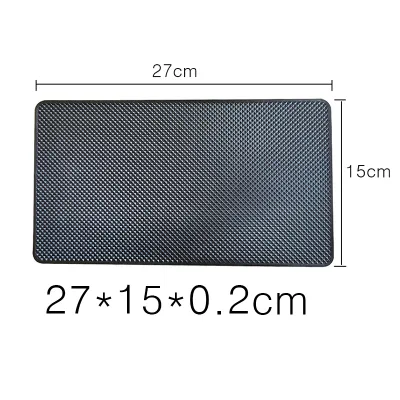
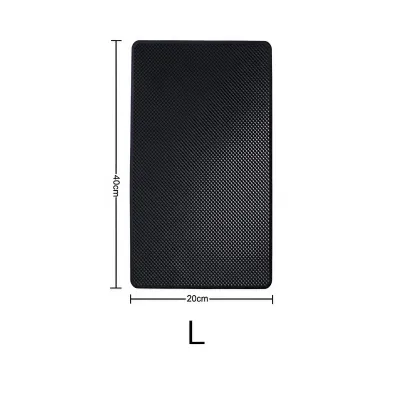
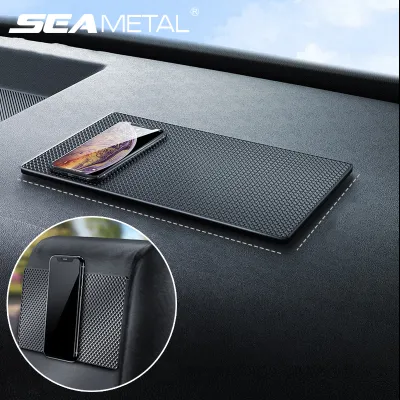
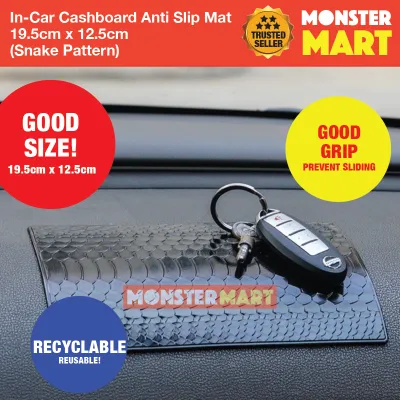
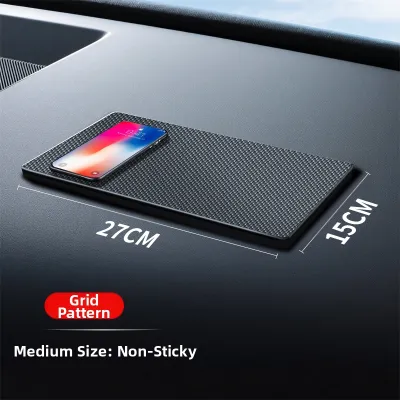
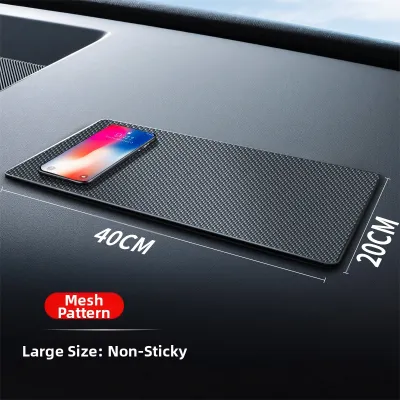
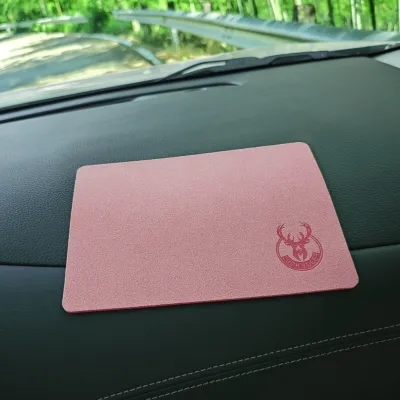
Prices are valid at publication and may change. Please refer to the product page for the latest price.
Finally, ensure the chosen pad size and placement do not interfere with critical vehicle functions or safety systems. The mounted phone must never obstruct your view of the road or block your instrument cluster and central infotainment displays. In warm climates, placing a large pad directly over or adjacent to air vents can restrict cabin airflow, reducing the efficiency of your air conditioning system. Most importantly, consult your vehicle’s owner’s manual to identify the exact deployment zones for all passenger and driver airbags. Never place an anti-slip pad or a mobile device on or near an airbag cover, as a deploying airbag will launch the device into the cabin with dangerous force.
Matching Grip Levels to Driving Dynamics
Car anti-slip pads generally fall into two categories based on their grip mechanisms: high-friction silicone pads and high-tack polyurethane (PU) gel options. Standard silicone pads rely on a textured, high-friction surface to prevent items from sliding. They do not use sticky adhesives, making them incredibly easy to reposition, remove, and clean. These are ideal for lightweight phones and flat dashboards. High-tack polyurethane pads, on the other hand, feature a naturally sticky, gel-like consistency that provides a light chemical adhesion. This added tackiness is highly beneficial for heavier devices, thicker cases, or dashboards with a slight incline.

Your vehicle’s suspension stiffness and your typical driving routes play a major role in determining the necessary grip level. If you drive a vehicle with a firm, sporty suspension, road vibrations and bumps are transmitted directly to the dashboard, which can easily jar a phone loose from a low-friction pad. Similarly, if your daily commute involves navigating winding roads, frequent roundabouts, or stop-and-go traffic, the lateral and longitudinal forces acting on your phone will be significantly higher. For these dynamic driving conditions, a high-tack polyurethane pad or a pad with raised, reinforced borders is highly recommended to physically contain the device during sharp turns.
Always check the manufacturer’s packaging or product specifications for stated weight capacity limits. While many basic pads are designed for lightweight accessories like keys or sunglasses, holding a modern smartphone securely requires a higher threshold. Compare the manufacturer’s weight rating directly against the combined weight of your phone and its protective case. If the manufacturer does not specify a weight limit, look for indicators such as reinforced edge walls or a deep-groove grid pattern, which provide mechanical support to complement the material’s natural friction.
Material Properties and Heat Resistance
Vehicle interiors are subject to extreme environmental stress, particularly from direct sunlight and high temperatures. In tropical regions, dashboard temperatures can easily exceed 60°C when the vehicle is parked outdoors. Under these conditions, low-quality plastic or poorly formulated gel pads can warp, melt, or undergo chemical breakdown. This breakdown often results in a sticky, liquefied residue that can permanently stain or bond to your dashboard. To prevent this, look for pads explicitly labeled as heat-resistant, UV-stabilized, or made from high-grade, food-safe silicone, which can withstand high temperatures without losing structural integrity.
In addition to heat resistance, verify that the pad material is safe for your specific dashboard finish. Modern vehicle interiors utilize a wide variety of materials, including soft-touch plastics, synthetic leather, genuine leather, and open-pore wood trims. Some chemical plasticizers used in cheap anti-slip mats can migrate into these sensitive surfaces, causing permanent discoloration, bubbling, or peeling of the dashboard’s protective topcoat. Always check the product label for warnings regarding sensitive materials, and look for manufacturers that explicitly state their products are non-staining and safe for all interior finishes.
Over time, prolonged exposure to ultraviolet (UV) radiation from the sun will degrade even high-quality polymers. This degradation typically manifests as a loss of flexibility, a yellowing of clear materials, or a gradual hardening of the pad’s surface, which severely reduces its grip. Regularly inspect your anti-slip pad for these signs of aging. If the pad feels brittle, shows visible cracks, or leaves a faint powdery residue on your hands, it has reached the end of its useful lifespan and should be replaced immediately to protect both your phone and your vehicle’s interior.
Safe Placement and Usage Guidelines
To maximize driving safety and maintain legal compliance, you must position your anti-slip pad strictly outside your primary line of sight. The phone should be mounted low enough on the dashboard that it does not cut into your view of the hood or the road ahead. In many jurisdictions, mounting devices in a way that obstructs the driver’s view is a traffic offense. A central location on the dashboard, slightly below the top edge of the instrument cowl, is often the most balanced position, allowing you to glance at navigation instructions without taking your eyes off the road for extended periods.
Proper surface preparation is essential to ensure the pad achieves its maximum rated grip. Before placing the pad, clean the target area of the dashboard thoroughly to remove dust, finger oils, and any residual dashboard dressings or protectants. Use only non-abrasive cleaners that are explicitly authorized by your vehicle manufacturer for use on your specific dashboard material. Avoid harsh household chemicals or glass cleaners, which can strip the dashboard’s protective coatings. Allow the surface to dry completely before applying the pad, as moisture trapped underneath can prevent proper adhesion and encourage mold growth.
It is important to recognize the physical limitations of non-slip pads and establish clear stopping conditions. If your dashboard has a steep slope, or if you find that your phone repeatedly shifts or falls during normal driving, a simple friction pad is insufficient for your setup. Continuing to use an inadequate pad poses a serious safety hazard, as a loose phone can slide under the pedals or distract you at a critical moment. In these scenarios, transition to a mechanical mounting solution, such as a heavy-duty vent clip, a CD slot mount, or a suction-cup mount attached to the windshield.
Maintenance and Longevity Checks
As you use your car anti-slip pad, dust, lint, and pet hair will inevitably accumulate on its surface, creating a barrier that reduces its grip. Fortunately, most high-quality silicone and polyurethane pads are designed to be washable. To restore the pad’s original tackiness, gently peel it off the dashboard and wash it under lukewarm water using a small amount of mild, additive-free dish soap. Do not use abrasive sponges or harsh chemical solvents. Once clean, allow the pad to air dry completely on a clean, lint-free surface; do not wipe it with paper towels or cloth, as this will reintroduce fibers to the sticky surface.
Regularly perform tactile and visual checks to monitor the pad’s condition. If you notice that the pad has developed a permanent, gooey texture that does not wash away, or if it has hardened to the point where it no longer conforms to the dashboard’s shape, the material has failed. Additionally, if the pad begins to leave a persistent sticky residue on your phone case or the dashboard, discontinue use immediately. Replacing a worn-out pad is a minor expense compared to the cost of repairing damaged interior trim or replacing a cracked phone screen.
When removing a pad, especially one that has been exposed to high heat for an extended period, proceed with caution. Slowly peel the pad back from one corner at a shallow angle, rather than pulling it straight upward, which can stretch or tear soft dashboard vinyl. If the pad feels firmly bonded or fused to the surface, do not force it. Applying gentle, indirect warmth from a hair dryer on a low setting can help soften the material, making it easier to release. If you suspect the pad has permanently bonded to a sensitive leather or wood surface, consult a professional automotive detailer to avoid causing costly cosmetic damage.
Frequently Asked Questions (FAQ)
Can I use a car anti-slip pad for a phone with a thick protective case?
Yes, but you must account for the added weight and the texture of the case material. Thick, heavy cases shift the phone’s center of gravity, making it more likely to tip over during sudden stops or sharp turns. Additionally, cases made of highly textured materials, fabric, or genuine leather do not interact as effectively with standard silicone pads as smooth plastic or TPU cases do. If you use a thick or heavily textured case, choose a high-tack polyurethane gel pad with raised outer borders to provide physical support and prevent the device from sliding.
Will the anti-slip pad leave a residue or damage my dashboard?
High-quality silicone pads generally do not leave a residue because they rely on friction rather than chemical adhesives. However, low-quality pads or those exposed to extreme heat can degrade and leave a sticky film or cause permanent discoloration on sensitive dashboard materials like leather or soft-touch plastics. To minimize this risk, verify that the manufacturer explicitly claims the product is residue-free and safe for all interior finishes. It is highly recommended to test the pad on a small, inconspicuous area of your dashboard first and consult your vehicle owner’s manual for any specific warnings regarding dashboard coatings.
Community discussion
Share your experience or ask a question. Comments are reviewed before publication.