
The best car anti-slip mat for keeping a smartphone secure on the dashboard is one that balances high-friction surface design, heat-resistant material composition, and appropriate physical dimensions to match your specific phone and vehicle interior. Unlike mechanical mounts that clip onto air vents or suction to the windshield, a dashboard anti-slip mat offers a simple, drop-and-go solution that requires no complex installation. However, choosing the right mat involves more than just picking a sticky piece of plastic. A poorly chosen mat can slide around during sudden stops, melt under intense sunlight, or even damage your vehicle’s dashboard.
To find a mat that truly keeps your phone secure during daily commutes and unexpected maneuvers, you must evaluate how its physical features, material properties, and placement interact with your car’s cabin environment. This is especially critical in regions with high ambient temperatures, where solar heat radiating through the windshield can quickly turn a closed car interior into an oven. By understanding the engineering behind these simple accessories, you can select a reliable option that protects both your mobile device and your vehicle’s interior surfaces.
Key Factors for Choosing a Car Anti-Slip Mat
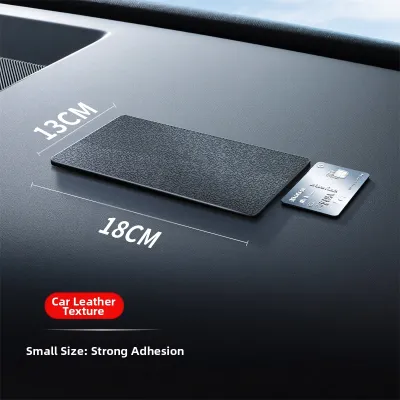
When evaluating a car anti-slip mat, the primary goal is to ensure it can generate enough friction and physical containment to counteract the forces of acceleration, braking, and cornering. The physical dimensions of the mat must comfortably accommodate your smartphone’s length and width. Modern smartphones have grown significantly larger, and when combined with thick protective cases, card holders, or ring stands, their footprint and weight distribution change. A mat that is too small will cause the phone to overhang, reducing the contact surface area and making it much easier for the device to slide off when you take a sharp turn.
Products mentioned in this guide
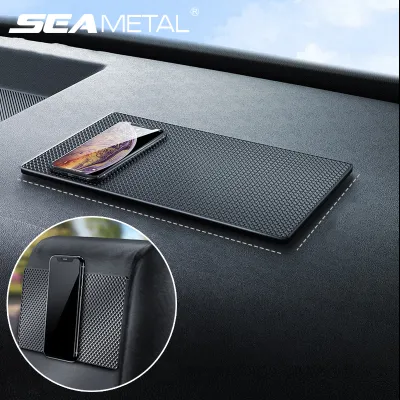
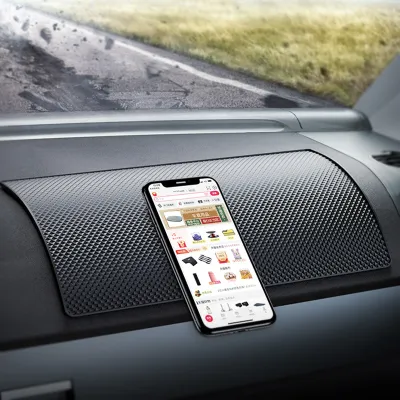
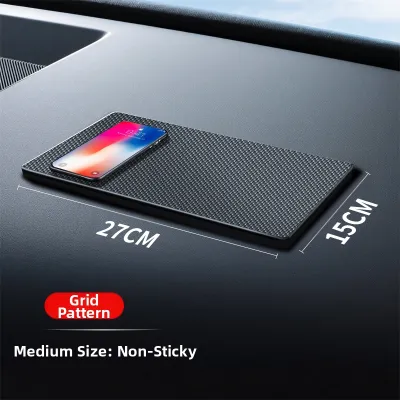
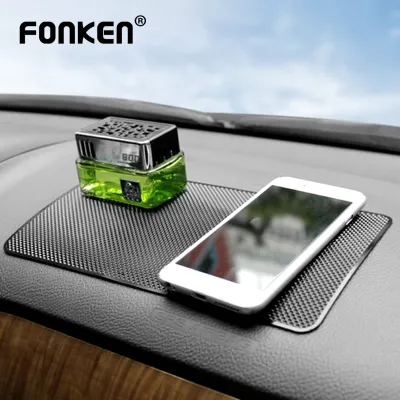
Prices are valid at publication and may change. Please refer to the product page for the latest price.
Thickness is another critical dimension that is often overlooked. A thicker mat provides better vibration dampening, absorbing the micro-shocks from uneven road surfaces, speed bumps, and highway expansion joints. This dampening effect prevents the phone from slowly “walking” across the mat due to continuous engine and road vibrations. When a phone vibrates on a hard, thin surface, the microscopic air gaps created between the phone case and the mat reduce the effective friction, leading to eventual slippage.
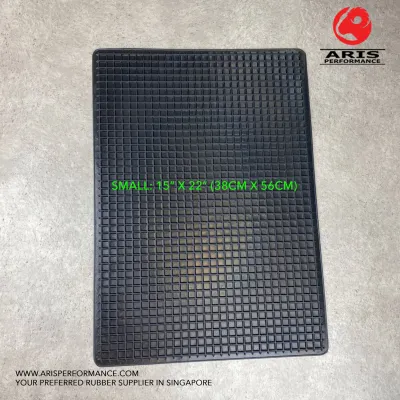
Surface texture plays a decisive role in how well a mat holds your device. While completely smooth, glossy mats offer high initial tackiness, they rely almost entirely on chemical adhesion. This tackiness degrades rapidly as soon as a thin layer of dust, lint, or pollen settles on the surface. In contrast, mats featuring textured surfaces—such as raised ridges, dimples, honeycomb grids, or wave patterns—utilize mechanical friction. These textures create physical pockets that trap dust away from the primary contact points, allowing the raised portions of the mat to maintain direct contact with your phone case even in dusty conditions.
Furthermore, many high-performance anti-slip mats incorporate physical barriers, such as raised lips, borders, or integrated slots. A raised edge acts as a physical stopper, preventing the phone from sliding off laterally when lateral G-forces act on the vehicle during cornering. Some designs feature built-in cradles or adjustable silicone teeth that allow you to prop the phone up at an angle for easier viewing of navigation maps. If you choose a model with integrated slots, ensure the slot width is compatible with the thickness of your phone case, as an overly tight fit can cause the phone to pop out, while a loose fit will allow it to wobble.
Evaluating Materials and Heat Resistance for Hot Climates
The material composition of a car anti-slip mat determines its durability, grip consistency, and safety under extreme cabin temperatures. When a vehicle is parked under direct sunlight, solar radiation passing through the windshield is absorbed by the dark surfaces of the dashboard, causing temperatures to rise significantly higher than the outside air. In tropical climates, dashboard surface temperatures can easily exceed 60°C to 70°C. Under these harsh conditions, low-quality materials will rapidly fail, potentially causing permanent damage to your vehicle.

Silicone is widely considered the most reliable material for high-temperature environments. High-grade silicone possesses excellent thermal stability, often rated to withstand temperatures well above 150°C without warping, melting, or losing its physical properties. Silicone mats do not rely on added chemical adhesives to remain sticky; instead, their grip comes from the natural high-friction coefficient of the polymer itself. This means they are less likely to leave sticky residues or undergo chemical breakdown over years of exposure to intense ultraviolet (UV) radiation.
Polyurethane (PU) gel mats offer exceptional initial tackiness, often feeling almost adhesive to the touch. They conform incredibly well to curved or textured dashboards, providing an extremely secure hold for lightweight items. However, PU is more susceptible to thermal degradation than silicone. Under prolonged exposure to high heat and UV light, some PU formulations can become overly soft, gooey, or even begin to liquefy. This chemical breakdown can result in the mat bonding permanently to the dashboard surface or leaving a stubborn, oily residue that is incredibly difficult to remove.
Polyvinyl Chloride (PVC) is another common material, typically found in budget-friendly mats. While PVC can be molded into various shapes and colors, it generally has the lowest heat tolerance of the three primary materials. To make PVC flexible, manufacturers often add chemical plasticizers. Under the intense heat of a car dashboard, these plasticizers can migrate to the surface, causing the mat to become greasy, harden, crack, or release volatile organic compounds (VOCs) that form a hazy film on the inside of your windshield.
Before purchasing a car anti-slip mat, it is essential to verify the manufacturer’s specifications regarding temperature tolerance and UV resistance. Look for products that explicitly state they are made from food-grade or high-temperature silicone and avoid those that only use generic terms like “soft plastic” or “magic sticky pad.” Checking these specifications ensures you are buying a product engineered to withstand the specific environmental demands of a hot vehicle cabin.
Safe Placement and Dashboard Surface Compatibility
Positioning your anti-slip mat correctly is vital for both driving safety and preserving your vehicle’s interior. The most critical safety rule when installing any dashboard accessory is to completely avoid passenger airbag deployment zones. Airbag covers are typically integrated into the passenger side of the dashboard and are marked with “SRS Airbag” or similar lettering. Placing a mat, phone, or any other object on or near these covers is extremely dangerous. In the event of a collision, the airbag deploys with immense force in milliseconds; any object resting on the cover will be launched into the cabin at high speed, acting as a dangerous projectile that can cause severe injury to passengers.
In addition to airbag safety, you must ensure the mat and your phone do not obstruct your forward line of sight. The mat should be positioned low enough on the dashboard so that the mounted phone does not block your view of the road, pedestrians, or traffic signals. It should also not interfere with your vehicle’s essential controls, instrument clusters, head-up displays, or the windshield defroster vents. Blocking defroster vents can impair your ability to clear condensation from the windshield during sudden rainstorms, compromising visibility.
Dashboard surface compatibility is another crucial factor to investigate before placing a mat. Modern vehicle interiors utilize a wide variety of materials, including natural leather, synthetic leather, suede, soft-touch plastics, and textured vinyl. Natural leather and suede are highly sensitive to trapped moisture, heat, and chemical agents. Placing a tacky mat on these surfaces can trap oils and heat, leading to localized discoloration, drying, cracking, or peeling of the delicate finish.
Even soft-touch plastics and vinyl dashboards can react negatively to certain mat backings. The chemical plasticizers used in some mats can migrate into the dashboard’s surface coating, causing a chemical reaction that leaves permanent dull spots, sticky patches, or dark stains. To prevent this, always check the vehicle manufacturer’s guidelines regarding dashboard accessories. If you are unsure about compatibility, a prudent step is to test the mat on a small, inconspicuous area of the dashboard—such as the side of the center console or a hidden corner—for a few days to monitor for any adverse reactions before placing it permanently on top of the dashboard.
Cleaning and Maintaining the Anti-Slip Grip
Over time, every car anti-slip mat will inevitably lose its grip. This loss of performance is rarely due to the material wearing out immediately; instead, it is usually caused by surface contamination. As you drive with the windows down, use the air conditioning, or enter and exit the vehicle, microscopic particles of dust, lint, pet hair, and pollen settle on the mat. Additionally, skin oils from handling your phone and residues from dashboard cleaning sprays or cabin air fresheners accumulate on the surface, creating a slick barrier that prevents the mat from making direct contact with your phone.
To restore the mat’s original friction, you must clean it regularly. Fortunately, high-quality silicone and PU mats are highly washable. The standard cleaning procedure is straightforward and should be performed as soon as you notice a decrease in tackiness:
- Gently peel the mat off the dashboard to avoid stretching or tearing the material.
- Rinse the mat under lukewarm running water to wash away loose dust and debris.
- Apply a few drops of mild, additive-free dish soap to the surface. Gently massage the soap over the mat using your fingertips to break down skin oils and greasy residues. Avoid using abrasive sponges, scrubbing pads, or harsh chemical solvents like bleach or isopropyl alcohol, as these can permanently degrade the polymer structure.
- Rinse the mat thoroughly under clean water to ensure all soap residue is completely removed, as dried soap will create a slippery film.
- Place the mat on a clean, flat surface to air-dry completely. Do not use paper towels, cotton cloths, or tissues to dry the mat, as the tacky surface will immediately pull fibers from the cloth, ruining the cleaning effort.
While regular washing can restore the grip of a dirty mat, you must also be able to recognize when a mat has reached the end of its usable lifespan. Over years of thermal cycling and UV exposure, the polymer chains within the material will eventually break down. Visual and tactile signs of permanent degradation include hardening, cracking, a yellowed or faded appearance, or a persistent gooey, sticky texture that remains even after a thorough wash. If the mat feels brittle or leaves a greasy residue on your hands, it is time to discard it and purchase a replacement to protect your phone and dashboard.
When to Consider Alternatives to Anti-Slip Mats
While car anti-slip mats are highly convenient, cost-effective, and easy to use, they have inherent physical limitations. Because they rely entirely on gravity and surface friction to hold your phone, they are not designed to withstand extreme driving forces. If you frequently drive on poorly maintained roads, encounter steep inclines, or have a spirited driving style that involves rapid acceleration, sharp cornering, and sudden braking, an anti-slip mat may not provide sufficient retention. Under these high-G-force conditions, the kinetic energy of the phone can easily overcome the static friction of the mat, causing the device to slide off and fall into the footwell, creating a dangerous distraction.
For drivers who require absolute security, dedicated mechanical mounts offer a more robust alternative. These mounts physically clamp or magnetically secure the phone in place, ensuring it remains stationary regardless of vehicle movement:
- Vent Mounts: These clip directly onto the slats of your vehicle's air conditioning vents. They keep the phone positioned close to your line of sight, making it easy to view navigation maps without blocking the windshield. However, they can restrict airflow, and during winter, the hot air from the heater can cause your phone to overheat.
- Suction-Cup Mounts: These attach to the windshield or smooth sections of the dashboard using a vacuum seal. They offer excellent adjustability via articulating arms, allowing you to position the phone precisely where you need it. The drawback is that extreme heat can cause the suction cup to lose its seal and fall off, and they can leave circular marks on the glass.
- CD-Slot Mounts: These utilize the slot of your vehicle's CD player (if equipped) to anchor a mounting bracket. They are incredibly stable and do not block your view of the road, but they can block access to other infotainment controls and are positioned lower than eye level.
When deciding between an anti-slip mat and a mechanical mount, you must also factor in local traffic regulations. In many regions, including Singapore, strict laws govern mobile phone use while driving. Drivers are prohibited from holding a phone or operating its functions while the vehicle is in motion. Even if the phone is resting on an anti-slip mat, looking down at it or touching the screen can be classified as driver distraction, leading to heavy fines and demerit points. If you rely heavily on your phone for real-time GPS navigation, a mechanical mount that positions the phone at eye level—allowing you to view maps with a quick glance without taking your eyes off the road—is often the safer and legally compliant choice.
Frequently Asked Questions (FAQ)
Can I leave the anti-slip mat on the dashboard overnight?
Yes, you can leave a high-quality silicone anti-slip mat on the dashboard overnight, as nighttime temperatures are significantly lower and pose no risk of thermal degradation. However, if your vehicle is parked outdoors in direct sunlight during the day, the cumulative heat and UV exposure can accelerate the aging of both the mat and the dashboard. If you plan to leave your car parked outside in the sun for extended periods, it is highly recommended to remove the mat and store it in the glove compartment or center console. This simple habit protects the mat from UV damage and prevents any potential chemical bonding or plasticizer migration from affecting your dashboard surface.
Will an anti-slip mat damage a leather or soft-touch dashboard?
There is a risk of damage, particularly with lower-quality PVC or PU gel mats on sensitive surfaces like natural leather, suede, or soft-touch plastics. These premium interior materials can react chemically with the plasticizers or adhesives used in some mats, leading to permanent discoloration, sticky residues, or peeling of the protective topcoat. High-grade silicone mats are generally safer because they do not contain chemical adhesives or migrating plasticizers. However, to ensure absolute safety, you should always check both the mat manufacturer’s compatibility guidelines and your vehicle’s owner manual. Performing a temporary test on a small, hidden area of the dashboard is the best way to verify compatibility before long-term use.
How do I restore the stickiness of a car anti-slip mat?
To restore the stickiness of a car anti-slip mat, you simply need to wash away the accumulated dust, lint, and skin oils that are blocking the surface contact. Wash the mat under lukewarm running water using a few drops of mild dish soap, gently rubbing the surface with your fingers. Avoid using abrasive pads, harsh detergents, or alcohol-based cleaners. Once clean, rinse the mat thoroughly to remove all soap residue, and let it air-dry completely on a flat, clean surface. Do not wipe it with a towel or paper towel, as this will recontaminate the surface with fibers. Note that if the mat has lost its grip due to chemical degradation, hardening, or cracking from age and UV damage, washing will not restore it, and the mat must be replaced.

Community discussion
Share your experience or ask a question. Comments are reviewed before publication.