
To prevent that uncomfortable sticky feeling on leather car seats in Singapore’s intense heat and humidity, choosing the right car seat towel requires balancing fabric breathability, leather compatibility, and secure fitment. A proper towel acts as a protective, moisture-absorbing barrier that keeps you comfortable without damaging your vehicle’s premium upholstery or compromising safety features. By focusing on material construction, backing safety, and proper maintenance, you can enjoy a cooler drive while preserving the condition of your car’s interior.
Evaluating Materials and Weaves for Breathability
When shopping for a car seat towel, the material composition and weave structure are the most critical factors determining how cool and dry you will stay during your commute. Natural fibers like cotton are highly regarded for their exceptional moisture absorption. A heavy-duty cotton terry cloth towel can quickly soak up sweat, but it tends to retain moisture rather than releasing it into the air. If you prefer natural fibers, look for a waffle-knit cotton structure. The raised, grid-like pattern of a waffle weave creates small air pockets that elevate the fabric slightly off your skin and the leather, promoting continuous airflow and helping the fabric dry much faster than a flat weave.
Synthetic fabrics, particularly engineered polyester and nylon blends, offer excellent moisture-wicking capabilities. These materials are designed to pull sweat away from your body and spread it across a large surface area so it can evaporate rapidly. However, not all synthetic towels are created equal. A cheap, tightly woven polyester cover can trap heat and feel like a plastic sheet against your back. To avoid this, check the manufacturer’s specifications for explicit breathability ratings and look for open-weave mesh designs. Mesh panels allow hot air to escape from behind your back, preventing the buildup of stagnant, humid air that causes sticking.
Products mentioned in this guide
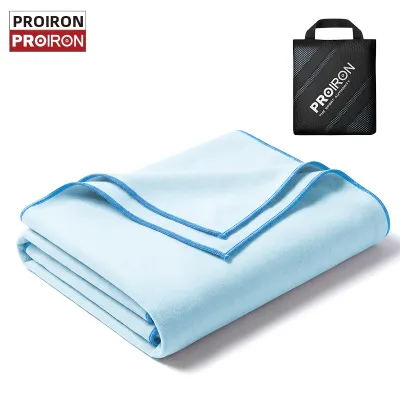
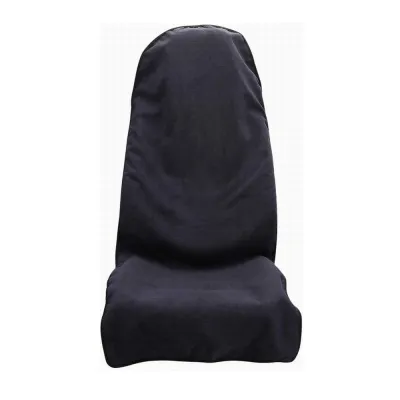
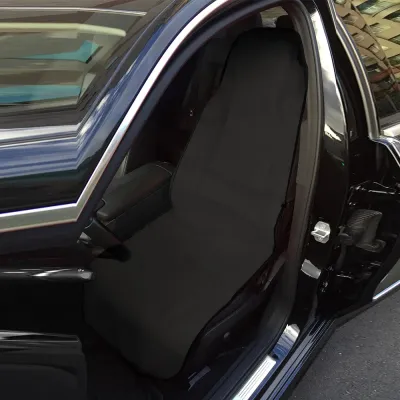
![[SG] Waterproof Sweat Towel Car Seat Cover for Post Gym Yoga Workout Running Swimming Beach and Hiking Universal Fit Anti-Slip Bucket Seat Protector for Cars SUVs and Trucks Machine Washable](https://img.lazcdn.com/g/p/b9a0f9040a71bf60df8d28763550aef9.jpg_400x400q80.jpg_.webp)
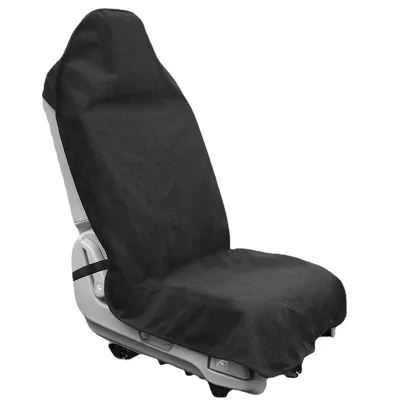
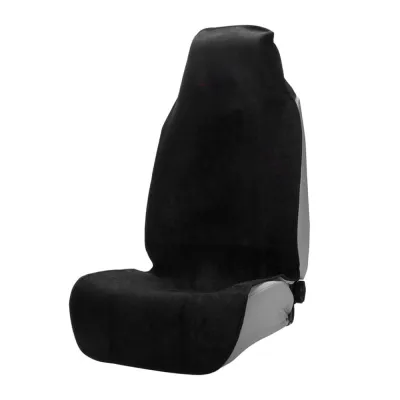
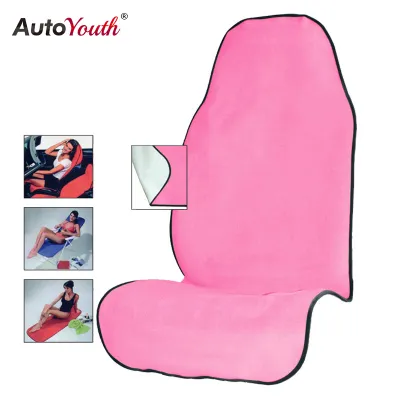
Prices are valid at publication and may change. Please refer to the product page for the latest price.
Rather than relying on the material name alone, always inspect the product label for performance claims. Look for terms like “active airflow,” “quick-dry technology,” or “breathable mesh channels.” High-quality car seat towels often combine different materials, using a soft, absorbent top layer paired with a highly breathable, porous middle layer. This multi-layered approach ensures that sweat is drawn away from your skin immediately while allowing air to circulate freely through the fabric, keeping both you and your leather seats cool.
Ensuring Compatibility and Protection for Leather Surfaces
While a car seat towel is meant to protect your interior, the wrong choice can actually cause severe damage to delicate leather upholstery. Leather is a natural, porous material that easily absorbs liquids, including dyes. When a damp towel is subjected to body heat and pressure, unstable dyes can bleed directly into the leather. This is a major concern for vehicles with light-colored interiors, such as beige, cream, or white leather, where dark or vibrant dyes can leave permanent, unsightly stains. Always check the product packaging for colorfastness guarantees or explicit warnings regarding use on light-colored leather.

The backing material of the towel is another critical area of concern. Many towels feature non-slip backings made of rubberized beads, silicone patterns, or chemical adhesives to keep them from sliding around. In Singapore’s tropical climate, cabin temperatures can soar when your car is parked outdoors under the sun. This extreme heat can cause low-quality backing materials to degrade, melt, or chemically react with the leather. Over time, this can leave a sticky, gummy residue on your seats or even strip away the leather’s protective topcoat and conditioners. To prevent this, look for towels that specify the use of high-temperature, leather-safe silicone or non-reactive backing materials.
Additionally, the towel must allow moisture to evaporate rather than trapping it against the seat. If a towel has a completely waterproof, non-breathable backing, any sweat it absorbs will remain trapped between the towel and the leather surface. This trapped moisture, combined with high cabin temperatures, creates a greenhouse effect on your seat. This can lead to the leather bubbling, cracking, or developing mold and mildew. Ensure that the towel’s backing is porous or breathable, allowing moisture to escape into the cabin air where your car’s air conditioning system can dehumidify it.
Checking Fit, Grip, and Vehicle Safety Features
A car seat towel must stay securely in place without interfering with your driving ergonomics or your vehicle’s built-in safety systems. Before making a purchase, measure your car seat’s dimensions, including the height of the headrest, the length of the backrest, and the depth of the seat cushion. A towel that is too small will constantly slip and bunch up, leaving areas of your skin in direct contact with the hot leather. Conversely, an oversized towel can drape over seatbelt buckles, block electronic seat adjustment controls, or interfere with lumbar support mechanisms, creating a safety hazard and a daily inconvenience.
Vehicle safety features must never be compromised for comfort. Many modern cars are equipped with side-impact airbags housed inside the outer bolsters of the front seats. If your car seat towel wraps around the sides of the seat or uses thick, non-breaking elastic straps to secure itself, it can delay or completely block the deployment of these airbags during a collision. Always verify that the towel is designed with an open-sided construction or is explicitly certified as side-airbag compatible. A safe design typically features a simple hood that slips over the headrest, leaving the sides of the seatback entirely unobstructed.
The grip mechanism should be effective yet gentle on your upholstery. Avoid towels that rely on harsh metal clips, sharp plastic hooks, or abrasive straps that can scratch, puncture, or stretch the leather. Instead, opt for towels that use soft, adjustable fabric straps with quick-release buckles, or those that rely on a high-friction, leather-safe textured backing. The towel should remain stable when you slide in and out of the cabin, preventing friction wear on the leather bolsters, which are highly susceptible to scuffing and color wear over time.
Maintenance and Hygiene in Humid Conditions
Singapore’s high humidity and warm temperatures create the perfect breeding ground for bacteria, mold, and mildew. Because a car seat towel is designed to absorb sweat and body oils, it requires regular cleaning to maintain hygiene and prevent unpleasant odors. Before washing your towel, always review the care label for specific machine-washing instructions and temperature limits. Most performance fabrics should be washed in cold or lukewarm water on a gentle cycle. Avoid using fabric softeners or bleach; fabric softeners leave a thin chemical coating on fibers that clogs the pores, drastically reducing the towel’s breathability and moisture-wicking efficiency.
Establish a consistent washing frequency based on your driving habits and sweat exposure. If you use the towel daily after gym sessions, outdoor sports, or long commutes, it should be washed at least once a week. Leaving a damp, sweat-soaked towel inside a closed, hot car overnight accelerates bacterial growth. This not only produces a stubborn, musty smell that can permeate your entire cabin but can also transfer bacteria and odors directly onto your leather seats, which are much harder to clean and deodorize than a machine-washable towel.
Thorough drying is essential before placing the towel back on your leather seat. Line drying the towel in a well-ventilated area under direct sunlight is highly effective, as ultraviolet rays act as a natural disinfectant to kill remaining bacteria. If you use a clothes dryer, select a low-heat setting to prevent shrinking the fabric or damaging any non-slip backing materials. Never reinstall a towel that is even slightly damp. Any residual moisture will be trapped against the leather seat, creating an environment ripe for mold growth on both the underside of the towel and the leather upholstery itself.
Frequently Asked Questions (FAQ)
Will a car seat towel interfere with heated or ventilated seat functions?
Yes, a car seat towel can significantly impact the performance of active seat climate controls. If your vehicle features ventilated seats, a thick, densely woven towel or one with a solid, non-slip backing will block the airflow, preventing the cool air from reaching your body. For heated seats, a thick towel acts as an insulator, slowing down heat transfer and potentially causing the heating elements to run longer than intended. Always consult your vehicle owner’s manual regarding any restrictions on covering ventilated or heated seats, and opt for a thin, highly porous mesh towel if you plan to use these features regularly.
How can I test a new towel for color bleeding before using it?
To protect your leather seats from permanent dye stains, perform a simple colorfastness test before installing a new towel. Dampen a small, inconspicuous corner of the towel with warm water, then press it firmly against a clean, white paper towel or a scrap of light-colored cloth for about thirty seconds. If any color transfers onto the white surface, the dye is unstable and prone to bleeding. You should avoid using that towel on your leather seats, especially in humid conditions where sweat will easily trigger dye transfer.

Community discussion
Share your experience or ask a question. Comments are reviewed before publication.