
To calculate the total wattage needed for a car power inverter, you must sum the continuous (running) wattage of all devices you plan to use simultaneously, add the single highest starting surge wattage, and apply a safety buffer of at least 20 to 30 percent. This calculation ensures your inverter can handle both the steady power demand and the brief initial power spikes of motorized electronics without overloading your vehicle’s electrical system.
Selecting the wrong size can lead to blown vehicle fuses, damaged electronics, or an inverter that constantly shuts down under load. By systematically listing your devices, identifying their power specifications, and verifying your vehicle’s electrical limits, you can safely integrate a mobile power solution that meets your needs on the road.
Understand the Difference Between Running and Starting Watts
Every electrical device has specific power requirements, but these requirements are not always constant. To size a power inverter accurately, you must first distinguish between running watts and starting watts. Running watts, also known as continuous watts, represent the steady state of power a device consumes while operating normally. Standard electronics like laptops, smartphones, tablet chargers, and LED lights draw a consistent amount of power that remains relatively stable throughout their use.
Products mentioned in this guide
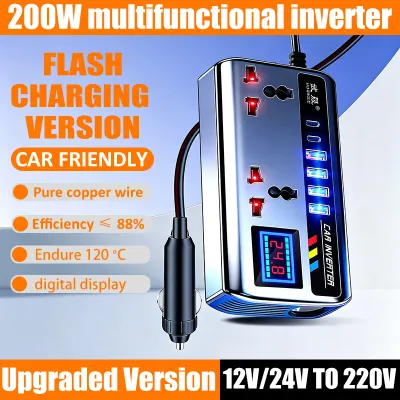
5 Lazada user ratings
I have received the 24V inverter used for the truck. I have tested it and found that it is quite stable with small appliances. The socket ho…Read full reviewShow less
I have received the 24V inverter used for the truck. I have tested it and found that it is quite stable with small appliances. The socket holes are also sufficient.
When traveling by truck, there are also many mobile phones and charging ports needed, so you no longer have to worry about not having enough…Read full reviewShow less
When traveling by truck, there are also many mobile phones and charging ports needed, so you no longer have to worry about not having enough plugs
Solid workmanship, fine workmanship, thick wires, reliable quality, strong adaptability, compact size, very good
The item is intact and undamaged. The logistics is very fast, and it will be used for all shipments
The quality is very good, I bought a few, the charging is fast, safe and reliable
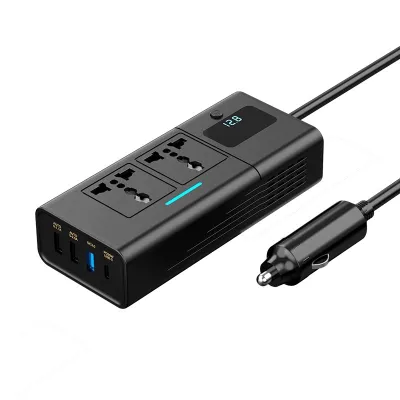
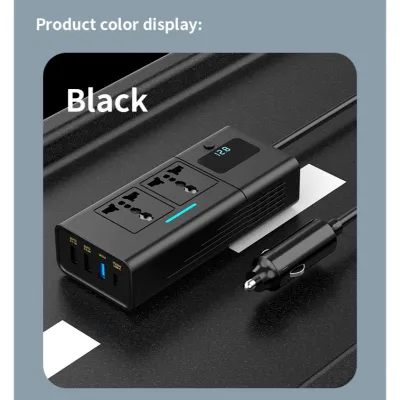
7 Lazada user ratings
Quick delivery. Product as described
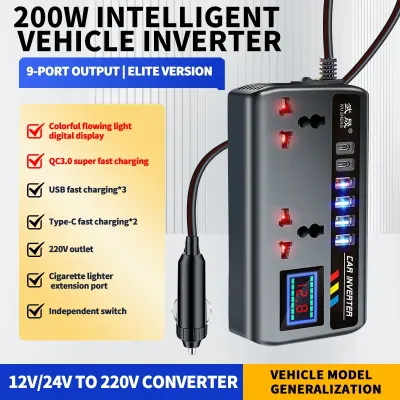
35 Lazada user ratings
Item came as described. Quick test seems to work OK for the USB charging. the Orange USBA shows Fast Charging, but the Type C ports show cha…Read full reviewShow less
Item came as described. Quick test seems to work OK for the USB charging. the Orange USBA shows Fast Charging, but the Type C ports show charging only (little disappointed). Yet to test charing multi devices at same time and the 230V 3 pin power point.
👌Ease of Use:Yes 🔧Durability:Haven't tested yet Compact and portable, Easy to carry in car, hopefully it's works smoothly.
label sticker is abit off, hopefully it is safe to use
Usb output ok, but no 220V AC output.
functional but made cheaply

5 Lazada user ratings
👜Portability:Portable 🔧Durability:Built quality is good
7 Lazada user ratings
Heat dissipation structure good, surface not scalding
Clear digital screen, voltage data visible directly
Ideal for road trip, solves outdoor power trouble
Multiple ports, charge several devices together
Digital display clearly shows real-time voltage
17 Lazada user ratings
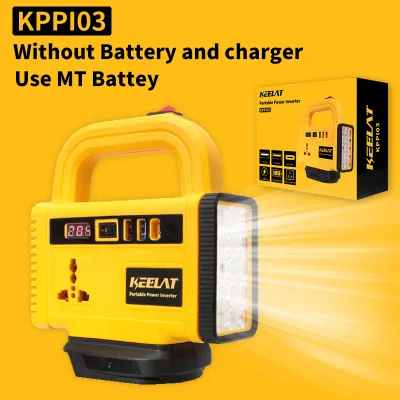
Portable and lightweight, Perfect for camping, High power output, Great for emergency, Fast delivery in SG,
portable inverter can be used for emergency and outgoing. LED is very bright. Tested and working.
Try it on a table fan, Not even half an hour journey, battery flat. Battery Life:very poor
Great! Good product!
Nice product 👍
9 Lazada user ratings
Fast shipping from Singapore, Perfect for camping, Durable lithium battery, Pure sine wave inverter, High power output.
good and fast delivery can buy thanks Yet to try but the sound was gokd and smooth, seems good quality with 2 bettery.
Safety: confident easy for weak battery to charger
Prices are valid at publication and may change. Please refer to the product page for the latest price.
Starting watts, often referred to as surge watts, represent the brief, high-intensity burst of electricity required by devices with electric motors, compressors, or heating elements to start up. When a motorized device like a portable car fridge, a small vacuum cleaner, or a power tool first turns on, the motor must overcome mechanical inertia. This initial startup phase can require up to three times more power than the device needs to run continuously. This surge typically lasts for only a fraction of a second, but it is critical to account for it.
Failing to consider both metrics when sizing your power inverter is a primary cause of system failures. If your inverter is rated only for the continuous power draw of your devices, the sudden demand of a starting surge will trigger the inverter’s internal overload protection. This safety mechanism immediately shuts down the unit to prevent damage, leaving you unable to power your equipment. Therefore, your inverter must have a continuous rating high enough for your combined running loads and a peak or surge rating high enough to handle the initial startup spikes.
Step 1: Identify the Power Ratings of Your Devices
Before performing any calculations, you must gather the exact power specifications for every device you plan to plug into the inverter simultaneously. The most reliable source for this information is the physical label or rating plate on the device itself or its power adapter. Look for a small sticker or engraved text on the back or bottom of the device, which typically lists electrical specifications such as voltage, amperage, and wattage.

If the label does not explicitly state the wattage, you can easily calculate it using a basic electrical formula. Multiply the listed voltage (V) by the amperage (A) to find the wattage (W). For example, if a device adapter lists an input of 12V and 2A, the power draw is 24 watts ($12 \times 2 = 24$). When checking AC-to-DC power bricks, such as those for laptops, look at the input specifications rather than the output specifications, as the input rating reflects the actual power the adapter draws from the wall socket or inverter.
Once you have gathered these figures, group your devices into two distinct categories: resistive devices and inductive devices. Resistive devices, such as phone chargers, laptops, and LED lights, have no moving parts and draw a constant wattage without a starting surge. Inductive devices, which contain motors, pumps, or compressors, will require a starting surge. Grouping your devices this way prevents you from overlooking hidden surge requirements during the calculation phase.
Step 2: Calculate Your Total Continuous and Peak Wattage
With your device list categorized, you can now calculate the total continuous and peak wattage your inverter must support. First, determine your total continuous load by adding together the running watts of all devices you intend to operate at the exact same time. For instance, if you plan to charge a laptop (90 watts), run a portable fan (30 watts), and charge two smartphones (15 watts each) simultaneously, your total continuous load is 150 watts ($90 + 30 + 15 + 15 = 150$).
Next, you must calculate the peak wattage requirement by identifying the single device with the highest starting surge. It is a common misconception that you must add the starting surges of all connected devices together. In practice, it is highly unlikely that multiple motorized devices will start up at the exact same millisecond. Therefore, you only need to account for the single largest surge spike on top of the continuous operating load of your other devices.
To find this peak requirement, take your total continuous load and add the difference between the starting watts and running watts of your most demanding inductive device. For example, if your portable car fridge draws 50 watts continuously but requires 150 watts to start, the surge increment is 100 watts ($150 – 50 = 100$). If you run this fridge alongside your 150-watt continuous load of laptops and chargers, your peak wattage requirement is 250 watts ($150 \text{ continuous} + 100 \text{ surge increment} = 250$).
Step 3: Apply a Safety Buffer and Choose the Right Inverter Size
Never choose an inverter that matches your calculated wattage exactly. Operating an inverter at or near its maximum capacity for extended periods causes significant heat buildup and reduces its lifespan. To ensure reliable operation, apply a safety buffer of 20 to 30 percent to your calculated peak wattage. This buffer provides breathing room for the inverter’s internal components and accounts for environmental factors.
In warm and humid climates, such as Singapore’s tropical weather, heat buildup inside a parked or moving vehicle can significantly degrade the efficiency of electronic components. An inverter operating in a hot cabin will trigger its thermal shutdown protection much earlier than it would in a cool environment. Adding a 20 to 30 percent safety margin helps keep the inverter operating within a safe temperature range, preventing unexpected shutdowns during long drives.
Using our previous peak calculation of 250 watts, applying a 20 percent safety buffer increases the target capacity to 300 watts ($250 \times 1.2 = 300$). Once you have this final target, round up to the nearest standard inverter capacity available on the market, such as 350W, 500W, or 1000W. Choosing a slightly larger size also future-proofs your setup, allowing you to connect additional low-draw devices later without needing to purchase a completely new inverter.
Step 4: Verify Your Vehicle's 12V Socket and Battery Limits
Before purchasing your selected inverter, you must verify that your vehicle’s electrical system can safely deliver the required power. Most modern vehicles feature 12V accessory sockets, commonly known as cigarette lighter sockets, on the dashboard or in the center console. These sockets are typically protected by a fuse rated at 10 amps or 15 amps. At a standard vehicle voltage of 12V, a 10A fuse limits your maximum power draw to 120 watts, while a 15A fuse limits it to 180 watts.
If you plug an inverter into a 12V accessory socket and attempt to draw more than 120 to 150 watts, you will blow the vehicle’s accessory fuse, disabling the socket entirely. For any power requirement exceeding 150 watts, you must bypass the accessory socket and connect the inverter directly to the vehicle’s battery terminals. Direct-to-battery connections utilize heavy-duty cables and must include an appropriate inline fuse placed close to the positive battery terminal to protect the wiring from short circuits.
Exceeding the electrical limits of your vehicle’s wiring poses serious safety risks, including melted insulation, electrical fires, or a rapidly drained battery. Always consult your vehicle owner’s manual to verify the exact amperage limits of your accessory sockets before plugging in any device. For high-wattage installations requiring direct-to-battery wiring, consult a qualified automotive electrician to ensure the cables are safely routed through the firewall and properly fused.
Avoid Common Sizing and Installation Mistakes
One of the most frequent mistakes when sizing a power inverter is ignoring the starting surge of small appliances. Even compact devices like handheld car vacuums or small travel kettles can have surprisingly high startup demands that trip sensitive inverter circuits. Always double-check the manufacturer specifications for any device containing a heating element or a motor before assuming a low-capacity inverter can handle it.
Another common error is overloading a standard 12V accessory socket with a high-wattage inverter. Many retail inverters rated for 500 watts or more are sold with both a 12V plug adapter and battery clamps. Users often mistakenly believe they can draw the full 500 watts through the 12V dashboard socket. In reality, the 12V plug adapter is only safe for loads under 150 watts; the battery clamps must be used to access the inverter’s full rated capacity.
Finally, many users forget to account for the inverter’s own efficiency loss. Inverters are not perfectly efficient machines; they typically lose 10 to 15 percent of their power as heat during the conversion from 12V DC to 230V AC power. This means that to output 150 watts of AC power, the inverter may actually draw closer to 175 watts of DC power from your vehicle’s battery. Factoring this efficiency loss into your calculations ensures you do not inadvertently overload your vehicle’s alternator or battery.
Frequently Asked Questions (FAQ)
Can I run a microwave or coffee maker with a standard car power inverter?
No, you cannot run a standard household microwave or coffee maker using a basic car power inverter plugged into a 12V accessory socket. These appliances utilize high-draw heating elements and heavy-duty motors that typically require between 800 and 1,800 watts of continuous power, with starting surges that can exceed 2,000 watts. A standard 12V dashboard socket is physically limited to around 120 to 150 watts.
To operate these high-power appliances in a vehicle, you must install a heavy-duty inverter rated for at least 2,000 watts. This type of installation requires thick, professional-grade wiring connected directly to the vehicle’s battery, an inline fuse, and often an upgraded high-output alternator or a secondary auxiliary battery system to prevent draining the main starting battery within minutes.
What happens if I plug in devices that exceed the inverter's wattage?
If you plug in devices that exceed the inverter’s rated wattage, the outcome depends on the quality of the inverter and how it is connected to your vehicle. High-quality modern inverters feature built-in overload protection. When the power draw exceeds safe limits, the inverter will emit a warning beep or display an error code before automatically shutting down to protect its internal circuitry.
If you are using a low-quality inverter without robust safety features, or if you attempt to draw excessive power through a 12V accessory socket, you risk blowing the vehicle’s accessory fuse. In worst-case scenarios, bypassing safety fuses or using improper wiring can lead to extreme heat buildup, melted wire insulation, permanent damage to your vehicle’s electronic control units, or an electrical fire.

Community discussion
Share your experience or ask a question. Comments are reviewed before publication.