
Choosing the right car hook hanger to organize your bags without cluttering your center console depends on your vehicle’s layout, passenger habits, and the items you carry. If your primary goal is to keep your dashboard clean, preserve full visibility of your phone mount, and maintain unobstructed access to your gear shifter, headrest hooks are generally the most effective solution. By suspending bags behind the front seats, these hangers utilize empty space in the rear cabin. However, if you drive a vehicle with integrated, non-adjustable headrests, or if you frequently carry rear passengers who cannot afford to lose knee clearance, dashboard adhesive hooks offer a convenient alternative for lightweight items. Selecting the best option requires evaluating how each mounting style interacts with your car’s physical dimensions, interior materials, and safety systems.
Evaluating Headrest Hooks for Bag Storage
Before purchasing a headrest-mounted car hook hanger, inspect your vehicle’s front seats to ensure they can accommodate this style of organizer. Many modern vehicles feature active headrest systems or single-piece, high-back seats that lack exposed metal support poles. For seats with adjustable headrests, measure the diameter of the metal poles and check the clearance between the seat back and the headrest cushion. Some hooks require you to completely remove the headrest to slide the hanger onto the poles, while others feature an open-loop or clip-on design that snaps directly around the metal shaft. Ensure the hook’s mounting bracket matches the pole diameter to prevent excessive rattling or sliding while driving.
Another critical factor is the impact on rear passenger legroom. When you hang a bulky handbag, backpack, or grocery bag from the back of the front seat, the bag hangs directly in the knee zone of anyone sitting in the rear. In compact cars, this can force rear passengers into uncomfortable seating positions. If you regularly transport adults in the back seat, you may need to remove the bags or swing the hooks to the front of the passenger seat when it is unoccupied.
Products mentioned in this guide
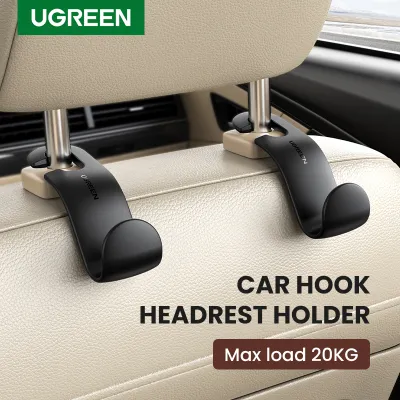
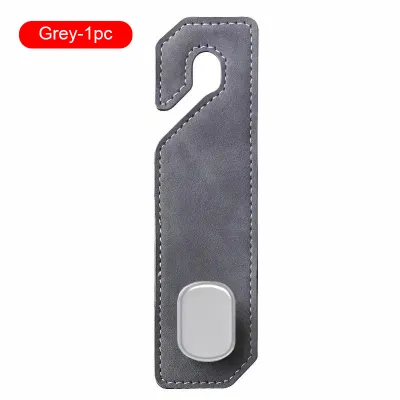
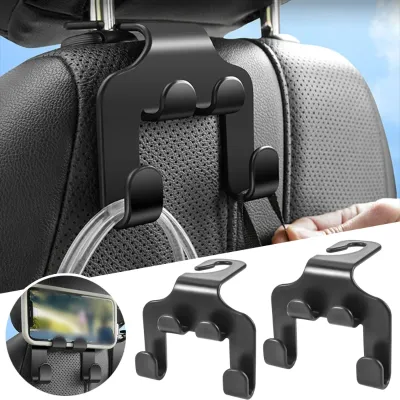
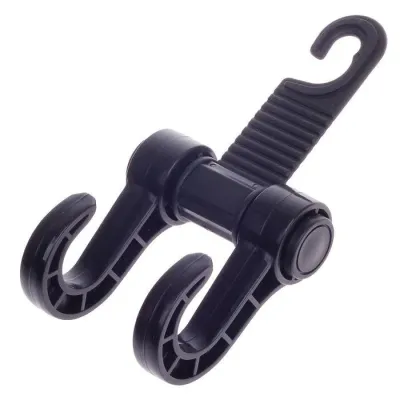
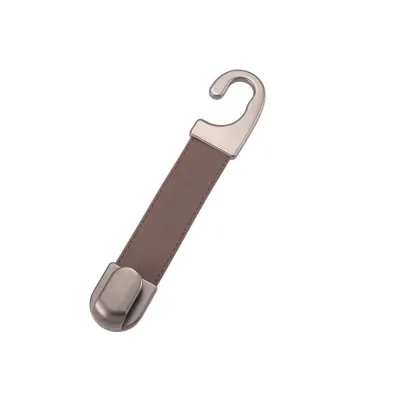
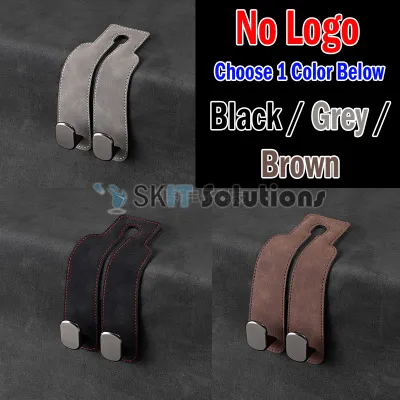
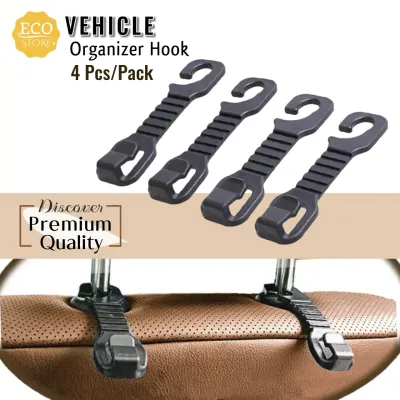
Prices are valid at publication and may change. Please refer to the product page for the latest price.
Finally, verify the weight capacity of both the hook hanger and your vehicle’s headrest assembly. While the metal poles of an adjustable headrest are sturdy, they are not designed to support unlimited downward force. Hanging excessively heavy items can bend the poles or damage the internal locking mechanisms of the seat back. Check the manufacturer specifications for the hook hanger, which typically list a maximum load limit, and avoid overloading the hanger to protect your vehicle’s interior.
Evaluating Dashboard Adhesive Hooks for Console Access
Dashboard adhesive hooks provide quick, arm’s-length access to small items, but their installation requires careful consideration of your vehicle’s interior materials. Car dashboards feature a variety of surfaces, including textured plastics, soft-touch vinyl, synthetic leather, and genuine wood or leather trims. Double-sided adhesives require a completely smooth, clean, and non-porous surface to form a secure bond. Applying these adhesives to textured or porous materials often results in premature failure, causing the hook to fall off under minimal weight. Furthermore, strong adhesives can permanently discolor, stretch, or peel delicate materials like leather or soft-touch coatings when removed.

The most critical safety consideration when installing dashboard hooks is the location of your vehicle’s airbag deployment zones. Passenger-side front airbags, knee airbags, and side-curtain airbags deploy with immense speed and force during a collision. Mounting a rigid plastic or metal hook, or hanging a bag, directly within or near these deployment paths is extremely dangerous. If an airbag deploys, the hook or the items hanging from it can be launched into the cabin as high-velocity projectiles. Always consult your vehicle’s owner’s manual to identify the exact boundaries of all airbag deployment zones before choosing a mounting location.
In addition to safety, ensure the chosen hook placement does not interfere with daily driving operations. A hook positioned too close to the center stack can block your line of sight to the infotainment screen, obstruct your phone mount, or physically get in the way of the gear shifter or climate control dials. Before peeling the adhesive backing, temporarily hold the hook in your desired position with a bag attached to verify that it does not impede your physical access to any controls.
Direct Comparison: Center Console Space and Daily Usability
The real-world driving experience differs significantly between headrest and dashboard hooks, particularly regarding bag movement and driver distraction. When you accelerate, brake, or take sharp corners, any item suspended from a hook will swing due to momentum. Bags hanging from headrest hooks have a wide range of motion and can swing violently, potentially spilling their contents onto the rear floorboards. Dashboard hooks, while holding items closer to the vehicle’s center of gravity, can still sway and knock against the hard plastic of the center console, creating annoying rattling noises or scratching the interior trim.
Visual distraction is another key differentiator. Items hanging from dashboard hooks remain within your forward field of vision. While this makes them easy to monitor, larger bags or bright items can catch your eye while driving, create distracting reflections on the windshield, or partially block your passenger-side side mirror. Headrest hooks keep all stored items completely behind the driver’s line of sight, ensuring a clean, distraction-free forward view.
Accessibility is the final trade-off. If you need to reach your wallet, sunglasses, or a charging cable while driving, a headrest hook is completely out of reach, requiring you to stop the vehicle and stretch into the back seat. Dashboard hooks excel at keeping small, frequently used items within easy reach of the driver’s seat.
| Feature | Headrest Hooks | Dashboard Adhesive Hooks |
|---|---|---|
| Spatial Footprint | Occupies rear passenger knee clearance | Occupies front passenger legroom or dashboard surface |
| Installation Effort | Tool-free clip-on or loop installation | Requires surface cleaning, curing time, and precise placement |
| Console Interference | Zero interference with front controls | High risk of blocking screens, mounts, or shifters |
| Ideal Use Cases | Heavy backpacks, grocery bags, large purses | Small trash bags, charging cables, sunglasses, lightweight keys |
Decision Framework: Which Car Hook Hanger Fits Your Setup?
To choose the right car hook hanger, evaluate your vehicle’s physical configuration and your specific storage needs using a clear set of conditional rules.
Choose headrest hooks if you meet the following criteria:
- Your vehicle has adjustable headrests with exposed metal poles.
- You regularly carry heavy items, such as grocery bags, laptop backpacks, or large purses.
- You prioritize keeping the front cabin and center console completely free of visual clutter and physical obstructions.
- Your rear seats are rarely occupied, or your passengers have sufficient legroom to accommodate hanging bags.
Choose dashboard adhesive hooks if you meet these conditions:
- Your vehicle features integrated, non-adjustable headrests or active headrest systems that cannot support clip-on hangers.
- You only need to hang lightweight items, such as keys, face masks, small trash bags, or sunglasses cases.
- You want immediate, arm's-length access to your items from the driver's seat.
- You frequently carry rear passengers and must keep the rear footwells and knee zones completely clear.
Before making a final decision, verify the physical limitations of your dashboard. If your dashboard features complex curves, heavily textured plastics, or delicate leather upholstery, adhesive hooks may not adhere properly or could damage the surface. In such cases, headrest hooks or alternative storage solutions, such as passenger-side floor organizers, are the safer and more reliable choice.
Safety and Installation Checks Before Mounting
To ensure a safe installation that protects both your vehicle’s interior and its occupants, always perform a few preliminary checks before mounting any hook hanger. First, consult your vehicle owner’s manual to review any manufacturer warnings regarding interior modifications, accessory installations, and airbag deployment zones. Never assume a flat spot on the dashboard is safe; some modern vehicles house knee or passenger airbags in unexpected locations beneath the dash panel.
If you decide to use an adhesive hook, perform a spot test on a small, hidden area of the dashboard material before applying the hook to your chosen spot. Apply a tiny piece of the adhesive tape to an inconspicuous area, such as the lower edge of the center console or inside the glovebox frame, and leave it for 24 hours. Carefully remove it to check for any signs of surface peeling, discoloration, or sticky residue that cannot be easily cleaned.
Finally, prioritize structural integrity and safety over convenience. If you notice that your headrest poles feel loose, rattle excessively, or do not lock securely after installing a hook, remove the hanger immediately. Similarly, if a dashboard adhesive hook begins to peel the underlying vinyl or leather, stop using it and consult a qualified automotive upholstery professional to prevent further damage to your vehicle’s cabin.
Frequently Asked Questions (FAQ)
Can dashboard adhesive hooks damage my car's interior?
Yes, dashboard adhesive hooks can damage your car’s interior if they are applied to incompatible materials or removed incorrectly. The high temperatures inside a parked car can cause the adhesive chemicals to soften and bond permanently with synthetic vinyl, leather, or soft-touch coatings. When the hook is pulled off, it can tear the surface layer or leave behind a stubborn, sticky residue. To minimize this risk, always check the product labels for material compatibility, use high-quality automotive-grade adhesives, and use a hairdryer to gently warm the adhesive before slowly peeling it away with dental floss or a plastic trim tool.
Do headrest hooks interfere with child car seats?
Headrest hooks can interfere with both rear-facing and forward-facing child restraint systems depending on the clearance in your rear cabin. For rear-facing child seats, a hanging bag can press against the shell of the car seat, potentially altering its angle or preventing it from resting securely. For forward-facing seats, a heavy swinging bag can strike the child or distract them during the drive. Always inspect the clearance between the front seat headrest and the child car seat. If there is any physical contact or if the suspended bag swings into the child’s immediate space, remove the hook and utilize alternative storage areas like the trunk or front passenger footwell.

Community discussion
Share your experience or ask a question. Comments are reviewed before publication.