
Determining whether GLB full-surround floor mats outperform other aftermarket brands depends on verifying 3D scanning accuracy, edge height, and pedal clearance rather than relying on marketing claims. While specific GLB-branded or OEM mats generally offer a guaranteed baseline fit for the vehicle’s interior contours, specialized aftermarket brands may provide alternative material textures or extended coverage. Use the conditional framework below to evaluate coverage metrics, safety boundaries, and overall value before making a purchase decision.
Defining Full-Surround Coverage Standards for Your Vehicle
When evaluating floor mats for a premium compact SUV like the GLB, understanding what constitutes true “full-surround” coverage is essential. Standard floor mats typically cover only the flat horizontal surfaces of the footwells, leaving the vertical carpeted walls exposed to dirt, mud, and liquid spills. In contrast, a genuine full-surround mat is designed to extend upward along the footwell walls, creating a protective barrier that shields the vehicle’s original carpeting from lateral contact. This design is particularly valuable in regions with high humidity or frequent rainfall, where wet shoes can easily transfer moisture to the side walls of the footwell.
To effectively contain spills and debris, the edge height of the floor mats must meet specific requirements. High-quality full-surround mats generally feature raised vertical edges that rise several centimeters along the sides of the footwell. These raised borders act as a tray, preventing liquids from cascading over the sides and soaking into the underlying vehicle carpet. When inspecting these mats, you must verify that the edges are rigid enough to maintain their upright shape over time, as sagging edges can allow dirt to bypass the protective barrier.
Products mentioned in this guide
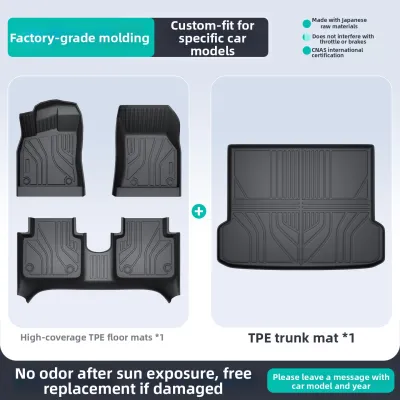
Prices are valid at publication and may change. Please refer to the product page for the latest price.
Critical coverage zones require close inspection during your evaluation. In the front cabin, the mats should extend high up the firewall behind the pedals and cover the entire dead pedal area on the driver’s side. In the rear passenger compartment, the mats must cover the center transmission tunnel seamlessly, as this high-traffic area is highly susceptible to scuffs and dirt. Additionally, the mats should extend beneath the front seat rails to protect the carpet from rear passengers’ shoes without obstructing the seat adjustment mechanisms.
Safety remains the most critical boundary when assessing any floor mat design. The driver-side mat must feature precise cutouts and clearances around the accelerator, brake, and clutch pedals. Any overlap or physical contact between the mat and the pedals can lead to dangerous pedal entrapment, where a pedal becomes stuck during operation. Before purchasing or installing any aftermarket mat, you must verify that the design provides a generous safety margin around all moving controls, ensuring that the pedals can be fully depressed and released without any resistance or interference.
Comparing Fit and Coverage: What to Look For
Achieving a perfect fit requires a clear understanding of how different manufacturers design and produce their floor mats. High-end options typically utilize advanced 3D laser-scanning technology to capture the exact digital contours of the GLB’s interior cabin. This scanning process ensures that the resulting custom-molded mats match every curve, angle, and floor anchor point with high precision. Conversely, universal or semi-custom mats rely on generic templates that require manual trimming. These universal options rarely provide a flush fit, often leaving gaps where dirt can accumulate or creating bunched-up areas that can interfere with vehicle operation.

When comparing the coverage extent of GLB-specific mats against competing aftermarket brands, you should carefully examine the side wall heights and under-seat extensions. Some aftermarket brands offer “extra-high” side walls that extend almost to the lower edge of the plastic interior trim. While this provides maximum carpet protection, it can sometimes look bulky or clash with the vehicle’s clean interior lines. You must balance the desire for maximum coverage with the aesthetic integration of the mats. Furthermore, check whether the rear mats are designed as a single continuous piece covering the center tunnel or as a three-piece set, as single-piece designs generally offer superior stability and coverage.
Retention mechanisms are another vital factor in comparing fit and stability. Even a custom-molded mat can slide forward if it is not securely anchored to the vehicle floor. You should verify that the mats are fully compatible with the factory floor retention clips installed in your GLB. These clips lock the mats in place, preventing any forward or lateral movement during driving. In addition to factory clip compatibility, high-quality mats often feature specialized anti-slip backing textures, such as micro-hooks or rubberized nibs, which grip the underlying carpet fibers. Avoid mats that rely solely on smooth backings, as they are highly prone to shifting underfoot.
Material Durability and Safety Checks
The durability of full-surround floor mats depends heavily on the quality of the materials used in their construction. Most premium mats feature a multi-layer design, starting with a wear-resistant surface layer. When reviewing product specifications, look for materials like thermoplastic elastomers (TPE), heavy-duty rubber, or high-grade synthetic leather. TPE is highly regarded for its balance of flexibility, durability, and resistance to chemicals and water. You should check the manufacturer’s labels to ensure the surface layer is rated as waterproof and scratch-resistant, which prevents premature wear from heel friction.
The base and middle layers of the mats must also meet strict safety and environmental standards. Because vehicles can sit in direct sunlight for extended periods, the interior cabin temperature can rise significantly. Under these high-temperature conditions, low-quality plastics or adhesives can emit volatile organic compounds (VOCs), resulting in strong, unpleasant chemical odors and potential health concerns. You should verify that the manufacturer certifies their mats as non-toxic, odorless, and free from harmful substances like formaldehyde. Look for recognized environmental certifications on the product packaging or official documentation.
Temperature resilience is a critical factor to observe, especially in warm, tropical climates. High cabin temperatures can cause inferior materials to soften, warp, or lose their structural rigidity, leading to sagging side walls and compromised coverage. You should review the manufacturer’s guidelines regarding the operating temperature range of the mats. Opt for materials like high-quality TPE that are engineered to maintain their shape, flexibility, and physical properties across a wide range of temperatures.
Evaluating Value, Warranty, and After-Sales Support
Evaluating the overall value of floor mats requires looking beyond the initial purchase price to consider the long-term cost of ownership. When comparing options, calculate the price-to-coverage ratio by assessing what you receive for your money. A lower-priced mat might seem attractive initially, but if it features thin materials, shallow edges, or lacks proper retention clips, it may need replacement much sooner than a premium option. Consider whether the S$ pricing reflects high-quality materials, precise 3D scanning, and robust edge support that will protect your vehicle’s resale value by keeping the original carpets pristine.
Warranty terms provide a strong indication of a manufacturer’s confidence in their product’s durability. You should carefully check the warranty coverage offered by different brands before making a decision. Look for warranties that specifically cover common long-term issues such as material peeling, cracking, permanent deformation, or color fading under normal use. A manufacturer offering a multi-year warranty is generally more reliable than one offering only a standard short-term return window. Always read the fine print to understand what conditions or behaviors might void the warranty.
After-sales support and return policies are equally important, particularly when purchasing online. Because fitment can vary slightly depending on the exact model year and trim level of your GLB, you should purchase from local automotive retailers or e-commerce platforms that offer clear return or exchange policies. Verify if the seller provides installation assistance or a fitment guarantee. If the mats arrive and do not align perfectly with your vehicle’s floor anchors or seat tracks, having a straightforward, hassle-free return process will save you significant time and expense.
Decision Framework: Choosing the Right Floor Mats
To make an informed decision, you should use a structured framework that aligns your specific needs with the characteristics of each floor mat option. Choose specific GLB-branded or OEM mats if your top priorities are a guaranteed baseline fit, perfect aesthetic integration with the factory interior, and verified pedal clearance. These mats are designed by the vehicle manufacturer to meet strict safety and quality standards, ensuring that they will not interfere with any vehicle controls or seat adjustments. While they may carry a higher price tag, they offer peace of mind and a seamless look.
On the other hand, you should choose specialized aftermarket brands if you require specific material upgrades or extended coverage that the OEM options do not provide. For instance, if you frequently transport wet gear, pets, or travel in muddy conditions, heavy-duty rubber or high-walled TPE mats from a reputable aftermarket brand may offer superior liquid containment. However, you must only select this route if you can independently verify the manufacturer’s 3D mold accuracy for your exact model year and trim level, as minor interior variations can affect the fit.
You should avoid both options if the mats fail to meet basic safety and quality checks. Neither OEM nor aftermarket mats are suitable if they lack proper pedal clearance, block the seat adjustment tracks, or emit strong, unlisted chemical odors when exposed to heat. Driving safety must never be compromised for the sake of carpet protection. If a mat bunches up near the pedals or prevents the front seats from sliding smoothly along their rails, it is a safety hazard and should be removed immediately.
Finally, if you are purchasing from e-commerce platforms, you must perform extra verification before completing your order. Do not rely solely on stock product images, which often show mats installed in different vehicle models. Instead, carefully review user-uploaded photos and feedback from buyers who have installed the exact mats in the same vehicle model and year as yours. This real-world evidence will help you verify the actual coverage, edge rigidity, and fit accuracy before you commit to a purchase.
Frequently Asked Questions (FAQ)
How do I clean and maintain full-surround floor mats?
To maintain the appearance and longevity of your full-surround floor mats, you should always remove them from the vehicle before cleaning. Cleaning the mats inside the car increases the risk of trapping moisture underneath, which can lead to mold, mildew, and persistent interior odors in the vehicle’s original carpeting. Once removed, shake or vacuum the mats to eliminate loose dirt, dust, and debris from the surface and crevices.
For washing, use mild cleaners and soft-bristled brushes strictly in accordance with the manufacturer’s care labels. Avoid harsh chemical detergents, bleach, or abrasive scrubbing pads, as these can degrade the protective surface coatings, fade the colors, or damage the material structure. After washing, rinse the mats thoroughly with clean water and allow them to air dry completely in a well-ventilated area out of direct sunlight before reinstalling them in your vehicle.
Will full-surround mats interfere with the GLB's seat adjustment or pedals?
Full-surround floor mats should never interfere with the vehicle’s mechanical controls or seat adjustments. When installing the driver-side mat, you must carefully check for precise cutouts and generous clearance around the dead pedal, accelerator, and brake pedals. The mat must lie completely flat against the floor and be securely locked into the factory retention clips to prevent it from sliding forward and trapping a pedal during operation.
Additionally, you should test the full range of motion of the front seats after installing the mats. Slide the seats completely forward and backward along their tracks to ensure the mats do not bunch up, catch, or block the seat adjustment mechanisms. If you observe any physical interference with the vehicle controls or seat tracks, stop using the mats immediately and consult the manufacturer or a qualified professional to resolve the fitment issue.

Community discussion
Share your experience or ask a question. Comments are reviewed before publication.