
Choosing the right cooling car seat cushion depends on whether you need immediate relief from a hot car seat or sustained breathability during long drives. There is no single material that outperforms the others in every scenario; instead, gel, mesh, and ventilated fabrics each use different physical principles to manage heat. In tropical climates where parked cars quickly absorb solar heat, understanding how these materials interact with your body and your car’s air conditioning is key to making an informed decision.
Passive cooling cushions do not actively lower the cabin temperature like your vehicle’s air conditioning system. Instead, they work by delaying heat buildup, promoting airflow, and reducing the amount of sweat trapped between your body and the seat upholstery. By matching the material properties to your daily driving habits, you can significantly improve your comfort during daily commutes and longer journeys.
Understanding How Cooling Cushion Materials Manage Heat
To choose the right cushion, understand the difference between conductive and convective heat transfer. Conductive cooling occurs when a material absorbs heat directly from your body through physical contact. Materials with high thermal mass, such as certain gels, excel at this initially, drawing warmth away from your skin the moment you sit down. However, this effect is temporary, as the material eventually reaches thermal equilibrium with your body.
Products mentioned in this guide
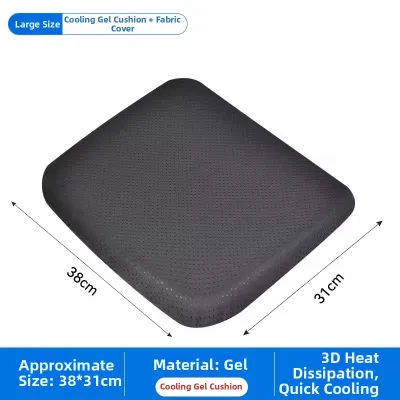
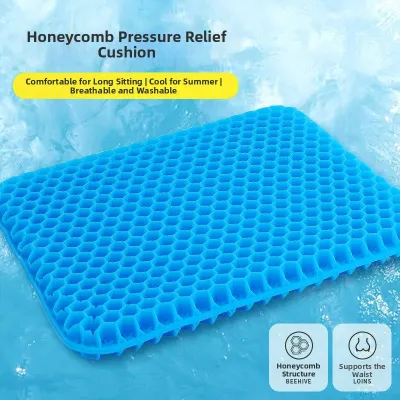
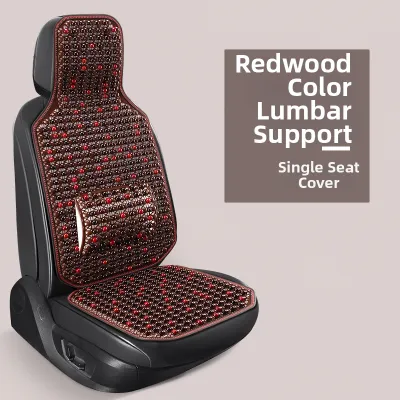

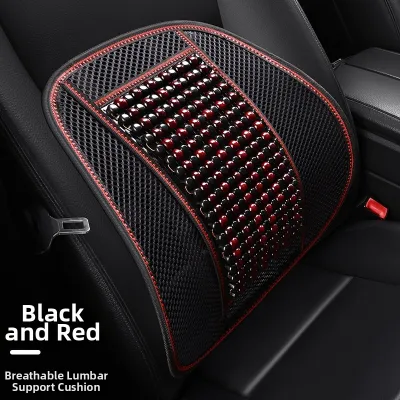
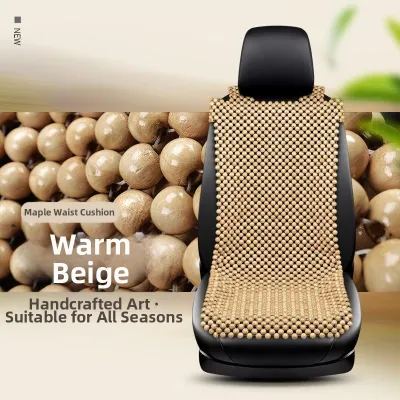
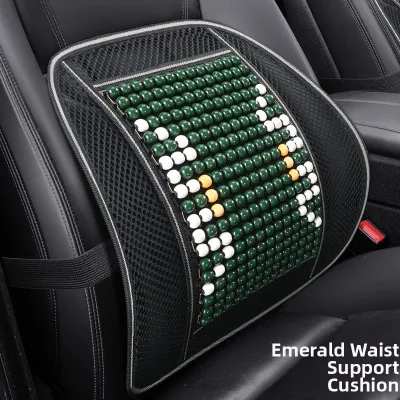

Prices are valid at publication and may change. Please refer to the product page for the latest price.
Convective cooling relies on the movement of air to carry heat and moisture away from your body. This process is highly dependent on the breathability of the cushion’s structure. Open-weave mesh and ventilated fabrics facilitate convection by allowing air to circulate freely beneath you. This circulation helps evaporate perspiration, which is the body’s natural method of cooling itself.
Environmental factors play a major role in how these materials perform. When a vehicle is parked under direct sunlight, the interior experiences heat soak, where the seats, dashboard, and air inside the cabin absorb and retain extreme heat. A cushion left in a hot car will absorb this ambient heat. If the material has high thermal retention, it may feel warm when you first sit down, requiring the cabin’s air conditioning to cool it down before it can provide any relief.
Gel Cushions: Conductive Cooling and Pressure Relief
Gel-based seat cushions are popular for their immediate cool-to-the-touch sensation and pressure distribution. These cushions typically feature a grid pattern made of elastomeric polymer or a layer of gel infused into memory foam. The primary advantage of solid gel is its high thermal capacity, which allows it to absorb body heat when you first sit down, providing rapid relief after your car has been parked in the sun.

However, gel cushions have a physical limit known as heat saturation. Because gel is a dense material, it retains heat once absorbed. On long, continuous drives, the gel eventually matches your body temperature. Once saturated, a solid gel cushion without adequate ventilation can begin to trap heat, potentially making you feel warmer over time. To mitigate this, many manufacturers use an open honeycomb or grid design that allows some air to pass through the channels, though this still relies on the ambient cabin air being cool.
Another practical consideration is the physical weight and thickness of gel cushions. Solid gel is heavy and can add significant loft to your seating position. Raising your seating height even by a few centimeters can alter your steering wheel reach, pedal clearance, and line of sight. Before purchasing, verify that the cushion’s thickness does not compromise your ergonomic driving position or restrict your ability to operate the vehicle’s controls safely.
Mesh and Ventilated Fabrics: Airflow and Breathability
Mesh and ventilated fabric cushions focus entirely on maximizing airflow and moisture wicking. Rather than absorbing heat, these cushions use structural designs to keep your body elevated slightly above the actual seat surface. The most common design is 3D spacer mesh, which uses polyester fibers woven into a three-dimensional structure that resists collapsing under your weight, maintaining a continuous air gap.
This physical air gap is highly effective at promoting convective cooling, but its performance is closely tied to the vehicle’s cabin environment. Mesh cushions do not feel cold to the touch initially; instead, they rely on the car’s air conditioning system to circulate cool air through the open weave. Once the cabin air cools down, the continuous airflow prevents heat and humidity from building up between your back and the seat.
In high-humidity tropical environments, the performance of ventilated fabrics can be slightly restricted because the air is already saturated with moisture, slowing down sweat evaporation. However, a highly porous mesh cushion still allows more air movement in these conditions than solid leather or dense foam, helping to prevent sweat from pooling. For drivers who experience high humidity, choosing a cushion with a wide, open-weave mesh rather than a tightly woven flat fabric will provide the best results.
Matching the Material to Your Driving Habits and Car Interior
Selecting the right cooling cushion requires evaluating your typical driving patterns and the existing upholstery of your vehicle. For short, stop-and-go city commutes, a gel cushion is often highly effective. Because these trips are brief, you can take full advantage of the gel’s initial heat-absorption phase before the material reaches its heat saturation point. The immediate relief is especially welcome when getting into a car that has been parked in the sun.
For long-distance highway driving, a breathable mesh cushion is generally a highly effective choice for continuous airflow. Over hours of continuous driving, the constant airflow provided by a 3D mesh structure prevents the gradual heat buildup that occurs with solid materials. Mesh cushions are also highly compatible with fabric upholstery, as the textured backing of the mesh helps keep the cushion securely in place without sliding.
If your car has leather seats, compatibility requires closer attention. Leather tends to retain heat and can become extremely hot to the touch. Placing a dense gel cushion on a hot leather seat can trap heat underneath, while the smooth surface of the leather may cause the cushion to slip during cornering or braking. If you have leather upholstery, look for a cushion with a high-friction, non-slip silicone backing and a breathable outer cover to ensure both stability and temperature management.
Safety, Compatibility, and Maintenance Checks
Before installing any aftermarket seat cushion, you must verify its compatibility with your vehicle’s safety systems. Many modern vehicles are equipped with side-impact airbags housed within the outer bolsters of the front seats. If a cushion uses straps that wrap around the entire seat back, it can obstruct the deployment path of these airbags. Always consult your vehicle owner’s manual and the cushion manufacturer’s instructions to ensure the mounting straps do not cross any airbag deployment zones.
Secure anchoring is also critical for driving safety. A cushion that slides forward under heavy braking can distract you or interfere with your ability to press the pedals correctly. Ensure the cushion features robust attachment points, such as chucks that insert into the seat crease or adjustable straps that secure tightly around the base of the seat. Regularly check these attachments to ensure they have not loosened over time.
Proper maintenance is essential to preserve the cooling properties and structural integrity of your cushion. Dust, dirt, and sweat can accumulate in the open pores of mesh fabrics or the grid channels of gel cushions, reducing airflow and causing odors. Always refer to the manufacturer’s care label before cleaning. While some mesh covers can be removed and machine washed on a gentle cycle, solid gel inserts should typically be wiped down with a damp cloth and mild soap, avoiding harsh chemical solvents that can degrade the polymer structure.
Frequently Asked Questions (FAQ)
Do cooling seat cushions work with built-in heated or ventilated car seats?
Aftermarket cooling cushions are generally not recommended for use on top of seats with built-in heating or active ventilation systems. A thick gel layer or a dense mesh cushion acts as an insulator, blocking the airflow from ventilated seats and preventing the heat from reaching your body. This can cause the built-in systems to work harder, potentially leading to overheating or reduced efficiency. If your vehicle has active seat climate controls, consult your owner’s manual before adding any aftermarket covers or cushions.
How do I clean a gel or mesh seat cushion without damaging it?
Cleaning methods depend entirely on the materials used, so you should always check the manufacturer’s care label first. For mesh cushions with removable covers, you can typically machine wash the cover on a cold, gentle cycle and air dry it to prevent the synthetic fibers from shrinking. For gel cushions, the inner gel grid should never be machine washed or submerged in water; instead, wipe it down with a damp cloth and mild detergent. Avoid exposing gel or foam components to direct sunlight or high heat during the drying process, as this can cause the materials to warp or degrade.

Community discussion
Share your experience or ask a question. Comments are reviewed before publication.