
Finding the best full-wrap floor mats for your Honda Fit depends on matching the precise generation of your vehicle, verifying right-hand drive (RHD) compatibility, and selecting materials that resist warping under high cabin temperatures. Because the Honda Fit has undergone significant interior layout changes across its generations—such as the GD, GE, GK, and GR series—there is no single universal brand that fits every model perfectly. Instead, the ideal choice is a custom-molded mat designed specifically for your vehicle’s model year and drive-side configuration, ensuring complete coverage without interfering with the pedals or seat tracks.
To achieve a seamless fit, you must look beyond generic options and focus on brands that utilize 3D scanning technology to map the exact footwell contours of the Honda Fit. A truly compatible full-wrap mat will align perfectly with the factory retention clips, hug the transmission tunnel, and extend high enough up the footwell walls to protect the carpet from dirt and moisture. Evaluating these factors before purchasing will save you from the frustration of shifting mats, bunched material, or dangerous pedal interference.
What Defines a Proper Full-Wrap Fit for the Honda Fit?
A proper full-wrap floor mat is engineered to act as a secondary protective skin for your vehicle’s floor pan. Unlike flat, universal rubber mats that leave the side carpets exposed, full-wrap options feature raised vertical walls that cover the footwell’s sides, the dead pedal area, and the space beneath the front seats. This comprehensive coverage is essential for protecting the underlying carpet from spilled liquids, mud, and debris that can accumulate during daily commutes.
Products mentioned in this guide
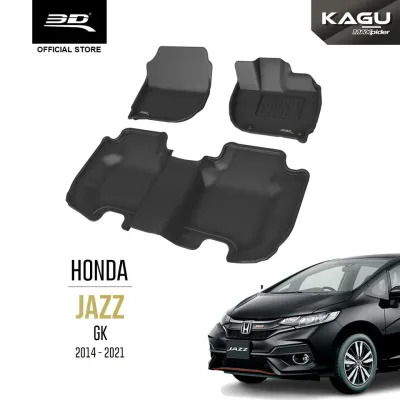
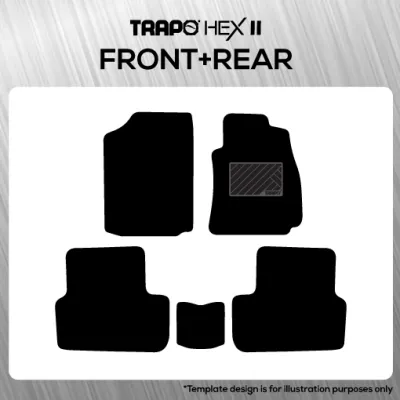
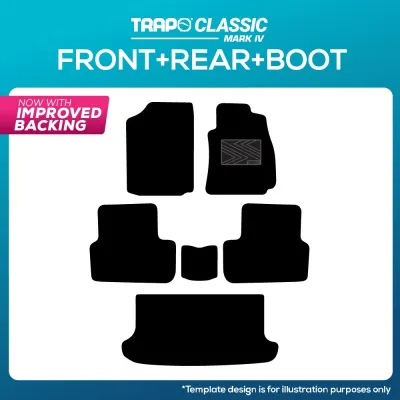
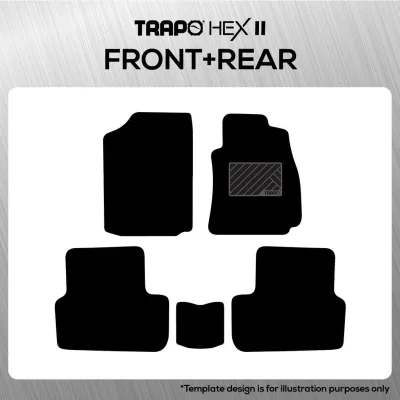
Prices are valid at publication and may change. Please refer to the product page for the latest price.
Achieving this level of protection requires a mat molded to the exact generation of your Honda Fit. The interior dimensions of a second-generation (GE) Fit differ significantly from those of a third-generation (GK) or fourth-generation (GR) model. Even minor mid-generation facelifts can introduce subtle changes to seat mounts or console shapes. A mat designed for one generation will not sit flush in another, leading to loose sections that can slide around or bunch up under your feet.
Furthermore, drivers in right-hand drive markets must pay close attention to the drive-side configuration of the mats. The driver’s side footwell in an RHD Honda Fit is a mirror image of a left-hand drive (LHD) model, featuring a completely different floor geometry, dead pedal position, and pedal spacing. Purchasing a mat set designed for LHD vehicles will result in a highly dangerous fitment on the driver’s side, as the molded sections will not align with the pedals or the floor’s contours.
Critical Coverage Zones and Clearance Checks
When evaluating full-wrap mats, several critical zones inside the Honda Fit require close inspection to ensure both protection and safety. The most vital area is the driver’s footwell, specifically around the accelerator, brake, and clutch pedals. The mat must lay completely flat against the floor and the firewall, with a dedicated cutout or a precisely molded recess that allows the pedals to travel through their full range of motion without catching on the mat’s edges.

Another key zone is the front seat rail and track system. The Honda Fit is celebrated for its highly adjustable seating configurations, including the rear Magic Seats. The front mats must not extend so far back or rise so high that they block the seat tracks or interfere with the manual or electronic adjustment levers. If the mat material is too thick or poorly cut, sliding the front seats forward or backward can pinch the mat, causing it to buckle and lift off the floor.
In the rear cabin, the mat must seamlessly cover the central floor hump without lifting or creating air pockets. The Honda Fit’s unique center-tank layout means the floor geometry under the seats is distinct from traditional hatchbacks. Additionally, you must check that the rear mat edges do not block the under-seat heater ducts or air vents. Blocked vents can restrict airflow throughout the cabin, reducing the efficiency of your air conditioning system during hot days.
How Material Choices Affect Long-Term Fit and Coverage
The material of your full-wrap floor mats plays a decisive role in how well they maintain their shape and coverage over years of use. Thermoplastic Elastomer (TPE) is a highly popular choice for modern custom-fit mats. TPE offers a rubber-like flexibility combined with the rigidity of plastic, allowing manufacturers to create highly precise, rigid edges that do not sag over time. These mats are excellent at retaining their molded shape, resisting edge curling, and containing liquid spills within their raised borders.
Alternatively, many full-wrap mats utilize a multi-layer construction consisting of an artificial leather top layer, a soft XPE (Cross-linked Polyethylene) foam core, and an anti-slip bottom backing. These mats provide a more luxurious, cushioned feel underfoot and offer excellent sound dampening. However, the softer nature of XPE means the vertical walls may lose some structural rigidity over time, potentially sagging away from the plastic trim panels and exposing the carpet underneath.
Environmental factors also heavily influence material performance, particularly in tropical climates with high humidity and intense sun exposure. When a car is parked under the sun, cabin temperatures can rise dramatically. This heat can cause lower-quality plastics and adhesives to expand, warp, or emit unpleasant chemical odors. TPE mats generally handle extreme temperature fluctuations better without losing their structural integrity, whereas cheaper leather-and-foam composites may experience adhesive breakdown, leading to separation of the layers and edge lifting.
Evaluating Brand Listings and Compatibility Claims Online
Shopping for full-wrap floor mats on online marketplaces requires a critical eye, as listings can often be misleading or overly generic. When browsing, always look for explicit confirmation of your Honda Fit’s model year and generation code (such as GK3, GK5, or GR3). Avoid listings that use vague terms like “fits most Honda models” or “universal fit for hatchbacks,” as these products will not provide the precise, high-walled coverage of a true custom-molded mat.
To verify the accuracy of a brand’s fitment claims, look closely at user-uploaded photos in the review sections rather than relying solely on polished marketing renders. Marketing images are often computer-generated or show the mats installed in a different vehicle model entirely. User photos provide a realistic view of how the mats sit against the center console, whether there are visible gaps along the door sills, and how well the color matches the Honda Fit’s interior trim.
Be on the lookout for red flags in product descriptions. If a listing does not clearly state whether the mats are for RHD or LHD configurations, it is highly likely designed for the more common LHD market. Additionally, check if the seller provides detailed photos of the driver’s side mat showing the pedal area. If the photos only show the passenger side or the rear seats, proceed with caution and message the seller directly to confirm the exact layout before placing your order.
Post-Installation Safety and Interference Checks
Before driving your Honda Fit with newly installed full-wrap mats, you must perform a series of safety checks to ensure the mats do not compromise vehicle operation. Start by verifying that the driver’s side mat is securely anchored to the factory floor clips. These clips are designed to prevent the mat from sliding forward under the pedals during sudden braking. Never stack a new full-wrap mat on top of an existing carpet or rubber mat, as this elevates the surface and increases the risk of pedal entrapment.
Next, perform a manual pedal travel test with the engine turned off. Press the accelerator, brake, and clutch pedals completely to the floorboard one by one. Feel for any resistance, catching, or rubbing against the edge of the mat. The pedals must return to their resting positions instantly and smoothly. If you feel even a slight rub, adjust the positioning of the mat or trim the edge if permitted by the manufacturer; otherwise, remove the mat immediately.
Finally, check the clearances around the doors and seats. Slide the front seats through their entire range of motion to ensure the tracks do not snag the mat. Open and close all doors to verify that the vertical walls of the mats do not prevent the door seals from seating properly against the sill plates. If you notice any persistent fitment issues, warping, or interference that cannot be resolved, stop using the mats immediately and contact the manufacturer or seller for a replacement or refund.
Decision Framework: Choosing the Right Mat for Your Honda Fit
To select the ideal full-wrap floor mats for your Honda Fit, align your choice with your primary driving conditions, aesthetic preferences, and maintenance habits.
- Choose Precision-Molded TPE Mats if: You prioritize maximum safety, durability, and easy maintenance. These mats offer the most reliable pedal clearance, do not warp under intense tropical heat, and can be easily hosed down when dirty. They are ideal for drivers who frequently deal with wet weather, mud, or outdoor activities.
- Choose Leather-Wrapped XPE Mats if: You want to elevate the cabin's visual appeal with a premium, cushioned look and prefer a quieter ride. These mats are excellent for daily city driving where extreme dirt is not a concern, though they require more careful cleaning and may show wear sooner on the driver's heel pad.
- Verify RHD and Generation Specifics First: Regardless of the material, never purchase a set unless the seller explicitly guarantees compatibility with your specific Honda Fit generation and confirms it is molded for right-hand drive vehicles.
- Avoid Universal or Strap-Based Options: If a product relies on adjustable straps, double-sided tape, or universal trimming to stay in place rather than matching the factory floor contours and retention clips, it will likely shift over time and present a safety hazard.
Frequently Asked Questions (FAQ)
Can I use a left-hand drive (LHD) full-wrap mat in a right-hand drive Honda Fit?
No, you should never use an LHD full-wrap floor mat in an RHD Honda Fit. The footwell floor pans of LHD and RHD vehicles are asymmetrical, meaning the shapes of the dead pedal, transmission tunnel, and wheel well arches are completely reversed. Attempting to install an LHD mat in an RHD vehicle will cause the mat to sit unevenly, buckle, and slide around. This creates a severe safety hazard, as the misplaced material can easily trap or obstruct the accelerator or brake pedals, leading to a loss of vehicle control.
How do I clean full-wrap mats without damaging the car's interior electronics?
To clean your full-wrap floor mats safely, always remove them completely from the vehicle before applying any water or cleaning agents. This prevents moisture from seeping underneath the mats, where it could damage underfloor wiring harnesses, hybrid battery components, or electronic seat motors. For TPE mats, wash them outside the car with mild soap and water, then let them dry completely in a shaded area before reinstallation. For leather-wrapped XPE mats, wipe them down with a damp microfiber cloth and a mild interior cleaner, avoiding harsh chemicals that could degrade the anti-slip backing or the synthetic leather surface.

Community discussion
Share your experience or ask a question. Comments are reviewed before publication.