
Selecting the right full-surround floor mats for your 2017 Honda Vezel requires looking beyond generic brand names and focusing on the precise physical layout of your vehicle’s cabin. Because the Vezel was produced in both petrol and hybrid variants—and is widely driven in right-hand drive markets like Singapore—a mat that fits one sub-model perfectly may obstruct critical components in another. The ideal choice is a custom-molded, three-dimensional mat that aligns with your specific drivetrain configuration while maintaining strict safety clearances around the pedal box.
Traditional flat mats often slide around, leaving vulnerable carpet exposed to dirt, mud, and spilled liquids. Full-surround mats, often referred to as 3D or deep-dish liners, solve this by using raised vertical walls that hug the exact contours of the footwell. However, because these mats cover a much larger surface area, any manufacturing defect or incorrect model selection can lead to serious safety hazards or cabin damage. To find the best option for your vehicle, you must evaluate how different brands handle the unique geometry of the 2017 Vezel.
Understanding Full-Surround Coverage for the 2017 Honda Vezel
The 2017 Honda Vezel features a highly distinct cabin floor geometry that demands precise molding from any aftermarket accessory. On the driver’s side, the dead pedal (the footrest to the left of the brake) is a primary wear zone where dirt and moisture accumulate rapidly. A high-quality full-surround mat must cover this entire footrest with a single, continuous piece of material, preventing debris from slipping behind the liner.
Products mentioned in this guide
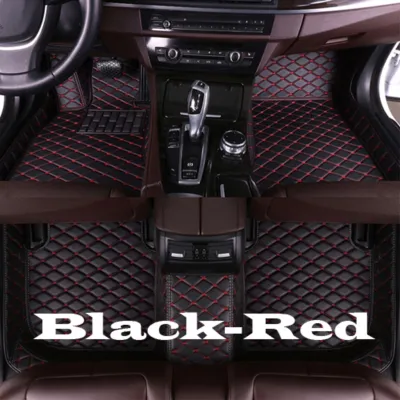
Prices are valid at publication and may change. Please refer to the product page for the latest price.
Another critical area is the high, floating center console characteristic of the Vezel. The vertical walls of the front mats must extend upward along the sides of this console to protect the carpet from scuffs and spills. However, these side walls must be structurally sound; if they lack rigidity, they will sag outward, creating an unsightly gap that traps dirt and interferes with the sliding mechanism of the front seats.
In the rear passenger compartment, the floor pan features a central transmission hump. While petrol models (RU1 and RU2 chassis codes) have a standard floor profile, hybrid models (RU3 and RU4) require special attention. The hybrid Vezel houses its high-voltage battery pack beneath the rear seats, utilizing an air intake vent located on the lower side of the seat base. It is absolutely vital that the rear full-surround mat does not block or partially cover this cooling vent, as restricted airflow can cause the hybrid battery to overheat, triggering system errors or premature battery degradation.
Furthermore, because the Vezel is commonly driven in right-hand drive configurations, the pedal box layout is highly compact. The accelerator pedal is positioned close to the right-side wall of the footwell. Any full-surround mat must feature a precise, molded recess in this area to ensure the pedal can travel through its entire range of motion without catching on the edge of the mat.
Key Dimensions to Compare Across Brands
When comparing different floor mat manufacturers, look closely at the physical dimensions and material specifications rather than relying on generic marketing claims. The height of the outer lip is a primary differentiator. High-lip designs, which typically feature vertical walls measuring between 3 and 5 centimeters, offer superior containment for liquid spills and heavy mud. However, these high walls require a highly rigid material to maintain their shape over years of exposure to cabin heat.

Material composition directly dictates both durability and safety. Thermoplastic Elastomer (TPE) mats are injection-molded or pressure-formed, offering exceptional structural memory. If bent or twisted, high-quality TPE will return to its original molded shape, ensuring the vertical walls do not sag over time. In contrast, multi-layer polyurethane (PU) leatherette mats rely on an internal layer of cross-linked polyethylene (XPE) foam for their shape. While PU leatherette offers a softer feel and a more luxurious appearance, the internal foam can break down under repeated heel pressure, leading to soft spots and eventual sagging.
Surface textures also play a major role in daily usability. Deep, molded channels or diamond-patterned stitching help trap water and dirt away from your shoes, preventing your feet from slipping while driving. However, deeply grooved patterns can be more difficult to clean, requiring a stiff brush to dislodge trapped grit. Smooth, lightly textured TPE surfaces are much easier to wipe clean with a microfiber cloth but may allow water to pool if the mat does not feature dedicated containment wells.
Finally, examine the design of the underside and the retention mechanisms. The bottom of the mat must feature a high-friction texture—such as rubberized nibs or a specialized fiber backing—to prevent the liner from shifting during transit. Most importantly, the driver’s side mat must feature heavy-duty, pre-installed eyelets that align perfectly with the 2017 Vezel’s factory floor pegs. These eyelets must lock securely onto the pegs to guarantee the mat remains anchored in place.
Verifying Fitment and Safety Compatibility
Before driving with any new aftermarket floor mats, you must perform a comprehensive safety and fitment inspection. The most critical check involves the pedal box. With the vehicle’s engine turned completely off, sit in the driver’s seat and manually depress the accelerator, brake, and clutch (if equipped) pedals one by one. Ensure each pedal can be pushed fully to the floorboard without making contact with the edge of the mat. There should be a minimum clearance of 15 millimeters between the pedal arm and the mat at all points of travel, and the pedals must return to their resting positions instantly and smoothly.
Next, test the clearance of the front seats. Slide both the driver and passenger seats fully forward and backward along their metal rails. The vertical side walls of the mats must not bunch up, fold, or catch on the seat runners. If you have electrically adjustable seats, listen closely to the motor; any straining sound indicates that the mat is obstructing the seat’s path. For manual seats, ensure the adjustment lever operates freely and that the seat locks securely into each position without interference from the mat’s rear edges.
You must also verify that the driver’s side mat is securely locked onto the factory floor anchors. If the mat does not align with these pegs, or if the locking mechanism feels loose, do not drive the vehicle. A loose mat can easily slide forward under heavy braking, wedging itself beneath the brake pedal and preventing you from stopping the vehicle in an emergency.
Lastly, inspect the passenger footwell and rear seating area. Ensure the front passenger mat does not block the cabin air filter intake or any under-dash wiring harnesses. In the rear, double-check that the mat lies completely flat against the transmission hump and does not obstruct the sliding or folding mechanisms of the Honda Vezel’s signature “Magic Seats.”
Decision Framework: Choosing the Right Mat Profile
Selecting the ideal mat profile depends on your typical driving environment, passenger profile, and maintenance preferences. If you frequently transport young children, pets, or outdoor gear, or if you regularly drive in wet, tropical weather, a heavy-duty TPE profile is highly recommended. These mats act like a solid protective tub, are completely impervious to water, and can be easily removed and hosed down. They provide the highest level of practical protection against mud, spilled drinks, and wet umbrellas.
For drivers who use their 2017 Vezel primarily for daily commuting and prefer a more refined, premium cabin aesthetic, a lower-profile leatherette or carpet-layered full-surround mat may be more suitable. These multi-layer designs often provide a slight sound-dampening effect, reducing road noise transmitted through the floorboards. However, they require more careful maintenance, as standing water can eventually seep through the stitching of lower-quality leatherette mats, damaging the internal foam layers and creating a breeding ground for bacteria.
Regardless of which material or brand you choose, safety must always remain your top priority. If you install a set of mats and find that they bunch up, slide forward, restrict pedal movement, or block the seat rails, stop using them immediately. Do not attempt to trim or modify the mats yourself unless explicitly instructed by the manufacturer’s documentation. Instead, return the product and seek a compatible, custom-molded alternative that matches your Vezel’s exact model year and drivetrain configuration.
Frequently Asked Questions (FAQ)
How do I clean full-surround mats without damaging the Vezel's interior?
To clean your full-surround mats safely, start by unlocking the factory retention clips on the driver’s side before lifting the mat out of the footwell. Pulling the mat forcefully without releasing the clips can damage the vehicle’s original carpet or snap the plastic floor anchors. Once removed, shake off loose dirt and debris outside the vehicle.
Clean the mats according to the manufacturer’s material instructions. For TPE or rubber mats, use a mild automotive soap and water, scrubbing gently with a soft-bristled brush. Avoid using harsh household detergents, bleach, or silicone-based tire shines, as these chemicals can degrade the anti-slip backing and leave the top surface dangerously slippery. For leatherette mats, wipe the surface with a damp microfiber cloth and a mild interior cleaner.
Always allow the mats to dry completely in a shaded, well-ventilated area before reinstalling them. Placing damp mats back into your Vezel will trap moisture against the vehicle’s floorboards, leading to mold growth, musty odors, and potential rust on exposed metal seat brackets.
Can I use generic universal mats instead of custom-fit ones for the 2017 Vezel?
Using generic universal mats in a 2017 Honda Vezel is highly discouraged due to significant safety and coverage limitations. Universal mats are designed as flat sheets to fit a wide variety of vehicles, meaning they cannot conform to the complex three-dimensional contours of the Vezel’s footwells. They will leave critical areas, such as the dead pedal, center console sides, and the rear transmission hump, completely exposed to wear and dirt.
More importantly, universal mats present a severe safety hazard. Because they are not custom-molded to the Vezel’s specific pedal box, they often bunch up near the pedals or slide forward during driving. Universal mats rarely align with the factory floor retention anchors, leaving them free to shift. A shifting mat can easily trap the accelerator pedal in a depressed position or wedge itself beneath the brake pedal, severely compromising your ability to control the vehicle. Investing in custom-molded, full-surround mats is essential to ensure both complete interior protection and safe vehicle operation.

Community discussion
Share your experience or ask a question. Comments are reviewed before publication.