
Selecting the right sun shades for your Kia Cerato requires more than just picking a generic size. The curvature of the front windshield and the specific dimensions of the side windows demand precise fitment to ensure maximum heat rejection and UV protection without obstructing your view or damaging the interior. This guide outlines the critical evaluation criteria, compares different shade mechanisms, and provides a practical framework to help you verify compatibility and choose the most suitable options for your vehicle.
To find the right sun shades for your Kia Cerato, you must prioritize options that match the specific generation and dimensions of your vehicle’s glass. The front windshield of the Cerato features a distinct rake and curvature, while the side windows have unique angular frames that vary depending on whether you drive the classic sedan or hatchback variants. Opting for custom-fit magnetic shades for the side windows and a custom-cut folding or flexible wire-frame shade for the front windshield ensures maximum coverage, prevents light leaks, and protects your cabin from intense heat.
The Kia Cerato has gone through several generations, each featuring distinct glass dimensions, windshield angles, and door frame profiles. Finding a sun shade that fits perfectly requires identifying your specific model year and choosing a shade mechanism that aligns with your daily usage, storage preferences, and local climate conditions. While universal options are widely available, they often leave gaps or fail to stay in place, making custom-fit or highly adjustable alternatives the preferred choice for effective thermal protection.
Products mentioned in this guide
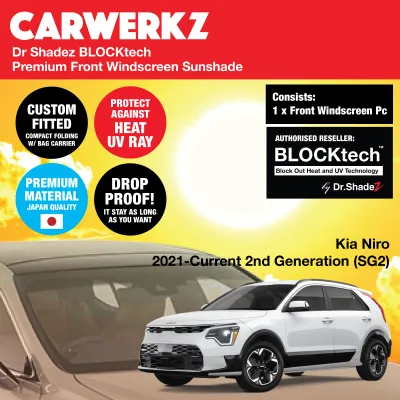
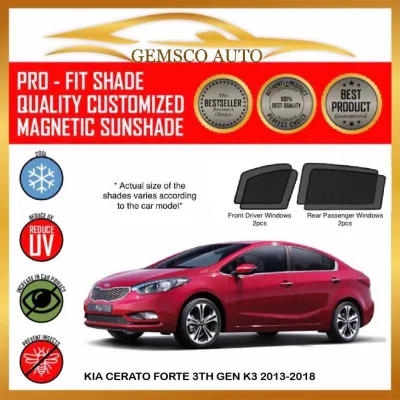
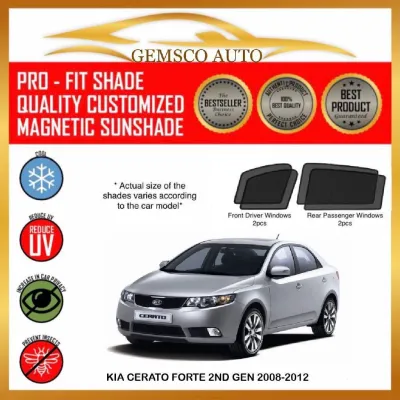

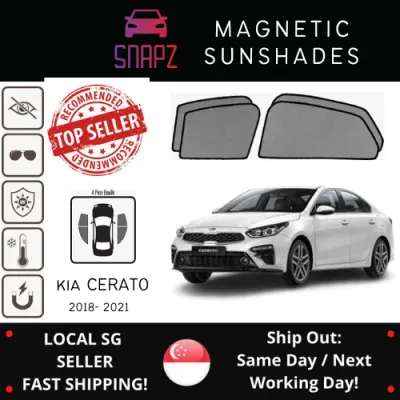
Prices are valid at publication and may change. Please refer to the product page for the latest price.
Why Exact Fitment Matters for the Kia Cerato
The Kia Cerato’s front windshield is characterized by a steep rake designed to improve aerodynamics. This angle creates a large surface area of glass that allows a significant amount of solar radiation to enter the cabin, heating up the dashboard, steering wheel, and front seats. Because of this steep angle, a generic sun shade that lacks structural rigidity will often sag in the middle, creating a large gap near the rearview mirror where heat and UV rays can penetrate freely.
Furthermore, the side windows of the Cerato feature a tapering roofline, especially in the newer generations. The rear side windows have a distinct triangular shape toward the C-pillar, which standard rectangular universal shades cannot cover adequately. When you use a generic suction-cup shade, you are often left with uncovered triangular sections at the edges, allowing sunlight to beam directly onto passengers or rear-facing child seats.
To avoid these coverage gaps, you should measure the actual dimensions of your glass before purchasing any non-custom accessory. For the front windshield, measure the maximum height from the base of the dashboard near the defroster vents to the top edge where the glass meets the headliner. Next, measure the width at both the bottom edge and the top edge, as the windshield tapers significantly toward the roof. Having these exact measurements allows you to cross-reference product specifications rather than relying on vague size categories like “medium” or “large.”
Custom-fit sun shades are engineered using 3D scanning technology to match the exact perimeter of the Cerato’s window frames. For the side windows, these shades often feature magnetic borders that snap directly onto the exposed metal frame of the door, or tension-fit frames that wedge securely into the window channel. This precise fitment eliminates light leaks entirely, provides a clean aesthetic, and ensures the shade remains stable even when the vehicle is in motion or when doors are opened and closed.
In contrast, adjustable universal shades rely on overlapping panels, spring wires, or suction cups to cling to the glass. While they offer flexibility if you own multiple vehicles, they rarely align with the specific contours of the Cerato’s A-pillars or the housing of the advanced driver assistance system (ADAS) camera located behind the rearview mirror. This can result in the shade putting pressure on sensitive sensor housings or slipping down during hot afternoons.
Comparing Sun Shade Types for Front and Side Windows
When selecting a front windshield shade, accordion-style foldable shades are a traditional and highly reliable option. Typically constructed from multi-layered materials—such as a reflective outer foil layer and a bubble-pack or foam insulating core—these shades offer excellent thermal resistance. They are rigid enough to stand upright when supported by the vehicle’s sun visors. However, their main drawback is their storage size; when folded, they form a long, stiff bundle that can be awkward to store in a compact sedan like the Cerato, often requiring placement on the rear floorboards or in the boot.

An increasingly popular alternative is the umbrella-style sun shade. This design uses a collapsible metal frame structure similar to a standard rain umbrella, allowing you to open and close it within seconds. While highly convenient to deploy and compact enough to store in the glove compartment or door pocket, you must exercise caution when using them in the Cerato. The central shaft and handle can press against the infotainment screen or scratch the soft-touch materials on the dashboard if not positioned carefully. Additionally, the metal tips of the canopy ribs must be well-padded to prevent scratching the interior A-pillar trim or the glass itself.
For the side windows, several distinct mechanisms exist, each offering different levels of convenience and functionality. Static cling films are thin, adhesive-free plastic sheets that rely on static electricity to adhere directly to the glass. They are highly unobtrusive and do not interfere with the window’s physical operation, but they can be difficult to apply without trapping air bubbles, and they do not block as much heat as thicker, fabric-based options.
Suction cup mesh shades are an affordable, highly portable solution that can be moved easily between vehicles. However, they suffer from reliability issues in hot climates, as the suction cups tend to lose their elasticity and fall off when the glass reaches high temperatures. More importantly, you cannot roll down the window while a suction cup shade is attached, as doing so will damage the window regulator mechanism or pull the shade down into the door cavity, potentially causing expensive mechanical failures.
Magnetic and snap-on frame shades represent the premium tier of side window protection. These shades feature a flexible metal wire frame wrapped in a fine mesh fabric, with small magnets sewn into the border. They attach directly to the metal door frame surrounding the window glass rather than the glass itself. This design allows you to roll the window down completely to let fresh air in while the shade remains securely in place, acting as a physical barrier against bugs and direct sunlight.
Retractable roller shades offer a semi-permanent installation option. These units are mounted either to the top of the door trim via clips or adhesive, or screwed directly into the door panel. They allow you to pull the shade up and hook it to the top of the window glass, rolling back down automatically when unhooked. While they offer unmatched convenience for daily passengers, the installation process can be complex, and low-quality adhesive mounts may fail under intense cabin heat, leaving unsightly residue on your door panels.
Key Features to Evaluate Before Purchasing
Before purchasing any sun shade, it is essential to look past marketing buzzwords and evaluate the actual material specifications. Many manufacturers advertise “maximum heat rejection” or “total UV block” without providing verified ratings. Look for products that explicitly state their Ultraviolet Protection Factor (UPF) rating, with UPF 50+ being the standard for high-quality sun protection. Additionally, check if the product specifies its Total Solar Energy Rejection (TSER) percentage, which measures the shade’s ability to block infrared radiation and visible light, rather than just UV rays.
The construction of the shade’s edges is another critical factor that directly impacts the longevity of your car’s interior. The Kia Cerato features soft-touch dashboard materials and delicate fabric or leatherette wrapping on the A-pillars. A sun shade with rough, unfinished nylon edges or exposed metal wires can easily scuff these surfaces over time. Opt for shades that feature double-stitched, soft fabric borders or felt-wrapped edges that glide smoothly against the interior trim without leaving marks or wearing down the factory finishes.
If your Cerato has aftermarket window tint film installed, you must be exceptionally careful. Hard plastic edges, metal clips, or low-quality suction cups can scratch or peel the tint film, especially around the edges of the side windows. Choosing magnetic shades that mount to the metal door frame completely avoids contact with the tinted glass, preserving your expensive tint investment.
Storage convenience is a frequently overlooked aspect of sun shade ownership. A shade that is difficult to fold or lacks a securing mechanism will quickly end up tossed onto the back seat, cluttering your cabin and potentially getting damaged. Look for shades that come with integrated elastic straps, hook-and-loop fasteners, or dedicated storage pouches. A compact, neatly packed shade can be easily slipped into the passenger seatback pocket or stored under the front seats, keeping your Cerato’s interior organized and clutter-free.
Finally, safety must remain a primary consideration, particularly for side window shades. While blocking out as much sunlight as possible is desirable when parked, driving with excessively dark or opaque side shades can severely limit your visibility. Ensure that any shade installed on the front side windows complies with local traffic regulations regarding light transmittance. The shades must not obstruct your view of the side mirrors or blind spots, especially during night driving or heavy rain. Many custom-fit sets offer “half-cut” designs for the front side windows, leaving the front portion of the window uncovered so you can clearly see your side mirrors at all times.
How to Verify Compatibility When Shopping Online
Shopping on online marketplaces or e-commerce platforms requires a diligent approach to ensure you receive a product that actually fits your Kia Cerato. Because the Cerato has been sold under different names globally—such as the Kia Forte in North America or the Kia K3 in South Korea and other markets—you must verify that the product listing explicitly covers your specific model year and body style. A shade designed for an older generation Cerato sedan will not fit a newer generation Cerato hatchback due to significant changes in windshield dimensions and door frame shapes.
When browsing listings, be highly skeptical of products labeled as “universal fit for Kia models” or those that list a wide range of unrelated vehicles in the title. Instead, look for sellers who provide detailed compatibility charts or explicitly state the manufacturing years (e.g., “Fits Kia Cerato 2018-2024”). If the listing only provides general dimensions like “150cm x 70cm,” take the time to measure your car’s windshield and compare it to these figures, keeping in mind that a rectangular shade may not account for the tapered top edge of the Cerato’s glass.
Before finalizing your purchase on any online platform, carefully review the seller’s return, refund, and exchange policies. Since physical fitment can vary slightly due to manufacturing tolerances, you want to ensure you can return the product easily if it does not fit as described. Look for listings that offer free returns or buyer protection guarantees. Reading customer reviews, particularly those that include photos of the shade installed in a Kia Cerato, can provide invaluable real-world confirmation of the product’s fit and quality.
If you are uncertain about the compatibility or quality of a particular brand, a wise strategy is to purchase a single piece first rather than committing to a complete multi-piece set for the entire vehicle. Starting with the front windshield shade allows you to evaluate the material quality, ease of folding, and accuracy of the fitment. If the front shade meets your expectations and fits your Cerato perfectly, you can then confidently order the matching side window shades to complete your cabin’s thermal protection.
Installation and Care Tips to Protect Your Interior
Proper installation and care are vital to extending the lifespan of your sun shades and protecting your Kia Cerato’s interior. When deploying a front windshield shade, avoid forcing it roughly against the glass or jamming it behind the rearview mirror. If your shade uses a flexible wire frame (often called a “twist-to-fold” design), learn the correct figure-eight twisting motion to fold it. Forcing the frame to bend in the wrong direction can snap the internal spring steel wire, creating sharp edges that can tear through the fabric and scratch your dashboard or windshield.
For those using suction cup or static cling shades on the side windows, maintaining clean surfaces is the key to reliable adhesion. Over time, dust, moisture, and plasticizers released from the car’s interior plastics will form a thin film on the glass and the shade’s mounting surface, causing them to slip or fall off. Periodically clean your windows with a high-quality glass cleaner and wipe down the suction cups or static cling backing with warm, soapy water. Allowing them to air dry completely before reinstallation will restore their grip and prevent them from peeling away under intense heat.
Where and how you store your sun shades when they are not in use also plays a major role in their durability. Avoid leaving folded shades exposed to direct sunlight on the rear parcel shelf or dashboard when driving. The concentrated heat can cause the reflective coatings to degrade, flake off, or release unpleasant chemical odors into the cabin. Instead, store them in their designated protective sleeves and place them in a shaded area of the car, such as the boot, under the seats, or in the door pockets.
Finally, make it a habit to periodically inspect the physical condition of your sun shades. Look for any signs of wear along the borders, such as frayed stitching, exposed metal wires, or deformed plastic clips. If you notice any sharp edges or structural degradation, replace the shade immediately. Continuing to use a damaged shade risks scratching your Cerato’s window tint, scuffing the interior door panels, or leaving permanent marks on the soft-touch dashboard surfaces.
Frequently Asked Questions (FAQ)
Will a universal sun shade fit the Kia Cerato's front windshield?
While a universal sun shade can physically block some light, it rarely provides a satisfactory fit for the Kia Cerato’s front windshield. Universal shades are typically designed with a generic rectangular shape that does not account for the Cerato’s steep windshield rake, tapered top edge, or the large sensor housing behind the rearview mirror. This mismatch often results in significant gaps at the corners, allowing heat to enter, or causes the shade to sag and slip down, requiring constant readjustment.
Can I roll down the windows with side sun shades installed?
Whether you can roll down your windows depends entirely on the mounting mechanism of your side sun shades. If you use static cling films or suction cup mesh shades, you must not roll down the windows, as the shade will be dragged into the door cavity, potentially damaging the window regulator or tearing the shade. However, if you use custom-fit magnetic or snap-on frame shades that attach directly to the metal door frame, you can freely roll the windows down to enjoy fresh air while maintaining sun protection.
Do sun shades damage the Kia Cerato's interior or window tint?
High-quality, properly fitted sun shades will not damage your Kia Cerato’s interior or window tint. However, damage can occur if you use low-quality shades with rough nylon edges, exposed metal wires, or hard plastic clips that rub against the soft-touch dashboard or scratch aftermarket tint film. To prevent damage, always choose shades with soft fabric borders, avoid sliding suction cups across tinted glass, and inspect the shades regularly for any signs of wear or structural deformation.

Community discussion
Share your experience or ask a question. Comments are reviewed before publication.