
Finding a full-surround car mat that fits your Subaru Forester requires looking past generic marketing claims. Because the Forester features a highly contoured floorpan with specific seat rail configurations, transmission humps, and a dedicated dead pedal area, a secure fit depends on the manufacturer’s scanning technology and material choice. There is no single brand that suits every driver; instead, the ideal mat is one that matches your vehicle’s exact generation, remains anchored under heavy use, and never interferes with the pedals.
Evaluating options involves understanding how different manufacturers measure, construct, and secure their products. A poorly fitting mat not only allows dirt and moisture to ruin your factory carpet but can also slide forward and obstruct your pedals, creating a severe safety hazard. By focusing on objective design criteria, material properties, and verification steps, you can find a high-coverage solution that protects your interior while keeping your drives safe.
Key Dimensions for Evaluating Forester Floor Contour Match
The floorpan of the Subaru Forester is complex, featuring a prominent transmission tunnel, a raised driver-side dead pedal, and low-profile front seat mounting brackets. To achieve a seamless fit, a car mat must be engineered to mirror these exact shapes. Standard flat mats or semi-custom options often leave large gaps, allowing dirt, sand, and spilled liquids to slide underneath and accumulate on the factory carpet.
Products mentioned in this guide
![[PRE-ORDER] ENZO Car Mat - Subaru Forester 6th Gen Model SL e-Boxer Hybrid (2025-Present) [Ship Out Within 14 days)](https://img.lazcdn.com/g/p/76e984863bd39e1411a4a07fa95ef0b1.jpg_400x400q80.jpg_.webp)
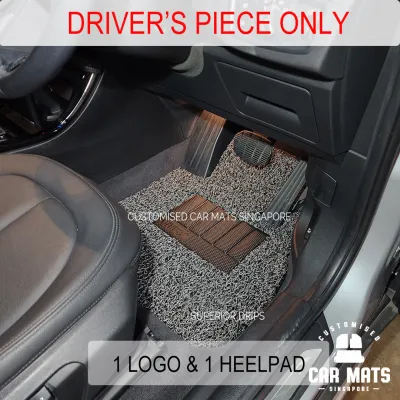
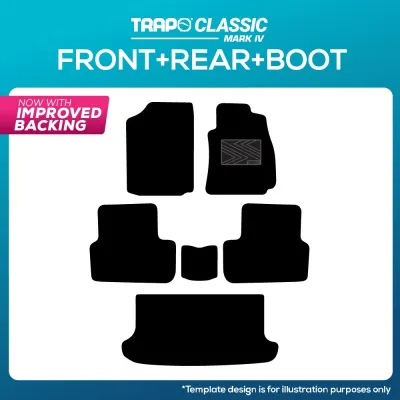
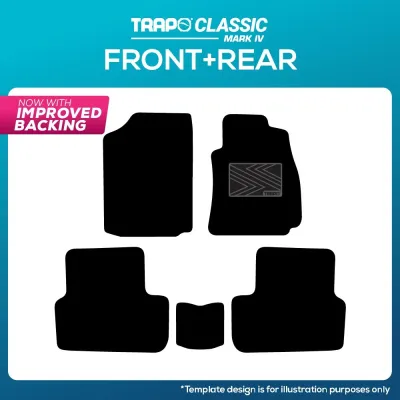
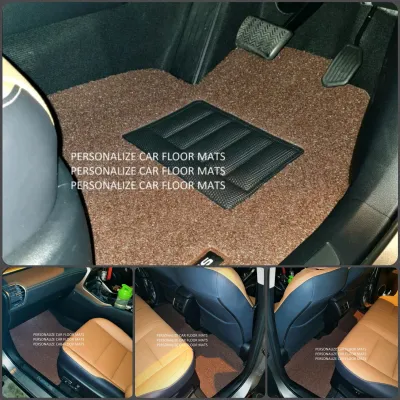
Prices are valid at publication and may change. Please refer to the product page for the latest price.
High-quality full-surround mats rely on 3D laser scanning rather than manual templating. Laser scanning captures every millimeter of the footwell, ensuring the mat hugs the vertical walls of the footwell and the sides of the center console. This precision is especially important around the dead pedal, where the mat must transition smoothly from the flat floor to the angled footrest without bubbling or lifting.
Edge height and lip design are equally critical for containing debris. The vertical edges of a full-surround mat should rise high enough to block dirt from reaching the original carpet, but they must not bow inward or press aggressively against the plastic trim. If the edges lack structural support, they can collapse over time, catching on your shoes as you enter or exit the vehicle or blocking the lower air vents.
Pedal clearance is the most vital dimension to evaluate. The Forester’s accelerator and brake pedals require a specific clearance zone to operate through their full range of travel. A properly designed mat will feature a recessed area or a precise cutout around the pedals, ensuring the mat material never comes into contact with the pedal arms, even when they are fully depressed.
Material and Anti-Slip Features That Prevent Shifting
Selecting the right material is not just about aesthetics; it directly impacts how well the mat retains its shape and stays in place. In hot and humid climates, cabin temperatures can rise significantly when parked outdoors. These temperature swings can cause lower-grade plastics to warp, curl, or emit unpleasant chemical odors.

Thermoplastic elastomer (TPE) is highly regarded for automotive mats due to its excellent balance of flexibility and rigidity. TPE mats resist deformation under extreme heat, maintaining their molded shape and high edges over years of use. Flexible polymers and multi-layer synthetic leather options can also perform well, provided they contain a semi-rigid core layer that prevents the edges from sagging.
To prevent the mat from sliding forward under foot pressure, the underside must feature an effective grip mechanism. Many manufacturers use molded nibs, directional hook-and-loop textures, or specialized fiber backings that lock into the factory carpet fibers. This friction layer is essential for keeping the passenger and rear mats stable, as these areas often lack mechanical anchors.
For the driver’s side, mechanical retention is non-negotiable. Subaru equips the Forester with factory floor mat anchor pegs designed to lock the mat in place. Any full-surround mat you choose must feature integrated retention rings or clips that align perfectly with these factory pegs. Never bypass or cover these anchors, as an unsecured driver’s mat is highly prone to shifting forward during sudden braking.
How to Verify Fitment Before Purchasing
Before spending your hard-earned money on a set of full-surround mats, you must verify that the product is engineered for your exact vehicle configuration. The Subaru Forester has gone through multiple generations, each with a completely unique floorpan layout. A mat designed for an older generation will not fit a newer model safely or cleanly.
For example, the floor dimensions of the fourth-generation Forester (SJ, 2012–2018) differ substantially from the fifth-generation (SK, 2018–present). Even within a single generation, mid-cycle facelifts or trim variations can introduce subtle changes. Hybrid variants, such as the e-Boxer, may have different floor contours in the rear passenger footwell due to battery placement or under-seat cooling vents.
Another critical factor for buyers in Singapore is steering orientation. You must ensure the mat set is specifically designed for right-hand drive (RHD) vehicles. Left-hand drive (LHD) mats feature reversed pedal cutouts and dead pedal positions, making them completely incompatible and highly dangerous if forced into an RHD vehicle.
To avoid ordering errors, do not rely solely on generic product titles on online marketplaces or ecommerce platforms. Instead, consult the manufacturer’s official compatibility database or fitment guide. Look for the exact model code, production year, and drive type to confirm that the mats are engineered specifically for your Forester’s market version.
Decision Framework: Matching Mat Features to Your Driving Needs
Choosing between different full-surround mat styles depends on your daily driving habits, passenger cargo, and aesthetic preferences. There is no universal option, so you should weigh the trade-offs of each material type against your typical vehicle usage.
Heavy-duty TPE mats are highly suitable if you frequently engage in outdoor activities, visit construction sites, carry wet sports gear, or transport pets. These mats are completely waterproof, highly resistant to mud and sand, and can be easily pulled out and hosed down. They provide excellent utility during heavy monsoon seasons when wet shoes are a daily occurrence.
Premium multi-layer synthetic leather or carpet-textured full-surround mats are better suited for urban commuters who prioritize a refined cabin appearance. These mats often feature foam core layers that provide additional sound dampening, reducing road noise entering through the floorboards. However, they require more careful maintenance, as mud and liquids can be harder to clean out of textured surfaces.
Keep in mind that neither style will fit safely if you have installed aftermarket modifications. Custom pedal covers, under-seat subwoofers, or aftermarket fire extinguisher mounts can alter the standard floor clearances. If your Forester has these modifications, you must measure the remaining clearance carefully and potentially avoid high-edge full-surround mats if they interfere with these additions.
Installation and Safety Checks for Full-Surround Mats
Once your new mats arrive, proper installation is critical to ensure they perform safely. Start by removing all existing floor mats from the vehicle; never stack a new full-surround mat on top of an old one, as this raises the height of the floor and increases the risk of pedal interference.
Thoroughly vacuum the factory carpet to remove any dirt or grit that could prevent the anti-slip backing from gripping properly. Lay the new mat into the footwell, aligning the mounting holes with the factory floor pegs. Press down firmly until you hear the retention clips click into place, and smooth out the edges to ensure the mat lies completely flat without any buckling.
Before starting the engine, perform a manual pedal sweep test. Sit in the driver’s seat and depress both the brake and accelerator pedals slowly through their entire range of motion. Verify that there is a clear gap between the pedals and the mat at all times, and that the pedals do not catch on any part of the mat when returning to their idle positions.
Establish a safety boundary for your mats. If you ever notice a mat shifting, curling at the edges, or blocking the front seat adjustment tracks, remove it immediately. Do not attempt to trim or modify the mat yourself unless explicitly instructed by the manufacturer’s documentation. If a fitment defect persists, contact the manufacturer or retailer to arrange for a replacement or refund.
Frequently Asked Questions (FAQ)
Do full-surround mats interfere with the Forester's seat rails?
Properly engineered full-surround mats are designed with precise cutouts that wrap around the Forester’s seat rails and mounting brackets. However, cheaper or generic mats may have excess material that bunches up near the tracks. Always slide the front seats fully forward and backward after installation to ensure the tracks remain completely unobstructed.
Can I use a Forester mat from a previous generation?
No, you should never use a mat designed for a different Forester generation. The floorpan dimensions, pedal placement, and factory anchor locations differ significantly between generations. Attempting to force an older mat into a newer model can lead to severe slipping, bunching, and dangerous pedal interference.

Community discussion
Share your experience or ask a question. Comments are reviewed before publication.