
Determining whether your vehicle needs an aftermarket tire pressure monitoring system (TPMS) depends on your car’s existing factory equipment, your typical driving conditions in Singapore, and your personal safety priorities. While modern vehicles often come with built-in monitoring, older cars or basic models may lack real-time, individual tire readouts. This guide will help you diagnose your current setup, evaluate your driving risks, and decide if an aftermarket upgrade is a necessary investment for your peace of mind on the road.
Maintaining correct tire pressure is one of the most critical yet frequently overlooked aspects of vehicle safety and maintenance. For drivers in Singapore, where road temperatures can soar and daily commutes involve high-speed expressway driving, keeping a close eye on your tires is essential. While many modern vehicles come equipped with factory-installed tire pressure monitoring systems, older models or entry-level variants often lack this feature entirely, or only offer basic warning lights without detailed real-time data.
Check Your Car's Existing Tire Pressure Monitoring Features
Before shopping for aftermarket accessories, you must first determine what kind of tire pressure monitoring system, if any, your vehicle already possesses. The easiest way to check is by turning your car’s ignition to the “on” position without starting the engine. Look at the instrument cluster for the standard TPMS warning symbol, which resembles a horseshoe with an exclamation point in the center. If this light illuminates briefly during the dashboard self-test, your car has some form of factory monitoring. You can also consult your vehicle owner’s manual to confirm the presence and specific operation of this system.
Products mentioned in this guide
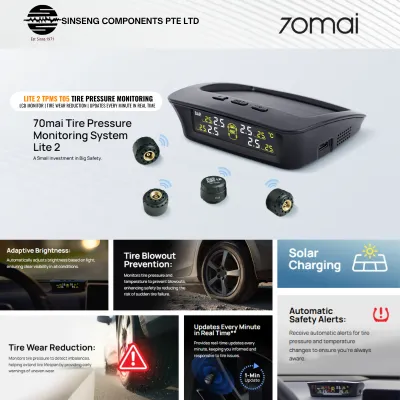
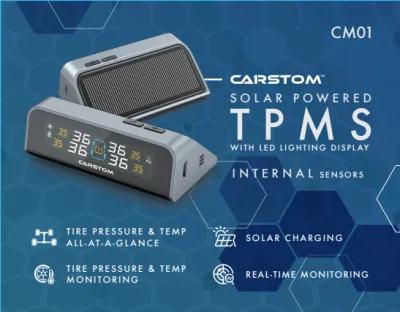
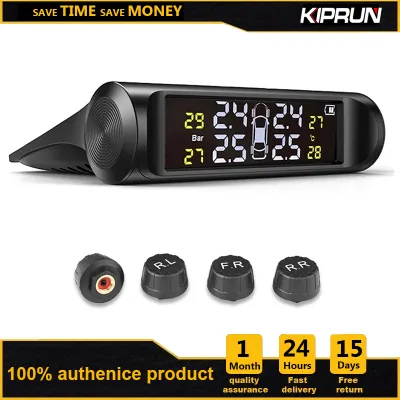
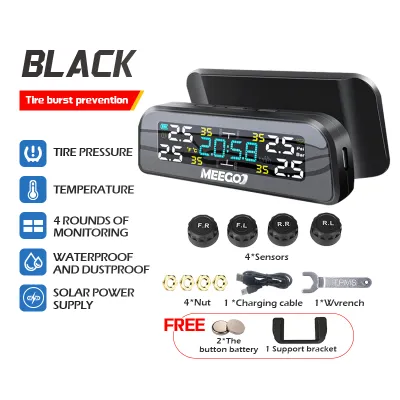
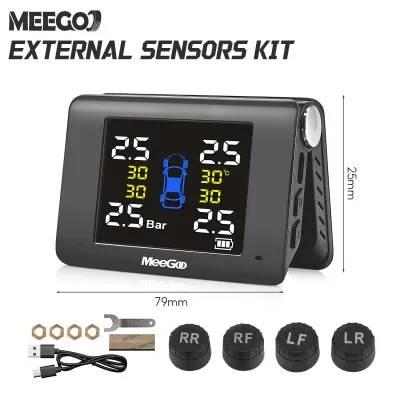
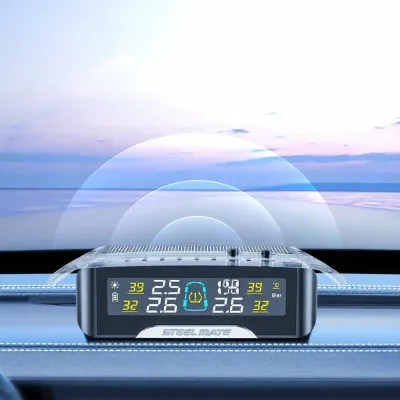
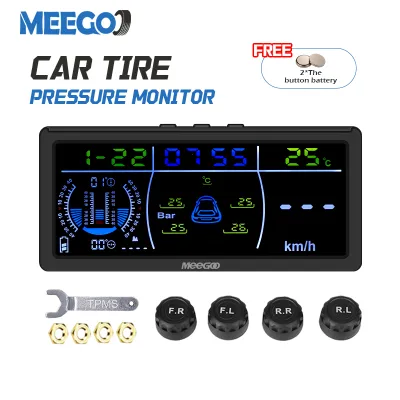
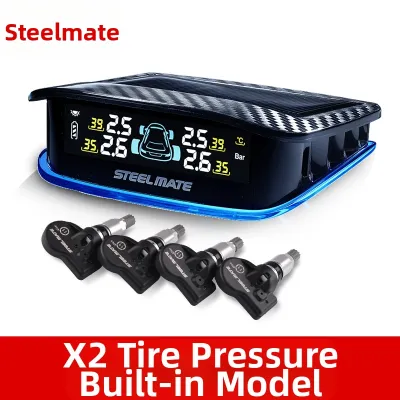
Prices are valid at publication and may change. Please refer to the product page for the latest price.
If your car does have a factory system, it is important to understand whether it is a direct or indirect TPMS, as their capabilities differ significantly. A direct TPMS utilizes physical pressure sensors mounted inside each wheel, typically integrated with the tire valve. These sensors measure the actual air pressure and temperature inside each tire and transmit this data wirelessly to the vehicle’s computer. This allows the system to display real-time, individual tire pressure readings on your dashboard, warning you immediately if a specific tire begins to lose air.
In contrast, an indirect TPMS does not use physical pressure sensors inside the tires. Instead, it relies on the vehicle’s Anti-lock Braking System (ABS) wheel speed sensors. When a tire loses pressure, its overall diameter decreases slightly, causing it to spin at a different speed compared to the other properly inflated tires. The ABS sensors detect this speed discrepancy and trigger the dashboard warning light. While cost-effective, indirect systems have notable limitations. They cannot display real-time pressure or temperature readings, they only warn you after a significant pressure loss has already occurred, and they require manual recalibration every time you adjust your tire pressure or change your tires. Furthermore, if all four tires lose pressure slowly and evenly over time, an indirect system may fail to detect the change because the relative wheel speeds remain similar.
Evaluate Your Driving Habits and Safety Needs
Your daily driving environment and habits play a major role in determining whether an aftermarket TPMS is a practical safety upgrade. Singapore’s hot tropical climate creates challenging conditions for automotive rubber. High ambient temperatures, combined with the heat generated by friction on expressways like the Pan Island Expressway (PIE) or East Coast Parkway (ECP), cause the air inside your tires to expand and contract significantly. Underinflated tires are particularly vulnerable in these conditions; because they have less structural support, their sidewalls flex excessively during driving, generating intense internal heat that can lead to sudden tire failure or a dangerous blowout at high speeds.

Operating a vehicle with underinflated tires also introduces several mechanical and financial drawbacks. Low tire pressure increases the tire’s contact patch with the road, creating higher rolling resistance. This forces your engine to work harder, noticeably reducing your fuel efficiency. Additionally, underinflation causes the tire tread to wear down prematurely and unevenly, specifically along the outer shoulders, forcing you to replace your tires much sooner than expected. It also compromises vehicle handling, increases braking distances, and reduces grip on wet roads during heavy tropical downpours.
An aftermarket TPMS provides continuous, real-time monitoring that mitigates these risks. This upgrade is especially beneficial for drivers who frequently travel long distances, those who regularly carry heavy passenger loads or cargo, and owners of older vehicles that lack any built-in monitoring features. By receiving instant alerts when pressure drops below safe thresholds, you can address leaks or punctures before they compromise your safety on the road.
Understand Aftermarket TPMS Types and Installation
If you decide to purchase an aftermarket TPMS, you will need to choose between two primary sensor designs: external and internal. External sensors are designed to screw directly onto your existing tire valve stems, replacing the standard valve caps. They are highly popular because they are incredibly easy to install yourself without any specialized tools, and replacing their small internal batteries is a straightforward task. However, because they sit on the outside of the wheel, external sensors are highly visible, making them vulnerable to theft or vandalism. They are also exposed to road debris, dirt, and moisture, and their added weight can sometimes cause wear on older rubber valve stems over time.
Internal sensors, on the other hand, are installed inside the tire cavity, replacing the factory valve stem entirely. Because they are housed safely inside the wheel, they are completely protected from theft, environmental damage, and physical impacts. They also provide highly accurate temperature and pressure readings because they are in direct contact with the air inside the tire. The primary drawback is that internal sensors require professional installation. Because the tire must be completely demounted from the wheel rim to install the sensor, you must visit a qualified tire workshop.
For any tire disassembly, sensor installation, or wheel balancing, always seek qualified professional installation at a reputable workshop to ensure proper wheel balancing, seal integrity, and road safety. Additionally, you should verify your vehicle model, wheel dimensions, and valve stem compatibility with the specific TPMS product documentation before making a purchase.
Aftermarket systems also offer various display options to suit your preferences. Many kits include a small, solar-powered monitor that mounts to your dashboard or windshield, automatically waking up when it detects vehicle vibration. Other systems feature compact displays that plug directly into your car’s 12V accessory socket. For a cleaner dashboard look, some modern aftermarket TPMS kits dispense with a dedicated screen entirely, instead transmitting data via Bluetooth directly to a dedicated smartphone application, which sends push notifications if a tire’s pressure or temperature crosses safe limits.
When to Upgrade vs. When to Rely on Manual Checks
Deciding whether to install an aftermarket TPMS or stick to traditional maintenance depends on a clear set of conditions. An aftermarket upgrade is highly recommended if your vehicle has no built-in monitoring system, if you frequently drive long distances on expressways, or if you regularly carry heavy loads. In these scenarios, the active, real-time warning system provides an invaluable layer of safety that manual checks simply cannot replicate while the vehicle is in motion.
Conversely, you can comfortably rely on routine manual checks if your car is primarily used for short city commutes, is parked in a sheltered garage, or is already equipped with a modern, direct factory TPMS that displays individual tire pressures. If your vehicle falls into this category, purchasing an aftermarket system is generally unnecessary, provided you remain disciplined about manual maintenance.
If you choose to rely on manual checks, you must use a high-quality digital or dial pressure gauge rather than relying on visual inspections alone, as a tire can be significantly underinflated without looking flat. Always follow the safety boundary of inflating your tires to the vehicle manufacturer’s recommended pressures. This information is located on the tire placard on your driver’s door jamb or in your owner’s manual. Never inflate your tires to the maximum pressure printed on the tire sidewall; that number indicates the maximum pressure the tire can safely hold under maximum load, not the correct operating pressure designed for your vehicle’s suspension, handling, and safety systems.
Frequently Asked Questions (FAQ)
Can You Install an Aftermarket TPMS Over a Factory System?
Yes, it is technically possible to install an aftermarket TPMS on a vehicle that already has a factory system, but it is usually redundant. This double setup is only practical if your factory system is broken and too expensive to repair, or if it is an indirect system that lacks real-time pressure and temperature readouts. If you choose to install aftermarket internal sensors, ensure the technician does not remove or damage your factory sensors, as disabling them can trigger persistent dashboard warning lights or error codes in your vehicle’s main computer.
How Often Should You Check Tire Pressure Without a TPMS?
If your vehicle does not have a functioning TPMS, you should manually check your tire pressure at least once a month and immediately before any long-distance expressway trips. Always perform these checks when the tires are cold—meaning the car has been parked for at least three hours or has been driven less than two kilometers. Checking hot tires will give artificially high pressure readings due to the heated, expanded air inside, which can lead you to accidentally underinflate your tires.

Community discussion
Share your experience or ask a question. Comments are reviewed before publication.