
Understanding motorcycle oil viscosity is essential for engine longevity and performance. The numbers on the bottle are not arbitrary; they represent standardized flow characteristics that dictate how well the oil protects your engine under varying temperatures. Rather than guessing or assuming that a “thicker” oil is always better, selecting the correct specification requires interpreting these grades and matching them to your motorcycle manufacturer’s exact requirements.
Understanding the SAE Viscosity Rating System
The Society of Automotive Engineers (SAE) established a numerical system to grade motor oils according to their flow characteristics. When you look at a bottle of multi-grade motorcycle oil, you will typically see a designation such as 10W-40 or 15W-50. This alphanumeric code tells you how the oil behaves when the engine is cold and when it reaches its normal operating temperature.
The letter “W” stands for Winter, not weight as is commonly believed. The number preceding the “W” indicates the oil’s low-temperature flow properties and pumpability. A lower number before the “W” means the oil remains more fluid at cold start-up, allowing it to flow quickly to critical engine components when you first start the motorcycle. This rapid flow minimizes metal-on-metal contact during those crucial first few seconds of operation.
Products mentioned in this guide
![🇸🇬 MOTUL 7100 4T 10W40 10W50 15W50 100% Synthetic Ester Engine Oil Motorcycle Oil [1L]](https://img.lazcdn.com/g/p/00450279a13a350708397ff343c39c19.png_400x400q80.png_.webp)
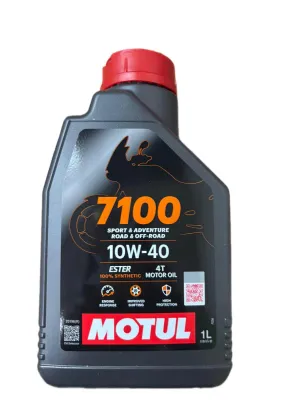
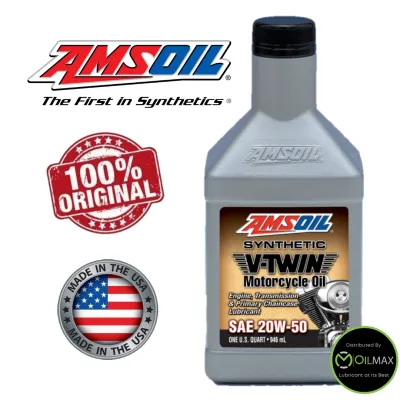
Prices are valid at publication and may change. Please refer to the product page for the latest price.
The second number, which appears after the hyphen, represents the oil’s kinematic viscosity at standard engine operating temperatures, typically measured at 100 degrees Celsius. A higher second number indicates a thicker, more viscous oil at high temperatures. This thickness is crucial for maintaining a strong protective film between moving parts under intense heat and heavy engine loads.
Multi-grade oils are formulated using special additives, such as viscosity index improvers, to provide adequate protection across a broad range of temperatures. These additives allow the oil to resist thinning out excessively when hot while remaining fluid enough to flow when cold. To ensure you are purchasing a high-quality product that meets these exact standards, always check the product label for compliance with the SAE J300 standard, which verifies the legitimacy of the viscosity grade.
Comparing 10W-40 and 15W-50 in Practical Riding Conditions
To understand how these grades perform on the road, it is helpful to contrast 10W-40 and 15W-50 under typical riding scenarios. A 10W-40 oil flows more easily during a cold start than a 15W-50 oil. In cooler morning temperatures or after the motorcycle has been parked for an extended period, the 10W rating ensures that the oil pump can distribute the lubricant throughout the engine block with less resistance, reducing initial startup wear.

Conversely, a 15W-50 oil offers a thicker protective barrier when the engine is running hot. Under heavy loads, such as carrying a pillion passenger, climbing steep inclines, or navigating slow-moving traffic in warm climates, the engine temperature rises significantly. The “50” rating means the oil maintains a more robust film thickness under these extreme conditions, preventing the metal surfaces of the piston rings, cylinder walls, and gears from making direct contact.
However, a higher viscosity rating is not universally better for every motorcycle. If your engine is designed with tight internal clearances and a high-precision oil pump, using an oil that is too thick, like a 15W-50 instead of a recommended 10W-40, can lead to oil starvation. The oil pump may struggle to push the heavier fluid through narrow oil passages, leaving critical components under-lubricated and causing premature wear or overheating.
Ultimately, you should rely on the motorcycle manufacturer’s recommended grade rather than assuming a thicker oil automatically provides safer operation. Modern motorcycle engines are engineered with specific tolerances, and the recommended viscosity is chosen to balance protection, cooling, and fuel efficiency. Deviating from these guidelines without a clear technical reason can compromise engine health.
How to Choose the Correct Oil Grade for Your Motorcycle
Selecting the right oil grade requires a systematic approach based on authoritative specifications rather than guesswork or online forum advice. Your primary source of truth is always the motorcycle owner’s manual, which contains the manufacturer’s precise recommendations. If you do not have the physical manual, you can often find the required SAE grade printed directly on the oil filler cap or by accessing the manufacturer’s official online service portal.
In addition to the viscosity grade, you must match the required performance standards specified for your motorcycle. Most modern motorcycles with wet clutches require oils that meet specific Japanese Automotive Standards Organization (JASO) standards, such as JASO MA or JASO MA2, which ensure the oil has the correct friction characteristics to prevent clutch slippage. You should also verify the American Petroleum Institute (API) service category matches or exceeds the manufacturer’s requirements.
If the owner’s manual is missing and you cannot find the specifications online, consult an authorized dealer or a qualified mechanic who has access to official service databases. They can verify the correct oil specification based on your motorcycle’s exact model, year, and engine configuration. This step is vital because using the wrong oil formulation can damage your clutch system or engine internals.
Avoid altering the specified viscosity grade for modified or high-mileage engines without professional engineering guidance or explicit manufacturer approval. While some riders believe that older engines always need thicker oil to stop leaks or consumption, doing so can disrupt the engine’s thermal management and lubrication balance. Stick to the manufacturer’s approved viscosity range to ensure reliable performance.
Frequently Asked Questions (FAQ)
Can I switch to a higher viscosity grade for riding in hot climates?
Many motorcycle manufacturers include an ambient temperature chart in the owner’s manual, showing which viscosity grades are acceptable for different climate ranges. If your local riding conditions consistently exceed the temperature limits of your current oil, you may switch to a higher grade only if it is explicitly permitted within that official chart. You should avoid switching to a grade outside the manufacturer’s approved range, as doing so can negatively affect engine lubrication, reduce fuel economy, and potentially void your vehicle warranty.
What should I do if I need to top up with a different viscosity grade?
Mixing different oil viscosities should only be done in absolute emergencies, such as when your oil level is dangerously low and running the engine dry would cause catastrophic damage. If you must top up with a different grade to reach safety, use an oil that meets the same JASO and API standards as your current oil. Once you reach a safe location, you should perform a complete oil and filter change as soon as possible to restore the correct, manufacturer-specified oil formulation and ensure consistent engine protection.

Community discussion
Share your experience or ask a question. Comments are reviewed before publication.