
Quick Answer: Which Dashboard Sunglass Holder Should You Choose?
Selecting the right dashboard sunglass holder depends on your vehicle’s interior materials, dashboard shape, and how quickly you need to access your eyewear. If your dashboard features a pronounced, rigid edge or instrument hood, a clip-on holder offers a secure, tool-free mounting option that you can reposition instantly. For flat, smooth dashboards where a minimalist look is preferred, a slot-style adhesive mount provides a low-profile solution that keeps your glasses tucked neatly out of your line of sight.
If your priority is effortless, one-handed retrieval while driving, a magnetic holder is highly efficient, provided you are comfortable attaching a small metal plate to your sunglasses or using a magnetic-compatible case. Because universal fitments are rare, you must verify your dashboard’s specific curvature, surface texture, and material composition before purchasing any mounting style.
Assessing Your Dashboard Layout and Surface Constraints
Before purchasing any interior accessory, you must conduct a physical inspection of your vehicle’s dashboard. Modern vehicle cabins utilize a variety of materials, including soft-touch polyurethane, textured ABS plastic, synthetic vinyl, and genuine leather. Each material reacts differently to mounting mechanisms. Adhesives require a completely flat, non-porous surface to achieve a proper chemical bond, meaning heavily textured plastics or oily, conditioned leather will often cause adhesive mounts to fail prematurely. Conversely, rigid clips can leave permanent indentations or scuffs on soft, foam-backed dashboard lips.
Products mentioned in this guide
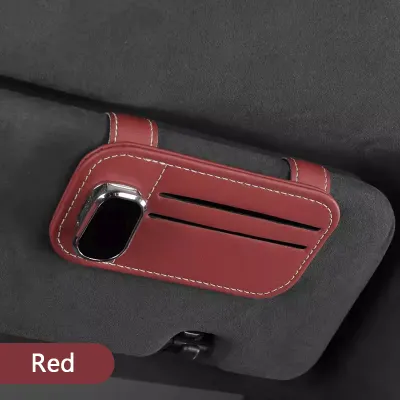
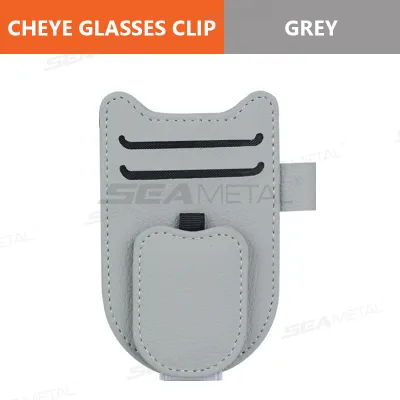
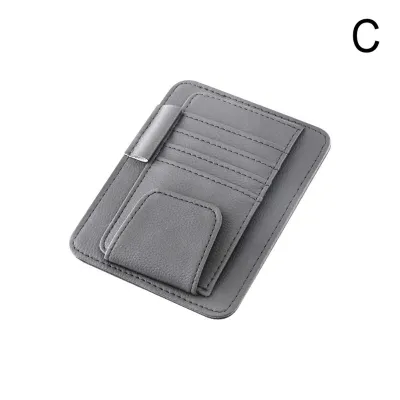

Prices are valid at publication and may change. Please refer to the product page for the latest price.

Dashboard geometry also dictates which mounting styles are viable. Run your hand along the top of your instrument cluster and center console to identify flat areas, curves, and seams. A mount with a flat adhesive base cannot conform to a curved dashboard without leaving gaps that compromise its hold.
Additionally, you must map out potential obstructions. Ensure the proposed mounting location does not block air vents, obscure your view of the instrument cluster, or interfere with the steering wheel’s range of motion. Most importantly, identify the deployment zones for the passenger airbag and side-curtain airbags; placing any hard accessory within these zones poses a severe safety hazard during a collision.
Clip-On Dashboard Holders: Mechanism and Fitment
Clip-on dashboard holders rely on mechanical tension to grip the protruding edges of your vehicle’s interior trim. These devices typically feature a spring-loaded jaw or a flexible plastic clamp lined with silicone or foam padding. The primary mounting point is usually the overhanging lip of the instrument cluster hood or the upper edge of the center display screen. This design allows for rapid, tool-free installation and removal, making it an excellent option for drivers who frequently switch vehicles or use rental cars.
To ensure a secure fit, you must measure the thickness of your dashboard’s overhang and compare it to the maximum jaw opening specified by the holder manufacturer. If the dashboard edge is too thick, the clip may slip off or experience high material stress, leading to structural failure of the plastic clamp. If the edge is too thin, the clip may rattle or slide during acceleration and cornering.
While clip-on holders avoid the messy residue associated with adhesives, they carry physical risks for certain cabin materials. The constant clamping pressure can compress the foam backing of soft-touch vinyl or leather dashboards, leaving permanent, unsightly indentations. If the protective silicone padding on the clip wears down or shifts, the hard plastic edges of the clamp can scratch delicate interior surfaces. Regularly inspecting the condition of the clip’s padding is essential to prevent cosmetic damage.
Slot-Style Dashboard Holders: Adhesive and Gap Mounts
Slot-style holders are designed to sit low on the dashboard, holding your sunglasses upright or horizontally within a dedicated channel. These holders generally mount using high-bond double-sided acrylic foam tape, though some specialized models feature thin, rigid tabs designed to slide directly into the seams between dashboard panels. This style is highly favored for its clean, integrated appearance that mimics factory-installed storage.
Adhesive-backed slot holders require careful consideration of cabin temperatures. In hot climates, such as Singapore, interior cabin temperatures can easily exceed 60°C when parked in direct sunlight. This extreme heat can soften standard adhesives, causing the holder to slide, tilt, or detach completely under the weight of your sunglasses. To prevent this, look for holders that utilize high-temperature automotive-grade acrylic adhesives, which are formulated to withstand severe thermal cycles without losing structural integrity.
If you choose a seam-insertion slot holder, you must verify the tolerances of your vehicle’s dashboard panels. Forcing a mounting tab into a tight seam can damage the hidden plastic clips holding your dashboard together, leading to persistent cabin rattles. Furthermore, you must measure the physical dimensions of the holder’s slot. Thick acetate frames, oversized fashion sunglasses, or highly curved wraparound sports eyewear may not fit into a narrow, rigid slot designed for slim metal wire frames.
Magnetic Dashboard Holders: Convenience and Constraints
Magnetic dashboard holders offer the fastest mounting and retrieval process, utilizing powerful neodymium magnets to secure your eyewear. The base unit is typically a small, adhesive-backed dome or block that mounts to a flat section of your dashboard. To complete the connection, you must attach a thin, lightweight metal disc to the temple arm or bridge of your sunglasses, or store your glasses inside a dedicated magnetic-compatible sleeve.
When evaluating a magnetic holder, the balance between magnetic strength and the weight of your sunglasses is critical. Heavy glass lenses or thick frames require a stronger magnetic field to remain secure. If the magnetic connection is too weak, driving over speed bumps, potholes, or taking sharp turns can dislodge the glasses, sending them falling into the footwell and creating a dangerous distraction. Conversely, an excessively strong magnet can make retrieval difficult, potentially pulling the entire adhesive base off the dashboard when you try to grab your glasses.
Additionally, you must consider the placement of magnetic mounts relative to your vehicle’s onboard electronics. While small neodymium magnets are generally safe, placing them directly adjacent to built-in digital compasses, GPS antennas, or keyless entry receivers located inside the dashboard can occasionally cause signal interference. Always clean and prepare the dashboard surface thoroughly before applying the magnetic base’s adhesive pad to ensure a permanent, stable anchor.
Decision Framework: Matching the Holder to Your Driving Habits
To choose the ideal sunglass holder, you must align the mounting style with your daily driving routine and storage priorities. If you are a daily commuter who frequently takes your sunglasses on and off as you enter tunnels or shaded areas, the rapid, one-handed operation of a magnetic holder is highly advantageous. If you only store your sunglasses in the car occasionally or prefer to keep them completely dust-free, a slot-style holder placed in a shaded console area may be more appropriate.
Consider also how much protection your eyewear requires. Exposed dashboard mounts leave your sunglasses vulnerable to direct sunlight, which can degrade UV-blocking lens coatings and warp plastic frames over time. If you park in unshaded areas frequently, a holder that positions your glasses lower on the center console, away from direct windshield exposure, is preferable.
| Holder Type | Best Dashboard Surface | Installation Method | One-Handed Usability | Key Limitation |
|---|---|---|---|---|
| Clip-On | Rigid, overhanging edges | Mechanical tension clip | Moderate (requires spreading clip) | Can dent soft-touch materials |
| Slot-Style | Flat, smooth, non-porous | Double-sided adhesive | Moderate (requires aligning frame) | Adhesive can degrade in high heat |
| Magnetic | Flat, smooth surfaces | Adhesive base + metal plate | Excellent (instant pull/release) | Requires modifying sunglasses |
Safe Installation and Maintenance Checks
Proper installation is vital to ensure your dashboard holder remains secure and does not damage your vehicle’s interior. Begin by thoroughly cleaning the mounting area. Use an interior-safe cleaner or a mild isopropyl alcohol solution (only if approved by your vehicle manufacturer for that specific material) to remove dust, fingerprint oils, and silicone-based dashboard protectants. Any remaining residue will severely compromise adhesive bonding.
If you are using an adhesive-mounted holder, apply firm, even pressure to the base for at least thirty seconds during installation. Crucially, allow the adhesive to cure completely before placing any weight on the holder. Most automotive-grade adhesives require 24 to 72 hours to reach full bonding strength; loading the holder too early is the primary cause of mount failure.
Establish a routine maintenance check every few months. Inspect adhesive mounts for signs of peeling, lifting, or sliding, especially after periods of intense heat. For clip-on mounts, check that the tension remains tight and that the protective padding has not shifted. If you notice any rattling noises while driving, tighten or reposition the mount immediately. A loose accessory can easily detach during sudden braking, turning into a dangerous projectile inside the cabin.
When it comes time to remove an adhesive mount, do not pry it off with metal tools, which can gouge the dashboard. Instead, use a piece of dental floss or high-strength fishing line in a sawing motion to cut through the foam adhesive backing. Clean up any remaining sticky residue using a dedicated, interior-safe adhesive remover, testing it first on an inconspicuous area to ensure it does not discolor or dissolve the dashboard finish.
Frequently Asked Questions (FAQ)
Can I use a dashboard sunglass holder on a leather-wrapped dashboard?
Using adhesive-backed holders on genuine or synthetic leather dashboards is highly discouraged. The strong adhesives required to hold the mount can permanently stain, discolor, or tear the delicate leather finish when removed. Similarly, tight clip-on holders can leave permanent compression marks or stretch the leather fibers. If your vehicle has a leather-wrapped dashboard, look for alternative mounting locations such as the plastic trim around the center console, the sun visor, or use a non-marking, weighted friction mount that sits on the dashboard without adhesives.
Will the heat inside a parked car weaken the adhesive or magnetic strength?
Yes, extreme cabin heat can significantly affect your mount. While high temperatures do not typically degrade the magnetic properties of neodymium magnets permanently, heat severely weakens the polymer chains in double-sided adhesives. This causes the adhesive pad to soften and lose its grip, which can lead to the holder sliding down the dashboard. To mitigate this, always use high-temperature-rated acrylic foam tapes and consider using a reflective windshield sunshade to lower cabin temperatures when parked.
Are dashboard sunglass holders safe regarding passenger airbag deployment?
Dashboard sunglass holders are only safe if they are installed completely outside of all airbag deployment zones. Airbags deploy with immense force in milliseconds; any object placed on or near the airbag cover seams can be launched into the cabin at high speed, causing severe injury to occupants. Always consult your vehicle’s owner’s manual to locate the exact boundaries of the passenger front and side-curtain airbags, and ensure your holder is mounted well clear of these safety systems.

Community discussion
Share your experience or ask a question. Comments are reviewed before publication.