
Deciding between a custom-fit and a universal sunshade for your Audi A3 comes down to balancing precise coverage against budget flexibility. A custom-fit sunshade is engineered specifically to match the exact contours of the Audi A3 windshield, ensuring edge-to-edge protection with virtually no gaps. On the other hand, a universal sunshade offers a highly accessible, cost-effective alternative, though it requires careful manual measurement and often leaves small margins of the glass exposed to direct sunlight.
Understanding the Fit: Custom-Fit vs Universal Dimensions
The Audi A3 features a sleek, swept-back windshield design with distinct angles near the A-pillars and a specialized housing unit behind the rearview mirror for rain sensors and driver-assist cameras. This complex geometry makes the physical fit of your sunshade critical. A shade that does not conform to these specific angles will either sag or fail to cover the entire glass surface.
Custom-fit shades are laser-measured or molded to match these exact dimensions. They hug the glass tightly, fitting neatly around the sensor console without putting pressure on the rearview mirror mount. This maximizes the contact area and prevents light leaks along the edges, ensuring that the dashboard remains fully shielded.
Products mentioned in this guide

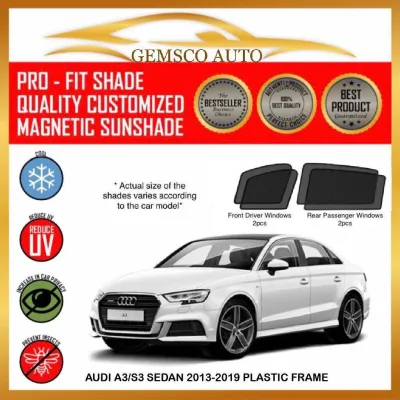
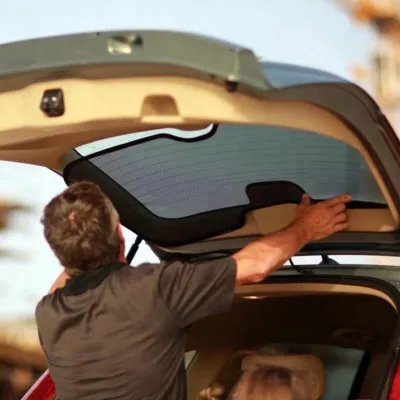
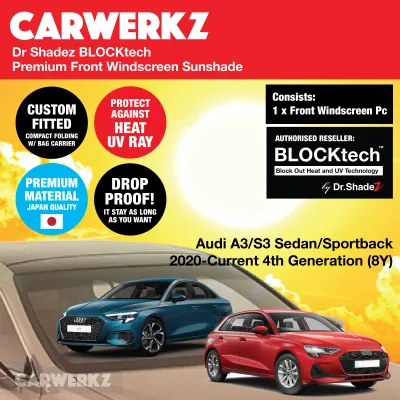

Prices are valid at publication and may change. Please refer to the product page for the latest price.
Universal shades typically come in standard geometric shapes, such as rectangles or dual-circle spring designs. Because they are built to fit a wide range of vehicle classes, they often fail to align with the Audi A3’s specific rake and taper. This mismatch can cause the shade to overlap with the dashboard trim or leave significant gaps along the sides and top edges.
To verify if a universal shade can work, you must physically measure your Audi A3 windshield. Use a flexible measuring tape to record three key dimensions: the maximum width at the base near the cowl, the narrower width across the top edge near the headliner, and the vertical height from the dashboard to the top of the glass. Compare these measurements against the manufacturer’s sizing chart to find the closest match, keeping in mind that any excess material may require awkward folding.
Coverage and Protection: Evaluating Heat and UV Blocking
Gaps left by ill-fitting universal shades do more than just let in light; they create thermal bridges. When sunlight streams through unprotected edges, it directly heats the dashboard, steering wheel, and front seats. This localized heating raises the ambient cabin temperature and forces your air conditioning system to work harder to cool the car down.

Actual heat rejection is determined by material composition rather than the fit category alone. High-quality sunshades utilize multiple layers, including an outer reflective aluminum or metallic film to bounce away solar radiation, a dense foam or bubble-pack core to insulate against heat transfer, and a soft backing layer to protect the interior. A thin, single-layer universal shade will perform poorly even if it fits reasonably well, whereas a multi-layered custom shade provides a robust thermal barrier.
When shopping, check product labels and manufacturer specifications for verified UV blocking percentages. Look for materials rated to block a high percentage of UVA and UVB rays, which are responsible for fading leather upholstery and cracking dashboard plastics over time.
Additionally, verify that the materials used are safe for prolonged contact with automotive interiors. Under intense heat, low-grade plastics and adhesives can off-gas harmful volatile organic compounds or leave sticky residues on your windshield. Opt for shades that specify high-temperature resistance and non-toxic construction.
Installation, Storage, and Daily Usability
Daily usability is a critical factor in whether you actually use your sunshade or leave it rolling around in the back seat. Custom-fit shades are generally designed for rapid deployment. Because they match the windshield’s shape, they often stay in place using a simple friction fit against the pillars, supported by folding down your Audi A3’s sun visors. This eliminates the need for suction cups or complex mounting brackets.
Universal shades, particularly those with spring-wire loops, can be unpredictable. They may sag in the middle or slip down from the top edge if the visors cannot hold them securely. Folding these shades can also be a test of patience, as the spring tension requires a specific twisting motion that can be cumbersome inside the compact cabin of an Audi A3.
Storage footprint is another practical consideration. Before purchasing, check the folded dimensions of the shade against the storage spaces in your Audi A3. A rigid, roll-up custom shade might need to be placed on the floor of the rear seats or in the boot, whereas a highly collapsible universal shade might slide easily into the door bins or the seatback pockets.
Rigid designs offer excellent structural integrity and do not sag over time, but they demand more physical space when stored. Flexible, folding designs are easier to tuck away but may lose their shape after repeated use, leading to increased sagging and reduced coverage over time.
Price and Value: Evaluating Options in Singapore
In Singapore, where vehicles are parked under intense tropical sunlight and high ambient temperatures, a sunshade is an essential daily accessory rather than a seasonal luxury. Custom-fit options naturally command a price premium in S$ due to the specialized manufacturing and low-volume production required for specific vehicle models. Universal shades are widely available at a fraction of the cost, making them highly attractive for budget-conscious drivers.
To evaluate long-term value, consider the material durability under constant UV exposure. Cheap universal shades often degrade rapidly in Singapore’s climate; the reflective coating can flake off, and the fabric edges can fray, requiring frequent replacements. A durable, structurally sound custom-fit shade can last for years, offering a lower cost per use over your vehicle ownership period.
When purchasing online through an online marketplace, always verify the seller’s reputation and return policy. This is especially important for universal shades, as real-world fitment can differ from online compatibility charts. Look for sellers who offer hassle-free returns if the shade does not fit your specific Audi A3 model year.
Think about your parking habits. If your Audi A3 is parked daily in an unsheltered HDB carpark or an open-air office lot, investing more S$ upfront for a premium custom-fit shade is highly justified. If you primarily park in sheltered basement carparks and only need a shade for occasional weekend outings, a cheaper universal option may suffice.
How to Choose the Right Audi A3 Sunshade for Your Needs
To make the final decision, assess your primary driving habits and budget. Choose a custom-fit sunshade if you prioritize maximum edge-to-edge coverage, a clean and seamless interior appearance, and effortless daily setup. It is the ideal choice for long-term owners who want to preserve their Audi A3’s premium cabin materials from tropical heat damage.
Choose a universal sunshade if you are working within a tight budget, use the vehicle temporarily, or share the shade among multiple cars in your household. It serves as a practical stopgap measure that still offers decent protection if sized correctly.
Before finalizing your purchase, use this verification checklist:
- Confirm the exact windshield dimensions of your specific Audi A3 generation.
- Read user reviews specifically written by other Audi A3 owners to check for real-world fitment issues.
- Inspect the product images for a soft, non-abrasive edge finishing to protect your dashboard.
Always prioritize safety. If any sunshade interferes with your rearview mirror mount, built-in rain sensors, forward-facing safety cameras, or aftermarket dashcams, stop using it immediately. Consult your vehicle manual or a professional installer to ensure the shade can be deployed safely without damaging or misaligning these critical electronic components.
Frequently Asked Questions (FAQ)
Will a universal sunshade scratch my Audi A3 interior?
Yes, poor-quality universal sunshades can cause cosmetic damage. Shades with exposed metal spring wires, rigid plastic edges, or rough synthetic fabrics can scuff the soft-touch materials on your Audi A3’s dashboard, scratch the glass, or leave marks on the A-pillar fabric. To prevent this, look for shades with fabric-bound edges, soft felt backings, and flexible construction.
Do I need a sunshade for the Audi A3 side windows as well?
While the front windshield lets in the majority of solar heat, adding side window shades significantly improves overall cabin comfort and UV protection, especially for rear passengers. Side shades are particularly useful in Singapore’s intense climate to protect passengers from glare. You can find these as custom-fit magnetic mesh shades that snap onto the window frames, or as universal stretchable mesh sleeves that slide over the door frame.

Community discussion
Share your experience or ask a question. Comments are reviewed before publication.