
Choosing between a custom-fit and a universal front windshield sun shade for your Toyota Noah comes down to balancing complete thermal coverage against upfront cost. Because the Toyota Noah features an exceptionally large, steeply raked windshield characteristic of multi-purpose vehicles (MPVs), a standard off-the-shelf shade often leaves significant gaps that let in heat and damaging ultraviolet (UV) rays. A custom-fit shade, tailored to the exact dimensions of your Noah’s specific generation, provides edge-to-edge coverage that seals out light, though it requires a higher initial investment and more storage space. For drivers in hot, tropical climates, where cars frequently sit in open-air carparks, understanding how these two options perform against the Noah’s unique glass geometry is essential for protecting both cabin comfort and sensitive dashboard electronics.
While a universal shade might seem like a highly economical choice, the sheer scale of the Noah’s front glass means that generic sizes often fall short. Gaps around the edges allow solar radiation to bypass the barrier, heating up the steering wheel, seats, and dashboard. Conversely, a custom-fit shade acts as a precise thermal shield, but it comes with physical trade-offs in terms of folding complexity and cabin storage. By evaluating your daily parking habits, budget, and the specific model year of your vehicle, you can make an informed decision that keeps your MPV cool and protects your interior investment over the long term.
Understanding the Toyota Noah Windshield Geometry
The Toyota Noah is designed with a cab-forward layout that maximizes interior passenger space, resulting in a massive, steeply angled front windshield. This design creates a large greenhouse area that acts as a heat trap when the vehicle is parked under direct sunlight. Because the glass surface area is significantly larger than that of a standard sedan or compact crossover, a standard sun shade simply cannot cover the entire span. To achieve effective heat rejection, any shade you choose must be able to cover this expansive vertical and horizontal stretch without sagging.
Products mentioned in this guide
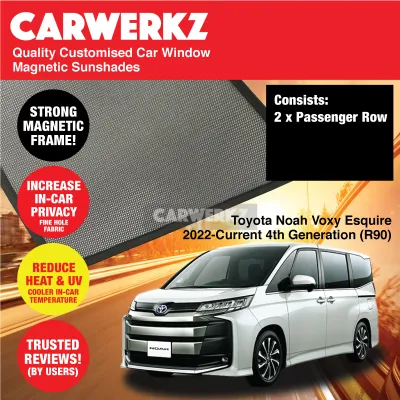
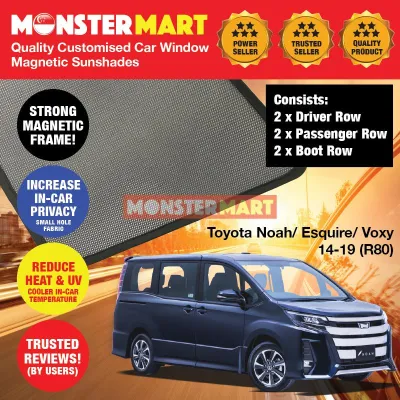
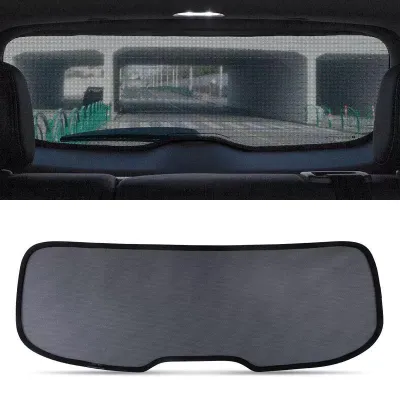
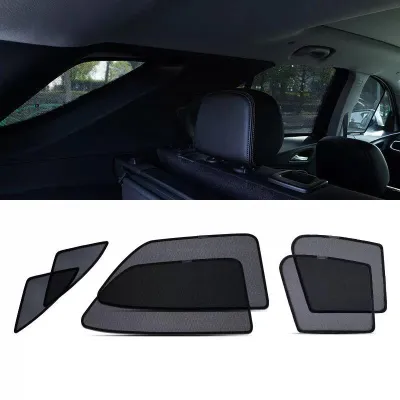
Prices are valid at publication and may change. Please refer to the product page for the latest price.
When selecting a sun shade, you must first identify the exact generation and model year of your Toyota Noah. The windshield dimensions, curvature, and glass area have evolved across different generations, such as the second-generation R70 (2007–2014), the third-generation R80 (2014–2022), and the fourth-generation R90 (2022–present). A shade designed for an older R80 model will not align correctly with the windshield of a newer R90 model due to changes in the glass rake angle, width, and the physical design of the front pillars.
Beyond the basic height and width, the modern Toyota Noah features a complex array of hardware mounted directly to the upper windshield. This includes the rearview mirror assembly, rain sensors, automatic wiper modules, and the camera housings for the Toyota Safety Sense (TSS) driver-assistance suite. These components create a bulky protrusion at the top center of the glass. A sun shade must be designed to accommodate this housing; otherwise, the shade will press against the sensors, potentially misaligning the cameras or preventing the shade from sitting flat against the glass.
To evaluate whether a universal shade can even come close to fitting, you should measure your windshield’s physical dimensions. Use a flexible measuring tape to record the maximum width along the bottom cowl (where the glass meets the hood), the width along the top edge near the roofline, and the vertical height from the center of the dashboard to the top of the glass. Comparing these measurements to product specifications is the only reliable way to avoid buying a shade that is either too short to reach the sun visors or too wide to fit between the A-pillars.
Custom-Fit Sun Shades: Precision Coverage and Trade-offs
Custom-fit sun shades are engineered using computer-aided design (CAD) templates of specific vehicle cabins, ensuring that the shade matches the exact perimeter of your Toyota Noah’s windshield. The primary design intent of these shades is to provide absolute edge-to-edge coverage, leaving virtually no gaps around the A-pillars, the dashboard base, or the upper roofline. By eliminating these light gaps, custom shades prevent localized hot spots from forming on your dashboard and steering wheel, keeping the cabin temperature noticeably lower.

These shades typically feature a multi-layered construction that provides superior thermal insulation compared to basic single-sheet designs. A highly reflective outer layer bounces away solar radiation, while inner foam or felt layers act as a thermal barrier to prevent heat from radiating into the cabin. Because they are stiff and cut to the exact shape of the window frame, they often do not require aggressive pinning by the sun visors to stay in place. They simply slide into the window channel and stay secure, minimizing wear and tear on your vehicle’s interior trim.
However, this rigid, high-coverage design introduces practical storage challenges inside the Noah’s cabin. Because custom-fit shades use thick, insulating materials and a stiff internal structure, they cannot be twisted into a tiny, flexible circle. Instead, they must be rolled up or folded like an accordion into a long, rigid bundle. In a family-oriented MPV where passenger space is highly valued, storing a one-meter-long rolled shade can be inconvenient, especially when all three rows of seats are occupied by passengers.
Furthermore, you must exercise extreme caution to verify that the custom shade matches your exact trim level and safety sensor configuration. If your Noah is equipped with an aftermarket dashcam or a specific regional variant of the Toyota Safety Sense housing, a standard custom-fit template might not clear these additions. Always check if the manufacturer offers different versions of the shade for models with or without advanced sensor packages to ensure a seamless fit without putting physical stress on your mounted electronics.
Universal Sun Shades: Budget Flexibility and Coverage Limits
Universal sun shades are designed to fit a wide range of vehicle classes, relying on flexible materials and adjustable positioning to accommodate different windshield sizes. To cover larger vehicles like the Toyota Noah, manufacturers of universal shades often use overlapping two-piece wire-ring designs, accordion-folded bubble foil, or extendable fabric flaps. These designs allow the user to pull, stretch, or overlap the material to fill as much of the glass area as possible, offering a highly adaptable solution at a fraction of the cost of custom alternatives.
Despite their flexibility, universal shades almost always result in noticeable coverage gaps when applied to the Toyota Noah’s massive windshield. Because these shades are built to a generic aspect ratio, they are frequently too short vertically for the Noah’s tall glass, leaving a wide gap at the top or bottom. Alternatively, if you purchase an extra-large size to cover the height, the shade may be far too wide, causing the excess material to bunch up at the sides and create deep folds that let in heat and light.
Another significant drawback of universal shades is their potential to interfere with your vehicle’s interior controls and safety hardware. Because they lack a dedicated cutout for the rearview mirror and the Toyota Safety Sense camera housing, you must often force the shade behind or over these sensitive components. This constant pressure can loosen the adhesive mounts of your dashcam, alter the angle of your rearview mirror, or put stress on the plastic housing of your safety sensors, requiring frequent readjustments.
Additionally, universal shades rely heavily on your vehicle’s sun visors to hold them upright against the glass. Because the material is often thin and prone to sagging under intense heat, the middle section of a universal shade can bow downward, pulling away from the windshield and allowing a pocket of superheated air to build up directly behind the glass. Over time, this sagging reduces the shade’s overall thermal efficiency and can make the installation process a daily frustration.
Comparing Fit, Storage, and Daily Usability
To help you weigh the daily convenience against the coverage quality of both options, the table below outlines the key performance differences between custom-fit and universal sun shades for the Toyota Noah.
| Feature | Custom-Fit Sun Shades | Universal Sun Shades |
|---|---|---|
| Edge Coverage | Complete edge-to-edge coverage with zero light gaps | Moderate coverage with common gaps at corners and edges |
| Installation Time | Fast; slides directly into place with minimal adjustment | Slower; requires overlapping, stretching, and visor pinning |
| Storage Footprint | Large; rolls or folds into a long, rigid cylinder | Small; twists into a compact circle or folds flat |
| Sensor Compatibility | High; features dedicated cutouts for TSS and mirrors | Low; often presses against or blocks sensor housings |
| Durability in Humid Climates | High; heavy-duty materials resist warping and flaking | Moderate to Low; thin materials can sag or flake over time |
| Typical Price Range | S$50 to S$100+ | S$15 to S$30 |
The daily setup process highlights a clear contrast in usability. A custom-fit shade is rigid enough to support its own weight, meaning you can install it in seconds by simply placing it against the glass and flipping down the sun visors to secure the top edge. A universal shade, especially a two-piece spring-wire design, requires you to carefully position both halves, overlap them in the center, and wedge them tightly under the visors, which can be tedious when you are in a hurry.
Long-term durability is another critical factor, particularly in hot and humid tropical climates. The intense UV radiation and high cabin temperatures can rapidly degrade cheap materials. Universal bubble-wrap shades often begin to flake after a few seasons of intense exposure, leaving tiny silver particles all over your dashboard and steering column. Custom-fit shades utilize high-grade, UV-stabilized polyester and heavy-duty edge binding that resist warping, cracking, and flaking, ensuring they remain effective for years.
How to Verify Compatibility and Coverage Claims
Before purchasing any sun shade on an online marketplace or from a local automotive accessory shop, you must verify that the product’s dimensions and design match your Toyota Noah. Do not rely solely on generic compatibility lists that claim a product “fits all MPVs.” Instead, cross-reference the manufacturer’s stated dimensions with the physical measurements you took of your windshield, paying close attention to the vertical height.
When reviewing product listings, look closely at the design of the upper center edge of the sun shade. A high-quality shade for the Toyota Noah should feature a deep, hook-and-loop secured cutout or a flexible V-shape split designed specifically to clear the rearview mirror post and the bulky Toyota Safety Sense camera housing. If the product image shows a solid, straight top edge with no cutout, it will likely struggle to fit around your safety sensors and may cause installation issues.
It is also highly recommended to check the return policies and seller guarantees before finalizing your purchase. Because minor trim variations or aftermarket accessories (such as larger dashcams or toll readers) can affect how a shade fits, having the option to exchange or return the product ensures you are not stuck with an unusable accessory. Read through customer reviews from other Toyota Noah owners to see if they have successfully installed the shade on your specific generation (R70, R80, or R90) without fitment issues.
Choosing the Right Shade for Your Driving Needs
If your daily routine involves parking your Toyota Noah in open-air carparks, rooftop decks, or unsheltered driveways for extended periods, investing in a custom-fit sun shade is highly recommended. The complete edge-to-edge coverage and superior thermal insulation of a custom shade are essential for protecting your dashboard leather, steering wheel electronics, and seat upholstery from severe heat degradation. Over time, the superior heat rejection will also reduce the load on your air conditioning system, allowing the cabin to cool down much faster when you start driving.
On the other hand, a universal sun shade may be entirely sufficient if you primarily park your vehicle in sheltered multi-storey carparks or basement garages. If you only need a shade for occasional weekend outings, outdoor road trips, or temporary parking, the lower cost and compact storage footprint of a universal shade make it a highly practical and budget-friendly choice. It is also an excellent option if you frequently switch accessories between multiple family vehicles.
Before adding any sun shade to your cart, take a moment to perform a final verification of your vehicle’s details. Double-check your Noah’s model year, chassis code, and the presence of any aftermarket windshield-mounted electronics. By matching the shade’s design to your specific driving habits and vehicle configuration, you will ensure a comfortable, protected cabin every time you step inside your MPV.
Frequently Asked Questions (FAQ)
Will a universal sun shade block the rain sensors on my Toyota Noah?
A universal sun shade can easily interfere with or block the rain sensors and driver-assistance cameras on your Toyota Noah if it does not feature a dedicated cutout. Because universal shades have a solid top edge, installing them requires you to either force the material behind the sensor housing or drape it over the assembly. This can put physical pressure on the plastic housing, potentially misaligning the sensitive cameras used for lane-keep assist and pre-collision braking, or trapping heat directly against the sensor electronics. To prevent this, look for universal shades with a flexible, split top edge or a hook-and-loop strap that allows the shade to close securely around the rearview mirror mount.
Can I use a front windshield sun shade on the side windows of the Noah?
Using a front windshield sun shade on the side windows of the Toyota Noah is highly impractical and ineffective. Front windshield shades are designed for a completely different aspect ratio and curvature, making them far too large and rigid to fit into the side window frames. Attempting to wedge a front shade into a side window will block your side mirrors, create massive blind spots, and likely fall out of place due to the lack of support. For the side windows of your Noah, you should look for dedicated magnetic mesh screens, static-cling sunshades, or custom-fit side window curtains designed specifically for MPV passenger rows, which allow for normal window operation and clear visibility.

Community discussion
Share your experience or ask a question. Comments are reviewed before publication.