
Quick Answer: Which Keeps You Cooler in a Hot Climate?
When driving in Singapore’s persistently hot and humid climate, choosing between a cooling gel cushion and a breathable mesh seat cover depends entirely on your daily commute patterns and immediate comfort needs. Neither of these passive accessories actively generates cold air like an air conditioning system; instead, they manage your body heat and cabin airflow through distinct physical mechanisms.
A cooling gel cushion seat relies on thermal mass to absorb and dissipate your body heat, providing an immediate “cool-to-the-touch” sensation when you first enter the car. However, this cooling effect is temporary, as the gel eventually reaches thermal equilibrium with your body and the cabin temperature during longer drives.
Conversely, a breathable mesh seat cover uses a hollow, three-dimensional fabric structure to establish a continuous air gap between your body and the seat. While it does not offer an instant chilly sensation upon sitting, it facilitates constant airflow and sweat evaporation when the car’s air conditioning is running, making it highly effective at preventing the uncomfortable “sticky back” feeling during extended commutes.
Products mentioned in this guide
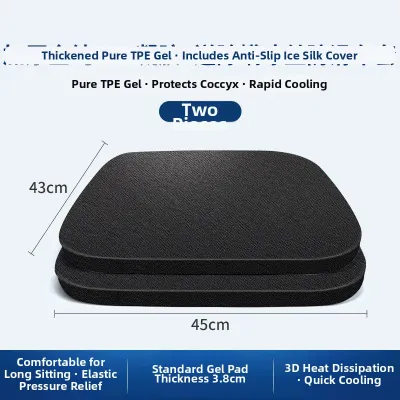
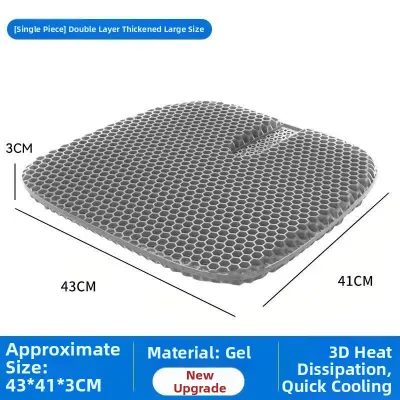
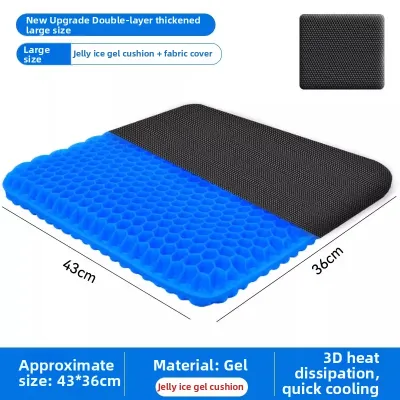
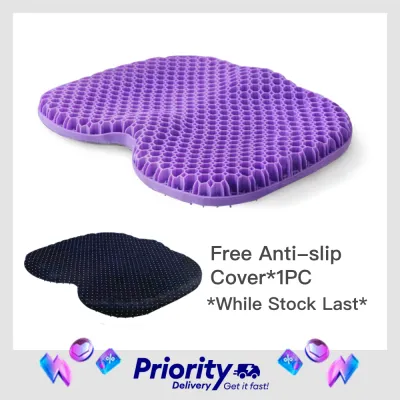
Prices are valid at publication and may change. Please refer to the product page for the latest price.
If your primary goal is instant relief from a sun-baked seat on short trips, a cooling gel cushion is the more suitable option. If you struggle with sweat buildup during long drives and want a lightweight solution that works in tandem with your vehicle’s air conditioning, a breathable mesh seat cover is the superior choice.
How Cooling Gel Cushions Handle Tropical Heat
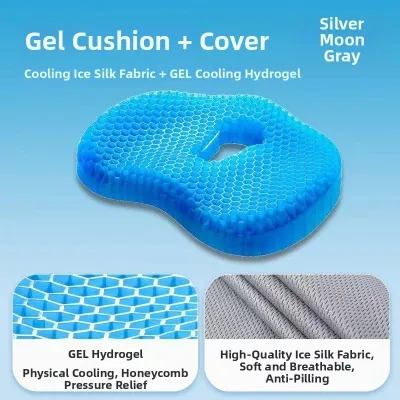
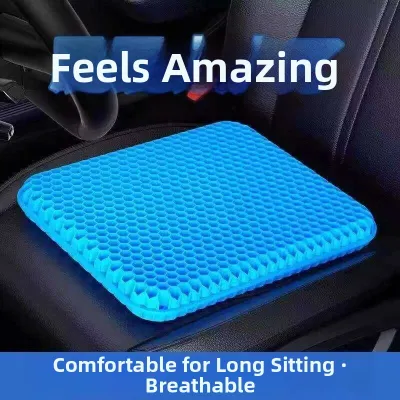
Cooling gel cushions are engineered using high-density polymer gels or phase-change materials designed to absorb significant amounts of thermal energy. When your body heat comes into contact with the cooler surface of the gel, the material conducts the heat away from your skin, creating a noticeable drop in localized temperature. This thermal transfer provides a soothing, refreshing sensation during the first twenty to thirty minutes of your drive.

The primary benefit of a gel cushion lies in this high thermal capacity, which acts as a temporary heat sink. For drivers in Singapore who frequently park in open-air lots, the initial climb into a hot car cabin can be incredibly uncomfortable. A gel cushion provides a protective barrier against a scorching leather or synthetic seat, absorbing your body heat before it can accumulate and cause sweating.
However, the physical laws of thermodynamics present a clear limitation: thermal equilibrium. Once the gel cushion absorbs as much heat as its mass allows, it matches your body temperature and can no longer provide a cooling sensation. If the cabin air conditioning cannot sufficiently cool the ambient air around the cushion, the gel may begin to trap heat, leaving you feeling warm and damp during longer journeys.
Additionally, if the vehicle is parked under direct sunlight for several hours, the gel cushion will absorb the ambient cabin heat. When you return to the vehicle, the cushion may actually feel warm to the touch and will require time to cool down once the air conditioning is turned on.
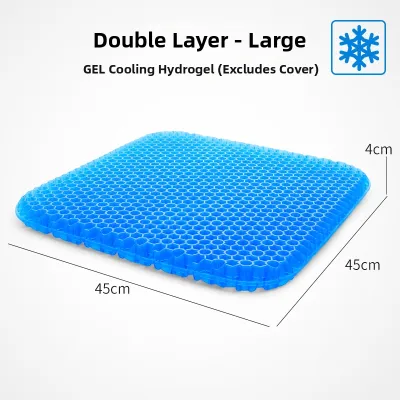
From a physical standpoint, cooling gel cushions are relatively heavy and thick, often measuring between three to five centimeters in height. This added thickness can alter your seating position, which is an important consideration for drivers who prefer a low-profile seating arrangement or have limited headroom.
How Breathable Mesh Covers Prevent Sweat Buildup
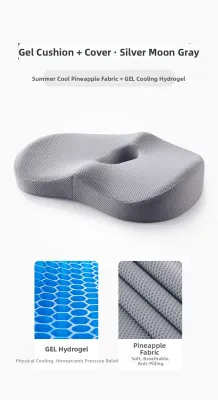
Breathable mesh seat covers address cabin heat through ventilation and moisture management rather than thermal absorption. These covers are typically constructed from a specialized 3D spacer mesh—a double-knitted fabric consisting of micro-filament yarns sandwiched between two outer layers of mesh. This design creates a resilient, springy air gap that does not collapse under your body weight.
This open air gap is crucial in Singapore’s high-humidity environment, where relative humidity levels regularly exceed eighty percent. Under such conditions, sweat cannot evaporate efficiently without adequate airflow, leading to a damp, uncomfortable driving experience. The 3D mesh structure allows air from the car’s air conditioning vents to circulate freely behind your back and beneath your thighs, facilitating rapid sweat evaporation.
Unlike gel cushions, a mesh cover does not have a finite heat capacity. Because it relies on continuous airflow, its cooling efficiency remains constant throughout your entire drive, provided your vehicle’s air conditioning system is functioning. It prevents the physical contact between your skin or clothing and the non-porous leather or vinyl of your car seats, eliminating the “sticky” sensation entirely.
The main limitation of a breathable mesh cover is the absence of an immediate, active “cool touch.” When you first sit on a mesh cover in a hot car, it will feel warm because it has no thermal mass to absorb your body heat. It relies entirely on the cabin’s air circulation to begin its cooling process, meaning you must wait for the air conditioning to lower the cabin temperature before you feel the benefits.
Furthermore, mesh covers provide very little additional padding. If you are looking for an accessory that offers plush comfort or significant pressure relief for your tailbone and lower back, a thin mesh cover will not meet those ergonomic expectations.
Key Comparison Dimensions for Daily Driving
To help you evaluate which accessory aligns best with your daily driving routine in Singapore, it is helpful to compare their performance across several practical dimensions. The table below outlines the core differences between cooling gel cushions and breathable mesh seat covers.
| Feature | Cooling Gel Cushion | Breathable Mesh Seat Cover |
|---|---|---|
| Primary Mechanism | Thermal absorption (heat sink) | Passive ventilation (air gap) |
| Initial Sensation | Instant cool touch upon sitting | Warm until cabin air circulates |
| Long-Drive Comfort | May trap heat after 30 minutes | Maintains consistent airflow indefinitely |
| Sweat Prevention | Moderate (limited by moisture buildup) | High (promotes evaporative cooling) |
| Cushioning & Support | High (thick, pressure-relieving polymer) | Low (thin, preserves seat contour) |
| Seating Height Impact | Raises driver position by 3 to 5 cm | Minimal impact on driving position |
| Airbag Compatibility | High (sits only on the seat base) | Variable (requires careful selection for full covers) |
Heat Dissipation vs. Continuous Airflow
The fundamental trade-off between these two products lies in how they handle heat over time. A cooling gel cushion excels at rapid heat dissipation during the initial phase of your drive, making it excellent for short, multi-stop trips around the city where you are constantly getting in and out of the vehicle.
A breathable mesh cover, on the other hand, is designed for the long haul. In stop-and-go traffic on major expressways, the constant airflow provided by the mesh ensures that moisture does not pool on your lower back. It acts as a passive climate control layer that relies on the vehicle’s HVAC system to maintain a comfortable, sweat-free microclimate.
Ergonomics and Driving Position
Adding any accessory to your car seat will alter your physical relationship with the vehicle’s controls. Because cooling gel cushions are thick and dense, they will raise your seating height, which can affect your line of sight through the windshield, your mirror alignment, and your reach to the pedals. Drivers of smaller vehicles or those who prefer an aggressive, low-slung driving position may find this height adjustment inconvenient.
Mesh seat covers are lightweight and thin, conforming closely to the existing contours of your car seat. They preserve your original driving posture and do not require you to readjust your steering wheel or mirrors. However, they offer no additional lumbar or coccyx support, which may be a drawback for drivers who suffer from chronic back pain or discomfort during long commutes.
Safety, Airbags, and Seat Compatibility
Safety is the most critical factor when introducing aftermarket interior accessories to your vehicle. Many modern vehicles feature side-impact airbags (SRS) integrated directly into the outer bolsters of the front seat backrests. Installing a full-coverage mesh seat cover that wraps around the entire backrest can severely obstruct or completely prevent these airbags from deploying in an accident.
If you choose a mesh cover, you must verify that it is explicitly certified as airbag-compatible, featuring specialized breakaway stitching or open-sided designs that allow the airbag to deploy unimpeded. Never install a non-compatible cover over a seat equipped with integrated side airbags, as this compromises your vehicle’s safety systems.
While cooling gel cushions typically sit only on the seat base and do not interfere with side-impact airbags, they present other safety considerations. A thick, heavy cushion can alter your seatbelt geometry, potentially reducing the effectiveness of the restraint system. Furthermore, modern front passenger seats are equipped with occupant classification sensors (OCS) that detect the weight of the passenger to determine airbag deployment force; a heavy gel cushion can interfere with these sensitive pressure pads.
Before purchasing or installing either accessory, always consult your vehicle’s owner manual to review any manufacturer warnings regarding seat covers, cushions, or modifications to the seating surfaces.
Decision Framework: Which Option Fits Your Commute?
To make an informed decision that suits your specific driving habits and vehicle configuration in Singapore, use the following structured decision framework.
Choose Cooling Gel Cushions if:
- You prioritize physical comfort: You require pressure relief for your lower back, tailbone, or hips during your daily drive, and you prefer a plush, supportive seating surface.
- Your trips are short and frequent: Your typical commute lasts less than thirty minutes, allowing you to benefit from the initial cool-to-the-touch sensation before the gel reaches thermal saturation.
- You use a base-only pad: You want an accessory that sits strictly on the seat cushion, avoiding any potential interference with backrest-mounted side airbags.
Choose Breathable Mesh Covers if:
- You suffer from back sweat: Your primary discomfort is a damp shirt and sticky skin caused by high humidity and non-breathable seat materials like leather or vinyl.
- You face long commutes: You spend significant time on the road, where continuous airflow and evaporative cooling are required to maintain comfort over several hours.
- You want to preserve your driving position: You prefer a low-profile accessory that does not alter your seating height, pedal reach, or steering wheel alignment.
Verify First if:
- Your seats have integrated side airbags: Ensure any full-coverage mesh cover is certified as airbag-safe with breakaway seams.
- Your vehicle features ventilated or heated seats: Solid gel cushions will completely block the airflow from factory-ventilated seats, rendering the built-in system useless.
- The accessory fits your seat dimensions: Measure your car seat carefully before purchasing to ensure a secure fit that prevents the cushion or cover from sliding while you are driving.
Maintenance and Care in High Humidity
Singapore’s tropical climate, characterized by high relative humidity and warm temperatures, creates an environment where mold, mildew, and bacteria can thrive on interior car accessories. Regular maintenance is essential to prevent unpleasant odors and ensure the longevity of your cooling seat accessory.
For cooling gel cushions, the outer cover is typically removable and machine-washable. You should wash the cover regularly according to the manufacturer’s care label using a mild detergent. The inner gel core should never be submerged in water or placed in a washing machine, as this can damage the polymer structure; instead, wipe the gel surface with a damp cloth and a mild sanitizing solution.
It is crucial to keep the gel core out of direct, intense sunlight when parking. Prolonged exposure to UV rays can cause the polymer gel to break down, lose its elasticity, or degrade the outer fabric. Utilizing a high-quality front windshield sunshade when parked outdoors will protect both your cushion and your car’s interior from solar damage.
For breathable mesh seat covers, hand washing or using a gentle machine cycle is highly recommended to protect the delicate 3D spacer filaments. Always refer to the product’s care instructions before washing.
The most critical step in maintaining a mesh cover is ensuring it is completely dry before reinstalling it in your vehicle. Reinstalling a damp mesh cover inside a closed, humid car cabin will trap moisture in the air gaps, leading to rapid mold growth and stubborn, musty odors that are difficult to eliminate. Allow the cover to air dry completely in a well-ventilated area away from direct, scorching sunlight.
Frequently Asked Questions (FAQ)
Can I use a cooling gel cushion on a car with ventilated seats?
No, you should not use a solid cooling gel cushion on a vehicle equipped with factory-ventilated seats. The solid structure of the gel pad will completely block the small ventilation holes in the seat leather, preventing the built-in fans from circulating air to your body and rendering the vehicle’s native cooling feature entirely useless. If you require a protective layer, a highly breathable, thin mesh cover may allow some airflow to pass through, but you should still check the manufacturer’s specifications to ensure it does not restrict the seat’s cooling performance.
Do cooling gel cushions leak if left in a hot, parked car?
High-quality cooling gel cushions are constructed using advanced, solid-state polymer gels or sealed honeycomb structures that do not liquefy or leak, even when subjected to the high temperatures of a closed vehicle parked in direct sunlight. However, prolonged exposure to extreme heat can accelerate the degradation of the outer fabric and the adhesive bonds within the cushion. To maximize the lifespan of your cushion and protect your car’s upholstery, it is highly recommended to use a reflective windshield sunshade to lower the overall cabin temperature when parked.
Are 12V active cooling seat covers a better alternative?
Active cooling seat covers equipped with built-in 12V electric fans offer a more powerful cooling solution than passive gel or mesh options because they actively force cabin air through the seating surface. However, they introduce several trade-offs, including mechanical noise from the fans, additional power cables that must be routed to your car’s accessory socket, and a stiffer seating surface due to the internal fan housing. For most drivers, high-quality passive options like mesh covers provide sufficient comfort without the added complexity, noise, and electrical requirements of an active system.

Community discussion
Share your experience or ask a question. Comments are reviewed before publication.