
Upgrading your Kia Niro Hybrid’s interior with full-surround floor mats is an excellent way to protect your vehicle’s carpet from dirt, moisture, and daily wear. However, finding the perfect fit requires understanding that the best option is defined by precise engineering rather than generic brand claims. Because the Niro Hybrid features a unique floor pan designed around its hybrid battery pack and electrical routing, standard off-the-shelf mats often fall short. To achieve a seamless fit, you must evaluate how different manufacturers utilize 3D scanning technology, compare the practical trade-offs of materials like TPE and leather, and verify critical safety clearances before making a purchase.
Understanding the Kia Niro Hybrid Floor Contours
The cabin floor of the Kia Niro Hybrid is a complex architectural landscape shaped by the vehicle’s hybrid drivetrain. On the driver’s side, the floor contour must accommodate either a floor-mounted or suspended accelerator pedal, along with a raised left footrest. The transition from the footwell to the seat base is particularly steep, as the floor pan rises to accommodate the hybrid battery pack located beneath the rear seats. This battery placement means the floor dimensions of the hybrid variant differ subtly from the fully electric or traditional petrol-only versions of the Niro, making exact model-year and drivetrain matching essential.
Moving to the rear passenger area, the floor pan features a low center tunnel and specific mounting points for the front seat rails. A high-quality full-surround mat must contour precisely over this central hump without bunching or lifting. Furthermore, the area directly beneath the front seats houses critical components, including electrical wiring harnesses for the seat sensors and, in many trim levels, dedicated climate control vents. The mat’s vertical walls must be sculpted to clear these obstacles, ensuring that rear passengers receive adequate airflow and that the front seats can slide smoothly along their tracks without snagging the edge of the mat.
Products mentioned in this guide


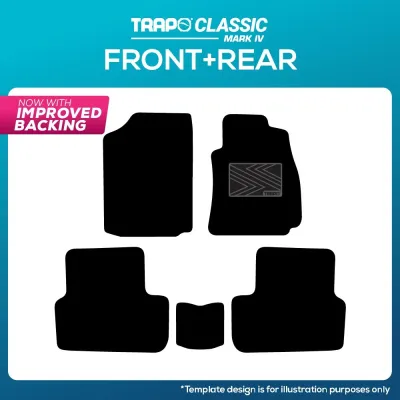
Prices are valid at publication and may change. Please refer to the product page for the latest price.
Critical Fit Checks for Full-Surround Mats
When evaluating full-surround mats, safety must always be your primary consideration. The driver’s side mat is the most critical component, as any shifting or curling can lead to pedal interference. A properly fitted mat must leave a clear, unobstructed path for both the brake and accelerator pedals throughout their entire range of travel. If a mat is too thick or lacks structural rigidity, the edge of the pedal can catch on the lip of the mat, which poses a severe safety hazard during sudden braking or acceleration.

To prevent the mats from sliding, they must align perfectly with the Kia Niro’s factory floor retention hooks. High-quality custom mats feature integrated locking clips or reinforced grommets that snap securely onto these hooks. If a brand relies solely on a high-friction backing without physical anchor points, the mat is highly likely to shift forward over time under the pressure of your feet.
The vertical edges of the mats, which provide the full-surround protection, must balance height with flexibility. These edges should rise high enough along the footwell walls to contain spills and dirt, typically around 3 to 5 centimeters, but they must not interfere with the plastic trim panels or the door sills. If the edges are too rigid or poorly shaped, they can prevent the doors from closing cleanly or rub against the seat adjustment controls, causing premature wear to both the mat and the vehicle’s interior trim.
Material Trade-offs: TPE vs. Leather and Coil
Choosing the right material for your full-surround mats involves balancing aesthetics, durability, and maintenance requirements. Thermoplastic Elastomer (TPE) has become highly popular for its exceptional durability and weather resistance. TPE is an odorless, non-toxic material that combines the flexibility of rubber with the strength of plastic. Because TPE mats are typically manufactured using precise injection molding based on 3D scans, they offer unmatched dimensional stability. They will not warp or crack under the intense cabin heat experienced when parked outdoors in Singapore, and they are completely waterproof, making them incredibly easy to clean.
For drivers seeking a more upscale cabin feel, multi-layer mats featuring a synthetic leather base with removable coil or carpet inserts are a compelling alternative. These mats offer a luxurious, cushioned feel underfoot and can be customized with various stitching patterns to match the Niro’s modern interior. The top coil layer is highly effective at trapping dry dirt, sand, and dust, keeping the surface looking clean. However, these mats require more intensive maintenance. The synthetic leather and stitching can absorb moisture over time if subjected to frequent spills, potentially leading to mold growth and unpleasant odors if not dried thoroughly.
Beneath the surface of many multi-layer mats lies a core of Cross-linked Polyethylene (XPE) foam. This material provides essential structural support, helping the mat maintain its 3D shape while offering sound-dampening properties that reduce road noise entering the cabin. When comparing brands, look for high-density XPE foam, as lower-grade foams can compress permanently under constant heel pressure, leading to sagging and reduced coverage over time.
Pre-Purchase Verification and Post-Installation Safety
Before purchasing a set of full-surround mats from an online marketplace or specialist retailer, you must perform a thorough compatibility check. Do not rely on generic listings that claim to fit all Kia Niro models. You must cross-reference the exact model year, generation, and trim level of your vehicle. Crucially, ensure the product is explicitly designed for Right-Hand Drive (RHD) vehicles. Installing a Left-Hand Drive (LHD) mat in an RHD car is highly dangerous, as the pedal cutouts and footrest alignments will be reversed, directly interfering with your ability to operate the vehicle safely.
When your mats arrive, take your time during the installation process. Begin by thoroughly vacuuming the factory carpet to remove any debris that could prevent the new mats from sitting flat. Carefully position the mats, aligning the factory floor hooks first before tucking the vertical edges under the plastic trim panels. Many manufacturers provide a plastic installation tool to help slide the edges cleanly behind the trim without creasing the mat material.
Immediately after installation, and before driving the vehicle, conduct a stationary safety test. Sit in the driver’s seat and depress the brake and accelerator pedals fully several times, verifying that there is absolutely no contact with the mat. Next, adjust the driver and front passenger seats through their entire range of forward, backward, and vertical motion. If you detect any resistance or hear the seat motor straining, remove the mats and adjust their positioning to ensure complete clearance.
Decision Framework: Matching Mat Types to Your Driving Needs
To select the ideal full-surround floor mats for your Kia Niro Hybrid, consider how your daily driving habits and maintenance preferences align with the following scenarios:
Choose TPE-based brands if you prioritize maximum utility and a low-maintenance lifestyle. These mats are ideal if you frequently transport children, pets, or wet gear, as they can be easily removed, hosed down, and wiped dry in minutes. Their superior liquid containment is particularly beneficial during Singapore’s heavy monsoon seasons, preventing rainwater from soaking into the underlying vehicle carpet.
Choose Leather/Coil hybrid brands if you want to enhance the premium aesthetic of your Niro’s cabin and prefer a softer, more cushioned feel underfoot. These mats are best suited for drivers who primarily commute in clean, urban environments and are willing to dedicate time to regular vacuuming and spot cleaning to maintain the leather borders.
Always verify compatibility first if the product listing does not explicitly state fitment for the hybrid variant of your specific model year. If the manufacturer cannot confirm clearance for the under-seat air vents or the exact layout of the hybrid floor pan, it is best to look for an alternative brand that provides verified, model-specific dimensions.
Frequently Asked Questions (FAQ)
Will full-surround mats block under-seat air vents in the Kia Niro Hybrid?
Yes, poorly designed or generic full-surround mats can block the climate control vents located under the front seats of the Kia Niro Hybrid. To prevent this, look for mats that feature precise, pre-cut openings or a lower vertical profile in the under-seat transition zones. Before purchasing, inspect the product photos or contact the manufacturer to confirm that their design explicitly accommodates these vents, ensuring uninterrupted airflow and optimal climate control for your rear passengers.
How should I clean and maintain different types of full-surround mats?
The cleaning process depends entirely on the mat’s material. For TPE mats, simply remove them from the vehicle, hose them down with clean water, use a mild soap if necessary, and wipe them dry with a microfiber cloth before reinstallation. For leather and coil hybrid mats, separate the top coil layer from the leather base. Vacuum the coil layer to remove trapped dirt, and wipe the synthetic leather base with a damp cloth and a mild, pH-neutral interior cleaner. Ensure all layers are completely dry before putting them back in the car to prevent moisture buildup and musty odors.

Community discussion
Share your experience or ask a question. Comments are reviewed before publication.