
Finding the ideal full-surround car mat for your Toyota Noah 90 requires looking beyond generic brand names and focusing on precise fitment, material durability, and safety clearances. Because the Noah 90 is a highly versatile multi-purpose vehicle (MPV) featuring complex floor contours, sliding seat tracks, and specific pedal arrangements, the best mat is one that integrates seamlessly with these mechanical features without compromising safety. Selecting the right option involves balancing your daily usage patterns against the physical characteristics of different materials available in the market.
Rather than relying on universal claims of a perfect fit, owners must evaluate how well a mat accommodates the unique layout of the Noah 90 cabin. A truly compatible full-surround mat must protect the original carpeting from Singapore’s humid weather, muddy shoes, and accidental spills while remaining firmly anchored in place. By understanding the core evaluation criteria, material differences, and critical safety checks, you can make an informed decision that protects your vehicle’s interior and ensures a safe driving experience.
Core Criteria for Evaluating Noah 90 Full-Surround Mats
When evaluating full-surround mats for the Toyota Noah 90, the primary baseline standard is coverage. A high-quality full-surround mat must extend beyond the flat floor areas to protect the vertical walls of the footwells, the transmission tunnel, and the side sills. In a family-oriented MPV like the Noah 90, dirt and moisture frequently accumulate around the door sills and the transitions to the seating areas, making high-edge walls essential for containing debris.
Products mentioned in this guide
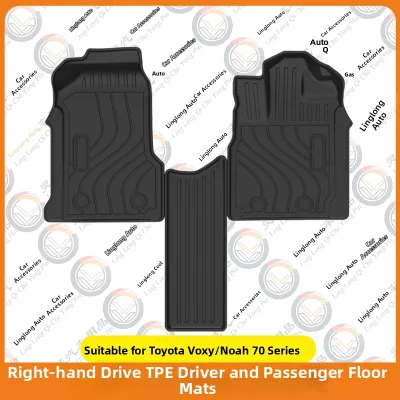
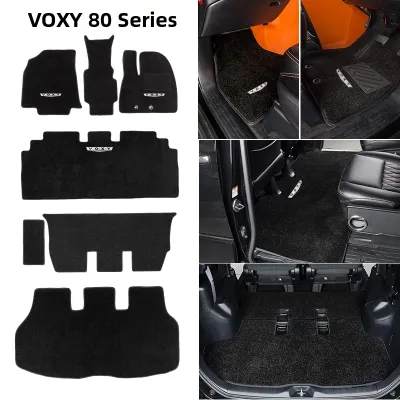
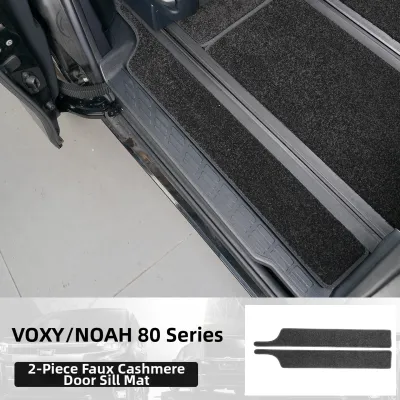
Prices are valid at publication and may change. Please refer to the product page for the latest price.
Special attention must be paid to the seat tracks and the pedal zones. The Noah 90 features a highly flexible seating arrangement where the second and third rows slide along tracks embedded in the floor. The mats must be designed with precise cutouts that allow these seats to move freely without bunching, lifting, or blocking the mechanism. In the driver’s footwell, the mat must contour perfectly around the accelerator, brake pedal, and footrest, leaving ample clearance to prevent any physical interference during operation.
Stability is another critical factor that defines a reliable full-surround mat. The backing of the mat must feature an effective anti-slip texture, such as a high-friction nibbed surface or a specialized hook-and-loop fastening system, to prevent the mat from shifting forward under foot pressure. Furthermore, the mat must be fully compatible with the original factory anchor points. These floor clips are designed to lock the driver’s mat in place, and any aftermarket option must utilize these exact mounting points without requiring modification.
To ensure you are getting a product that meets these standards, always verify the manufacturer’s technical specifications rather than relying solely on generic marketing claims. Look for detailed product diagrams or physical samples that demonstrate how the mat handles the specific floor pan of the Noah 90. A reputable manufacturer will provide clear documentation showing the exact dimensions and mounting interfaces designed for this specific vehicle model.
Material Comparison: TPE, Leather, and XPE Options
Thermoplastic Elastomer (TPE) has become a highly popular material choice for modern car mats due to its exceptional durability and practical maintenance. TPE mats are molded using high-precision 3D scans, resulting in a rigid yet flexible tray-like structure that retains its shape over years of use. This material is completely waterproof, highly resistant to wear, and naturally odor-free, which is a significant advantage in Singapore’s hot and humid climate where trapped moisture can quickly lead to musty smells. Cleaning TPE mats is straightforward, requiring only a quick rinse with water and a wipe down, making them highly suitable for drivers who prioritize low-maintenance utility.

Synthetic leather or polyurethane (PU) leather mats offer a more traditional, premium aesthetic that complements the upscale interior of the Noah 90. These mats typically feature a quilted pattern and a softer surface texture, providing a comfortable foot feel and a quieter cabin environment by absorbing road noise. However, synthetic leather options require more careful maintenance. While they are generally water-resistant, the stitching in quilted designs can sometimes allow moisture to seep into the lower layers if major spills occur, and the surface can show signs of scuffing or wear in high-friction areas over time.
Cross-linked Polyethylene (XPE) foam is frequently utilized as a core structural layer in multi-layer synthetic leather mats. XPE provides excellent cushioning, thermal insulation, and sound dampening, helping the mat maintain its three-dimensional shape without collapsing at the edges. The thickness of the XPE layer directly influences the overall plushness of the mat and its ability to absorb vibrations from the road. When choosing multi-layer mats, the quality of the XPE foam determines whether the mat will remain stiff and upright or sag after a few months of exposure to cabin heat.
Before finalizing your choice, it is highly recommended to check the physical product labels for actual material composition and safety certifications. Look for certifications such as RoHS or SGS, which verify that the materials used are free from harmful volatile organic compounds (VOCs), heavy metals, and toxic plasticizers. Because a car cabin can reach high temperatures when parked under the sun, ensuring that your mats do not emit harmful chemical fumes is essential for the health and safety of all passengers.
Fitment Accuracy and Safety Checks for the Noah 90
Achieving perfect fitment is not merely an aesthetic preference; it is a fundamental safety requirement. In the driver’s footwell of the Toyota Noah 90, the clearance around the pedals must be checked with absolute precision. The accelerator pedal in modern vehicles is highly sensitive, and a mat that is even slightly too thick or poorly aligned can catch the edge of the pedal, leading to unintended acceleration or preventing the pedal from returning to its idle position. Similarly, the brake pedal must have unobstructed travel to ensure full braking force can be applied in an emergency.
To verify pedal clearance, perform a physical check with the vehicle’s engine completely turned off. Press both the accelerator and brake pedals fully to the floorboard several times, observing whether the pedal arm or pad comes into contact with the edge of the mat. There should be a clear, unobstructed gap around the entire range of motion of each pedal. If the mat bunches up, slides forward, or pinches the pedal mechanism at any point, it is unsafe for road use.
In the rear passenger cabin, the sliding tracks of the second and third-row seats present a unique fitment challenge. The Noah 90’s seats are designed to slide smoothly to configure the cabin for passengers or cargo. Install the mats and slide the seats through their entire range of travel, from the furthest forward position to the furthest rearward position. Watch closely to ensure the bottom plastic shrouds of the seats do not catch, scrape, or fold the edges of the mats, which can damage both the seat mechanism and the mat itself.
As a strict safety boundary, if you observe that any moving parts are obstructed, or if the original floor clips do not align perfectly with the mat’s locking eyelets, stop using the mats immediately. Do not attempt to force the fitment or drive the vehicle with an unsecured mat. Consult the manufacturer or a qualified automotive professional to address the alignment issue, or return the product for a compatible version that matches your vehicle’s exact specifications.
Assessing Price-to-Value and Purchasing Channels
When shopping for full-surround mats in Singapore, prices can vary significantly depending on the materials used and the manufacturing process. Entry-level mats may seem attractive due to their lower initial S$ cost, but they often use cheaper PVC materials that can warp under heat, emit unpleasant chemical odors, or slide around easily. Investing a higher S$ amount in premium TPE or high-grade multi-layer mats generally yields better long-term value, as these products retain their shape, offer superior safety features, and protect the vehicle’s original carpet from permanent stains and wear.
To ensure a reliable purchase, it is helpful to contrast the benefits of different purchasing channels. Official automotive accessory shops and specialized physical stores in Singapore offer the distinct advantage of hands-on inspection. Visiting a physical store allows you to feel the material thickness, check the stiffness of the edges, and often perform a test fitment directly in your Noah 90 before committing to the purchase. Furthermore, physical retailers typically provide immediate warranty support and straightforward exchange policies if a manufacturing defect is discovered.
In contrast, online marketplaces offer convenience and a wider selection of designs, often at competitive prices. However, buying online requires a higher level of vigilance. You must carefully verify the seller’s authorization status and read recent buyer feedback specifically left by other Toyota Noah 90 owners. Pay close attention to reviews that mention the exact model year and seat configuration, as minor design variations between production batches can affect how well the mats fit the floor pan.
Regardless of the channel you choose, always clarify the terms of the warranty and the return policy before making a payment. A reputable seller should offer a clear fitment guarantee, promising a full refund or a replacement if the mats do not align with the original floor clips or if they interfere with the vehicle’s mechanical operations. Avoid sellers who do not offer clear return terms for fitment issues, as modifying a poorly fitting mat yourself can compromise its structural integrity and safety.
Decision Framework: Which Mat Type Suits Your Driving Needs?
To finalize your choice, align the mat’s material characteristics with your primary vehicle usage and lifestyle. Your daily routine, passenger profile, and maintenance preferences should dictate which type of full-surround mat will serve you best over the lifespan of your Toyota Noah 90.
Choose molded TPE mats if:
- Your Noah 90 is primarily used as a daily family mover where spills, wet umbrellas, and muddy shoes from outdoor activities are common.
- You frequently visit coastal areas, parks, or carry damp items, requiring a completely waterproof barrier that can be hosed down and dried in minutes.
- You prioritize long-term durability, consistent edge stiffness, and a clean, modern utility look over a plush carpet feel.
Choose multi-layer synthetic leather mats if:
- You use your vehicle for premium business transport, private hire services, or executive commuting where a luxurious, quiet, and upscale cabin aesthetic is highly valued.
- You prefer a softer, cushioned feel underfoot and are willing to spend a bit more time performing gentle surface cleaning and vacuuming.
- You want to maximize sound dampening within the cabin to reduce road noise during long drives.
Verify first if:
- You have confirmed the exact production year and facelift status of your Toyota Noah 90, as floor pan dimensions can vary slightly between different model years.
- You have identified your specific seat configuration, particularly whether your Noah 90 is a 7-seater with individual second-row captain chairs or an 8-seater with a continuous bench seat, as the rear mat layouts and track cutouts are completely different.
- The product packaging or technical documentation explicitly states compatibility with your specific drivetrain variant, such as the hybrid or petrol model, which may have different floor contours near the front console.
By systematically checking these details, inspecting the physical product quality, and prioritizing pedal and seat track safety clearances, you can confidently select a full-surround car mat that offers the perfect balance of protection, style, and peace of mind for your journeys.
Frequently Asked Questions (FAQ)
Do full-surround mats affect the sliding doors or seat tracks of the Noah 90?
Yes, poorly designed or improperly installed full-surround mats can interfere with both the sliding doors and the seat tracks of the Toyota Noah 90. Because the second and third-row seats slide along tracks that sit nearly flush with the floor, any mat that is too thick or has loose, curling edges can easily catch on the seat runners. This can cause the seat to jam, damage the plastic track covers, or put unnecessary strain on the sliding mechanism.
After installing new mats, visually inspect the entire length of the seat tracks to ensure the mat edges lie completely flat and do not spill over into the sliding channels. Physically slide each seat through its full range of motion to confirm there is no resistance. If you feel any catching or if the sliding doors encounter resistance near the floor level, stop using the mats immediately. You may need to adjust the alignment, trim the mat if permitted by the manufacturer’s instructions, or return the product for a model with better clearance.
How do I clean and maintain full-surround car mats?
Proper cleaning and maintenance depend heavily on the specific material of your mats as indicated on their product labels. For molded TPE mats, maintenance is highly straightforward; you can remove them from the vehicle, rinse them thoroughly with clean water, use a mild soap for stubborn dirt, and wipe them dry with a microfiber cloth before reinstallation. Avoid using high-pressure washers at extremely close range, as the intense pressure can sometimes compromise the surface finish or backing material.
For synthetic leather or multi-layer mats, avoid soaking them completely in water, as moisture can penetrate the stitching and become trapped in the inner XPE foam layer, leading to mold and unpleasant odors. Instead, vacuum the surface to remove loose debris, and use a damp cloth with a mild, pH-neutral interior cleaner to wipe down the panels. Never use harsh household chemicals, bleach, or silicone-based dressings, as these can degrade the protective coatings, weaken the stitching, and leave a slippery residue that compromises foot safety.

Community discussion
Share your experience or ask a question. Comments are reviewed before publication.