
Parking your vehicle in an open-air carpark in Singapore exposes it to some of the most intense solar radiation in the region. With ambient temperatures regularly exceeding 30 degrees Celsius and a UV index that frequently climbs into the extreme range, the interior of a parked car can quickly become a thermal trap. Within just an hour of direct exposure, cabin temperatures can soar, accelerating the degradation of your dashboard, steering wheel, leather upholstery, and sensitive electronics like dashcams and toll collection units.
To combat these harsh conditions, the most effective front windshield sun shade is one that combines a highly reflective outer layer with a thick, insulating core and a precise fit that leaves no gaps. Standard generic shades often fail because they use thin, single-layer materials that absorb heat rather than reflecting it, or they leave large gaps around the edges where sunlight can stream in. By focusing on material reflectivity, structural design, and precise windshield coverage, you can significantly reduce cabin temperatures and protect your vehicle’s interior from costly UV damage.
Essential Features for Maximum Heat and UV Protection
To understand how a sun shade protects your car, it helps to look at how solar heat enters your vehicle. Sunlight passes through the glass of your windshield and is absorbed by dark surfaces like your dashboard and seats, which then re-radiate this energy as heat. Because glass traps this heat, your car experiences a greenhouse effect, rapidly warming the cabin air.
Products mentioned in this guide
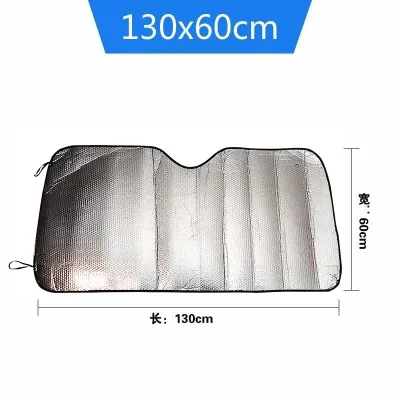
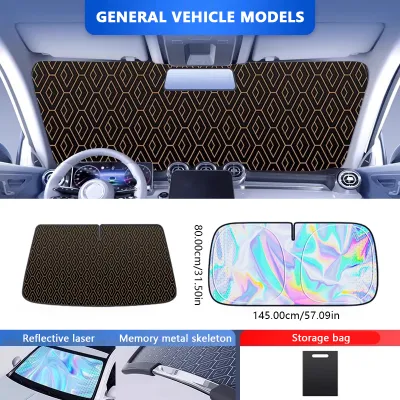
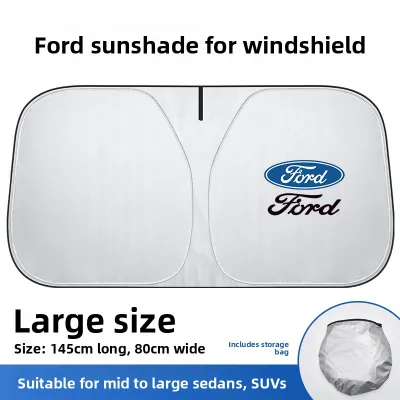
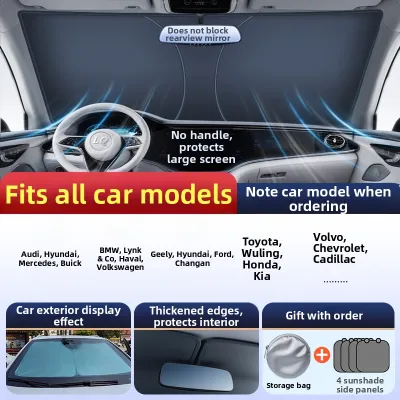
Prices are valid at publication and may change. Please refer to the product page for the latest price.
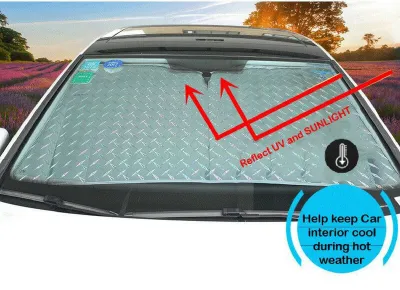
An effective sun shade must stop this process at the glass surface. The first line of defense is a highly reflective outer layer. Materials like polished aluminum foil or specialized metallized films act as a mirror, bouncing the solar radiation back out through the windshield before it can be converted into heat. Simple silver-colored fabrics offer some reflectivity, but true metallized barriers are significantly more effective at redirecting solar energy.
The second line of defense is the insulating middle layer. Even the best reflective surfaces will absorb some heat, which can then conduct into the cabin. To prevent this, high-quality shades feature a thermal barrier, typically made of polyethylene bubble wrap or closed-cell foam. These materials contain thousands of tiny, sealed air pockets that resist heat transfer, keeping the inner surface of the shade relatively cool to the touch.
Beyond heat, ultraviolet (UV) radiation is a major threat to your car’s interior. UV rays break down the chemical bonds in plastics, vinyl, and leather, leading to fading, cracking, and sticky dashboard surfaces. When choosing a shade, look for products that explicitly state their UV protection capabilities, such as a UPF (Ultraviolet Protection Factor) rating of 50+ or a certified UV-blocking percentage on the manufacturer’s label, rather than relying on visual thickness alone.
Finally, structural rigidity and edge binding are critical for long-term performance. The intense heat inside a parked car can cause cheap, flimsy shades to sag, warp, or delaminate. When a shade sags, it creates a gap between the material and the windshield, allowing hot air to circulate freely into the cabin. Look for shades with heavy-duty edge binding and a stiff internal frame or thick construction that maintains its shape even after hours of exposure to high temperatures.
Comparing Popular Windshield Sun Shade Designs
When selecting an auto shade car accessory, you will encounter several distinct designs, each offering a different balance of coverage, ease of use, and storage convenience. Understanding these trade-offs will help you choose the design that best fits your daily routine and vehicle layout.

Accordion/Foldable Shades: These are among the most traditional and durable options available. Constructed from rigid panels that fold flat against one another, accordion shades offer excellent structural integrity. They do not sag easily and can be pressed tightly against the windshield glass. Because of their rigid construction, they typically provide highly consistent coverage. The primary drawback is their bulkiness; when folded, they form a long, stiff rectangle that can be difficult to store in smaller hatchbacks or compact sedans.
Roll-Up Shades: Made from flexible, lightweight materials, roll-up shades are designed to be rolled into a tight cylinder and secured with an elastic strap. This makes them incredibly easy to store, as they can be tucked alongside the center console, placed in the passenger footwell, or slid under a seat. However, this flexibility can be a disadvantage. Over time, the constant rolling and unrolling can cause the edges of the shade to curl permanently, creating gaps along the sides of the windshield where heat can enter.
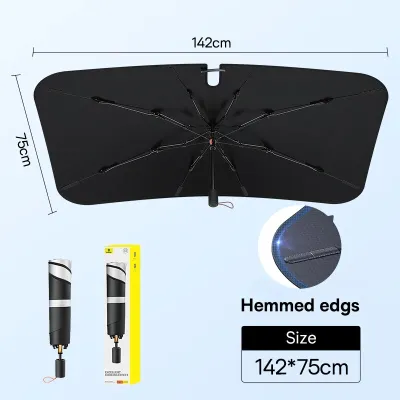
Umbrella-Style Shades: This modern design has gained significant popularity on online marketplaces. It operates like a traditional rain umbrella, featuring a central shaft, metal ribs, and a highly reflective canopy. To deploy it, you simply open the umbrella inside your car and press the canopy against the windshield. It folds down into a highly compact sleeve that easily fits into a door pocket. While highly convenient, they require careful handling to ensure the central handle does not press against sensitive infotainment screens or dashboard buttons.
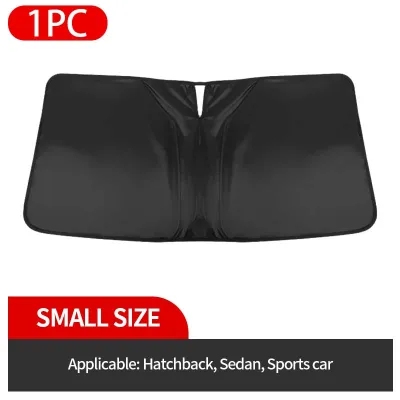
Custom-Fit vs. Universal Shades: Custom-fit shades are engineered to match the exact dimensions and contours of a specific vehicle make and model. They feature precise cutouts for the rearview mirror, dashcams, and toll collection units, ensuring virtually complete coverage with zero light leaks. While they are more expensive and harder to find for older or less common car models, their performance in blocking heat is unmatched. Universal shades, on the other hand, come in standard sizes. They are highly affordable and widely available, but they often require you to overlap the edges or fold the corners to make them fit, which can lead to sagging and reduced effectiveness.
How to Measure and Verify the Right Fit for Your Car
To ensure your sun shade provides maximum heat protection, you must obtain an accurate measurement of your windshield. A shade that is too small will leave large gaps that let in heat, while a shade that is too large will be difficult to install and may damage your car’s interior trim.
Always measure your windshield from the inside of the vehicle. Measuring from the outside will give you an inaccurate, oversized reading because it does not account for the thickness of the dashboard, the A-pillars, and the headliner. Use a metal measuring tape, as fabric tapes can sag and give inaccurate measurements.
First, measure the width of the glass. Because windshields are rarely perfect rectangles, you should take two width measurements: one along the very bottom of the glass (where it meets the dashboard) and one along the very top (where it meets the headliner). Next, measure the vertical height of the glass from the base of the dashboard to the top of the headliner, running the tape measure parallel to the A-pillars.
When checking these dimensions against product listings, you must account for several critical interior components. In Singapore, almost every car is fitted with an In-vehicle Unit (IU) or the newer On-Board Unit (OBU) touchscreen for ERP payments, alongside a front-facing dashcam. These devices are typically mounted on the windshield or dashboard. Your sun shade must be able to fit around these units without putting pressure on them or pulling their mounting brackets loose. Look for shades that feature a deep, flexible cutout or a hook-and-loop strap at the top center to accommodate the rearview mirror and any camera or sensor housings.
When selecting a universal shade, aim for dimensions that match your measurements as closely as possible. A slight overlap of a few millimeters is acceptable, as it helps eliminate light leaks at the edges. However, never force an oversized shade into place. Forcing a rigid shade can bend the internal frame, cause the material to crease permanently, or apply excessive pressure to your rearview mirror mount and delicate windshield-mounted electronics.
Practical Tips for Installation, Storage, and Care
Proper usage and maintenance of your sun shade will not only extend its lifespan but also protect your car’s interior from accidental damage. Developing a careful routine for deploying and storing your shade is highly recommended.
When installing the shade, start by placing the bottom edge flat against the base of the dashboard, ensuring it clears your OBU and dashcam wires. Gently slide the top of the shade up and behind your rearview mirror. Once the shade is flat against the glass, lower your vehicle’s sun visors to hold the top edge securely in place. Avoid rushing this process; forcing the shade quickly can cause the edges to scrape against the soft-touch plastic of your A-pillars or scratch your central infotainment screen.
When it is time to drive, remove the shade carefully. Fold or roll it according to its specific design. For accordion shades, follow the pre-existing crease lines to prevent creating new, permanent folds that weaken the structural integrity of the panels. For roll-up shades, roll them tightly from one end to the other and secure them with the integrated strap. Store the shade in a dedicated spot, such as under the passenger seat, in the door pocket, or in the trunk, to keep it clean and prevent it from sliding around while the vehicle is in motion.
To maintain the reflective efficiency of your shade, clean it periodically. Over time, dust, condensation, and airborne oils can form a dull film on the reflective outer layer, reducing its ability to bounce away solar radiation. Wipe the surface gently with a clean, damp microfiber cloth. Do not use harsh chemical cleaners, glass cleaners, or alcohol-based sprays, as these can dissolve or strip away the delicate metallized coatings. Allow the shade to air dry completely before folding and storing it to prevent mold or mildew growth.
Finally, always remember the most important safety rule: never drive with the sun shade deployed, even for a short distance inside a carpark. A sun shade completely blocks your forward vision, making driving extremely dangerous and violating Singapore’s traffic safety laws. Ensure the shade is fully removed and safely stowed away before you start the engine and put the car in gear.
What to Check Before Buying from Online Marketplaces
Shopping for car accessories on online marketplaces or at local automotive shops offers a massive variety of choices, but it also requires careful verification to avoid low-quality products. To ensure you get a durable and effective sun shade, keep a few key checks in mind before making a purchase.
First, never rely solely on generic compatibility claims like “fits all sedans” or “universal fit for SUVs.” Windshield dimensions and angles vary significantly between different car brands and models. Always cross-reference the exact measurements of your windshield with the detailed dimensions provided in the product listing. If a seller does not list the precise width and height of the shade in centimeters or millimeters, look for another listing that does.
Second, dive deep into the customer reviews. Look for feedback from buyers who drive the same car model as you to see how well the shade fits in practice. Pay close attention to reviews that mention the durability of the materials. In Singapore’s hot and humid climate, cheap adhesives can break down quickly, causing the reflective layers of the shade to peel, bubble, or flake off. For umbrella-style shades, check if users report issues with the folding mechanism jamming or the metal ribs tearing through the fabric.
Third, verify the seller’s return and exchange policy. Even with careful measurement, you may find that a shade does not clear your specific dashcam mount or OBU setup. A flexible return policy allows you to exchange the shade for a different size or return it for a full refund without hassle.
Lastly, avoid unbranded listings that offer extremely low prices but provide no technical specifications. A high-quality sun shade is an investment in protecting your car’s interior, which can cost thousands of dollars to repair or replace if damaged by heat and UV rays. Look for listings that clearly detail the materials used, such as multi-layered aluminum foil, high-density foam, and verified UV-blocking ratings. Spending a bit more on a reputable, well-constructed shade will provide superior heat protection and last for years.
Frequently Asked Questions (FAQ)
Do umbrella-style sun shades scratch the dashboard?
Yes, some designs can cause scratches or scuffs. The central metal shaft, the plastic handle, and the exposed metal tips of the support ribs can rub against soft-touch dashboard plastics, leather wraps, or sensitive infotainment screens during installation and removal. To prevent this, look for umbrella-style shades that feature rubberized, padded, or flexible handles. Alternatively, you can place a small microfiber cloth over your dashboard or screen before deploying the shade to act as a protective barrier.
Is a custom-fit sun shade necessary for maximum heat reduction?
While not strictly necessary, a custom-fit sun shade provides the most effective heat reduction because it is tailored to the exact dimensions of your windshield. This eliminates the edge gaps where sunlight can penetrate and heat up the cabin air. However, a high-quality, carefully measured universal shade can deliver very similar performance if it covers the vast majority of the glass surface and is secured tightly against the frame.
Can I leave the sun shade on the windshield while driving?
Absolutely not. You must completely remove and store the sun shade before putting your vehicle in motion. Leaving any part of a sun shade on the windshield or side windows while driving completely blocks your line of sight, creating an extreme safety hazard and violating Singapore’s traffic safety regulations. Always store the shade securely in the trunk, backseat, or a dedicated storage pocket to prevent it from sliding under the pedals or causing a distraction.

Community discussion
Share your experience or ask a question. Comments are reviewed before publication.