
The BYD Sealion 7 has quickly gained popularity as a sleek, high-tech electric SUV, but its expansive glass surfaces and steeply raked front windshield present a distinct challenge in hot, tropical climates. When parked under the intense sun, the cabin can rapidly turn into an oven, putting extra strain on the air conditioning system and potentially accelerating the wear of interior materials like the synthetic leather seats and soft-touch dashboard panels. Selecting the right sunshade is not just about keeping the cabin cool; it is about protecting your vehicle’s interior components and ensuring your driving comfort from the moment you step inside.
To find the ideal sunshade setup for your BYD Sealion 7, you must consider both the front windshield and the side windows as distinct areas with unique requirements. The front windshield requires a solution that accommodates the vehicle’s advanced driver assistance systems (ADAS) housing without causing physical damage or sensor misalignment. Meanwhile, the side windows require options that balance heat rejection, ease of installation, and compliance with local traffic safety regulations. This guide provides a comprehensive framework to help you evaluate, select, and verify the best sunshade options for your vehicle.
Understanding Your BYD Sealion 7 Glass and Window Specifications
The BYD Sealion 7 features a modern, aerodynamic design with a large, steeply angled front windshield that maximizes forward visibility but also lets in a significant amount of solar radiation. This windshield is equipped with a gradient tint band at the top, designed to reduce glare from the overhead sun. However, this built-in tint is rarely sufficient to block the intense heat of a full day parked outdoors. When shopping for a front sunshade, you must measure or verify compatibility with this specific windshield curvature, as generic rectangular shades will often leave large triangular gaps at the bottom corners or fail to cover the upper edges.
Products mentioned in this guide
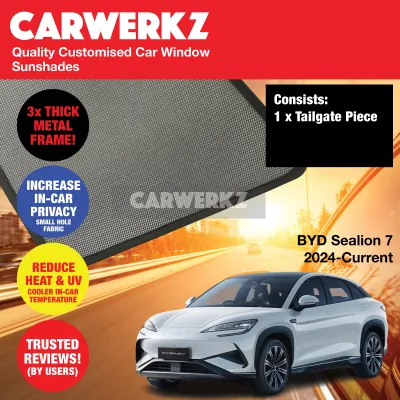
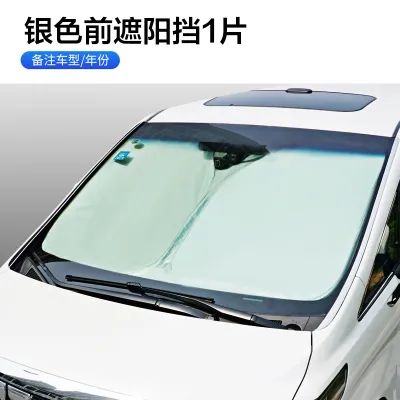
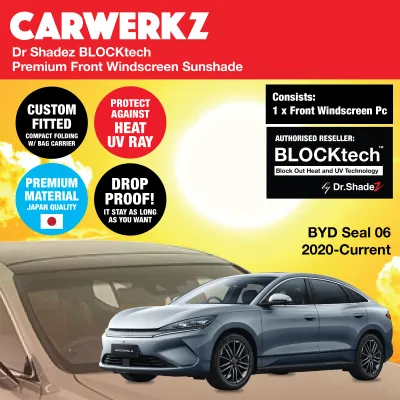
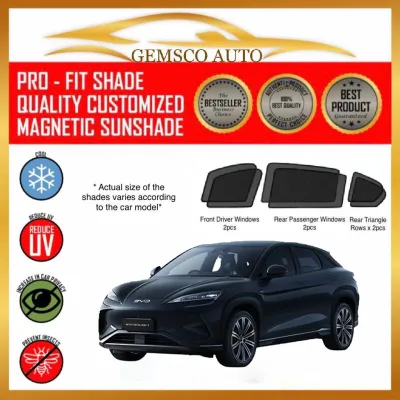
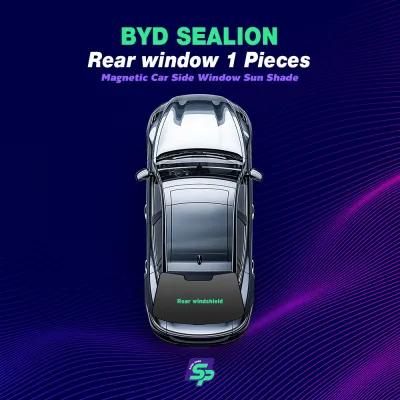
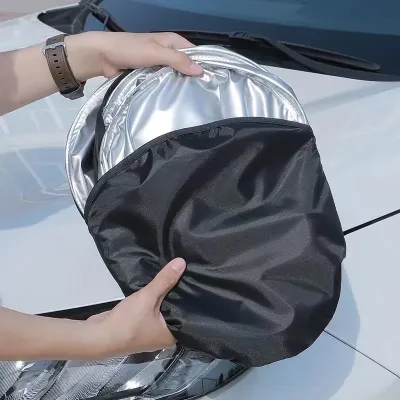
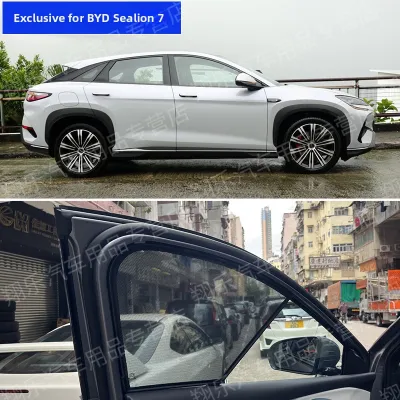
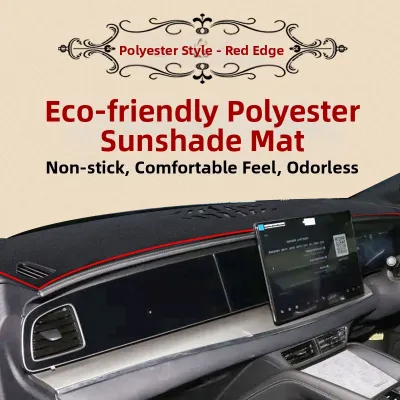
Prices are valid at publication and may change. Please refer to the product page for the latest price.
A critical area of concern on the front windshield is the central sensor cluster located behind the rearview mirror. This housing contains the ADAS cameras, rain sensors, and other calibration equipment essential for safety features like lane-keeping assist and autonomous emergency braking. Any sunshade you choose must have a precise cutout or a flexible fabric section that wraps around this housing. Pressing a rigid, ill-fitting sunshade against this plastic cover can apply unwanted pressure, potentially loosening the mount, scratching the casing, or even disrupting the calibration of the sensitive cameras inside.
The side windows of the BYD Sealion 7 present their own set of geometric challenges. The front side windows feature an angular, tapering design that narrows toward the side mirrors, while the rear side windows are larger and curve downward toward the rear of the vehicle. Additionally, the vehicle includes small rear quarter windows integrated into the C-pillar. If you want complete light and heat blockage, you will need a multi-piece kit that includes custom-cut shades for these small quarter panels. Some trim levels may come with factory-installed rear privacy glass, which reduces glare but does not necessarily block infrared heat, meaning thermal-blocking shades are still highly beneficial.
Front Windshield Sunshade Types and Selection Criteria
When evaluating front windshield sunshades, the mechanism of deployment and storage is just as important as the material itself. Foldable accordion-style shades, often made of rigid cardboard or thick foam sandwiched between reflective layers, offer excellent structural integrity. They stand up well against the glass without sagging, but their bulkiness can be a major drawback inside the relatively compact cabin of the Sealion 7. Storing a long, rigid folded board when you have passengers can quickly become inconvenient, forcing you to place it in the boot or across the rear footwell.

Roll-up sunshades, typically made of flexible reflective material, are another common option. While they are highly durable and easy to roll up, they tend to retain a curled shape over time, making them frustrating to position flat against the windshield. They also require a significant amount of space to store. In contrast, wire-ring twist-and-fold shades offer excellent portability. These shades use flexible steel wire loops wrapped in reflective fabric that twist down into a small circle, easily fitting into the door pockets or the seatback pockets of your Sealion 7. However, folding them requires a bit of practice, and the spring-loaded wire can accidentally strike the dashboard or the central infotainment screen if you are not careful during deployment.
Umbrella-style sunshades have emerged as a highly popular modern alternative. These shades open like a standard umbrella, using a series of flexible ribs to stretch a reflective fabric across the windshield. While they are incredibly fast to deploy and fold down to the size of a small water bottle, you must pay close attention to the design of the central shaft. On the BYD Sealion 7, the large, rotating central touchscreen is a prominent feature of the dashboard. An umbrella shade with a rigid, unyielding metal shaft can easily scratch or apply dangerous pressure to this screen. Look for umbrella designs that feature a bendable, rubberized, or fabric-jointed shaft that can be angled away from the screen and rested safely on the dashboard console.
Regardless of the mechanism, always read the product labels carefully to verify the materials used. High-quality sunshades utilize multi-layer construction, featuring a highly reflective outer layer (such as silver-coated polyester or aluminum foil) to bounce away visible light and infrared radiation. Beneath this outer layer, look for an insulating middle layer, such as polyethylene bubble wrap or non-woven cotton, which acts as a thermal barrier to prevent heat from radiating into the cabin. Ensure the product specifies a high UV protection rating, such as UPF 50+, to shield your dashboard, steering wheel, and seats from the fading and cracking caused by prolonged ultraviolet exposure.
Side Window Sunshade Options for Complete Coverage
Side window sunshades are essential for protecting rear passengers, especially young children, from direct sunlight and heat. The most common types include static-cling films, suction-cup shades, and magnetic mesh screens. Static-cling shades use thin, flexible plastic sheets that adhere directly to the glass using static electricity. They are highly affordable and do not interfere with the window glass, but they can be difficult to apply without trapping unsightly air bubbles, and they do not offer complete edge-to-edge coverage for the Sealion 7’s uniquely shaped windows.
Suction-cup shades are another budget-friendly option, but they come with significant practical drawbacks. The suction cups can lose their grip over time, especially when exposed to high temperatures, causing the shade to fall off unexpectedly. They also leave circular residue marks on the glass that require frequent cleaning. Furthermore, you cannot roll down the window while a suction-cup shade is attached, which can be highly inconvenient if you need to pay for parking or let in fresh air.
For the BYD Sealion 7, magnetic mesh screens are often the most practical and elegant solution. These shades feature a flexible metal frame sewn into the fabric edge, which clings magnetically to the steel frame of the vehicle’s door. Because they attach to the door frame rather than the glass itself, you can roll the windows down completely while keeping the shades in place, allowing for ventilation while maintaining shade and insect protection. However, before purchasing, you must verify whether the inner door frame of your specific Sealion 7 trim is exposed metal or covered by plastic trim, as magnets will not adhere to plastic. Some manufacturers provide small adhesive metal clips to overcome this limitation.
When selecting side window shades, you must remain highly conscious of local traffic regulations. In many regions, including Singapore, there are strict legal limits on light transmission for vehicle windows. Front side windows must maintain a high level of visibility to ensure the driver can clearly see the side mirrors and detect pedestrians or cyclists, especially at night or in heavy rain. Permanent or highly opaque shades on the front side windows are generally illegal while driving. Therefore, any shade used on the front side windows must be strictly temporary, easily removable, and reserved exclusively for when the vehicle is parked. Rear side windows typically have more lenient regulations, allowing for darker mesh screens or privacy shades.
How to Verify Fitment and Safety Before Buying
Before committing to a purchase, it is crucial to perform a thorough compatibility check to ensure the sunshade fits your BYD Sealion 7 perfectly. Because the Sealion 7 is a relatively new model, some online listings or retail packaging may group it generically with other BYD models or older SUV designs. Always double-check that the product description explicitly names the “BYD Sealion 7” and matches the correct model year. Avoid relying solely on generic “medium SUV” sizing, as these universal options rarely account for the specific rake of the windshield or the exact placement of the ADAS sensor housing.
Physical interference is another major safety consideration. When installing a front windshield sunshade, ensure that it does not press against or obstruct the camera calibration targets or the rain sensor housing. If the shade is too tight, forcing it into place can put stress on the rearview mirror mount, potentially loosening it over time. Additionally, check the exterior of the vehicle after installation to ensure the shade is sitting flat against the glass; if it is bunched up or pushing outward, it could interfere with the automatic windshield wipers if they are left in “Auto” mode and trigger unexpectedly.
You must also assess the risk of damage to your vehicle’s interior materials. The BYD Sealion 7 features premium, soft-touch materials on the dashboard and door panels. Sunshades with exposed metal wires, sharp plastic edges, or rigid fiberglass support rods can easily scratch or dent these delicate surfaces during installation or removal. Look for shades with fully bound, fabric-wrapped edges. Furthermore, if you have installed aftermarket solar films or window tints on your glass, be extremely cautious with suction cups or adhesive brackets. The heat of the sun can cause the adhesive or suction cup to bond tightly to the tint film, and removing it can peel, bubble, or tear the expensive film, leading to costly repairs.
Comparing Sunshade Materials and Mechanisms
To help you decide which sunshade style best fits your daily routine and budget, it is helpful to compare the primary options across several key performance and usability metrics. The table below outlines the practical trade-offs between the most common sunshade types available for the BYD Sealion 7.
| Shade Type | Installation Method | Storage Footprint | Best Application Area | Key Verification Check |
|---|---|---|---|---|
| Rigid Custom-Fit Board | Friction fit behind sun visors | Large (requires folding/rolling) | Front Windshield | Check for precise ADAS sensor cutout and soft fabric edges |
| Umbrella-Style Shade | Opens like an umbrella inside cabin | Small (compact cylinder) | Front Windshield | Ensure the central shaft is flexible or rubberized to protect the screen |
| Wire-Ring Twist-Fold | Spring-tension fit against frame | Medium (folds into flat circle) | Front Windshield | Verify that the wire tension is not too stiff for the soft dashboard |
| Magnetic Mesh Screen | Clings to metal door frame | Medium (flat sheets) | Side Windows | Confirm if door frame has exposed metal or requires adhesive clips |
| Static-Cling Film | Static adhesion directly to glass | Minimal (removes flat) | Side/Quarter Windows | Ensure glass is perfectly clean; avoid if using aftermarket tint |
While custom-fit rigid boards offer the most complete coverage and the highest level of heat rejection, they are often the most expensive option, typically ranging from S$50 to S$100. They also require a two-handed operation to carefully maneuver the large board around the steering wheel and the central touchscreen without causing scratches. For drivers who prioritize convenience and quick deployment, an umbrella-style shade or a wire-ring twist-fold shade is often a more practical daily choice, offering a good balance of portability and protection at a lower price point, usually between S$15 and S$40.
Frequently Asked Questions (FAQ)
Do I need custom-fit sunshades for the BYD Sealion 7, or will universal ones work?
While universal sunshades are widely available and generally less expensive, they are rarely a perfect fit for the BYD Sealion 7. Universal shades often leave significant gaps around the edges of the steeply raked windshield, allowing heat and UV rays to penetrate and heat up the cabin. More importantly, generic shades do not feature the precise cutout required to clear the large ADAS camera and sensor housing behind the rearview mirror. This can result in the shade pressing against the housing, potentially misaligning the safety cameras or slipping down and exposing the dashboard. Investing in a custom-fit shade ensures complete edge-to-edge coverage and safe clearance for all onboard vehicle systems.
Will suction cup sunshades damage my BYD Sealion 7 window tint?
Yes, there is a significant risk that suction cup sunshades can damage aftermarket window tint films. When a vehicle is parked in the sun, the glass and the tint film can reach very high temperatures, causing the adhesive backing of the tint to soften slightly. If a suction cup is applied with high tension to this heated surface, removing it can pull the film away from the glass, creating permanent bubbles, creases, or tears. To protect your investment in solar films, it is highly recommended to avoid suction cups entirely. Instead, opt for magnetic mesh screens that attach to the door frame, static-cling shades that use gentle static electricity, or friction-fit shades that slide securely into the window channel.

Community discussion
Share your experience or ask a question. Comments are reviewed before publication.