
Finding a secure, highly visible spot for your smartphone in a car can be a challenge, especially when you want to avoid cluttering your dashboard or blocking your air vents. A 2-in-1 car cup holder phone mount offers an elegant solution by utilizing your vehicle’s existing center console cup holder as a sturdy foundation. This design keeps your device within easy reach and at a comfortable viewing angle for hands-free navigation, while often preserving or even expanding your cup-holding capacity.
Choosing the right model requires understanding how these accessories interact with your vehicle’s specific layout and your smartphone’s dimensions. Because center consoles vary widely across different car makes and models, a mount that works well in an SUV might obstruct the gear shifter in a compact hatchback. By evaluating key design features, mounting styles, and physical measurements before making a purchase, you can ensure a secure fit that enhances your driving experience without compromising safety.
Key Features to Evaluate in a 2-in-1 Cup Holder and Phone Mount
When shopping for a dual-purpose accessory, the phone retention mechanism is your first consideration. Mechanical clamps use spring-loaded or ratcheting arms to grip the sides of your phone. They offer a highly secure hold, especially when lined with silicone or rubber pads that prevent slipping. Some models feature a quick-release button on the back or side, allowing you to mount and remove your phone with one hand.
Products mentioned in this guide
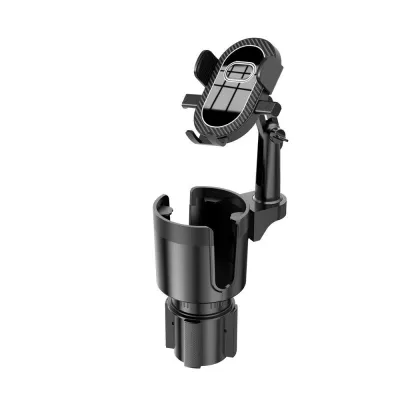
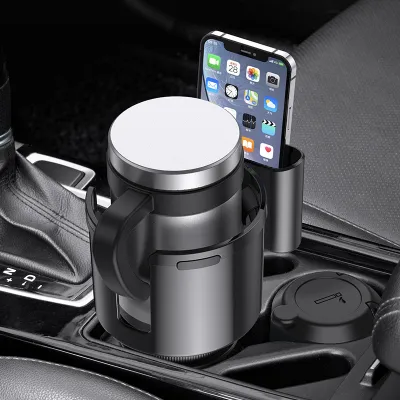
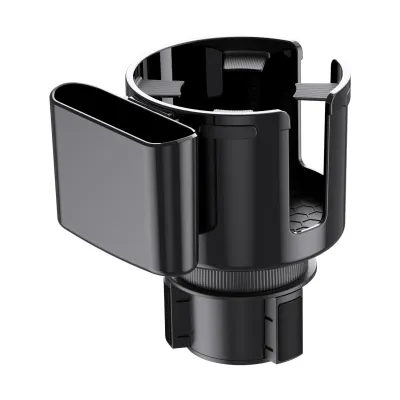
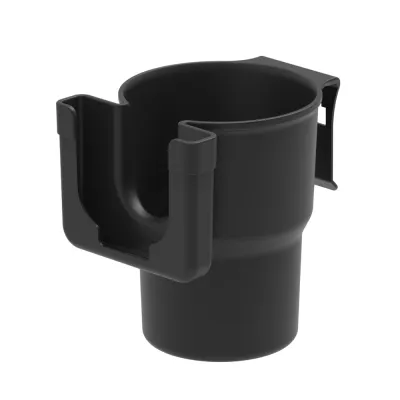
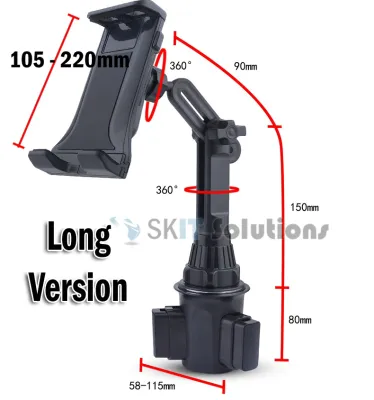
Prices are valid at publication and may change. Please refer to the product page for the latest price.
Magnetic arrays rely on powerful magnets to hold your device. To use these, you typically need to attach a metal plate to the back of your phone or use a compatible magnetic phone case. While magnetic mounts offer a fast docking experience, you must verify that the magnetic force is strong enough to hold your phone’s weight over bumpy roads.
Gravity links use the weight of your phone to pull the side arms inward. When you drop the phone into the cradle, the bottom bracket slides down, automatically closing the side clamps. While convenient, gravity mounts generally do not hold the phone as tightly as mechanical clamps and may allow the device to rattle or slip when driving over uneven surfaces.
Because factory cup holders come in various shapes and sizes, a reliable 2-in-1 mount must feature an adjustable base. Most robust designs utilize an expandable base mechanism. By twisting the upper portion of the mount’s base, you force three or four expansion pads outward, locking the unit securely into the walls of your vehicle’s cup holder.
Some bases use rubberized tension tabs or foam inserts instead of a mechanical expansion system. While these are simpler and often less expensive, they may not provide the rigid, wobble-free foundation required to support a heavy smartphone on an extended arm. Look for bases that specify a wide expansion range to ensure compatibility with both narrow and wide console openings.
Keeping your cabin free of tangled cords is essential for both aesthetics and safety. Many dual-purpose mounts feature integrated cable clips or routing channels along the neck or arm. This design keeps your charging cable neatly aligned and prevents it from interfering with your gear shifter or climate controls.
Some premium models integrate wireless charging pads directly into the phone cradle. If you choose a wireless charging mount, verify that your phone supports the specific wireless standard and that your car’s USB ports or 12V adapters can supply sufficient power to the mount.
The overall stability of your navigation display depends heavily on the materials used in the mount’s construction. Look for high-grade ABS plastics, aluminum alloys, and reinforced joints. A flimsy plastic neck will flex and vibrate with every engine vibration or road imperfection, making it difficult to read your navigation map.
Adjustable joints, such as ball-and-socket connectors or locking hinges, should feature robust tightening rings. These rings allow you to lock the phone at your preferred viewing angle. If the joints are too loose or made of soft plastic, they may wear down quickly, causing the phone to droop over time.
Mounting Styles and Vehicle Interior Compatibility
Direct cup holder inserts are highly favored because they require no adhesives, suction cups, or permanent modifications to your vehicle’s interior. They sit low in the center console, keeping your windshield completely clear of obstructions. However, their effectiveness depends entirely on where your factory cup holders are located. If your cup holders are positioned too far back or deep under an overhanging dashboard, the phone screen may be difficult to see or reach.

To overcome low positioning, many cup holder mounts feature flexible goosenecks or telescoping arms. While these arms bring the phone up into your line of sight, they also introduce more leverage. A longer arm is naturally more prone to vibration, so choosing a model with a thick, rigid neck is crucial if your cup holders are situated low in the console.
Dashboard suction or adhesive mounts offer significant flexibility in placement, allowing you to position your phone directly at eye level. Suction mounts typically use a sticky polyurethane gel combined with a vacuum lever to grip the surface. Adhesive mounts use semi-permanent double-sided tape to secure a small base to the dashboard.
The primary drawback of these mounts is their reliance on flat, non-porous surfaces. Modern vehicle dashboards often feature textured plastics, leather, or soft-touch materials that prevent a proper vacuum seal. Additionally, prolonged exposure to intense sunlight and high cabin temperatures can degrade the adhesive or suction gel, leading to sudden mount failure or permanent damage to your dashboard’s finish upon removal.
Air vent clips attach directly to the slats of your vehicle’s climate control vents, while CD slot inserts expand inside the unused CD player slot. Both options position your phone higher than a cup holder mount without obstructing your view through the windshield.
However, these mounting styles come with distinct trade-offs. Air vent mounts block airflow and can expose your phone to extreme heat when the car’s heater is running, potentially causing the device to overheat. CD slot mounts can block access to your infotainment screen or physical radio buttons, and they are only viable if your vehicle still features a physical CD player.
When choosing between these styles, you must weigh the trade-offs of adjustability, ease of installation, and potential wear on your vehicle’s interior. Cup holder inserts are the easiest to install and move between vehicles, and they cause zero wear to delicate dashboard surfaces. However, they do sacrifice at least one of your functional cup holders, though some advanced models feature a secondary built-in cup holder on top of the expansion base to mitigate this loss.
How to Measure and Verify Fitment Before Buying
Before purchasing a cup holder mount, take a few minutes to measure your vehicle’s existing cup holder. Use a ruler or calipers to measure the inner diameter at both the top and the bottom of the holder, as many factory designs are tapered. Also, measure the depth from the top rim to the bottom surface.
Compare these measurements against the expansion range specified by the mount manufacturer. Most expandable bases can adjust from approximately 65 mm to 100 mm in diameter. If your vehicle’s cup holder is exceptionally shallow or features an unusual shape, such as a square or a slot with flexible tension tabs, a standard round expansion base may not sit securely.
Next, measure your smartphone while it is inside its protective case. Many users overlook the thickness of their phone case, especially if they use heavy-duty rugged cases, wallet folios, or attached ring holders. Check the mount’s specifications for both maximum grip width and maximum depth capacity.
Weight is another critical factor. Large-screen smartphones, especially those with heavy protective cases, can weigh over 250 grams. Ensure the mount’s arm and joint mechanism are rated to support this weight without drooping or vibrating excessively while driving.
Sit in your driver’s seat and visualize where the mount and phone will sit. Pay close attention to the path of your gear shifter, especially if you drive a manual transmission vehicle or have a console-mounted shifter. A tall mount or a wide phone in landscape orientation could easily interfere with your hand movements while shifting gears.
Also, check if the mount will block access to your center console storage lid, handbrake, climate control dials, or infotainment screen. If your cup holders are located directly beneath the dashboard overhang, ensure there is enough vertical clearance to insert and remove your phone without hitting the dash.
Even with careful measurements, the unique geometry of your vehicle’s cabin can sometimes lead to unexpected fitment issues. When shopping on online marketplaces or at local automotive accessory shops, always verify the seller’s return policy. Look for retailers that offer hassle-free returns or exchanges within a reasonable timeframe, allowing you to test the physical fitment in your actual vehicle before committing to the purchase.
Safety Boundaries and Line-of-Sight Clearance
Your primary responsibility while driving is maintaining a clear, unobstructed view of the road ahead. Any accessory mounted on your dashboard or windshield has the potential to create blind spots, particularly when turning or navigating busy pedestrian crossings. A cup holder mount is highly advantageous in this regard, as it typically keeps your phone positioned below the dashboard line, preserving your full field of view through the windshield.
If you use a cup holder mount with an extended neck or gooseneck, adjust it so that the phone does not rise above the bottom edge of the windshield. This ensures that your line of sight remains completely clear while still keeping the navigation screen within your peripheral vision.
Modern vehicles are equipped with multiple airbags designed to deploy rapidly in the event of a collision. It is absolutely critical that your phone mount and charging cables are positioned well away from these deployment zones. Consult your vehicle’s owner’s manual to identify the exact locations of the steering wheel airbag, passenger dashboard airbag, and side curtain airbags.
Never mount a phone or run a cable across an airbag cover or within its deployment path. In a collision, the force of a deploying airbag can turn a mounted phone or a heavy plastic accessory into a dangerous projectile, causing severe injury to the cabin occupants.
A safe driving environment requires quick, unhindered access to all essential vehicle controls. Your phone mount must not block your physical access to the hazard light button, climate control dials, windshield wiper stalks, or gear selector. In an emergency, even a split-second delay caused by having to reach around a mounted phone to press the hazard button can have serious consequences.
Ensure that the phone’s position allows you to operate all dashboard controls comfortably. If you find yourself stretching or awkwardly maneuvering your hand to adjust the air conditioning or radio, readjust the mount’s angle or choose a different mounting location.
In Singapore, traffic safety regulations strictly govern the use of mobile devices while driving. Under the Road Traffic Act, it is an offence for a driver to hold any mobile device in their hand while the vehicle is in motion. To use your phone for navigation legally, it must be securely mounted in a dedicated holder.
Furthermore, the Land Transport Authority (LTA) and traffic police emphasize that any mounted device must not obstruct the driver’s view of the road or interfere with the safe operation of the vehicle. Using a secure cup holder mount is an excellent way to comply with these regulations, as it keeps the phone firmly held in a fixed position below the windshield line, ensuring you can view your navigation maps safely and legally without holding the device.
Frequently Asked Questions (FAQ)
Will a 2-in-1 mount support a heavy smartphone with a thick case?
Yes, but you must carefully verify the mount’s specifications before purchasing. Standard mounts are designed for average-sized phones, but heavier devices with rugged, thick cases require a mount with deep side clamps (often 15 mm or more) and a robust, heavy-duty arm. Look for models that explicitly state compatibility with thick cases and have a high weight capacity. Avoid long, flexible goosenecks for heavy phones, as they are more prone to vibrating and drooping under the extra weight; instead, opt for rigid, mechanical arms with locking joints.
Can suction cup mounts damage leather or soft-touch dashboards?
Yes, suction cup mounts can potentially damage sensitive interior surfaces. The combination of strong adhesive gels, vacuum suction, and intense heat inside a parked car can leave permanent rings, discoloration, or even peel away the delicate soft-touch coatings or leather wraps on modern dashboards. If your vehicle features a premium leather or soft-touch dashboard, it is highly recommended to use a cup holder mount or an air vent mount instead. If you must use a suction mount, apply a protective dashboard pad first, or mount the suction cup directly to the glass of your windshield where it cannot damage interior upholstery.

Community discussion
Share your experience or ask a question. Comments are reviewed before publication.