
Charcoal odour removers can work in tropical car interiors, but Singapore’s high relative humidity accelerates moisture saturation, which directly competes with odour absorption. Because activated charcoal is highly porous, it naturally attracts both water vapour and volatile organic compounds from the air. In a humid climate, the pores can quickly fill with water, leaving less surface area to trap unpleasant smells. Consequently, the effectiveness of these products relies on checking specific product labels for humidity tolerance and committing to regular maintenance, rather than assuming they are a “set-and-forget” solution.
Understanding how these passive absorbers function in a tropical environment is essential before purchasing one. While they offer a fragrance-free, chemical-free alternative to traditional air fresheners, their performance is highly dependent on environmental conditions and user habits. By learning how to select, place, and maintain these absorbers, you can keep your vehicle’s cabin smelling fresh even during the most humid months of the year.
How Heat and Humidity Affect Charcoal Absorption
To understand why tropical climates present a unique challenge, it helps to look at the physical process of adsorption. Unlike absorption, where a substance is absorbed into the bulk of a material, adsorption involves gas or liquid molecules adhering to the outer and inner surfaces of a solid. Activated charcoal contains millions of microscopic pores that create a massive surface area relative to its physical size. This structure allows it to trap volatile organic compounds (VOCs), food smells, and musty odours as air circulates through the cabin.
Products mentioned in this guide
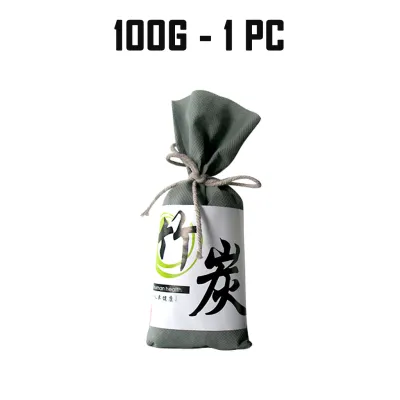

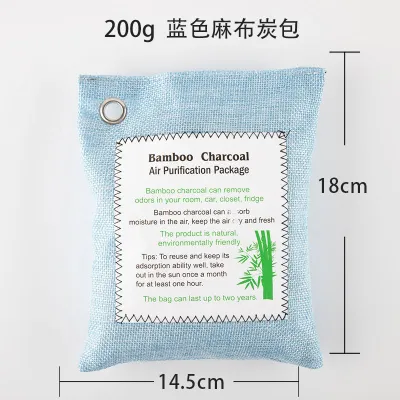
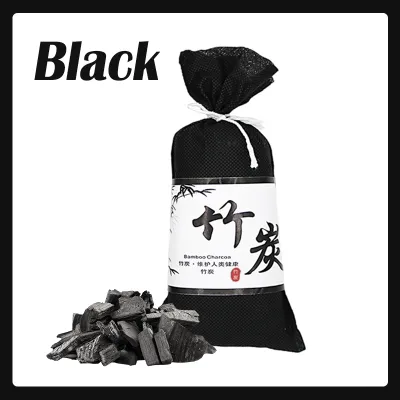
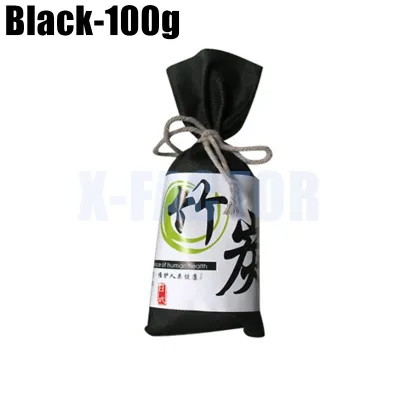
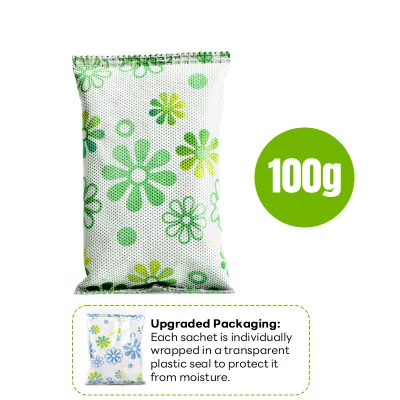
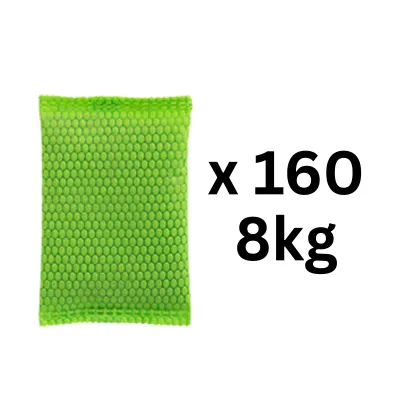
Prices are valid at publication and may change. Please refer to the product page for the latest price.
However, water vapour is also highly attracted to these microscopic pores. In Singapore’s climate, where relative humidity levels frequently exceed 80 percent, the air is constantly saturated with moisture. As a result, the charcoal bag acts as a dual absorber, pulling both water vapour and odour molecules out of the air simultaneously. When the pores become filled with water molecules, the charcoal’s capacity to trap new odour molecules is significantly reduced. This means the bag can quickly become saturated and lose its deodorising efficiency if left unattended.
Furthermore, the extreme heat that builds up inside a parked car can alter how these gases are held. When a vehicle is parked under direct sunlight, cabin temperatures can rise dramatically. While this heat is not intense enough to damage the carbon structure of the charcoal, the thermal energy can cause some of the trapped moisture and volatile gases to expand and potentially escape back into the cabin air. This temperature-driven release makes regular ventilation and proper product management crucial for maintaining a clean-smelling interior.
What to Check Before Buying a Charcoal Odour Remover
When browsing online marketplaces or local automotive retail shops, it is important to evaluate several key product specifications rather than choosing the first option you see. First, examine the pore structure and material source. Look for products explicitly labeled as “activated charcoal” or “activated bamboo charcoal.” Bamboo charcoal is particularly well-suited for automotive use because its natural pore structure is highly efficient at trapping both moisture and organic odours. Check the packaging or manufacturer documentation to see if they specify any moisture-retention limits or humidity-tolerance ratings.

Second, pay close attention to the breathable packaging of the container. The outer fabric or housing must allow maximum airflow for the charcoal to do its job. Look for high-quality, tightly woven natural fabrics like linen, canvas, or burlap, which permit air to pass through freely while keeping the fine charcoal dust securely contained. Avoid products housed in thick, non-porous synthetic materials or plastic casings with minimal ventilation holes, as these designs severely restrict air contact and will perform poorly in humid conditions.
Third, consider the size and capacity of the remover relative to your vehicle. A single small sachet of 50 grams might be sufficient for a compact glove box, but it will quickly become overwhelmed in a large sport utility vehicle (SUV) or multi-purpose vehicle (MPV) cabin. Check the manufacturer’s recommended coverage area or volume guidelines. For most standard sedans in a tropical climate, a capacity of 200 to 500 grams is generally recommended to ensure adequate absorption over an extended period.
Finally, safety and placement features should not be overlooked. Ensure the product includes secure mounting options, such as integrated metal eyelets, sturdy hanging loops, or non-slip backing. A loose charcoal bag sitting on a dashboard or rear parcel shelf can easily slide around during sharp turns or become a dangerous projectile during sudden braking. Verify that the design allows you to secure the bag firmly in a safe location where it will not interfere with your driving controls or passenger safety systems.
Maximising Effectiveness in a Tropical Climate
To prevent your charcoal odour remover from becoming prematurely saturated in a hot and humid environment, you must establish a regular maintenance routine. The most critical step is regular sun-drying, which acts as a physical “recharge” for the charcoal. Placing the bag in direct sunlight allows solar heat and UV rays to evaporate the trapped moisture and release the bound odour molecules, effectively clearing the pores for another cycle of absorption. However, you should never attempt to dry the bag by leaving it on the dashboard inside a closed, parked car, as the extreme heat buildup can degrade the outer fabric and create a safety hazard.
The frequency of this maintenance depends heavily on local weather conditions. While manufacturers in temperate climates often recommend recharging the bag once a month, Singapore’s persistent humidity usually requires a more frequent schedule. To maintain optimal performance, aim to sun-dry your charcoal bags every two weeks. If your car is frequently exposed to rain, damp umbrellas, or wet gym gear, you may need to dry the bag even more often to prevent it from becoming waterlogged.
Optimal placement within the vehicle cabin also plays a major role in how well the charcoal performs. Passive absorbers rely on natural air currents to bring odour and moisture molecules into contact with the charcoal pores. Therefore, place the remover in areas with active air circulation, such as suspended from the headrest posts, secured near the air conditioning vents, or placed on the floor under the front seats where the under-seat vents blow air. Avoid tucking the bag deep inside enclosed, stagnant spaces like the boot, glove compartment, or deep door pockets, as the lack of airflow will render the charcoal largely ineffective.
Lastly, learn to observe the physical signals of saturation. When a charcoal bag is full of moisture, it may feel noticeably heavier or stiffer to the touch than when it was dry. You might also notice a sudden return of musty, damp smells inside the cabin. Monitoring these changes allows you to recharge the product before the air quality in your car deteriorates.
When to Replace or Switch to Alternatives
Even with diligent maintenance and regular sun-drying, charcoal odour removers do not last indefinitely. Over time, the physical structure of the charcoal degrades, and certain heavy organic compounds become permanently lodged in the deepest pores, resisting the gentle heat of solar recharging. Refer to the manufacturer’s specified maximum lifespan, which typically ranges from one to two years. Once this limit is reached, the bag must be replaced to maintain effective odour control.
It is also important to recognise when an odour issue is beyond the capabilities of a passive charcoal absorber. Charcoal is designed to trap airborne molecules; it cannot eliminate deep-rooted odours that have physically bonded with the vehicle’s interior surfaces. If a smell is caused by spilled liquids that have soaked deep into the seat foam, carpet padding, or the headliner, a passive bag will only mask the symptom temporarily without addressing the source.
In these situations, you should consider alternative, targeted solutions. If a musty smell persists whenever you turn on the air conditioning, the issue is likely mold or bacteria growing on the evaporator coil or a clogged cabin air filter. Replacing the cabin air filter according to your vehicle manufacturer’s service schedule or scheduling a professional air conditioning system cleaning is necessary to resolve the problem. For severe spills or deep-seated cabin odours, professional interior detailing with hot-water extraction or an ozone treatment may be required.
When your charcoal bag finally reaches the end of its useful life, dispose of it responsibly. Because natural bamboo or hardwood charcoal is organic, you can often cut open the outer fabric bag and empty the charcoal pieces directly into your garden soil. The charcoal acts as a natural soil conditioner, helping to retain moisture and nutrients in the earth. The outer fabric bag can then be disposed of in accordance with local waste guidelines, minimizing environmental waste.
Frequently Asked Questions (FAQ)
Can I leave the charcoal odour remover on the dashboard under the sun?
While direct sunlight is required to evaporate trapped moisture and recharge the activated charcoal, you should not leave the bag on your car’s dashboard while the vehicle is parked in the sun. The extreme greenhouse heat that builds up inside a closed cabin, combined with intense ultraviolet (UV) radiation through the windscreen, can rapidly degrade the outer fabric casing of the bag. Over time, this exposure can cause the fabric to tear or crumble, spilling fine black charcoal dust all over your dashboard and ventilation vents. Instead, take the bag out of the car and place it in a safe, dry, outdoor area with good airflow for a few hours to recharge it safely.
Will a charcoal bag remove the smell of cigarette smoke or spilled milk?
A charcoal bag can help reduce mild, lingering airborne smoke particles or faint organic smells over time, but it cannot eliminate severe odours from cigarette smoke or spilled milk that have penetrated the car’s interior materials. Cigarette smoke leaves a sticky residue of tar and nicotine on the headliner, windows, and upholstery, while spilled milk quickly seeps into carpet padding and ferments, creating a deep-seated biological odour. Because passive charcoal only filters the air that passes directly through its pores, it cannot extract these embedded contaminants. Resolving these issues requires deep chemical extraction, steam cleaning, or professional interior detailing.

Community discussion
Share your experience or ask a question. Comments are reviewed before publication.