
Choosing between Castrol Power1 and Shell Advance comes down to matching your riding style and engine requirements to each brand’s specific formulation goals. While both brands offer high-quality lubricants that meet international standards, they target slightly different performance priorities. Castrol Power1 focuses heavily on optimizing power release and throttle responsiveness, making it a popular choice for riders seeking a spirited, high-performance feel. On the other hand, Shell Advance emphasizes active engine cleansing and long-term wear protection, which appeals to daily commuters and long-distance tourers looking for consistent reliability.
Evaluating these factors systematically will help you identify the ideal match for your machine. To make the right choice for your motorcycle, you must look past marketing slogans and evaluate the technical specifications on the bottle. Your decision should be guided by your manufacturer’s manual, your typical riding conditions, and the specific synthetic tier of the oil.
Check Your Motorcycle's Oil Requirements First
Before comparing any aftermarket oil brands, you must establish the baseline specifications your motorcycle engine requires. Using an oil that does not meet these parameters can lead to poor clutch performance, accelerated engine wear, or even void your manufacturer’s warranty. Your primary source of truth is always the owner’s manual provided by your motorcycle manufacturer.
Products mentioned in this guide
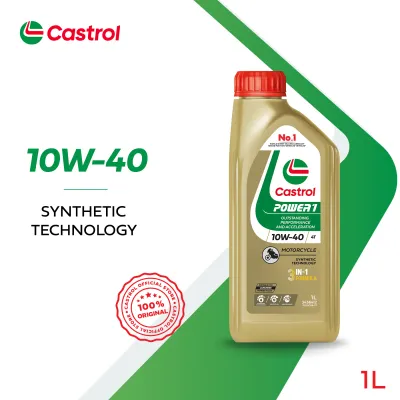
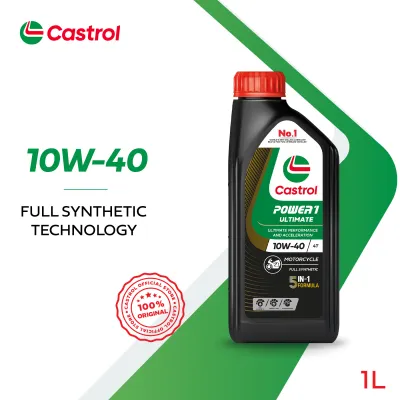
![[TWIN PACK] Castrol POWER1 ULTIMATE 4T 10W-40 (1L) Motorcycle Full Synthetic API SP JASO MA2](https://img.lazcdn.com/g/p/f764729b4d79cf52e77b76d49e4d78ec.jpg_400x400q80.jpg_.webp)
![[TWIN PACK] Castrol POWER1 4T 10W-40 (1L) Motorcycle Synthetic Technology API SP JASO MA2](https://img.lazcdn.com/g/p/304692cfde138b9d79f0458621b9567b.jpg_400x400q80.jpg_.webp)
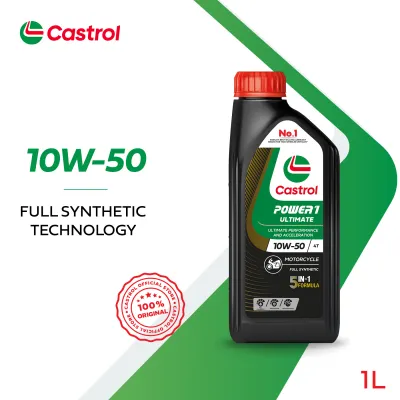
![[TWIN PACK] Castrol POWER1 ULTIMATE 4T 10W-50 (1L) Motorcycle Full Synthetic API SP JASO MA2](https://img.lazcdn.com/g/p/0401f2a9d09f99b908e60178ba27beb3.jpg_400x400q80.jpg_.webp)
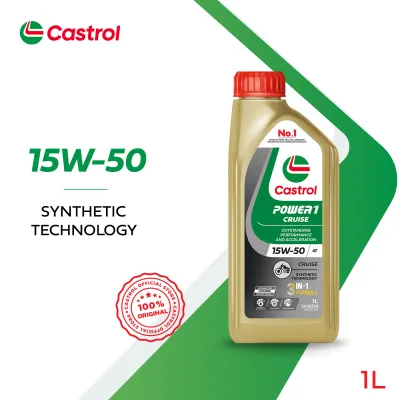
![[TWIN PACK] Castrol POWER1 Cruise 4T 15W-50 (1L) Synthetic Technology API SP JASO MA2](https://img.lazcdn.com/g/p/8789b8270838e4ddeed40686aef40866.jpg_400x400q80.jpg_.webp)
Prices are valid at publication and may change. Please refer to the product page for the latest price.
When servicing your motorcycle’s lubrication system, always refer to the original-vehicle instructions for proper drain plug torque and filter installation. Because handling hot engine oil carries burn risks and improper installation can lead to sudden oil loss, consider seeking qualified professional service if you lack the proper tools or experience. Always ensure the engine is cool before beginning any maintenance work.
The first specification to locate is the recommended viscosity grade, typically represented by a rating such as 10W-40 or 15W-50. The number preceding the “W” indicates the oil’s flow characteristics at low temperatures, while the second number represents its viscosity at operating temperatures. In a consistently warm environment like Singapore, the high-temperature rating is particularly critical for maintaining a stable protective film.
Next, you must identify the required Japanese Automotive Standards Organization (JASO) standard. Most modern motorcycles utilize a wet clutch system, where the engine oil also lubricates the clutch plates. For these bikes, you must use an oil certified as JASO MA or JASO MA2, which guarantees the friction characteristics necessary to prevent clutch slippage. JASO MB oils, conversely, are designed for low-friction applications like automatic scooters and must never be used in a wet clutch system.
Finally, check the minimum American Petroleum Institute (API) service classification required by your engine. This rating, denoted by letters such as SN, SM, or SP, indicates the level of wear protection, deposit control, and oxidation resistance the oil provides. Ensure any oil you consider meets or exceeds the specific API letter sequence mandated by your motorcycle’s manufacturer.
Castrol Power1: Design Focus and Best Use Cases
The Castrol Power1 product line is engineered with a clear emphasis on performance, acceleration, and immediate throttle response. Castrol designs these lubricants to minimize internal engine friction, allowing the engine to rev more freely and deliver power efficiently to the rear wheel. This design philosophy makes the range highly attractive to riders who prioritize a dynamic and engaging riding experience.

Within the Power1 family, you will find different tiers based on base oil composition, primarily standard Power1 and Power1 Racing. Standard Power1 typically utilizes a semi-synthetic formulation, balancing cost and performance for everyday riding. Power1 Racing, however, is a fully synthetic formulation designed for high-stress environments, offering superior thermal stability and shear resistance under extreme operating temperatures.
The typical rider profile for Castrol Power1 includes sportbike enthusiasts, weekend canyon riders, and those who frequently operate their motorcycles at higher revolutions per minute (RPM). If your daily route involves spirited riding or if you participate in track days, the friction-reducing technology in the Power1 line is tailored to support those high-demand scenarios. However, you must verify that the specific viscosity and JASO rating of the chosen Power1 variant align with your bike’s manual.
Shell Advance: Design Focus and Best Use Cases
Shell Advance takes a maintenance-centric approach, focusing heavily on engine cleanliness, active deposit control, and long-term reliability. The brand’s primary design goal is to prevent dirt particles from coalescing into harmful sludge, which can restrict oil passages and reduce heat dissipation. By keeping internal components clean, Shell Advance aims to maintain consistent engine performance over extended service intervals.
The Shell Advance lineup is clearly segmented into different performance tiers, most notably Shell Advance AX7 and Shell Advance Ultra. Shell Advance AX7 is a semi-synthetic oil that offers robust protection for standard daily commuting and moderate riding conditions. Shell Advance Ultra is a premium, fully synthetic oil manufactured using Shell’s proprietary gas-to-liquid technology, which provides a highly pure base oil with exceptional resistance to thermal degradation.
This product line is highly suited for daily commuters, high-mileage touring riders, and those who operate their motorcycles in heavy stop-and-go traffic. If your priority is maximizing the lifespan of your engine, maintaining fuel efficiency through cleanliness, and ensuring smooth gear shifts during long hours on the road, Shell Advance provides a highly stable platform. It is particularly favored by riders who want peace of mind during long, hot journeys.
How to Compare the Labels Objectively
To make an objective comparison between Castrol Power1 and Shell Advance, you must look past the branding and analyze the technical data printed on the labels. Comparing a premium fully synthetic oil from one brand to a semi-synthetic oil from the other will not yield a fair assessment. You must compare equivalent product tiers to understand which oil offers the better value for your specific needs.
Start by matching the base oil composition. If you are looking at Shell Advance Ultra, you should compare it directly against Castrol Power1 Racing, as both represent the fully synthetic tier of each brand. Likewise, Shell Advance AX7 should be compared against the standard semi-synthetic Castrol Power1. This ensures you are evaluating oils with similar molecular stability and service life expectations.
Next, verify the exact JASO and API certifications on the back label of both bottles. While both brands widely support JASO MA2 and modern API standards (such as API SN), some specific viscosity grades or regional formulations may carry different ratings. Confirming that both options meet or exceed your motorcycle’s requirements ensures that either choice is chemically safe for your engine and wet clutch.
Finally, check for specific Original Equipment Manufacturer (OEM) approvals or recommendations. Some motorcycle manufacturers collaborate with oil brands to develop specific formulations or officially endorse certain products. If your owner’s manual explicitly recommends a particular brand or requires a specific manufacturer approval code, verifying this on the oil label is crucial for maintaining warranty compliance and optimal performance.
How to Decide: Matching the Oil to Your Riding Style
Choosing between these two reputable brands ultimately depends on your riding habits, your motorcycle’s design, and your personal maintenance priorities. Since both brands offer excellent protection when matched correctly to your engine’s specifications, you can use your typical riding environment as the deciding factor.
You should lean toward Castrol Power1 if your primary goal is a highly responsive throttle feel and you frequently ride in high-RPM scenarios. The friction-reducing properties of the Power1 line are optimized for quick power delivery, making it an excellent match for sportier riding styles and performance-oriented motorcycles.
Conversely, you should choose Shell Advance if your priority is long-term engine cleanliness, consistent thermal stability, and reliable protection over high mileages. The active cleansing technology in Shell Advance is highly beneficial for engines that endure prolonged idling in city traffic or continuous operation on long-distance highway cruises.
Before making your final purchase, always verify if your motorcycle is still under its factory warranty period. Some manufacturers mandate the use of their own proprietary OEM-branded fluids to keep the warranty intact. If your manual allows aftermarket oils, ensure the bottle you select matches the exact viscosity and certification standards required by your machine.
Frequently Asked Questions (FAQ)
Can I mix Castrol Power1 and Shell Advance motor oils?
It is highly recommended to avoid mixing Castrol Power1 and Shell Advance motor oils. While both are high-quality lubricants, they utilize different proprietary additive packages to achieve their performance goals. Mixing different brands can disrupt the chemical balance of these additives, potentially reducing the oil’s effectiveness, altering its viscosity, or causing premature degradation. If you decide to switch from one brand to the other, the safest approach is to perform a complete drain-and-fill procedure, replacing the oil filter at the same time to ensure your engine runs on a consistent formulation.
How does Singapore's tropical climate affect motorcycle oil choice?
Singapore’s consistently high ambient temperatures and humid tropical climate place continuous thermal stress on motorcycle engines, especially during stop-and-go city commuting. Under these conditions, multi-grade oils with robust high-temperature viscosity ratings (such as 10W-40 or 15W-50) are essential to prevent the oil film from thinning excessively. High heat accelerates oil oxidation and degradation, which can lead to sludge formation. To protect your engine, it is crucial to monitor your oil level regularly and adhere strictly to the manufacturer’s recommended oil change intervals, or even shorten them if you frequently ride in heavy traffic.
Is full synthetic always necessary for daily commuting motorcycles?
A fully synthetic oil is not always strictly necessary for daily commuting, but it offers significant advantages in demanding environments. Semi-synthetic options, such as Castrol Power1 or Shell Advance AX7, provide adequate protection and are highly cost-effective for low-stress, moderate-distance daily riding. However, if your commute involves prolonged idling in heavy traffic under high ambient temperatures, a fully synthetic oil like Shell Advance Ultra or Castrol Power1 Racing provides superior thermal stability and resistance to breakdown. Evaluate your budget and riding conditions; for standard commuting, a high-quality semi-synthetic changed regularly is often perfectly sufficient.

Community discussion
Share your experience or ask a question. Comments are reviewed before publication.