
There is no single “better” motor oil between Castrol Power1 and Shell Advance; the right choice depends entirely on your motorcycle manufacturer’s specifications and your specific riding habits in Singapore. Both brands produce highly engineered lubricants designed to protect motorcycle engines under various operating conditions. However, selecting the ideal oil requires looking beyond brand marketing and focusing on the technical specifications printed on the bottle.
To make an informed decision, you must align the oil’s properties with your motorcycle’s engine type, transmission configuration, and typical usage patterns. Singapore’s unique riding environment—characterized by year-round tropical heat and dense, stop-and-go urban traffic—places specific demands on engine lubricants. By understanding how to read oil labels and matching them to your vehicle’s needs, you can ensure optimal engine protection, smooth gear shifts, and long-term reliability.
Understanding Your Motorcycle's Oil Requirements
Before comparing any aftermarket oil brands like Castrol or Shell, you must establish the baseline specifications your motorcycle requires. The primary source for this information is always your motorcycle’s owner’s manual. Using an oil that does not meet these manufacturer-specified standards can lead to poor engine performance, accelerated component wear, clutch slippage, or even catastrophic engine failure.
Products mentioned in this guide
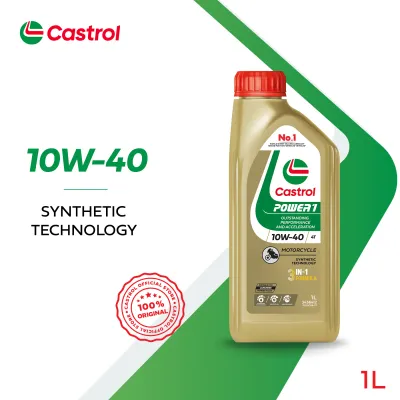
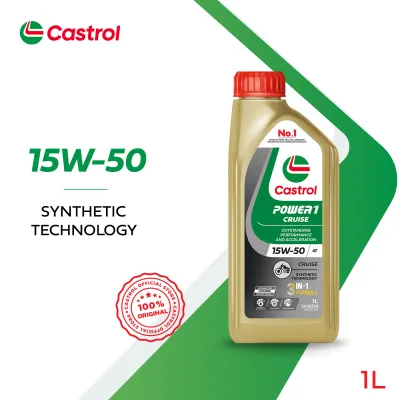
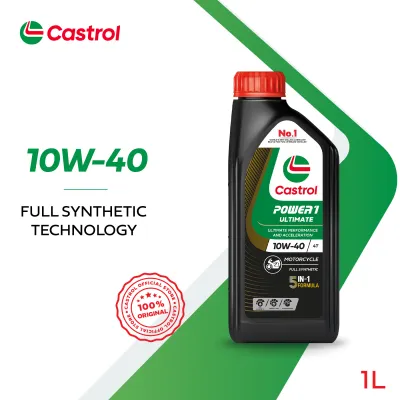
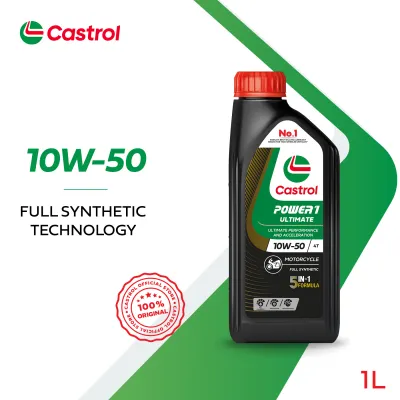
![[TWIN PACK] Castrol POWER1 ULTIMATE 4T 10W-40 (1L) Motorcycle Full Synthetic API SP JASO MA2](https://img.lazcdn.com/g/p/f764729b4d79cf52e77b76d49e4d78ec.jpg_400x400q80.jpg_.webp)
![[TWIN PACK] Castrol POWER1 4T 10W-40 (1L) Motorcycle Synthetic Technology API SP JASO MA2](https://img.lazcdn.com/g/p/304692cfde138b9d79f0458621b9567b.jpg_400x400q80.jpg_.webp)
![[TWIN PACK] Castrol POWER1 ULTIMATE 4T 10W-50 (1L) Motorcycle Full Synthetic API SP JASO MA2](https://img.lazcdn.com/g/p/0401f2a9d09f99b908e60178ba27beb3.jpg_400x400q80.jpg_.webp)
![[TWIN PACK] Castrol POWER1 Cruise 4T 15W-50 (1L) Synthetic Technology API SP JASO MA2](https://img.lazcdn.com/g/p/8789b8270838e4ddeed40686aef40866.jpg_400x400q80.jpg_.webp)
Prices are valid at publication and may change. Please refer to the product page for the latest price.
The first specification to locate is the recommended viscosity grade, typically represented by a rating such as 10W-40, 10W-30, or 15W-50. The number preceding the “W” (which stands for winter) indicates the oil’s flow characteristics at low temperatures, while the second number indicates its viscosity at operating temperature (100°C). In Singapore’s tropical climate, low-temperature startup flow is less of a concern than in colder regions, but the high-temperature viscosity rating remains critical to ensure the oil film does not shear or thin out excessively under intense heat.
Next, identify the required API (American Petroleum Institute) service classification and the JASO (Japanese Automotive Standards Organization) standard. The API classification (such as SN, SM, or SL) indicates the level of engine protection and additive technology, with later letters generally representing more modern standards. The JASO standard is particularly crucial for motorcycles: JASO MA and MA2 standards are formulated for wet clutches, providing the necessary friction to prevent clutch slippage, while JASO MB is designed for automatic scooters with dry clutches and requires low-friction characteristics.
You must also note any specific manufacturer approvals or explicit warnings against using incorrect friction modifiers. Many modern passenger car motor oils contain friction-reducing additives that can cause motorcycle wet clutches to slip, leading to power loss and clutch damage. Always verify that the oil you select is specifically formulated for motorcycles and carries the correct JASO certification for your transmission type.
Comparing Castrol Power1 and Shell Advance Product Lines
When comparing Castrol Power1 and Shell Advance, it is essential to match equivalent product tiers rather than comparing mismatched categories. Both brands offer a tiered product lineup ranging from entry-level mineral oils to mid-tier semi-synthetics and premium fully synthetic formulations. Comparing a fully synthetic oil from one brand to a semi-synthetic oil from another will not yield a fair or useful comparison.

For instance, if you are looking at fully synthetic options, you should compare Castrol Power1 Ultimate against Shell Advance Ultra. These premium oils utilize high-quality synthetic base stocks designed to offer maximum thermal stability, shear resistance, and engine cleanliness. If your motorcycle manufacturer specifies a semi-synthetic oil, you would compare Castrol Power1 4T (often formulated with synthetic technology) against Shell Advance AX7. For older or lower-displacement motorcycles requiring mineral oil, the comparison would be between Castrol Activ or entry-level Power1 variants and Shell Advance AX5.
Always read the physical product labels carefully to verify that the stated viscosity and JASO/API certifications match your motorcycle’s requirements. Do not assume that a premium brand name automatically guarantees compatibility with your engine. A fully synthetic oil with the wrong viscosity grade or an incorrect JASO rating can perform worse in your specific motorcycle than a correctly specified semi-synthetic oil.
Furthermore, avoid assuming performance superiority based solely on brand marketing claims. Both Castrol and Shell highlight proprietary technologies on their packaging—such as Castrol’s “5-in-1 Formula” or Shell’s “Active Cleansing Technology.” While these formulations represent genuine engineering efforts to reduce friction, control deposits, and manage heat, their real-world benefits are highly conditional on correct application, proper oil levels, and adherence to recommended service intervals. Rely on the printed specifications and certifications as your primary guide.
Evaluating Oils for Singapore's Tropical and Urban Riding Conditions
Singapore’s climate and traffic patterns present a challenging environment for motorcycle engines and their lubricants. The ambient temperature consistently ranges from 25°C to over 34°C, and high humidity is constant. For motorcycles, especially those with air-cooled or liquid-cooled single-cylinder engines, this means the engine operates under continuous thermal stress, requiring an oil with exceptional thermal stability.
Under high-temperature conditions, lower-quality oils can undergo thermal breakdown, where the oil molecules crack and lose their lubricating properties. This leads to a rapid drop in viscosity, reducing the protective oil film between moving metal parts and increasing the risk of engine wear. Fully synthetic oils, such as Castrol Power1 Ultimate or Shell Advance Ultra, are engineered to resist thermal breakdown and maintain their viscosity even under extreme operating temperatures, making them highly suitable for Singapore’s climate.
In addition to the weather, Singapore’s urban traffic environment involves frequent stop-and-go riding, short commutes, and prolonged idling at traffic lights or in congestion. This type of riding prevents the engine from reaching and maintaining its optimal operating temperature for extended periods, which can lead to incomplete combustion, fuel dilution of the oil, and moisture condensation. These factors accelerate the formation of engine sludge, varnish, and harmful deposits.
To combat these urban riding challenges, a motorcycle oil must contain robust detergent and dispersant additives. Detergents work to neutralize acidic combustion byproducts and prevent deposits from forming on hot engine surfaces like pistons and rings. Dispersants keep soot and other insoluble contaminants suspended in the oil, preventing them from clumping together to form sludge. When evaluating Castrol Power1 and Shell Advance, check the product labels for manufacturer claims regarding high-temperature protection, deposit control, or engine cleanliness, keeping in mind that these benefits are only realized when the oil is changed regularly.
How to Verify Authenticity and Check Pricing
Ensuring that you purchase genuine motor oil is critical to protecting your motorcycle’s engine. The market for automotive lubricants occasionally faces issues with counterfeit products, which are often low-grade mineral oils packaged in replicated bottles. Using counterfeit oil can lead to rapid engine wear, severe deposit buildup, and potential engine failure due to a lack of proper additives and shear stability.
To avoid counterfeit products, always purchase your motor oil from authorized distributors, official brand stores on reputable online marketplaces, or established, reputable workshops in Singapore. Avoid buying from unverified third-party sellers or online listings that offer prices significantly below the market average. If a deal seems too good to be true, it is highly likely to be counterfeit or expired stock.
When purchasing, inspect the packaging thoroughly. Genuine bottles of Castrol Power1 and Shell Advance feature high-quality printing, intact tamper-evident seals on the cap, and clearly printed batch numbers and production dates on the bottle. Some manufacturers also include holographic labels or QR codes that allow you to verify the product’s authenticity directly on their official website.
In terms of pricing, compare the S$ price per liter for equivalent synthetic or semi-synthetic grades between the two brands. While fully synthetic oils generally cost more upfront than semi-synthetic or mineral oils, they often provide superior protection and can maintain their properties over longer intervals, potentially offering better long-term value. Calculate the cost-effectiveness based on your annual mileage and recommended oil change intervals rather than just the initial purchase price.
Step-by-Step Decision Framework: Which Oil Should You Choose?
To finalize your purchasing decision, follow this structured, conditional framework to ensure you select the safest and most effective oil for your motorcycle.
First, consult your motorcycle’s owner’s manual to verify the exact viscosity grade, API service classification, and JASO standard required. This step is non-negotiable, as using the incorrect specification can void your warranty or cause mechanical issues. If your motorcycle is currently under warranty, check if the manufacturer requires specific OEM-branded oils or authorized service centers to maintain coverage.
Second, evaluate your typical riding habits and budget. If you use your motorcycle for daily commuting in heavy Singapore traffic, delivery services, or high-speed highway riding, prioritize a premium fully synthetic oil. Compare the equivalent fully synthetic offerings from both brands: Castrol Power1 Ultimate and Shell Advance Ultra. Choose Castrol Power1 if its specific product tier matches your manual’s specifications and offers a preferred price-to-value ratio at authorized local sellers.
Third, choose Shell Advance if its equivalent tier meets all your motorcycle’s JASO and API requirements and is more readily available or cost-effective in your immediate area. If your riding consists of short, occasional trips and your manual permits it, a semi-synthetic option like Castrol Power1 4T or Shell Advance AX7 can provide a highly practical and cost-effective balance of protection and price.
Finally, always perform a physical inspection of the bottle before purchase to confirm the seals are intact and the batch codes are present. If you are having the oil changed at a workshop, verify that the mechanic is pouring the oil from a sealed, genuine bottle that matches your vehicle’s specifications.
Frequently Asked Questions (FAQ)
How Often Should I Change My Motorcycle Oil in Singapore's Climate?
To determine the correct oil change interval, always refer to your motorcycle’s owner’s manual for the standard mileage or time-based replacement schedule. However, because Singapore’s tropical climate and stop-and-go traffic qualify as severe riding conditions, you may need to adjust this interval. Frequent idling, short trips under 10 kilometers, and operating in high ambient temperatures accelerate oil degradation and additive depletion. If you use your motorcycle for commercial purposes, such as food delivery, or commute daily in heavy traffic, consider shortening the manufacturer’s standard interval to maintain optimal engine protection. Always consult the oil manufacturer’s label for any specific severe-service recommendations, and regularly check your oil level and color using the dipstick or sight glass.

Community discussion
Share your experience or ask a question. Comments are reviewed before publication.