
Choosing between Shell and Castrol for your scooter engine oil rarely comes down to a single “best” brand. Both manufacturers offer dedicated scooter formulations designed for dry-clutch engines, but they use different base oils and additive packages. The right choice depends on your scooter’s manufacturer specifications, your typical riding conditions in Singapore’s tropical climate, and which brand’s specific product line aligns with your maintenance priorities. This guide breaks down how to compare their offerings and make a confident purchase.
Scooters operate under significantly different mechanical conditions than standard motorcycles. Because most modern scooters use automatic continuously variable transmissions (CVTs) with dry clutches, their engines do not share oil with the gearbox. This separation allows scooter-specific lubricants to focus entirely on reducing engine friction and managing heat without worrying about clutch slippage. Understanding these differences is the first step toward selecting the ideal oil for your daily commute.
Check Your Scooter's Oil Requirements First
Before comparing any lubricant brands, you must establish the baseline specifications your scooter needs to ensure engine safety and warranty compliance. The most critical specification for automatic scooters is the JASO rating. You must look for a JASO MB certification on the oil bottle. JASO MB oils are specifically formulated for dry-clutch engines, offering low-friction properties that maximize fuel efficiency and power delivery. Avoid JASO MA or MA2 oils, which are formulated with higher friction coefficients specifically to prevent wet clutches from slipping in standard motorcycles.
Products mentioned in this guide
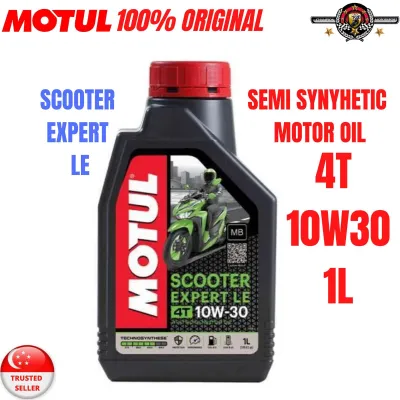
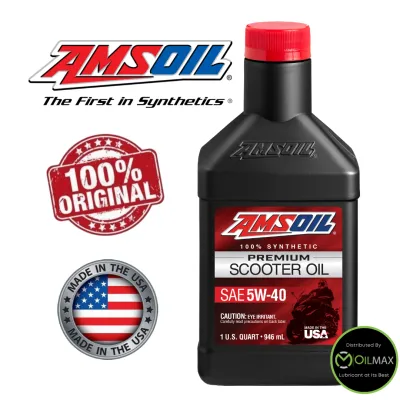
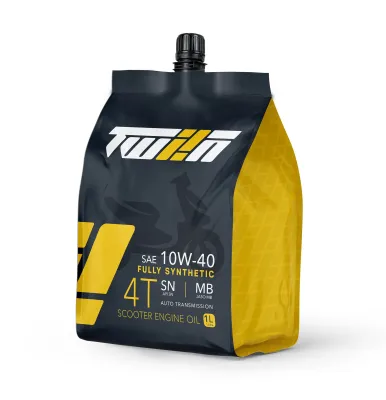
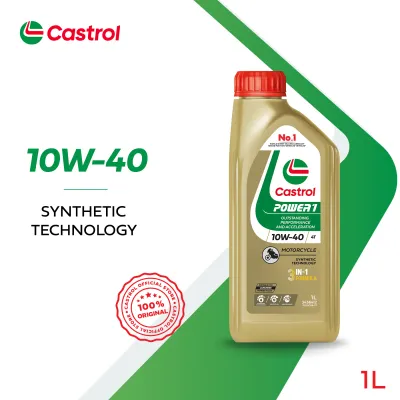
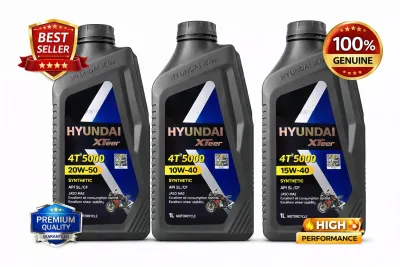
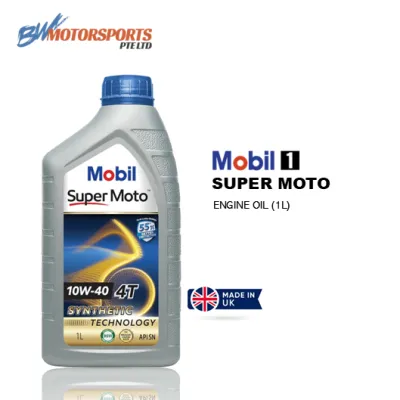
Prices are valid at publication and may change. Please refer to the product page for the latest price.
Next, identify the correct viscosity grade recommended in your owner’s manual, such as 10W-30, 10W-40, or 5W-40. The first number (followed by a “W”) indicates the oil’s flow characteristics at cold temperatures, while the second number indicates its viscosity at operating temperature. In Singapore’s consistently warm tropical climate, the high-temperature rating is particularly important for maintaining a protective oil film during prolonged idling or high-speed highway riding.
Finally, check the required API (American Petroleum Institute) service classification, such as API SN or SP. These ratings indicate the level of wear protection, deposit control, and oxidation resistance the oil provides. Matching your manufacturer’s exact specifications for JASO rating, viscosity, and API classification must always take precedence over brand marketing or peer recommendations. Using an incorrect oil specification can lead to increased engine wear, reduced fuel economy, or even void your vehicle’s warranty.
Shell Scooter Oils: Key Product Lines and Labeled Features
Shell’s dedicated scooter lubricants are grouped under the Shell Advance Scooter range, which includes both semi-synthetic and fully synthetic formulations. The most common options you will encounter on local retail shelves are Shell Advance Ultra Scooter (fully synthetic) and Shell Advance AX7 Scooter (semi-synthetic). Fully synthetic oils generally offer superior thermal stability and longer service life, while semi-synthetic options provide a more budget-friendly choice for riders who perform highly frequent oil changes.

A key differentiator on Shell’s premium labels is the mention of PurePlus Technology. This is Shell’s proprietary gas-to-liquid (GTL) process, which converts natural gas into a crystal-clear base oil. Because this base oil contains virtually none of the impurities found in crude-oil-derived bases, it provides excellent viscosity stability and resistance to oil degradation under extreme operating temperatures. This technology is designed to keep the engine closer to factory cleanliness standards over the entire oil drain interval.
Shell also highlights its Active Cleansing Technology on its packaging. This additive package is formulated to prevent dirt and soot particles from clumping together to form harmful sludge. For daily commuters navigating congested urban routes, this focus on engine cleanliness helps maintain consistent performance and prevents deposit buildup on critical components like pistons and valves. When evaluating Shell products, check the front and back labels to confirm these specific technology markings match your chosen viscosity.
Castrol Scooter Oils: Key Product Lines and Labeled Features
Castrol addresses the scooter market primarily through its Castrol Power1 Scooter range. This lineup includes premium fully synthetic options like Castrol Power1 Ultimate Scooter and highly popular synthetic-technology formulations like Castrol Power1 Scooter 4T. Castrol offers these products in several common viscosity grades, allowing riders to match the specific requirements of various engine displacements, from compact 125cc commuter models to larger maxi-scooters.
Castrol’s packaging frequently highlights specialized friction-modifier and anti-wear technologies, such as Scootek Technology. This formulation is engineered to reduce internal engine friction, which Castrol states helps optimize throttle response and acceleration. Because dry-clutch scooter engines can run hotter than motorcycle engines due to enclosed bodywork and high-RPM operation, reducing internal friction is a key method for managing operating temperatures.
On the product packaging, Castrol also emphasizes high-temperature oxidation resistance and thermal stability. These properties are designed to prevent the oil from thickening and breaking down when subjected to continuous high-load conditions, such as riding with a pillion passenger or tackling steep inclines. When browsing Castrol options, pay close attention to the specific performance claims on the back label to ensure the oil’s protective features align with your typical riding habits.
Comparing Shell and Castrol Across Core Riding Dimensions
When evaluating Shell and Castrol side-by-side, you are comparing two distinct approaches to lubricant formulation. Shell emphasizes base oil purity and long-term engine cleanliness through its gas-to-liquid technology. Castrol, on the other hand, focuses heavily on friction reduction, throttle responsiveness, and immediate acceleration feel. Both brands design their premium fully synthetic oils to withstand the intense heat of tropical urban environments, but they use different additive chemistry to achieve their protective goals.
In stop-and-go traffic, your scooter’s engine experiences rapid temperature fluctuations and prolonged idling, which can accelerate oil oxidation. Shell’s PurePlus base oil provides a highly stable foundation that resists thinning, making it an excellent option for riders seeking consistent viscosity retention. Castrol’s friction-reducing additives focus on minimizing drag within the engine, which can translate to a slightly livelier throttle response during sudden acceleration from a standstill.
Price per liter in Singapore typically varies depending on whether you choose a semi-synthetic or a premium fully synthetic formulation. Fully synthetic options from both brands generally sit in a similar premium price bracket (typically ranging from S$15 to S$25 per liter at retail), while semi-synthetic options offer a lower-cost alternative. To make an accurate comparison, you should weigh the retail price against your planned oil change interval; premium synthetics may justify their higher cost by maintaining their protective properties longer.
To help you compare specific products available at your local workshop or online retailer, use the template below to record and evaluate the technical data from the physical product labels:
| Comparison Dimension | Shell Advance Product | Castrol Power1 Product | Your Scooter's Manual Requirement |
|---|---|---|---|
| Exact Product Name | e.g., Advance Ultra Scooter | e.g., Power1 Ultimate | N/A |
| Viscosity Grade | e.g., 10W-40 | ||
| JASO Rating | e.g., JASO MB | ||
| API Rating | e.g., API SN or SP | ||
| Base Oil Type | Fully Synthetic / Semi-Synth | Fully Synthetic / Semi-Synth | Manufacturer Recommendation |
| Price per Liter (S$) | Your Budget Target |
How to Decide: Choose Shell if… / Choose Castrol if…
You should choose Shell if you prioritize maximum base oil purity, long-term engine cleanliness, and consistent viscosity retention over extended daily commutes. If your scooter accumulates high mileage quickly and you want an oil that focuses heavily on preventing sludge and deposit buildup, Shell’s gas-to-liquid base oil technology provides an excellent protective shield. It is also a strong choice if you prefer a highly stable, predictable lubricant that maintains its properties consistently between scheduled service intervals.
You should choose Castrol if you prefer a formulation optimized for rapid throttle response, smooth acceleration, and minimized internal engine friction in stop-and-go urban traffic. If your daily ride consists of short, frequent trips through congested city streets where immediate power delivery and friction reduction are your primary goals, Castrol’s specialized additive packages are designed to support this riding style.
Before making your final decision, verify whether your scooter manufacturer mandates a proprietary OEM oil specification. Some manufacturers require specific factory-branded lubricants or highly niche viscosity grades during the warranty period, which supersedes any aftermarket brand choice. Additionally, if the only available Shell or Castrol options on the shelf lack the correct JASO MB certification or the exact viscosity grade required by your owner’s manual, you must choose an alternative product that meets those critical specifications.
Where to Buy Authentic Oil and Avoid Counterfeits in Singapore
Using counterfeit engine oil can cause catastrophic engine damage, as fake lubricants often lack the necessary anti-wear additives and thermal stability required for high-RPM scooter engines. To ensure you are purchasing genuine Shell or Castrol products, always buy from authorized distributors, established local automotive workshops, or official brand flagship stores on major e-commerce platforms. Avoid purchasing from unverified third-party online sellers offering prices that seem too good to be true.
When purchasing physical bottles, inspect the packaging closely for signs of tampering. Genuine bottles feature clean, high-quality label printing with sharp text, intact tamper-evident plastic rings on the caps, and clear batch numbers and production dates printed directly on the plastic. Many premium oils also include holographic anti-counterfeit labels or QR codes on the cap that allow you to verify the product’s authenticity directly on the manufacturer’s official website. If the print quality looks blurry, the cap seal is broken, or the price is suspiciously low (such as fully synthetic oil sold for under S$10), do not risk pouring it into your engine.
Frequently Asked Questions (FAQ)
Can I mix Shell and Castrol engine oils in my scooter?
While mixing different brands of engine oil will not cause immediate mechanical failure in an emergency, it is not recommended for regular maintenance. Shell and Castrol use different proprietary additive packages and base oil formulations that are designed to work as a cohesive system. Mixing them can disrupt this chemical balance, potentially reducing the oil’s overall wear protection, deposit control, and high-temperature stability. If you must top up your oil level with a different brand in an emergency, you should plan to perform a complete oil drain and filter change as soon as possible to restore optimal engine protection.
How often should I change my scooter's engine oil?
You must always follow the mileage or time-based oil change intervals specified in your scooter’s owner’s manual. However, you should adjust this interval downward if you frequently ride under severe operating conditions. In Singapore, severe conditions are common and include frequent short trips under five kilometers, prolonged idling in heavy traffic, carrying heavy loads, and riding in high ambient temperatures and humidity. Under these conditions, the engine oil degrades faster and can accumulate moisture; shortening your change interval (for example, changing fully synthetic oil every 3,000 to 5,000 kilometers instead of the maximum limit) helps ensure long-term engine health.
Community discussion
Share your experience or ask a question. Comments are reviewed before publication.