
A standard car charger steps down your vehicle’s 12V DC power to lower DC voltages (like USB) for small electronics, while a power inverter converts 12V DC into standard household AC power to run larger appliances and laptops. Choosing between them depends entirely on the plug type, voltage requirements, and power draw of the specific devices you need to support on the road. Understanding how each device interacts with your vehicle’s electrical system ensures you can power your gear safely without blowing fuses or draining your battery.
How They Work: AC Inversion vs. DC Step-Down
Standard car chargers are relatively simple electronic devices. They take the 12-volt direct current (DC) supplied by your vehicle’s accessory socket and step it down to lower DC voltages, such as 5V, 9V, 12V, or 20V. This power is typically delivered through USB-A or USB-C ports, or sometimes via specific DC barrel connectors designed for small electronics. Because the power remains in DC form throughout the process, these chargers operate with high electrical efficiency and generate very little heat.
A power inverter performs a fundamentally different task. Instead of keeping the current in DC form, it converts the vehicle’s 12V DC power into standard household alternating current (AC) voltage. This allows you to plug in devices that use standard three-pin household wall plugs. When choosing an inverter, you must verify that its AC output standard matches the voltage and frequency requirements of your specific appliances, which typically align with local household standards.
Products mentioned in this guide
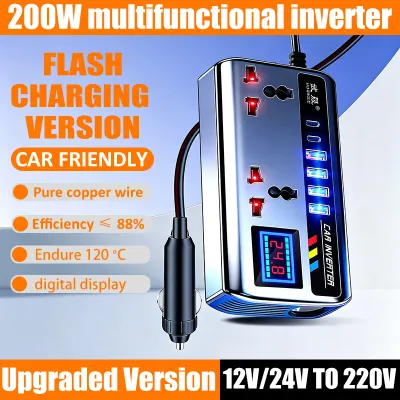
5 Lazada user ratings
I have received the 24V inverter used for the truck. I have tested it and found that it is quite stable with small appliances. The socket ho…Read full reviewShow less
I have received the 24V inverter used for the truck. I have tested it and found that it is quite stable with small appliances. The socket holes are also sufficient.
When traveling by truck, there are also many mobile phones and charging ports needed, so you no longer have to worry about not having enough…Read full reviewShow less
When traveling by truck, there are also many mobile phones and charging ports needed, so you no longer have to worry about not having enough plugs
Solid workmanship, fine workmanship, thick wires, reliable quality, strong adaptability, compact size, very good
The item is intact and undamaged. The logistics is very fast, and it will be used for all shipments
The quality is very good, I bought a few, the charging is fast, safe and reliable
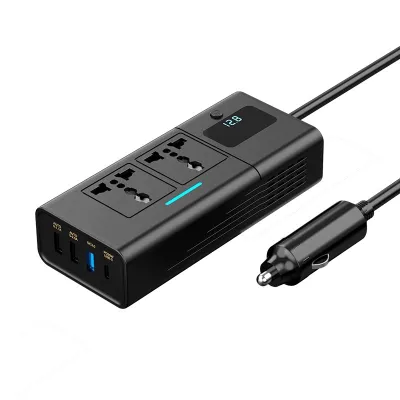
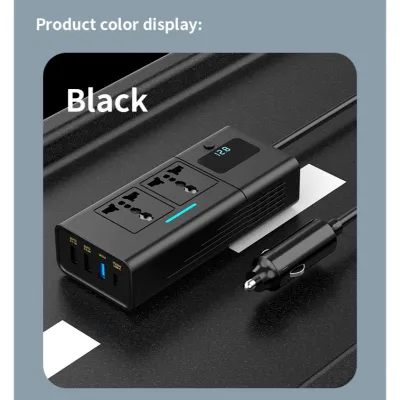
7 Lazada user ratings
Quick delivery. Product as described
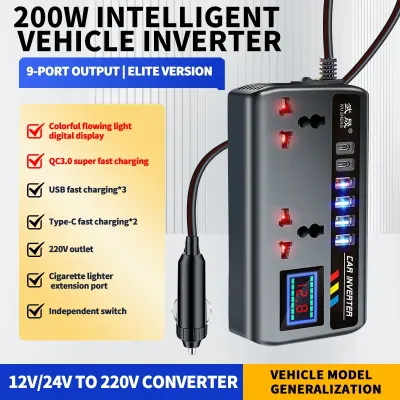
35 Lazada user ratings
Item came as described. Quick test seems to work OK for the USB charging. the Orange USBA shows Fast Charging, but the Type C ports show cha…Read full reviewShow less
Item came as described. Quick test seems to work OK for the USB charging. the Orange USBA shows Fast Charging, but the Type C ports show charging only (little disappointed). Yet to test charing multi devices at same time and the 230V 3 pin power point.
👌Ease of Use:Yes 🔧Durability:Haven't tested yet Compact and portable, Easy to carry in car, hopefully it's works smoothly.
label sticker is abit off, hopefully it is safe to use
Usb output ok, but no 220V AC output.
functional but made cheaply
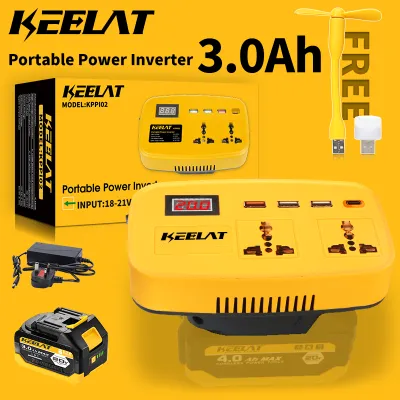
5 Lazada user ratings
👜Portability:Portable 🔧Durability:Built quality is good
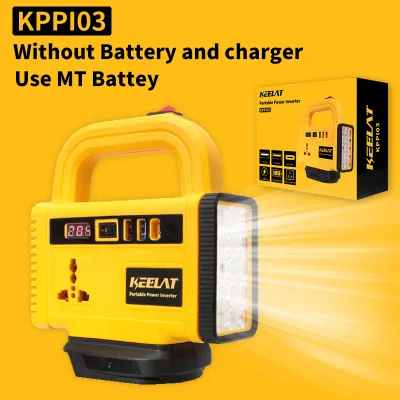
17 Lazada user ratings
Portable and lightweight, Perfect for camping, High power output, Great for emergency, Fast delivery in SG,
portable inverter can be used for emergency and outgoing. LED is very bright. Tested and working.
Try it on a table fan, Not even half an hour journey, battery flat. Battery Life:very poor
Great! Good product!
Nice product 👍
9 Lazada user ratings
Fast shipping from Singapore, Perfect for camping, Durable lithium battery, Pure sine wave inverter, High power output.
good and fast delivery can buy thanks Yet to try but the sound was gokd and smooth, seems good quality with 2 bettery.
Safety: confident easy for weak battery to charger
7 Lazada user ratings
Heat dissipation structure good, surface not scalding
Clear digital screen, voltage data visible directly
Ideal for road trip, solves outdoor power trouble
Multiple ports, charge several devices together
Digital display clearly shows real-time voltage
Prices are valid at publication and may change. Please refer to the product page for the latest price.
This conversion process from DC to AC is not perfectly efficient. Inverters inherently lose a portion of their energy as heat during the inversion process. This means an inverter will draw more power from your vehicle’s electrical system to deliver the same amount of wattage to a device compared to a direct DC-to-DC charger.
Device Compatibility: What Can Each Option Power?
Standard car chargers are ideal for everyday personal electronics. They easily support smartphones, tablets, dashcams, portable GPS units, rechargeable flashlights, and other USB-powered accessories. If your device charges via a standard USB cable, a dedicated car charger is almost always the most practical and efficient choice.

A power inverter is necessary when you need to run devices that require a standard household wall outlet. Common examples include laptops with proprietary AC power bricks, portable coolers, CPAP machines, camera battery chargers, or small household appliances. These devices are designed to run on AC power and cannot be connected directly to a USB port.
Before buying an inverter, always check the power adapter or “brick” of the device you want to charge. If the label indicates that the adapter ultimately outputs DC power to the device, you should search for a compatible DC car charger first. Using a direct DC charger with the correct voltage and connector is often safer, more efficient, and more compact than converting DC to AC and back to DC again.
Vehicle Limits: Checking Your 12V Socket and Battery
Your vehicle’s electrical system has strict limits that you must respect to avoid damaging your wiring or blowing fuses. Most standard 12V accessory sockets, commonly known as cigarette lighter sockets, are rated for a maximum current such as 10 to 15 amperes. You should check your vehicle owner’s manual to find the exact wattage limit of your accessory socket, which is typically between 120 and 180 watts. Exceeding this limit will immediately blow the socket’s fuse.
If you need to use a high-wattage power inverter that exceeds your accessory socket’s limit, you cannot plug it into the cabin’s 12V outlet. Instead, you must connect the inverter directly to the vehicle’s battery terminals using heavy-duty cables and appropriately rated inline fuses. This direct connection bypasses the thin cabin wiring, allowing the inverter to draw the high current it needs safely.
You must also consider your vehicle’s alternator capacity. Running high-draw appliances while the engine is idling can easily exceed the alternator’s power output. When this happens, the system draws the deficit directly from the car battery, which can quickly drain the battery and leave you stranded. Always monitor your power consumption and avoid running high-wattage devices for extended periods without a running engine.
Safety and Operational Risks to Monitor
Because power inverters convert high levels of electrical current, they generate significant heat during operation. In warm tropical climates like Singapore, heat dissipation is especially critical; you must place the inverter in a well-ventilated area inside the vehicle, keeping it away from flammable materials, loose papers, and direct sunlight. Never cover the inverter’s cooling fans or squeeze it into tight, enclosed spaces like a glove compartment or under a seat where heat can build up rapidly.
Preventing battery drain is another critical operational habit. If you run an inverter or a high-draw charger while the engine is turned off, you risk draining the starter battery to the point where the vehicle will not start. To mitigate this risk, look for power inverters equipped with built-in safety features, such as low-voltage alarms or automatic shutoff functions that disconnect the load before the battery charge drops too low.
Additionally, you must understand the difference between modified sine wave and pure sine wave inverters. Modified sine wave inverters are more common and affordable, but they produce a blocky, stepped electrical wave that can cause electrical noise, overheating, or malfunction in sensitive electronics. You should check the user manuals of your laptops, medical equipment, or audio gear to determine if they require a pure sine wave inverter to operate safely and correctly.
Which One Should You Choose?
A standard car charger is the best choice if you only need to charge USB-powered devices like smartphones, tablets, or dashcams. These chargers are highly energy-efficient, compact, inexpensive, and plug directly into your accessory socket without generating noticeable heat or requiring complex safety precautions. They offer a simple, plug-and-play solution for everyday commuting and road trips.
A power inverter is the correct choice if you must run appliances that require a standard AC wall plug, such as laptops with proprietary chargers, portable coolers, or specialized medical equipment. Before purchasing, ensure you have verified your vehicle’s wattage limits and determined whether you need a pure sine wave model to protect your sensitive electronics.
Always verify your device’s power requirements before making a decision. Check if your device has a proprietary plug, look up its exact wattage draw, and confirm whether it can be powered via a modern USB-C Power Delivery charger instead of a bulky AC adapter. Taking these steps ensures you select the safest and most efficient power solution for your vehicle.
Frequently Asked Questions (FAQ)
Will leaving a power inverter plugged in drain my car battery?
Yes, leaving a power inverter plugged in can drain your car battery even if you do not have any devices connected to it. Inverters draw a small amount of standby power, known as an idle current or phantom load, simply to keep their internal conversion circuits active. Over several days, this continuous draw can deplete your vehicle’s starter battery.
To prevent this, you should check whether your vehicle’s 12V accessory socket remains live when the ignition is turned off. Some vehicles cut power to the socket automatically, while others keep it constantly powered. If your socket remains live, always unplug the inverter when the engine is not running.
Can I use a standard car charger and a power inverter at the same time?
You can use both devices simultaneously, but the total combined wattage of all connected electronics must not exceed the safety limit of your vehicle’s electrical circuit. If you plug both a charger and an inverter into a single 12V socket using a multi-plug adapter, you run a high risk of overloading the circuit and blowing the fuse.
To use multiple devices safely, calculate the total wattage draw of all connected items and compare it to the limit specified in your vehicle’s owner’s manual. Avoid daisy-chaining adapters or running multiple high-draw appliances on a single circuit, and consider using separate sockets on different fuses if your vehicle has them.

Community discussion
Share your experience or ask a question. Comments are reviewed before publication.