
Choosing between a front windshield sunshade and side window sunshades for your BYD Atto 3 depends on where you park and who rides with you. If your primary goal is to protect the expansive dashboard, steering wheel, and rotatable center touchscreen from intense overhead sun, a front windshield shade is the most critical purchase. Conversely, if you frequently carry passengers in the rear seats who complain about lateral heat and glare during afternoon drives, side window shades offer more immediate relief. For drivers operating in tropical climates, a combination of both provides the most comprehensive thermal barrier, but starting with the option that matches your daily parking orientation and passenger needs is the most practical approach.
Identifying Your Cabin Heat and Glare Pain Points
To determine which sunshade to prioritize, you must first diagnose where solar heat and glare impact your daily drive the most. The BYD Atto 3 features a modern cabin design with a deep dashboard and a large front windshield that lets in a significant amount of light. If you park your vehicle in open-air car parks during the hottest hours of the day, you will likely notice that the steering wheel and the synthetic leather seats become uncomfortably hot to the touch. This is a clear sign that a front windshield shade is required to block direct, overhead solar radiation.
On the other hand, if your daily commute involves driving directly east in the morning or west in the evening, lateral sun exposure can cause significant discomfort. Side window glare can make it difficult for rear passengers, especially children, to rest or view screens comfortably. To assess your vehicle’s baseline protection, consult your BYD Atto 3 owner’s manual to verify the factory glass specifications. While the vehicle comes equipped with factory-tinted glass that offers a degree of ultraviolet (UV) filtration, standard glass does not completely block infrared heat transfer. Identifying whether your main issue is dashboard heat buildup or lateral passenger discomfort will clarify which accessory to buy first.
Products mentioned in this guide
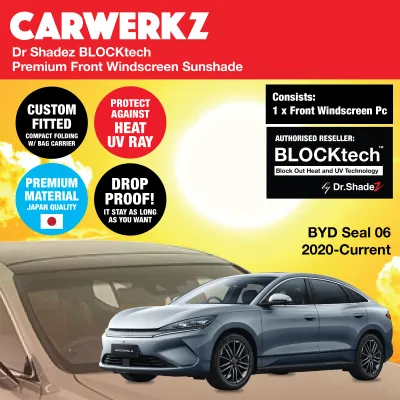
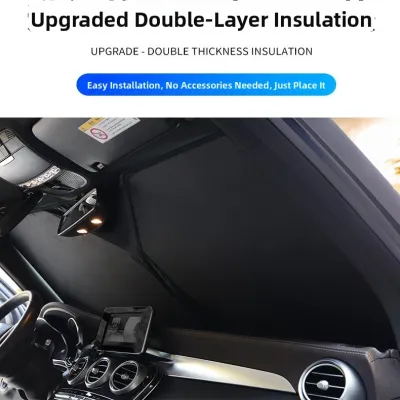
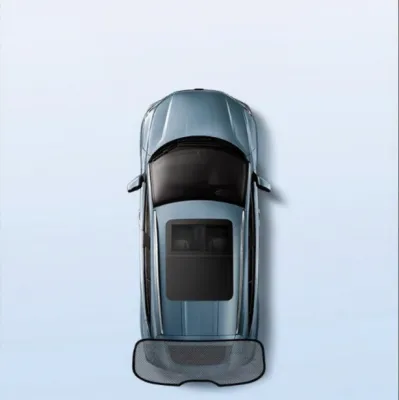
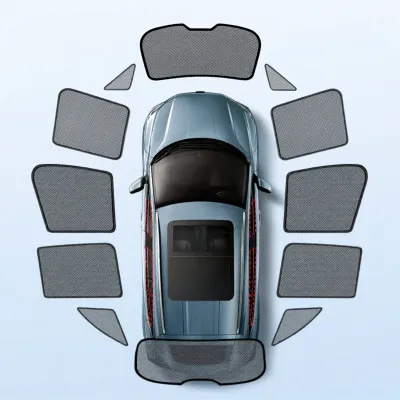
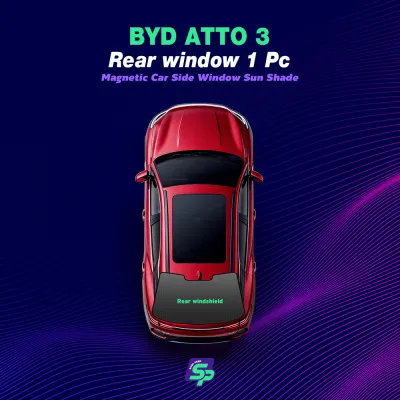
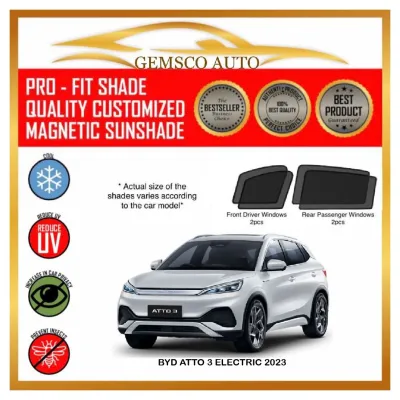
Prices are valid at publication and may change. Please refer to the product page for the latest price.
Front Windshield Sunshades: Dashboard Protection
The front windshield of the BYD Atto 3 is one of the largest entry points for solar energy into the cabin. Because of its steep angle, direct sunlight streams continuously onto the soft-touch dashboard materials, the digital instrument cluster, and the prominent rotatable infotainment screen. Over time, prolonged exposure to high temperatures and UV rays can accelerate the aging of interior plastics and synthetic upholstery, potentially leading to fading or micro-cracking. A dedicated front windshield sunshade acts as a physical barrier, intercepting this radiation before it reaches these sensitive electronic and cosmetic components.

When selecting a front windshield shade, material composition is a key factor to verify on product labels. Reflective metallic or foil-faced shades are designed to bounce solar radiation back through the glass, keeping the surface temperature of the dashboard lower. Absorptive multi-layer fabric shades, while still effective, tend to hold heat within the shade material itself, which can slowly radiate into the cabin over extended parking periods. Additionally, consider the physical storage of the shade. The BYD Atto 3 cabin offers storage solutions like the floating center console tray and door pockets, but a bulky, non-collapsible shade can still be cumbersome to stow. Opting for a collapsible, spring-wire design allows you to fold the shade into a compact disc that fits easily into the seatback pockets or the under-console storage area.
Side Window Sunshades: Passenger Comfort and Privacy
While a front shade protects the vehicle while parked, side window sunshades are primarily designed to enhance passenger comfort and privacy while the vehicle is in motion or parked sideways to the sun. Lateral solar radiation can cause localized discomfort, often leading to uneven cabin temperatures where passengers on one side of the vehicle feel significantly warmer than those on the shaded side. Side shades help mitigate this by diffusing direct sunlight, reducing glare, and preventing the localized greenhouse effect that occurs when sun rays hit passenger seating areas directly.
There are several common mounting styles for side window shades, each with distinct operational trade-offs. Static-cling films adhere directly to the glass without adhesives, allowing the window to roll down, though they require careful installation to avoid air bubbles. Magnetic mesh shades cling to the metal door frame of the BYD Atto 3, providing excellent coverage and allowing you to roll down the window for fresh air while keeping the shade in place. Suction-cup shades are highly portable and easy to remove, but they can leave residue on the glass and must be detached before operating the window. When choosing side shades, it is vital to remain compliant with local road safety regulations. In Singapore, the Land Transport Authority (LTA) mandates strict light transmission limits for vehicle windows. Any aftermarket shade or film must not obstruct the driver’s physical line of sight to the side mirrors or compromise overall visibility, especially during night driving or inclement weather.
Comparing Front and Side Sunshades for Daily Use
Evaluating how each sunshade type fits into your daily routine involves comparing their coverage areas, installation effort, and potential impact on vehicle systems. A front windshield shade covers a massive surface area but is typically only deployed when the vehicle is stationary. In contrast, side window shades cover smaller individual areas but remain installed semi-permanently, providing continuous protection whether you are driving or parked.
The daily setup effort also differs significantly. A front shade requires you to unfold, position, and secure it using the sun visors every time you park, which can add a brief step to your parking routine. Side shades, particularly magnetic mesh or static-cling varieties, require a one-time installation and remain functional without daily adjustment. However, you must ensure that neither option interferes with the BYD Atto 3’s interior technology. The front windshield houses critical driver-assistance sensors and cameras near the rearview mirror, while side windows must remain clear enough to allow unobstructed views of the side mirrors.
| Feature | Front Windshield Sunshade | Side Window Sunshades |
|---|---|---|
| Primary Focus | Dashboard, steering wheel, and front electronics protection | Passenger comfort, lateral glare reduction, and rear privacy |
| Usage State | Stationary (parked) only | Stationary and in-motion (driving) |
| Installation Effort | High daily effort (must deploy and stow upon parking) | Low daily effort (semi-permanent installation) |
| Material Types | Reflective foil, multi-layer fabric, umbrella-style | Magnetic mesh, static-cling, suction-cup fabric |
| Sensor Considerations | Must clear the ADAS camera pod and rearview mirror | Must not obstruct physical view of side mirrors |
Decision Framework: Which Setup Fits Your Routine?
To make the right choice for your BYD Atto 3, map your purchasing decision to your specific driving habits and parking environment. If your daily routine involves parking in uncovered outdoor lots, such as HDB open-air car parks or industrial estates, a front windshield sunshade should be your first acquisition. This setup is also ideal for solo drivers who want to ensure the steering wheel and driver’s seat are at a comfortable temperature when they return to the vehicle.
Conversely, prioritize side window sunshades if your vehicle serves primarily as a family transport. If you frequently carry young children, elderly passengers, or pets in the rear seats, blocking lateral glare and reducing heat transfer in the passenger zone is paramount. Side shades are also the preferred choice if your regular parking space forces the side of your vehicle to face direct sunlight for most of the day.
For owners who park outdoors long-term in tropical environments, a combined setup utilizing both front and side shades offers the most robust defense against cabin heat buildup. Before finalizing any purchase, verify if your BYD Atto 3 has aftermarket window films installed. If you already have high-performance solar films on your windows, you may only need a front windshield shade to protect the dashboard, as the films may already handle a significant portion of the lateral heat rejection.
Fitment and Safety Checks Before Buying
Before purchasing any sunshade accessory, it is essential to perform fitment and safety checks to ensure compatibility with your BYD Atto 3. Because vehicle dimensions and interior trim configurations can vary slightly by model year and market specification, always verify the exact dimensions of the product against your vehicle’s interior layout from the manufacturer’s documentation. A poorly fitting front shade can sag, reducing its effectiveness and potentially putting physical pressure on the rearview mirror assembly.
Safety must remain your top priority when installing interior accessories. The BYD Atto 3 is equipped with an Advanced Driver Assistance System (ADAS) that relies on a camera and sensor array mounted on the upper windshield behind the rearview mirror. When installing a front windshield shade, ensure the design features a cut-out or clearance zone that accommodates this sensor pod. Forcing a rigid shade into this area can misalign the camera or damage the housing. Similarly, side window shades must never block your physical line of sight to the side mirrors or blind spots. If you are uncertain about the clearance of a specific shade or its impact on your vehicle’s safety systems, stop and consult your owner’s manual or contact a qualified automotive professional before proceeding with the installation.
Frequently Asked Questions (FAQ)
Can I use a generic sunshade instead of a custom-fit one for the BYD Atto 3?
While generic or universal-fit sunshades are widely available on online marketplaces, they often present fitment challenges when used in the BYD Atto 3. Universal shades are designed to fit a wide range of vehicle classes, meaning they may be too small, leaving large gaps that let in heat, or too large, requiring you to force them into place. In the BYD Atto 3, a generic shade may press tightly against the central rearview mirror and the ADAS sensor housing, risking damage or misalignment. A custom-fit shade is tailored to the exact contours of the Atto 3 windshield, ensuring maximum coverage and a dedicated cutout for the sensor pod.
Will side window shades affect the BYD Atto 3's blind spot monitoring?
The BYD Atto 3’s blind spot monitoring system utilizes external radar sensors mounted on the rear bumper, meaning physical shades inside the cabin will not interfere with the system’s electronic sensors. However, internal shades can affect your physical ability to see the warning indicators on the side mirrors if the shades are too dark or poorly positioned. To maintain optimal safety, ensure that any side window shade you install does not physically block your line of sight to the side mirrors or the front side windows. Mesh shades that allow light transmission are generally preferred over solid or opaque shades to preserve driver visibility.

Community discussion
Share your experience or ask a question. Comments are reviewed before publication.