
The actual lifespan of a Bullsone Grasse air freshener in a hot car depends heavily on your daily parking habits, vehicle exposure to direct sunlight, and the specific product format you choose. In tropical climates like Singapore’s, where parked vehicles frequently experience extreme cabin temperatures, the rate of fragrance evaporation accelerates significantly. While there is no single fixed number of weeks or months that applies to every driver, understanding how heat interacts with these premium fragrance oils allows you to manage expectations, optimize placement, and determine the true value of your purchase.
Understanding Bullsone Grasse Longevity in Tropical Heat
To understand how long your Bullsone Grasse air freshener will last, it is essential to look at the physical science of evaporation. Car air fresheners rely on the steady diffusion of volatile organic compounds—the aromatic oils—into the surrounding air. When your vehicle is parked in an open-air surface lot under the intense afternoon sun, the cabin acts like a greenhouse, trapping solar radiation and raising interior temperatures well above the ambient outdoor temperature.
This extreme heat increases the kinetic energy of the liquid or gel molecules inside the air freshener. As molecular movement speeds up, the rate at which the fragrance oils transition from a liquid or gel state into a gas increases dramatically. Consequently, a diffuser that might last for several months in a temperate climate or a temperature-controlled garage will deplete its active ingredients much faster when subjected to daily tropical heat cycles.
Products mentioned in this guide
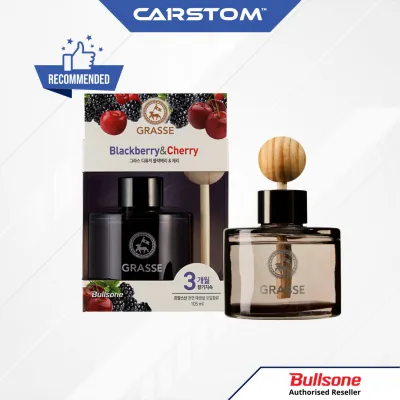
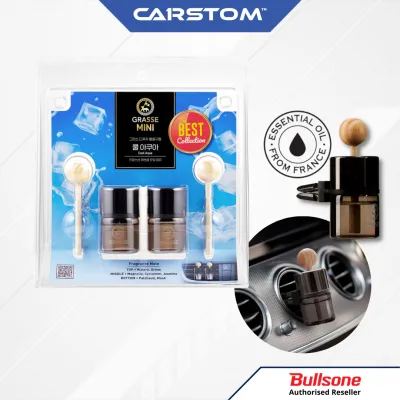
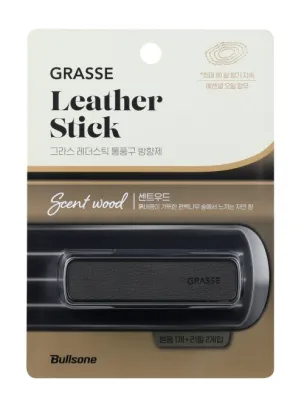
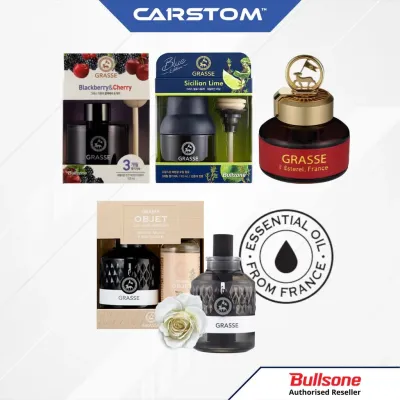
![[Local InStocks 2days Delivery] Bullsone Grasse Diffuser Blackberry & Cherry/Grapefruit/Pure Cotton Aroma](https://img.lazcdn.com/g/ff/kf/Sacb589cd6b794d9c971257c703170f3eY.jpg_400x400q80.jpg_.webp)
Prices are valid at publication and may change. Please refer to the product page for the latest price.
There is a stark contrast between the evaporation rate during active driving and when the vehicle is parked. While you are driving, the air conditioning system cools the cabin, lowering the temperature and slowing down the chemical evaporation process. However, once the engine is turned off and the car is left in direct sunlight, the rapid heat buildup triggers an accelerated release of the scent. If your daily routine involves parking in shaded multi-storey car parks, you will observe a longer lifespan compared to parking in exposed open-air lots.
Observable Signs That It Is Time for a Replacement
Rather than relying on a calendar to decide when to replace your Bullsone Grasse, you should monitor specific physical and sensory indicators that signal the product has reached the end of its functional life. Because heat speeds up depletion unevenly, visual and olfactory checks are the most reliable methods to determine when a replacement is necessary.

The most straightforward visual check is monitoring the physical medium of the fragrance. For liquid-based diffusers, keep an eye on the fluid level relative to the container’s minimum fill line or the wick’s saturation point. Once the liquid drops below this level, the remaining oil may no longer draw up the wick effectively, resulting in a sudden drop in scent output. For gel-based variants, the gel will visibly shrink, pull away from the sides of the container, and harden into a dry, solid mass, indicating that the solvent and fragrance carriers have completely evaporated.
Olfactory changes also provide a clear cue. Fragrances are composed of top, middle, and base notes, each evaporating at different temperatures. In a hot car, the lighter top notes evaporate very quickly, leaving behind the heavier base notes. Over time, you may notice the scent profile shifting, becoming faint, or smelling increasingly like the base chemical solvent rather than the intended fragrance. When the scent becomes barely perceptible even after the car has been closed up overnight, the active fragrance oils are likely exhausted.
Finally, perform regular physical inspections of the housing. Prolonged exposure to high temperatures and ultraviolet (UV) radiation can degrade plastics. Check for signs of warping, cracking, or leakage around the seals of liquid diffusers. If you use a vent-clip model, inspect the clip mechanism to ensure it has not become brittle or loose, which could cause the unit to fall and spill its contents onto interior surfaces.
Practical Steps to Extend Scent Life in a Hot Car
While you cannot change the tropical climate, you can adopt several practical, low-risk strategies to slow down the evaporation rate of your Bullsone Grasse and extend its usable life. Strategic placement within the cabin is one of the most effective ways to shield the air freshener from extreme heat.
Avoid placing liquid diffusers or gel pots directly on top of the dashboard where they are exposed to direct sunlight streaming through the windshield. Instead, consider placing them in lower, shaded areas of the vehicle, such as a cup holder, a door pocket, or under a seat, provided this does not block necessary footwell airflow or interfere with vehicle controls. If you use a vent-mounted model, placing it on a vent that is shaded by the steering wheel or dashboard overhang can help reduce direct solar heating.
Reducing the overall cabin temperature when the vehicle is parked is another highly effective approach. Utilizing high-quality, reflective front windshield sunshades can significantly lower the peak temperatures reached inside a parked car. Additionally, ensuring your vehicle’s window films are compliant with local Land Transport Authority (LTA) guidelines for solar heat rejection will help mitigate the greenhouse effect inside the cabin, directly preserving the fragrance oils from rapid thermal degradation.
If your Bullsone Grasse model features an adjustable cap or vent control, make active use of it. During the hottest months or when you know the car will be parked in the sun for extended periods, adjust the opening to its minimum setting. You can open it wider when driving with the air conditioning on to enjoy a stronger scent throw, then close it down when parking to conserve the remaining oils.
Always observe key safety boundaries when managing your car air freshener. Never attempt to refill non-refillable units with third-party oils, as the materials may not be compatible, leading to leaks or chemical reactions that could damage your car’s interior surfaces. Do not mix different chemical fragrances within the same container, and always adhere to the manufacturer’s temperature and handling warnings printed on the product packaging.
Evaluating Value and Planning Your Replacement Cycle
To determine if a premium air freshener like Bullsone Grasse fits your budget, it helps to establish a simple framework for calculating the true cost of ownership. Because individual driving habits and parking conditions vary, your personal replacement cycle will be unique.
You can calculate your cost-per-month by taking the retail price of the unit in S$ and dividing it by the number of weeks or months it remains effective in your specific vehicle. For example, if you purchase a unit for S$18 and find that it provides a satisfactory scent level for six weeks under your typical parking conditions, your weekly cost is easily tracked. If you primarily park in sheltered basements, this cost-per-week will naturally be lower than if you park daily in an unsheltered industrial estate lot.
When evaluating value, compare the cost of frequent replacements of premium, oil-based scents against standard, budget-friendly alternatives like paper cards or basic gel cups. While premium options often carry a higher initial price tag in S$, they may offer a more consistent, sophisticated scent profile over their lifespan, whereas cheaper alternatives might lose their scent entirely within a few days of exposure to intense cabin heat.
If you find that liquid-based diffusers evaporate too quickly for your budget due to unavoidable outdoor parking, consider switching formats. Solid gel or ceramic-based air fresheners generally resist rapid thermal evaporation better than liquid oils, offering a more stable, albeit sometimes more subtle, scent release in high-heat environments. Evaluating these trade-offs allows you to select the product format that best balances fragrance performance with your monthly automotive accessory budget.
Frequently Asked Questions (FAQ)
Can I leave Bullsone Grasse in a parked car under direct sunlight?
Leaving a liquid or gel air freshener in a car parked under direct sunlight carries risks that go beyond rapid scent depletion. High temperatures can cause the liquid inside a sealed container to expand, potentially leading to leaks through the wick or seals. If the highly concentrated fragrance oils leak onto plastic dashboard panels, leather upholstery, or electronic components, they can cause permanent staining, peeling, or chemical damage. Always check the manufacturer’s maximum storage and operating temperature warnings on the packaging, and try to position the unit in a shaded area of the cabin to minimize direct solar exposure.
Does the air conditioning make the scent fade faster?
The relationship between your car’s air conditioning and fragrance longevity involves a balance of temperature and airflow. Cold air from the AC actually slows down the chemical evaporation rate of the fragrance oils, which helps conserve the product. However, high fan speeds increase the physical dispersion of the scent throughout the cabin, making it feel stronger but also carrying the evaporated molecules out of the vehicle through the cabin ventilation extracts. To optimize both scent throw and product longevity, adjust your AC fan to a moderate setting once the cabin has cooled down, and close the air freshener’s adjustable vents slightly if the airflow is directed straight at the unit.

Community discussion
Share your experience or ask a question. Comments are reviewed before publication.