
Managing heat in a Toyota Hiace requires a strategic approach. The vehicle’s expansive glass surfaces, designed to maximize visibility, also act as a massive greenhouse under intense sunlight. In tropical climates like Singapore, parking a Hiace unsheltered for even an hour can cause cabin temperatures to soar, putting immense strain on the air conditioning system and accelerating the wear of dashboard plastics.
To combat this effectively, a single universal sun shade is rarely sufficient. Instead, the most reliable solution is a coordinated, multi-piece setup that combines a custom-fit front windshield reflector with dedicated side window covers. This approach ensures complete coverage, blocking radiant heat before it can penetrate the cabin’s interior surfaces.
Front Windshield Solutions: Covering the Expansive Glass
The front windshield of the Toyota Hiace is exceptionally large, particularly in the flat-front H200 models and the semi-bonneted H300 generations. Standard retail sun shades designed for sedans or compact SUVs are simply too short and narrow, leaving wide gaps at the edges where heat can pour in. When selecting a front shade, vehicle owners generally choose between custom-fit rigid folding reflectors and flexible, umbrella-style shades.
Products mentioned in this guide
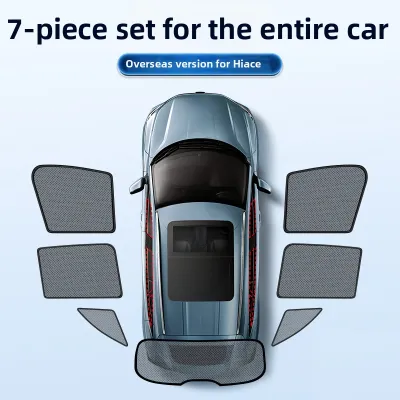
Prices are valid at publication and may change. Please refer to the product page for the latest price.
Rigid folding reflectors, often constructed with multiple layers of bubble insulation and reflective foil, offer excellent thermal resistance. Because they are tailored to the exact dimensions of the Hiace windshield, they sit flush against the glass, minimizing the pocket of hot air that builds up behind the shade.
On the other hand, flexible umbrella-style shades deploy rapidly by popping open inside the cabin. However, when using an umbrella-style shade in a Hiace, you must carefully check the clearance around the dashboard. The central tensioning rod of an umbrella shade can press against the dashboard trim, potentially scratching delicate surfaces or interfering with aftermarket head units and glass-mounted accessories like the In-vehicle Unit (IU) used for electronic road pricing.
Furthermore, ensure the shade features a dedicated cutout with a hook-and-loop fastener to wrap around the rearview mirror stem. This allows the shade to sit high and tight against the top edge of the glass, preventing sag and ensuring the wiper sensors or dashcams remain unobstructed.
Side Window and Passenger Area Heat Control
While the front windshield is the primary entry point for solar heat, the large side windows of the Hiace driver and passenger doors—as well as the sliding doors—contribute significantly to cabin warming. Managing heat through these side windows requires balancing thermal protection with operational safety.

Static-cling tint films are a popular semi-permanent option. They adhere directly to the glass without adhesives and can reduce UV penetration. However, any tint film applied to the front side windows must strictly comply with local light transmission regulations to ensure clear visibility for the driver, especially during night driving or heavy rain.
For maximum heat rejection while parked, removable magnetic mesh or fabric shades are highly effective. These shades snap onto the exposed metal frame of the door, providing full coverage. When dealing with the Hiace’s sliding doors, the mounting mechanism is critical. The sliding door operates on a precise track with minimal clearance between the door frame and the vehicle body.
Thick suction cups, bulky plastic brackets, or fabric that wraps over the outer edge of the door frame can easily catch in the door seals or tracks during operation. This can lead to torn shades, damaged weatherstripping, or a jammed door mechanism. To prevent this, opt for ultra-thin magnetic frames or static-cling shades that remain entirely flush against the glass surface, allowing the sliding door to open and close smoothly without interference.
Additionally, if you plan to leave the vehicle parked in warm climates, using breathable mesh shades on the front side windows allows you to leave the glass cracked open slightly. This promotes natural cross-ventilation, letting hot air escape while keeping insects and debris out of the cabin.
Material, Fitment, and Safety Checks
The performance of a sun shade setup depends heavily on its material composition. High-quality shades utilize a dual-layer design: a highly reflective outer layer (such as silver-coated polyester or aluminum foil) to bounce solar radiation away from the vehicle, and a dark, heat-absorbing inner layer to prevent any remaining heat from radiating into the cabin. When evaluating shades, avoid single-layer plastic options that can degrade, flake, or emit unpleasant chemical odors when exposed to extreme heat.
Fitment accessories also require close inspection. Suction cups are a common mounting method, but under intense heat, the plasticizers in cheap suction cups can melt, leaving a stubborn, sticky residue on the glass that attracts dust and impairs visibility. If you are mounting shades on the rear or side windows, be extremely cautious with suction cups or adhesive tabs placed directly over the printed defroster lines or glass-integrated radio antennas. Repeatedly pulling these mounts off can peel the conductive material away, disabling the defroster.
Furthermore, ensure that any rigid wire frames used in pop-up shades are fully enclosed in durable fabric piping. If the metal frame punctures the fabric, it can scratch the interior door panels, dashboard, or even pose a safety hazard to occupants.
Daily Use, Storage, and Driving Visibility
Integrating sun shades into your daily driving routine requires a balance of convenience and safety. Because the Toyota Hiace is a large vehicle often used for commercial transport, deliveries, or carrying passengers, keeping the cabin organized is essential. Loose, unfolded sun shades can easily slide around the cabin, blocking passenger aisles, footwells, or sliding under the driver’s pedals.
Establish a dedicated storage routine. Foldable shades should be collapsed immediately after use and stored in the front door pockets, behind the front seats, or in cargo nets.
Driving visibility is the most critical safety consideration. Under no circumstances should any front windshield or front-side window shades remain deployed while the vehicle is in motion. Doing so severely compromises the driver’s field of vision and blocks critical views of the side mirrors. Before shifting the vehicle out of park, fully remove all temporary shades and stow them securely.
Finally, maintain a regular cleaning routine for your shades. The inner glass of a vehicle naturally accumulates a thin film of plastic outgassing, dust, and fingerprint oils. Sun shades placed against this glass will transfer these contaminants back and forth. Periodically wipe down both sides of your sun shades with a damp microfiber cloth and a mild, interior-safe cleaner to keep your windows clean and prevent nighttime glare.
Frequently Asked Questions (FAQ)
Can I use a standard universal sun shade for the Toyota Hiace?
Standard universal sun shades designed for passenger cars typically measure around 130 cm by 70 cm. The windshield of a Toyota Hiace is significantly larger, often requiring a width of 140 cm or more and a height exceeding 80 cm, depending on the specific model year and body style (such as wide-body or high-roof variants). A universal shade will leave large gaps around the edges, allowing heat to bypass the barrier and warm up the dashboard. Always measure your windshield’s height and width, or search specifically for shades labeled for van or commercial vehicle dimensions, to ensure adequate coverage.
Will side window shades interfere with the Hiace sliding doors?
Yes, they can if they are not selected carefully. The sliding doors on a Toyota Hiace slide extremely close to the exterior body panels and rely on tight rubber weatherstripping to prevent water leaks. If you use thick suction cups, bulky plastic clips, or shades that wrap around the door frame, they can get caught in the tracks or tear the rubber seals when the door is opened or closed. To avoid mechanical damage, use custom-fit magnetic shades that cling directly to the inner metal window frame, or thin static-cling films that do not extend past the glass boundary.

Community discussion
Share your experience or ask a question. Comments are reviewed before publication.