
Finding the right full-surround floor mats for your Honda Vezel requires looking beyond generic “one-size-fits-all” options. Because the Vezel has evolved across multiple generations and drivetrain configurations—including petrol and e:HEV hybrid variants—the floor pan dimensions vary significantly. A mat that fits a pre-2021 model perfectly will not align with a 2021 or newer model. To secure the best fit, coverage, and value, you must evaluate how different brands handle the Vezel’s unique interior contours, pedal clearances, and seat rail configurations.
Rather than searching for a single universal winner, the most effective approach is to match your specific vehicle generation with the appropriate material and design tier. High-quality thermoplastic elastomer (TPE) mats offer excellent durability and water resistance, while multi-layer synthetic leather options provide a more cushioned, premium aesthetic. This guide breaks down the essential comparison factors, safety considerations, and compatibility checks to help you make an informed decision for your vehicle.
Understanding Full-Surround Mats for the Honda Vezel
Full-surround floor mats, often marketed as 3D, 5D, or 6D mats, differ from standard flat mats by featuring raised edges that contour to the walls of the footwell. While traditional mats only cover the flat horizontal surfaces of the floor, full-surround designs extend upward along the transmission tunnel, side sills, and deep into the footwells. This design is particularly beneficial in tropical climates like Singapore, where heavy rain, mud, and wet footwear can easily ruin the factory carpet if water spills over the edges of a flat mat.
Products mentioned in this guide
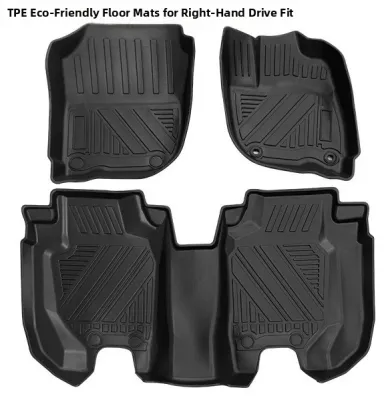
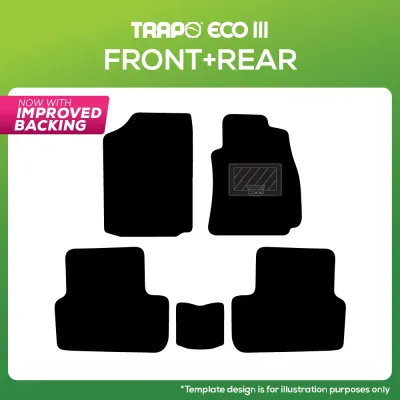
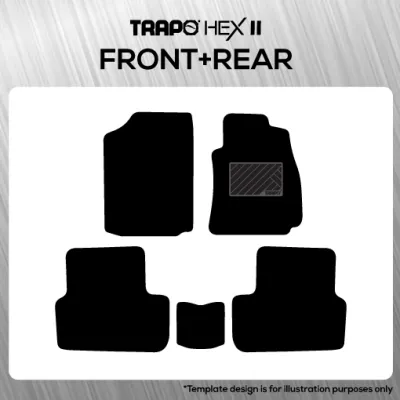
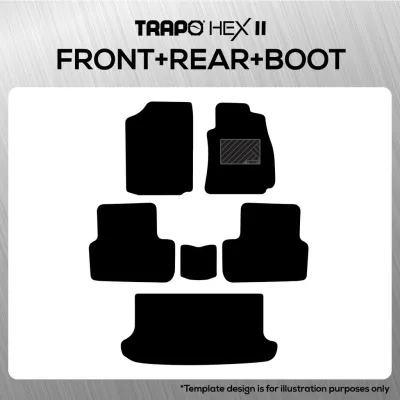
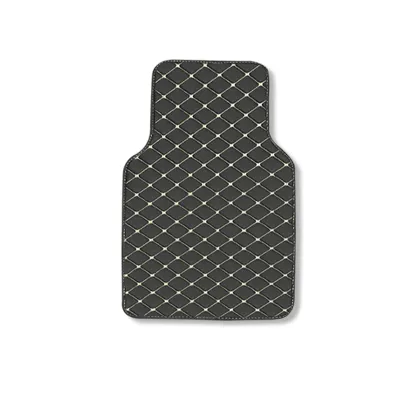
Prices are valid at publication and may change. Please refer to the product page for the latest price.
The Honda Vezel features several unique interior design elements that demand highly precise mat molding. For instance, the front footwells feature a sloping center console wall and a prominent dead pedal on the driver’s side. In the rear, Honda’s signature “Magic Seats” system—which allows the rear seat cushions to fold upward—means the floor pan under and around the rear seats has specific anchoring points and brackets. A poorly designed full-surround mat can block these brackets, preventing the seats from locking into place or interfering with the sliding mechanism of the front seats.
Furthermore, floor pan dimensions vary across different generations of the Vezel. The first-generation Vezel (RU series, produced from 2013 to 2021) has a completely different floor layout compared to the second-generation model (RV series, introduced in 2021). The RV series features updated seat rail positions, a redesigned center console base, and modified rear footwell dimensions to accommodate the hybrid battery pack in e:HEV models. Consequently, you must never assume that a mat designed for an older Vezel will fit a newer model, even if the product listing claims general compatibility with the vehicle name.
Key Dimensions to Compare: Fit, Coverage, and Material
When comparing different brands of full-surround mats for your Vezel, you should focus on three primary dimensions: fitment precision, physical coverage, and material composition.

Fitment and Pedal Clearance
The most critical aspect of any floor mat is how safely it fits around the driver’s foot controls. The accelerator and brake pedals require unobstructed travel to operate safely. When evaluating a brand, check how closely the mat molds around the pedal box and the dead pedal. A high-quality mat will feature a recessed area or a precise cutout that ensures the accelerator pedal cannot catch on the edge of the mat when fully depressed. Avoid mats that are overly thick in the pedal area or lack rigid structural support, as they can sag over time and interfere with pedal operation.
Coverage and Lip Height
The primary appeal of full-surround mats is their ability to trap dirt, liquids, and debris within a self-contained tray. Compare the lip height along the side sills and the transmission tunnel. A higher lip prevents spilled liquids from seeping underneath the mat onto the vehicle’s original carpeting, where trapped moisture can cause mold and unpleasant odors. Additionally, look for brands that extend far enough under the front seats to protect the carpet from rear passengers’ feet, while still leaving the rear air conditioning vents and seat rails completely unobstructed.
Material Trade-offs
The materials used in full-surround mats generally fall into three categories, each with distinct characteristics:
- TPE (Thermoplastic Elastomer): This material is highly durable, waterproof, and odorless. TPE mats are typically injection-molded to the exact shape of the footwell, offering a rigid yet flexible structure. They are exceptionally easy to clean—requiring only a quick rinse with water—and do not degrade when exposed to high cabin temperatures.
- XPE (Cross-linked Polyethylene): Often used as a core layer in multi-layer mats, XPE foam provides lightweight cushioning and sound insulation. It helps the mat retain its 3D shape while offering a softer feel underfoot.
- Synthetic Leather (PU or PVC): These mats feature a stitched, quilted appearance that adds a luxury feel to the Vezel's cabin. While visually appealing, synthetic leather requires more careful maintenance. Low-grade synthetic leathers may emit chemical odors when parked under direct sunlight in hot climates, and the stitching can trap dirt if not vacuumed regularly.
Evaluating Value: Price Tiers and What You Get
To help you align your budget with realistic expectations, aftermarket full-surround mats can be categorized into three distinct price tiers.
| Price Tier | Typical Materials | Fitment Precision | Expected Lifespan | Key Characteristics |
|---|---|---|---|---|
| Entry-Level (S$40 – S$80) | PVC, basic synthetic leather, thin XPE foam | Moderate; may require manual trimming or minor adjustments | 1 to 2 years | Budget-focused; prone to minor shifting; stitching may wear under heavy heel friction. |
| Mid-Range (S$80 – S$150) | High-quality TPE, multi-layer PU leather with XPE | High; molded to specific generation layouts | 3 to 5 years | Good balance of durability and cost; minimal odor; secure backing with retention clips. |
| Premium (S$150 – S$300+) | Premium injection-molded TPE, custom dual-layer mats | Exceptional; exact laser-scanned fitment | 5+ years | Odorless; maximum edge-to-edge coverage; robust anti-slip backing; highly resistant to wear. |
When deciding which tier to purchase, apply a conditional decision framework based on your driving habits and budget. If budget is your primary constraint and you do not mind minor fitment gaps or occasional adjustments, an entry-level synthetic leather mat can provide basic protection. For daily commuters who want a balance of durability, easy cleaning, and reliable fitment without a premium price tag, a mid-range TPE or high-quality multi-layer mat is often the most practical choice. If you plan to keep your Vezel for many years and want maximum protection against heavy rain, mud, and spills, investing in a premium, laser-scanned TPE mat ensures exact edge-to-edge coverage and long-term durability.
Please note that exact S$ prices fluctuate based on manufacturing costs, shipping fees, and promotional events. We advise checking current listings on reputable e-commerce platforms or official brand stores to verify real-time pricing before making a purchase.
How to Verify Compatibility Before You Buy
Because the Honda Vezel is a highly popular import model with various regional configurations, purchasing the wrong mat is a common mistake. Follow this checklist to verify compatibility before finalizing your order:
- Identify the Generation and Chassis Code: Confirm whether your Vezel is a first-generation model (RU1/RU2 for petrol, RU3/RU4 for hybrid, typically 2013–2021) or a second-generation model (RV3/RV4 for petrol, RV5/RV6 for e:HEV hybrid, 2021–present). Manufacturers design mats specifically for these chassis codes.
- Check the Drivetrain Configuration: Hybrid variants (e:HEV) often have different floor contours in the rear or under the front seats due to the placement of high-voltage battery packs and electrical routing. Ensure the product description explicitly states compatibility with your specific drivetrain (petrol vs. hybrid).
- Look for Right-Hand Drive (RHD) Specifications: Since the Honda Vezel is primarily driven in right-hand-drive markets like Singapore, ensure the mats are specifically molded for RHD vehicles. Left-hand-drive (LHD) mats will have the dead pedal and pedal cutouts on the wrong side, making them completely unusable and highly dangerous if forced into place.
- Analyze Customer Reviews: Search online marketplaces and forums for reviews specifically mentioning "Vezel" or "HR-V". Look for feedback regarding whether the mats slide forward, block the seat rails, or interfere with the fuel lid release lever located on the floor near the driver's seat.
- Confirm the Return Policy: Only purchase from sellers who offer a clear return or exchange policy for automotive accessories. If the physical product exhibits poor fitment or blocks any safety controls upon arrival, you should be able to return it for a refund.
Installation and Daily Maintenance
Proper installation and regular maintenance are essential to ensure your full-surround mats remain safe and functional throughout their lifespan.
Safe Installation Steps
Before installing your new full-surround mats, completely remove the factory carpet mats from the vehicle. Stacking aftermarket mats on top of existing mats is highly dangerous, as it increases the height of the floor and can trap the accelerator or brake pedals. Lay the new mats flat in the footwells and slide them into position. Securely fasten the mats using the factory floor retention clips on the driver’s side. If the mats come with side clips that tuck under the plastic interior trim, install them carefully to prevent the edges from curling or lifting.
The Crucial Safety Check
Once the mats are installed, perform a physical safety check before starting the engine. Sit in the driver’s seat and fully depress both the brake pedal and the accelerator pedal to their absolute limits. Verify that neither pedal catches, rubs, or gets obstructed by the mat at any point during their travel. Adjust the driver’s seat forward and backward along its rails to ensure the mat does not block the seat tracks or pinch any under-seat electrical wiring.
Cleaning and Care
To maintain the appearance and structural integrity of your mats, follow the manufacturer’s care labels. For TPE mats, simply remove them from the vehicle, hose them down with clean water, and allow them to dry completely in a shaded area before reinstallation. For synthetic leather mats, wipe the surface with a damp microfiber cloth and a mild, pH-neutral interior cleaner. Avoid using harsh chemical solvents, bleach, or stiff abrasive brushes, as these can degrade the protective top coatings, weaken the stitching, and cause synthetic materials to crack or peel prematurely.
Frequently Asked Questions (FAQ)
Can I use Honda HR-V floor mats for my Vezel?
While the Honda Vezel and the Honda HR-V share the same global platform, you should not assume their floor mats are universally interchangeable. Depending on the market and model year, the HR-V may feature different interior trim options, center console designs, or seat configurations that alter the floor pan dimensions. Always check the manufacturer’s specific part number or fitment guide to confirm compatibility with your exact Vezel model year and drivetrain rather than relying solely on the HR-V name.
Are full-surround mats safe for the Vezel's side airbags?
Yes, high-coverage full-surround floor mats are generally safe and do not interfere with the deployment of side airbags. In the Honda Vezel, side airbags are integrated into the outer sides of the front seat backrests, deploying outward toward the doors rather than from the floor. However, you must ensure that the mats do not obstruct the movement of the seat rails, block the seatbelt pretensioner mechanisms at the base of the B-pillars, or pinch any electrical connectors located underneath the front seats.

Community discussion
Share your experience or ask a question. Comments are reviewed before publication.