
Finding the right front windshield sunshade for your Honda Vezel is essential for maintaining a comfortable cabin and protecting your vehicle’s interior from intense tropical heat. In Singapore, where cars are frequently parked in unsheltered open-air lots or on the upper decks of multi-storey carparks, solar radiation can rapidly turn your compact SUV into an oven. The Honda Vezel features a generously sized, steeply raked front windshield that invites a significant amount of solar energy directly onto the dashboard and front seats. To combat this, a high-quality sunshade is your first line of defense, but finding one that fits perfectly requires understanding the unique dimensions of the Vezel’s glass and the placement of its safety sensors. This guide will help you navigate the different styles of sunshades, evaluate material performance, and ensure a secure fit that does not compromise your vehicle’s advanced driver assistance systems.
Why Your Honda Vezel Needs a Dedicated Front Sunshade
The raked windshield of the Honda Vezel creates a large surface area for sunlight to enter. Solar radiation passes through the glass and is absorbed by the dark surfaces of the dashboard, steering wheel, and seats. These surfaces then re-radiate this energy as infrared heat, which cannot easily escape back through the glass, leading to a rapid rise in cabin temperature. This greenhouse effect is particularly pronounced in compact SUVs, where the cabin volume is relatively small compared to the total glass area.
The Vezel’s dashboard houses sensitive electronic components, including the infotainment screen, instrument cluster, and the Honda Sensing camera array mounted near the rearview mirror. Prolonged exposure to high temperatures and ultraviolet (UV) radiation can cause plastic trim to fade, crack, or warp over time. It can also degrade the adhesive backing of interior panels and potentially affect the longevity of electronic displays. Protecting these components with a dedicated sunshade helps preserve the vehicle’s resale value and prevents costly interior repairs.
Products mentioned in this guide
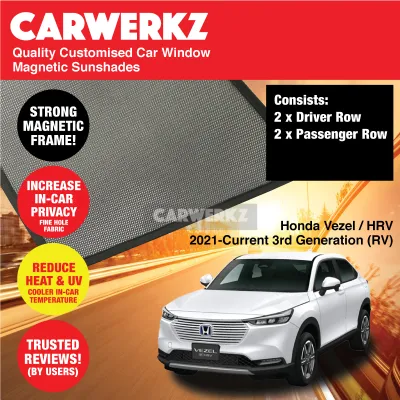
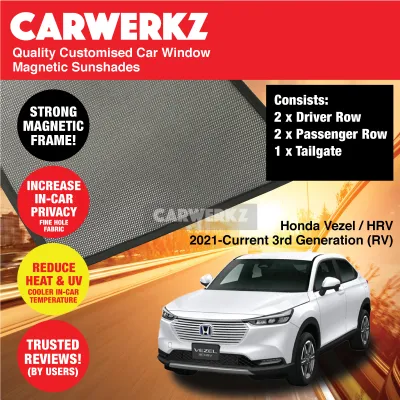
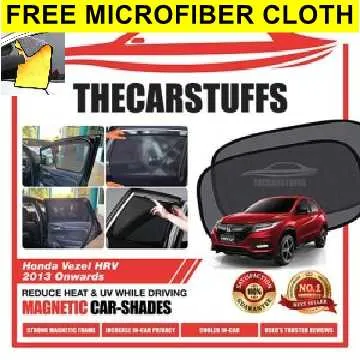
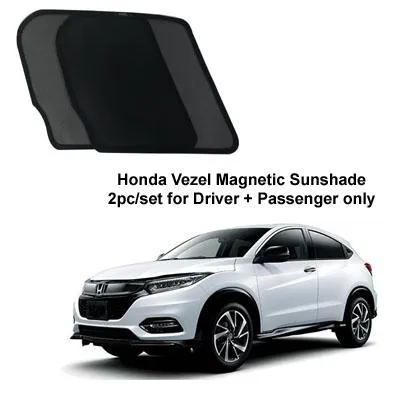
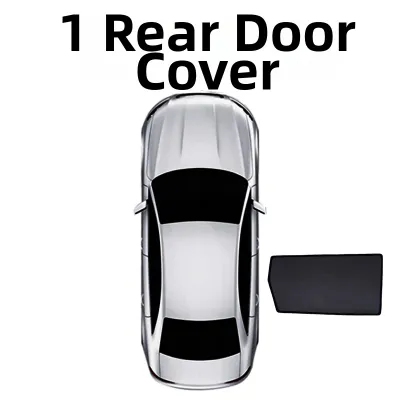
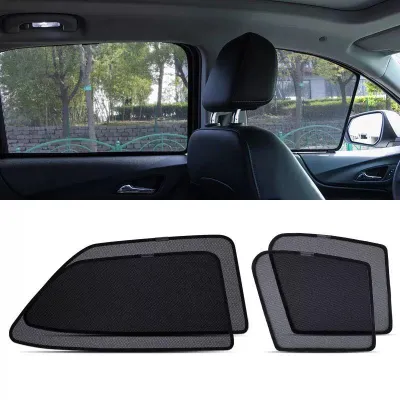
Prices are valid at publication and may change. Please refer to the product page for the latest price.
Stepping into a car that has been baking in the sun for hours is not only uncomfortable but also puts a heavy load on your vehicle’s air conditioning system. By blocking solar radiation before it penetrates the cabin, a sunshade helps maintain a lower baseline temperature. This means your air conditioning system does not have to work as hard or consume as much fuel to cool the cabin down to a pleasant temperature when you start your journey.
Custom-Fit vs. Universal Sunshades for the Vezel
A custom-fit sunshade is patterned specifically for the Honda Vezel’s windshield dimensions. This precise tailoring ensures edge-to-edge coverage, leaving virtually no gaps around the A-pillars, dashboard, or rearview mirror. Minimizing these gaps is crucial because even small slivers of exposed glass can allow significant amounts of heat and light to enter, reducing the overall effectiveness of the shade. Custom-fit options also tend to stay in place more securely without requiring constant adjustment.

Universal sunshades are designed to fit a wide range of vehicle classes, often categorized simply as “medium” or “SUV” sizes. While they are generally more affordable and widely available in local automotive accessory shops or online marketplaces, they rarely provide a perfect fit. You may find that a universal shade is either too small, leaving large uncovered areas, or too large, requiring you to bend or overlap the edges, which can damage the shade and make installation frustrating.
When shopping on e-commerce platforms, many sellers label their products as custom-fit for the Honda Vezel when they are actually generic universal shades packaged with a compatibility list. To verify a true custom-fit product, look for specific design features such as a dedicated cutout for the Honda Sensing camera housing behind the rearview mirror. True custom-fit shades will also list dimensions that match the Vezel’s windshield profile exactly, rather than offering a generic rectangular shape.
Essential Features for Heat and UV Protection
The primary job of a sunshade is to reflect solar radiation away from the vehicle. Look for shades that feature a highly reflective outer layer, typically made of polished aluminum foil or metallized polyethylene terephthalate (PET). These materials act as a mirror, bouncing visible light and infrared radiation back through the windshield before it can be absorbed by the cabin’s interior surfaces.
While heat reflection is important, blocking ultraviolet radiation is equally critical for preventing material degradation. High-quality sunshades often feature multiple layers, including a dedicated UV-blocking core. When evaluating options, check the manufacturer’s specifications for certified ratings such as UPF (Ultraviolet Protection Factor) 50+, which indicates that the fabric blocks a significant percentage of harmful UVA and UVB rays. Avoid products that make vague claims without specifying their material composition or protective ratings.
A sunshade must maintain its shape under intense heat to remain effective. Soft, flimsy shades tend to sag over time, creating gaps and allowing heat to bypass the barrier. Look for options with robust structural support, such as high-tensile memory wire frames or rigid, multi-layered cardboard or foam cores. These designs ensure the shade stays pressed firmly against the glass, maximizing coverage and ease of deployment.
Recommended Sunshade Styles for Daily Driving
The style of sunshade you choose will directly impact your daily routine, storage convenience, and the level of protection your cabin receives. Different form factors offer distinct trade-offs between how quickly they can be deployed and how much space they occupy when stored. Understanding these differences will help you select a style that matches your lifestyle and parking habits.
Foldable Accordion Shades
Foldable accordion-style shades are constructed from rigid panels that fold flat along pre-creased lines. They offer excellent structural integrity and typically feature thick, multi-layered insulation that provides superior heat reflection. However, because they do not roll or collapse into a compact cylinder, they can be bulky to store, often requiring placement along the passenger side footwell or in the boot when not in use. This style is ideal for Vezel owners who prioritize maximum thermal insulation and do not mind taking a few extra seconds to fold and store a larger accessory. It is particularly suited for those who frequently park in unsheltered areas for extended periods, where the superior heat-blocking capabilities of rigid panels are most beneficial.
Windshield Umbrella Shades
Umbrella-style sunshades are a relatively modern innovation designed for ultimate convenience. They feature a collapsible frame that opens exactly like a standard rain umbrella, pressing the reflective fabric directly against the windshield. When collapsed, they fold into a highly compact shape that can easily fit into the glove box, door pockets, or center console. The main drawback is that the central shaft and handle can sometimes interfere with the Vezel’s dashboard console or rearview mirror mount if not positioned carefully. This style is perfect for daily commuters who value rapid deployment and minimal storage footprint. If you want a sunshade that can be set up in seconds with one hand and tucked away neatly without cluttering your cabin, the umbrella style is an excellent choice.
Retractable Roller Shades
Retractable roller shades are permanently mounted to one side of the windshield or the A-pillars using suction cups or adhesive brackets. To use them, you simply pull the shade across the glass and secure it to the opposite side. While they offer unmatched convenience and require zero storage space, they can be difficult to install correctly. Additionally, the adhesive mounts may degrade under extreme heat, and the roller mechanism can leave small gaps at the top and bottom of the windshield. This option is best for drivers who want a completely hands-free, permanent solution and are willing to accept a slight compromise in total light coverage and aesthetic integration in exchange for effortless daily operation.
How to Verify Windshield Dimensions and Fitment
To ensure you purchase a sunshade that fits your Honda Vezel perfectly, it is best to take your own measurements rather than relying solely on online compatibility charts. Use a flexible measuring tape to measure the maximum width of the windshield along the bottom edge, near the dashboard, and the maximum height from the base of the glass to the top edge near the headliner. Keep in mind that the Vezel’s windshield is slightly curved, so measuring along the contour of the glass will give you the most accurate dimensions.
Once you have your measurements, compare them with the detailed specification sheets provided by sunshade manufacturers. If you are purchasing from an online marketplace, look for product listings that provide exact dimensions in centimeters or inches. A proper fit should be within a few centimeters of your measured dimensions; a shade that is too small will let in light, while one that is too large will bunch up and fail to stay in place.
Before making a final decision, spend some time reading customer reviews on e-commerce platforms. Search specifically for keywords like “Honda Vezel,” “Vezel,” or “HR-V” (the name used for the Vezel in some markets) within the review section. Look for feedback regarding how well the shade fits around the rearview mirror and whether other owners experienced any issues with the shade sagging or failing to cover the corners of the windshield.
Safety Clearances, Storage, and Maintenance
The Honda Vezel is equipped with the Honda Sensing suite of safety technologies, which relies on a precision camera mounted behind the rearview mirror. When installing any front windshield sunshade, it is critical to ensure that the shade does not press hard against this camera housing or the surrounding rain sensors. Forcing a rigid sunshade into this area can potentially misalign the camera or damage the mounting brackets, which could compromise the functionality of safety features like Lane Keeping Assist and Collision Mitigation Braking. Always choose a sunshade with a flexible cutout or a hook-and-loop strap designed to secure the shade around the mirror mount without exerting pressure on the sensor housing.
To prolong the lifespan of your sunshade, always follow the manufacturer’s instructions for folding and storage. For memory wire shades, avoid forcing the frame into unnatural shapes, as this can snap the internal wire or permanently deform the frame. For reflective accordion or roll-up shades, fold them neatly along their natural creases to prevent cracking or peeling of the reflective outer coating, which can significantly reduce its heat-deflecting efficiency over time.
Over time, your sunshade will accumulate dust, fingerprints, and potentially condensation residue from your vehicle’s air conditioning system. To clean the reflective surface, use a dry or slightly damp microfiber cloth to gently wipe away dirt. Avoid using harsh chemical cleaners, glass cleaners, or abrasive sponges, as these can strip away the specialized reflective or UV-resistant coatings. Ensure the shade is completely dry before folding and storing it to prevent the growth of mold or mildew in the creases.
Frequently Asked Questions (FAQ)
Will a sunshade interfere with the Vezel's ADAS cameras or rain sensors?
No, provided you select a sunshade designed with a proper cutout for the rearview mirror area. The Honda Sensing camera and rain sensors are housed in a plastic console mounted directly to the windshield glass. A high-quality custom-fit sunshade will feature a recessed section or a split design with a fastening strap that wraps around the mirror stem, allowing the shade to sit flush against the glass without putting physical pressure on the sensor housing. Avoid using stiff, universal shades that force you to jam the material behind the mirror, as this can disturb the camera’s alignment.
Can I leave the sunshade partially deployed while driving?
Absolutely not. Front windshield sunshades are designed strictly for use when the vehicle is parked. Driving with a sunshade even partially deployed is extremely dangerous and illegal, as it severely obstructs your forward vision and creates massive blind spots. Before starting your engine and moving the vehicle, ensure the sunshade is fully removed, folded, and safely stored in a location where it will not slide under the pedals or distract the driver.
How do I clean a reflective sunshade without damaging the coating?
To clean your sunshade safely, wipe the surfaces down with a clean, soft microfiber cloth that has been lightly dampened with plain water. Do not use household detergents, chemical solvents, or abrasive scrubbing pads, as these can degrade the delicate reflective foil or UV-resistant polymer coatings. If the shade gets wet from condensation, allow it to air dry completely in a shaded area before folding and storing it to prevent mold, mildew, and unpleasant odors from developing.

Community discussion
Share your experience or ask a question. Comments are reviewed before publication.