
Why the Toyota Alphard Requires a Specialized Sun Shade
The Toyota Alphard is a benchmark for luxury multi-purpose vehicles (MPVs) in Singapore, offering unparalleled cabin comfort and space. However, its iconic design—characterized by a massive, sweeping front windshield with a steep rake—presents a significant environmental challenge in our tropical climate. When parked under the intense Singapore sun, this expansive glass area acts as a highly efficient solar collector. Solar radiation, specifically ultraviolet (UV) and infrared (IR) rays, passes easily through the untreated glass, converting into heat energy that becomes trapped within the sealed cabin.
This phenomenon, known as the greenhouse effect, can elevate interior temperatures to dangerous levels within minutes. In Singapore, where outdoor temperatures regularly exceed 30°C and the UV index frequently reaches extreme levels, a parked vehicle’s dashboard can easily surpass 70°C. For an Alphard, which features premium leather upholstery, soft-touch dashboard materials, and sensitive digital displays, this prolonged thermal exposure is highly destructive. Over time, intense heat and UV radiation cause plastics to off-gas and crack, leather seats to dry out and split, and electronic components to degrade prematurely.
Standard, off-the-shelf sun shades designed for compact sedans or hatchbacks are entirely inadequate for the Toyota Alphard. The Alphard’s windshield is not only exceptionally wide but also remarkably tall, requiring a shade with significantly greater vertical and horizontal coverage. Using a generic shade results in massive gaps around the edges, particularly near the A-pillars and the deep dashboard base. These gaps allow direct sunlight to stream in, creating localized hot spots and rendering the shade largely ineffective at maintaining a cooler cabin temperature.
Products mentioned in this guide
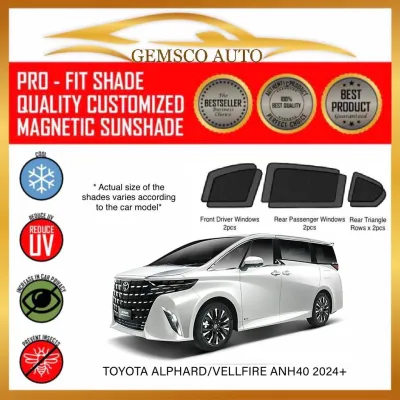
Prices are valid at publication and may change. Please refer to the product page for the latest price.
Essential Criteria for Choosing the Right Sun Shade
Selecting an effective sun shade for your Toyota Alphard requires evaluating several technical and practical dimensions beyond simple aesthetics.

Fitment and Edge-to-Edge Coverage
The most critical factor is a precise, snug fit against the windshield frame. Because the Alphard’s glass surface is so vast, even a minor gap of a few centimeters along the edges can allow a substantial amount of solar energy to penetrate the cabin. This light bleed directly heats the dashboard and steering wheel, undermining the overall thermal barrier. A proper sun shade must contour perfectly around the rearview mirror assembly, including the bulky housing for the Toyota Safety Sense (TSS) camera system, without leaving large unshielded zones.
Material and Thermal Reflectivity
Sun shades operate on two primary physical principles: reflection and absorption. Reflective shades utilize metallic foils, aluminum-coated films, or specialized silver coatings to bounce solar radiation back through the glass before it can convert into heat. Absorptive shades, often made of thick dark fabric or felt, trap heat within their own fibers; however, they eventually radiate this heat back into the cabin air. For Singapore’s climate, highly reflective multi-layer materials are vastly superior, as they actively reject infrared rays rather than storing them inside the vehicle.
Ease of Deployment and Storage
A sun shade is only useful if you actually deploy it every time you park. Given the Alphard’s high roofline and deep dashboard, installing a shade can be physically awkward if the design is overly rigid or complicated. The shade must be easy to unfold and position from the driver’s seat without knocking against the passenger or the center console. Furthermore, storage is a key consideration; a bulky, non-collapsible shade will clutter the premium interior of your MPV, so a model that twists or folds into a compact sleeve is highly desirable.
Structural Rigidity
The steep rake of the Alphard’s windshield means the sun shade must support its own weight across a large diagonal span. If the shade lacks structural integrity, it will sag in the middle, pulling away from the glass and allowing hot air to circulate behind it. Look for options with integrated spring-steel rings, reinforced composite ribs, or heavy-duty multi-layer construction that can press firmly against the window frame and remain securely in place when supported by the vehicle’s sun visors.
Comparing Sun Shade Types for the Alphard
To find the optimal solution, you must weigh the pros and cons of the three primary sun shade designs available for the Toyota Alphard.
Custom-Fit Foldable Reflective Shades
Custom-fit foldable reflective shades are engineered specifically for individual vehicle models, matching the exact dimensions and curves of the Alphard’s windshield. These shades typically feature a multi-layer construction, combining an outer reflective aluminum foil layer, a thermal barrier middle layer (such as polyethylene bubble wrap or closed-cell foam), and a soft inner polyester backing to protect your dashboard from scratches.
The primary advantage of this style is its absolute edge-to-edge coverage, leaving virtually zero gaps for light bleed. They are designed to fit perfectly around the TSS camera housing and are stiff enough to hold their shape without sagging. The main trade-off is their physical size when stored; because they fold accordion-style rather than collapsing into a tiny circle, they can be somewhat bulky to store in the door pockets or behind the seats when not in use.
Umbrella-Style Windshield Shades
Umbrella-style shades have gained popularity due to their highly convenient deployment mechanism. They feature a collapsible metal frame and a reflective fabric canopy that opens exactly like a standard rain umbrella. You simply place the canopy against the windshield, push the runner to open the frame, and rest the handle on the dashboard to hold it in place.
While highly convenient and incredibly compact when folded, these shades present specific challenges for the Toyota Alphard. The rigid, square-cut frame of a universal umbrella shade rarely matches the unique, sweeping curves of the Alphard’s massive windshield, often leaving gaps in the lower corners. Additionally, you must exercise extreme caution during deployment; the metal tips of the umbrella ribs can easily scratch the delicate leather dashboard, scuff the plastic trim, or damage aftermarket window tint films if they scrape against the glass.
Retractable Roller Sun Shades
Retractable roller sun shades offer a semi-permanent installation, mounting directly to the side of the windshield frame or onto the dashboard using suction cups or adhesive brackets. Once installed, the shade can be pulled across or up the glass and hooked into place, then retracted back into its slim housing with the press of a button.
While this design provides a clean, integrated look, it is generally ill-suited for the Toyota Alphard’s front windshield. Finding a roller mechanism wide and tall enough to cover the Alphard’s massive glass is exceptionally difficult. Furthermore, the permanent mounting brackets can obstruct your forward field of vision while driving—a serious safety hazard. The adhesive backings and suction cups also tend to degrade rapidly under Singapore’s intense heat, leading to premature failure of the mounting system.
How to Verify Fitment for Your Specific Alphard Generation
The Toyota Alphard has evolved through several generations, each featuring distinct body styles, interior layouts, and windshield dimensions. Assuming a shade labeled “Toyota Alphard” will fit your specific vehicle without verifying the generation is a common mistake that often results in a poorly fitting accessory.
To ensure a perfect fit, you must identify your vehicle’s specific model code. The most common generations currently operating on Singapore roads include:
- AH20 Generation (2008–2015): Features a slightly more upright windshield compared to its successors.
- AH30 Generation (2015–2023): Introduced a much larger, more sweeping windshield with a prominent camera housing for driver assistance systems.
- AH40 Generation (2023–Present): Features the latest design language, with highly advanced sensor clusters near the rearview mirror and revised glass dimensions.
When shopping on ecommerce platforms or visiting local automotive accessory shops in Singapore, always verify that the product listing explicitly mentions your specific generation (e.g., “Fits Alphard AH30 2015-2023”). A custom shade designed for an AH20 will be far too small for an AH40, while an AH40 shade will not fit properly in an older model due to differences in the rearview mirror and sensor console shapes.
If you are considering a high-quality “universal” shade, do not rely on generic size labels like “L” or “XL.” Instead, take a soft tape measure and manually measure your windshield from the inside. Measure the maximum width along the bottom edge near the dashboard, the width along the top edge near the roofline, and the vertical height from the center of the dashboard to the top of the glass. Compare these exact measurements against the product’s specifications before purchasing.
Finally, always review the seller’s return and exchange policies. Because a precise fit is paramount for effective heat rejection, you want the flexibility to exchange the shade if you discover any unexpected light bleed or structural sagging upon initial installation.
Proper Installation and Daily Maintenance
Maximizing the lifespan and effectiveness of your sun shade requires proper handling and regular care.
Installation Steps
To install your sun shade correctly, start by unfolding it inside the cabin while sitting in either the driver or front passenger seat. Carefully slide the bottom edge of the shade down into the deep crevice where the windshield meets the dashboard, ensuring it is pushed as far forward as possible. Next, press the top of the shade flush against the upper glass frame, fitting the center cutout around the rearview mirror and sensor housing. Finally, pull down both the driver and passenger sun visors to press firmly against the shade, locking it securely against the steep rake of the windshield.
Maintenance and Cleaning
Over time, your sun shade will accumulate dust, fingerprints, and a thin film of plasticizer residue from the dashboard. This buildup can dull the reflective surface, reducing its thermal efficiency. To clean the shade, wipe down the reflective silver side with a damp microfiber cloth. Avoid using harsh chemical cleaners, ammonia-based sprays, or abrasive pads, as these can strip away the reflective metallic coating. Allow the shade to air-dry completely in a shaded area before folding and storing it to prevent mold or mildew from developing in the folds.
Crucial Safety Boundary
You must always remove the sun shade entirely and store it securely before starting your vehicle’s engine or shifting into gear. Driving with a front windshield sun shade installed—even partially—completely obstructs your forward visibility and is a severe safety violation. Ensure the shade is stowed in a location where it cannot slide under the brake pedal or distract you while driving, such as the rear cargo area, a door pocket, or behind the front seats.
Frequently Asked Questions (FAQ)
Will a standard universal sun shade fit the Toyota Alphard?
A standard universal sun shade will rarely provide adequate coverage for a Toyota Alphard. Because the Alphard’s windshield is exceptionally tall and wide compared to standard passenger cars, universal shades are typically too small. Using one will leave large gaps at the top, bottom, or sides, allowing intense sunlight to bypass the barrier and heat up your cabin. If you must use a universal shade, ensure you measure your windshield first and select a size specifically designated for large MPVs or vans, though a custom-fit option remains highly recommended for optimal thermal protection.
Is a reflective silver shade better than a black fabric one for heat reduction?
Yes, a reflective silver or metallic foil sun shade is significantly more effective at reducing cabin heat than a black fabric shade. Reflective surfaces operate by bouncing solar radiation (including infrared and UV rays) back out through the glass before it can be absorbed by the vehicle’s interior. In contrast, black fabric shades absorb the solar energy, heating up themselves and gradually radiating that thermal energy into the cabin air. For Singapore’s intense, year-round sunshine, a multi-layer reflective silver shade is the superior choice for maintaining a cooler interior.
Can a windshield sun shade damage the Alphard's glass or interior?
A high-quality, properly installed sun shade will not damage your vehicle; however, careless handling can cause issues. Rigid wire frames or the metal tips of umbrella-style shades can scratch the dashboard leather, scuff plastic trim, or tear aftermarket window tint film if forced into place. To prevent damage, always choose shades with soft, fabric-bound edges or protective rubber tips, and deploy them gently. Additionally, ensure the shade does not put excessive pressure on your rearview mirror or the delicate plastic housing of your driver assistance cameras.

Community discussion
Share your experience or ask a question. Comments are reviewed before publication.