
Selecting the right front windshield sun shade for your Mazda 6 is one of the most practical decisions you can make to preserve your vehicle’s interior and maintain cabin comfort. In Singapore’s tropical climate, where cars parked outdoors are subjected to intense, year-round solar radiation, an effective sun shade acts as the primary line of defense against extreme cabin heat. By reflecting solar energy before it penetrates the cabin glass, a high-quality shade prevents the greenhouse effect from turning your parked sedan or wagon into an oven.
While universal, one-size-fits-all shades are widely available, they rarely provide the comprehensive coverage required for the Mazda 6’s distinct windshield geometry. To achieve maximum heat rejection, you need a shade that fits flush against the glass, leaving no gaps for sunlight to bypass. Investing in a custom-fit sun shade tailored to your specific Mazda 6 generation ensures total coverage, simplifies daily deployment, and protects the sensitive electronics mounted near your rearview mirror.
Why a Custom Fit Matters for the Mazda 6 in Singapore's Climate
When a car is parked under direct sunlight in Singapore, it experiences a rapid thermal buildup known as the greenhouse effect. Shortwave solar radiation passes through the clear windshield glass and is absorbed by the dark surfaces of the dashboard, steering wheel, and seats. These surfaces then re-emit this energy as longwave infrared radiation, which cannot easily pass back out through the glass. This trapped energy causes the interior temperature to skyrocket, often reaching levels that can degrade interior plastics, cause leather upholstery to dry and crack, and weaken the adhesives holding cabin trim together.
Products mentioned in this guide
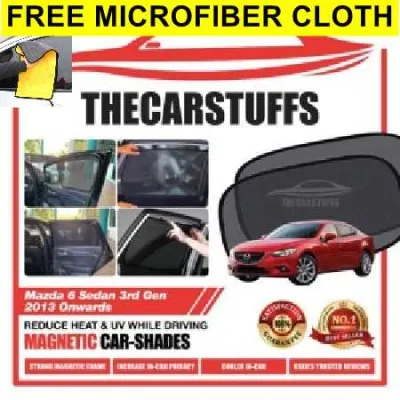
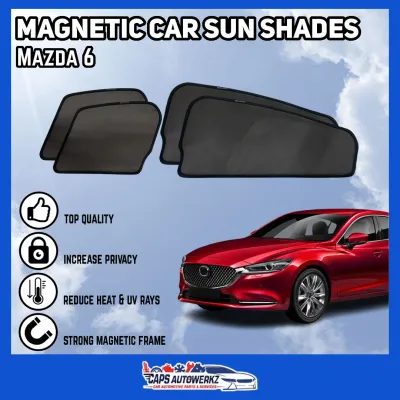
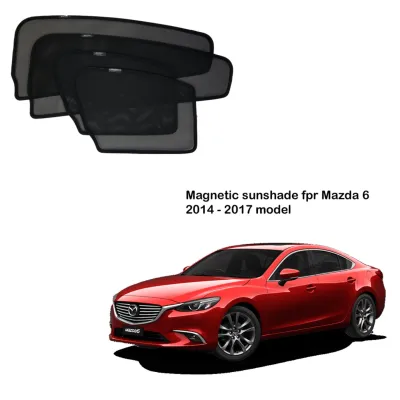
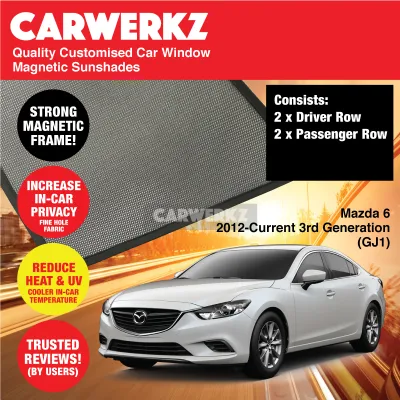
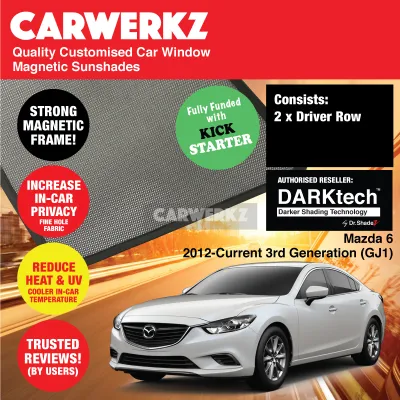
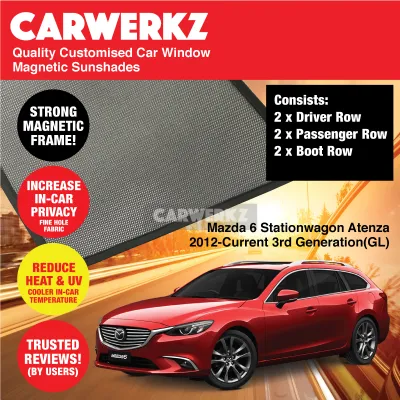
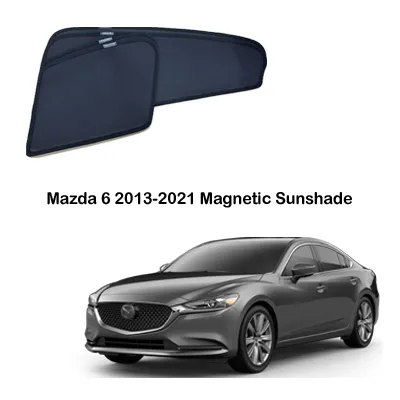
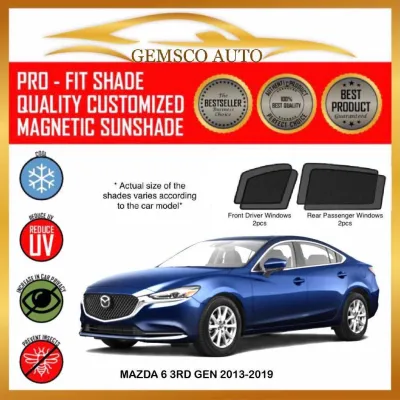
Prices are valid at publication and may change. Please refer to the product page for the latest price.
For the Mazda 6, this thermal threat is amplified by the car’s sleek, aerodynamic design. Across its various generations—most notably the GJ series launched in 2012 and the subsequent GL facelifts—the Mazda 6 features a highly raked, expansive front windshield. This sweeping glass surface acts as a large solar collector, directing a massive volume of solar energy straight onto the dashboard. Because the windshield is wide and features a pronounced curvature, standard rectangular universal shades cannot sit flush against the glass, leaving significant gaps at the corners and edges.
Furthermore, the physical dimensions of the windshield area vary slightly depending on your Mazda 6’s body style and model year. The sleek sedan and the practical wagon (Kombi) share front-end aesthetics, but subtle variations in rooflines can influence the angle of the sun visors, which are typically used to hold folding shades in place. If you use a generic shade that is too small, UV rays will stream through the exposed areas, creating localized hot spots. Conversely, a shade that is too large will bunch up, sag, and fail to stay securely in position.
Another critical factor is the integration of advanced safety technology. Modern Mazda 6 models are equipped with the i-ACTIVSENSE safety suite, which relies on a cluster of cameras and sensors housed in a pod mounted directly behind the rearview mirror. The size of this sensor housing has evolved significantly over the years; earlier GJ models feature a relatively compact sensor footprint, whereas later GL models have a much larger, trapezoidal camera pod. A custom-fit sun shade is engineered with a precise cutout that accommodates this sensor housing without putting physical pressure on the camera casing, ensuring your safety systems remain undamaged and unaligned.
Before purchasing any sun shade, it is essential to verify your Mazda 6’s exact model year, generation, and sensor configuration. Checking your owner’s manual or consulting with a specialist can help you identify whether your vehicle has the larger i-ACTIVSENSE camera housing, allowing you to select a shade with the correct cutout. Ensuring a precise match is the only way to guarantee complete coverage and protect both your dashboard and your vehicle’s safety electronics.
How to Evaluate Heat Rejection and Material Quality
To choose an effective sun shade, you must look past generic marketing claims and understand the materials and physics that govern heat rejection. Solar energy consists of ultraviolet (UV) rays, visible light, and infrared (IR) radiation. An effective sun shade must address all three components. It does this through a combination of reflection, insulation, and structural stability, preventing heat from transferring from the hot windshield glass into the cabin air.

An effective sun shade relies on a high-grade reflective outer layer. This layer is typically constructed from metallic polyethylene terephthalate (PET), aluminum foil laminates, or specialized silver-coated fabrics. These materials are designed to reflect visible light and near-infrared radiation back out through the windshield before it can be absorbed by the dark surfaces of your interior. When evaluating a shade, look for a highly polished, uniform reflective surface that does not easily flake or peel under high temperatures.
Reflectivity alone is insufficient if the shade lacks proper insulation. Once the outer layer reflects a portion of the solar energy, the remaining heat conducts through the material. To block this conductive heat transfer, high-quality shades incorporate an insulating inner layer. This is often made of a closed-cell foam core or a double-bubble honeycomb structure. The microscopic air pockets trapped within these layers act as a highly effective thermal barrier, slowing down the movement of heat toward your dashboard and helping to maintain a lower cabin temperature.
UV protection is another critical metric to verify. Prolonged exposure to ultraviolet radiation is the primary cause of fading, cracking, and structural degradation in automotive interiors. Over time, UV rays break down the polymer chains in your dashboard’s soft-touch plastics, which can lead to a sticky or discolored surface—a known issue in older vehicles exposed to tropical climates. Look for sun shades that carry verified UV protection ratings, such as UPF 50+, which indicates that the material blocks over 98% of harmful UV radiation.
Finally, structural integrity is vital for long-term performance in Singapore’s humid, high-temperature environment. Cheap, single-layer shades often soften and sag when exposed to intense heat for several hours. When a shade sags, it rests directly against the dashboard or the glass, creating a thermal bridge that transfers heat straight into the cabin. Premium shades feature high-tensile spring steel frames or rigid, multi-layered fiberboard backing that maintains its shape and keeps the shade suspended away from the dashboard, preserving the insulating air gap.
Top Sun Shade Styles for the Mazda 6: Pros, Cons, and Use Cases
There are three primary styles of front windshield sun shades available for the Mazda 6: custom-fit foldable shades, umbrella-style shades, and retractable roller shades. Each style offers a different balance of coverage, ease of use, and storage convenience. Understanding how these designs interact with the Mazda 6’s interior layout will help you make an informed decision.
Custom-Fit Foldable Shades
Custom-fit foldable shades are rigid panels that are cut to the exact dimensions of the Mazda 6 windshield and fold up accordion-style when not in use. These shades are engineered to match the specific curvature of the GJ or GL windshield, providing edge-to-edge coverage that leaves virtually no gaps for sunlight to penetrate.
- Pros: This style offers the highest level of heat rejection and thermal insulation due to its thick, multi-layered construction. The rigid structure prevents sagging, ensuring the shade remains suspended away from the dashboard. They typically feature a dedicated hook-and-loop strap that secures the shade around the i-ACTIVSENSE camera housing, providing a snug fit without putting pressure on the sensors.
- Cons: The primary drawback of foldable shades is their physical bulk. When folded, they form a long, stiff panel that can be awkward to store within the Mazda 6's cabin, especially if you regularly travel with front-seat passengers. Storing them along the passenger footwell or in the rear footwell can occasionally be inconvenient.
Umbrella-Style Sun Shades
Umbrella-style sun shades utilize a deployment mechanism similar to a standard rain umbrella. They feature a rectangular canopy made of highly reflective silver-coated fabric supported by a network of tensioned metal ribs, which pop open to press against the windshield.
- Pros: These shades are exceptionally convenient and compact. When collapsed, they fold down into a small sleeve that fits easily into the Mazda 6's door pockets, glove box, or center console. Deployment is quick and requires minimal physical effort, making them an excellent choice for drivers who prioritize easy storage.
- Cons: The central shaft and metal ribs can pose a risk of cosmetic damage to your vehicle's interior. If not positioned carefully, the rigid shaft can press against the prominent Mazda Connect infotainment screen or scratch the soft-touch leather on the dashboard. Additionally, because the canopy is flexible, it may leave small gaps at the extreme corners of the windshield.
- Mazda 6 Specifics: If choosing this style, it is crucial to select a model that features a flexible, bendable shaft. A flexible shaft allows you to angle the handle away from the infotainment screen, resting it safely on the center console. You should also ensure the top of the canopy has a split design with a velcro closure to accommodate the rearview mirror and sensor pod.
Retractable Roller Shades
Retractable roller shades are semi-permanently mounted units that attach to one side of the windshield—usually using high-strength suction cups or bracket clips—and pull across the glass to hook onto the opposite side when parked.
- Pros: This design offers the fastest possible deployment. You simply pull the shade across the windshield and hook it into place, a process that takes only a few seconds. Because the shade retracts into a self-contained roller housing, there is no need to fold, roll, or store the unit inside the cabin on a daily basis.
- Cons: The permanent mounting brackets and roller housing remain visible on your windshield even while driving, which can detract from the clean, minimalist aesthetic of the Mazda 6's cabin. Furthermore, the suction cups used to secure these shades are highly susceptible to failing under Singapore's intense heat, which can cause the shade to fall unexpectedly while parked or driving.
- Mazda 6 Specifics: The rolled housing takes up valuable windshield space and can slightly obstruct the driver's upward sightline. In the Mazda 6, care must be taken during installation to ensure the mounting brackets do not interfere with the passenger-side A-pillar airbag deployment zone or the sensitive sensors located near the top of the windshield.
Installation, Storage, and Dashboard Protection Tips
To maximize the lifespan of your sun shade and prevent accidental damage to your Mazda 6’s interior, it is important to follow proper installation, storage, and maintenance practices. Correct usage ensures that the shade performs at its best while safeguarding your vehicle’s cabin components.
When installing your sun shade, always ensure the highly reflective side (typically silver or aluminum) faces outward toward the sun, while the matte or dark side faces inward toward the cabin. Begin by gently sliding the shade behind the rearview mirror, taking care not to force or jam the material against the glass. Excessive pressure can stress the windshield edges or damage the delicate plastic trim surrounding the i-ACTIVSENSE camera pod. Once the shade is positioned flat against the glass, fold down both the driver and passenger sun visors to hold the top edge of the shade securely in place.
Proper folding and storage are essential to prevent structural damage to the shade. For foldable accordion shades, follow the pre-creased lines carefully; forcing the panels to fold in the wrong direction can weaken the internal fiberboard and cause the shade to sag over time. For umbrella-style shades, ensure the canopy is fully collapsed before pulling the shaft back to avoid catching the metal ribs on the dashboard trim. Never twist or force internal spring-steel wires, as snapping them can ruin the shade’s structure and create sharp points that could puncture the fabric or scratch your leather seats.
Crucially, you must completely remove, fold, and securely store your sun shade before starting your journey. Driving with any portion of a front windshield shade deployed severely obstructs your visibility, which is highly dangerous and violates Singapore’s Land Transport Authority (LTA) regulations regarding windshield obstructions. Store the folded shade in the boot, under a seat, or in a dedicated storage pocket to ensure it does not slide around and distract you while driving.
To clean your sun shade, wipe it down periodically with a clean, damp microfiber cloth to remove dust and fingerprints. Avoid using harsh chemical cleaners, alcohol-based sprays, or abrasive scrubbing pads, as these can strip or degrade the reflective metallic coating and damage the inner insulating layers. If your dashboard or windshield requires cleaning, always refer to the care instructions in your Mazda 6 owner’s manual to ensure you use compatible, non-damaging cleaning agents.
Frequently Asked Questions (FAQ)
Will a universal sun shade fit the Mazda 6 properly?
While a universal sun shade may cover the central portion of the glass, it rarely matches the distinct curvature, wide aspect ratio, and large sensor housing of the Mazda 6’s windshield. This mismatch often leaves significant gaps at the top corners and around the rearview mirror, allowing UV rays and heat to bypass the barrier. Additionally, universal shades can put physical pressure on the i-ACTIVSENSE camera pod, potentially misaligning the safety sensors. For optimal protection and fitment, a custom-fit option designed specifically for the GJ or GL platform is highly recommended.
How much temperature reduction can I expect in Singapore's climate?
A high-quality sun shade will dramatically lower the surface temperature of your steering wheel, leather seats, and dashboard, preventing them from becoming painfully hot to touch and protecting them from UV damage. However, because a parked car is a sealed environment, the ambient air temperature inside the cabin will still rise over time due to heat transferring through the roof, side windows, and metal body panels. To cool your car efficiently after parking in the sun, open the doors or wind down the windows for a minute to let the trapped hot air escape before turning on the air conditioning.
Can a windshield sun shade damage the glass or dashboard?
A properly sized, soft-edged sun shade will not damage your windshield or dashboard. However, poorly constructed shades with exposed wire frames, sharp plastic tips, or rigid metal umbrella shafts can easily scratch the Mazda 6’s soft-touch dashboard, leather steering wheel, or the Mazda Connect screen. To prevent cosmetic or physical damage, always choose shades with protective fabric borders, rubberized tips, or flexible shafts, and install them gently without forcing them against the interior trim.

Community discussion
Share your experience or ask a question. Comments are reviewed before publication.