
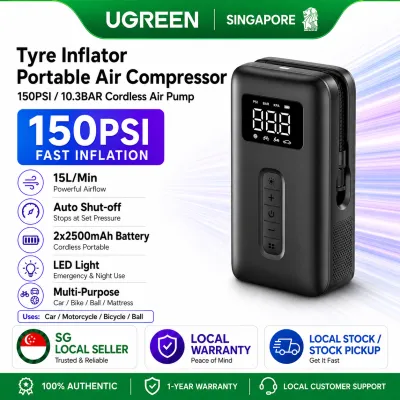
To choose the right air pump for your car tires, you need a unit with a maximum pressure rating that comfortably exceeds your vehicle’s recommended tire pressure—typically requiring at least 100 to 120 PSI for standard passenger vehicles—and a flow rate that matches your tire volume. For standard commuter cars, a flow rate of 25 to 35 liters per minute is sufficient, while larger SUVs and off-road vehicles benefit from a flow rate of 50 liters per minute or higher to avoid excessive inflation times and equipment overheating. Matching these specifications ensures quick, safe inflation without overloading your vehicle’s electrical system or straining the pump motor.
Understanding PSI Ratings for Car Tires
When shopping for a portable air compressor, you will often see two different pressure ratings: continuous rated PSI and maximum peak PSI. The continuous rated PSI represents the pressure the pump can safely maintain during normal, sustained operation. In contrast, the maximum peak PSI is a short-term limit the pump can reach momentarily under ideal conditions, which is rarely sustainable for inflating a fully deflated car tire.
To determine your vehicle’s actual pressure requirements, check the tire information placard located on the driver’s side door jamb or consult your owner’s manual. This label lists the exact cold inflation pressure recommended by the vehicle manufacturer for optimal safety, handling, and fuel efficiency. Do not rely on the maximum pressure listed on the tire sidewall itself, as this is the absolute limit the tire can hold, not the daily operating pressure.
Products mentioned in this guide
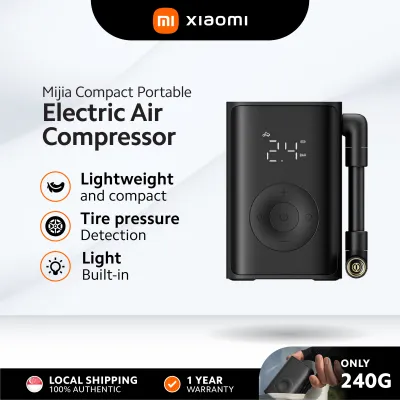
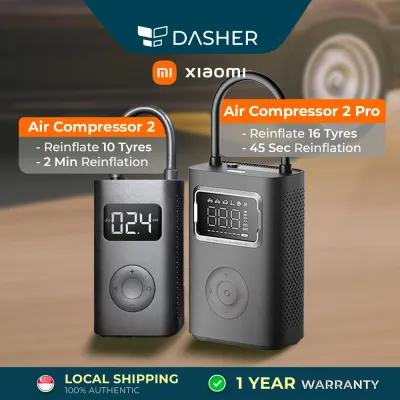
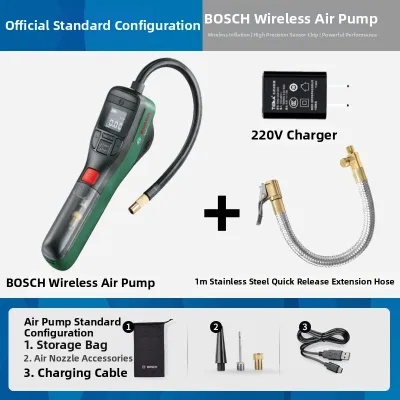
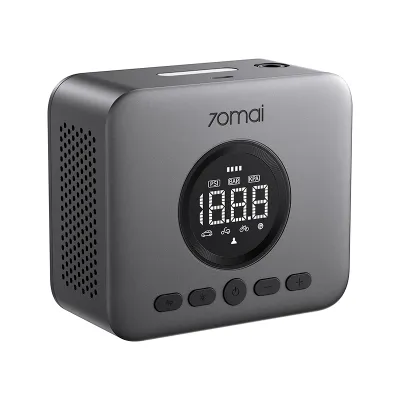
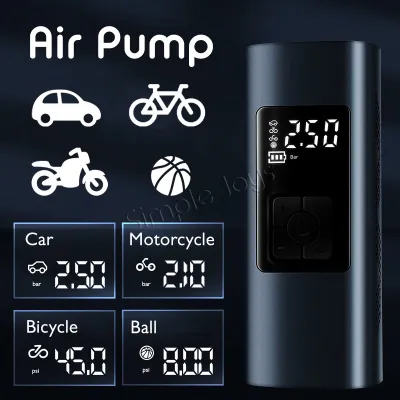
Prices are valid at publication and may change. Please refer to the product page for the latest price.
Your chosen air pump must have a maximum continuous PSI rating that comfortably exceeds your vehicle’s recommended pressure. If your tires require 32 PSI, using a pump rated for a maximum of only 35 PSI will force the motor to work at its absolute limit, leading to slow inflation, severe overheating, and premature motor failure. Selecting a pump rated for at least 100 to 120 PSI provides a safe buffer, allowing the motor to run efficiently and easily overcome the resistance of a partially filled tire.
Evaluating Flow Rate and Inflation Speed
Flow rate determines how quickly an air pump can fill a tire and is typically measured in liters per minute (LPM) or cubic feet per minute (CFM). While PSI measures the force of the air, the flow rate measures the volume of air delivered over time. A higher flow rate directly translates to shorter wait times by the side of the road, which is especially critical during emergency situations or inclement weather.

The volume of your tires dictates the flow rate you need. Standard compact sedans and hatchbacks have relatively small tire volumes, meaning a modest pump delivering 25 to 30 liters per minute can inflate them in a few minutes. However, larger tires found on SUVs, vans, and light trucks contain significantly more air volume, requiring a flow rate of 50 liters per minute or more to prevent the inflation process from becoming excessively slow.
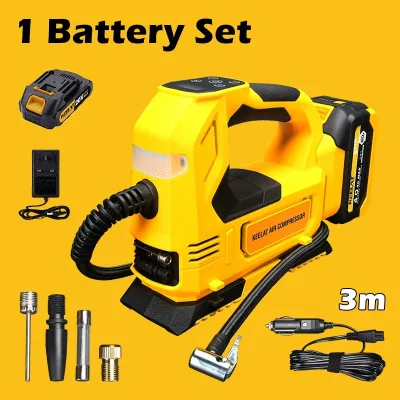
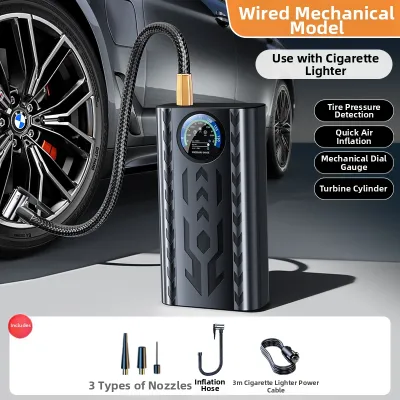
Choosing a high-flow pump involves a trade-off with physical size and power requirements. High-volume pumps require larger motors and draw more electrical current, often exceeding the 10-amp or 15-amp limit of a standard vehicle 12V accessory outlet. While smaller, lower-flow pumps can run safely off a cigarette lighter socket, heavy-duty high-flow models usually require direct connection to the vehicle’s battery terminals using alligator clips to avoid blowing fuses.
Matching Air Pump Specs to Your Vehicle Type
Selecting the right air pump depends heavily on your vehicle type and how you plan to use the equipment. For daily commuter cars navigating urban environments, a compact, lightweight 12V portable inflator is highly practical. These units easily store in the boot, run directly from the cabin’s power outlet, and provide sufficient performance for occasional top-ups or emergency roadside assistance.
For larger family SUVs, multi-purpose vehicles, or off-road vehicles, standard single-motor 12V pumps often fall short. These larger tires demand heavy-duty or dual-motor inflators that can deliver sustained high volume. If you frequently lower your tire pressures for off-road driving on sandy or uneven terrain, you will need a robust compressor capable of rapidly inflating all four large tires back to highway pressures.
Before purchasing, check the pump’s duty cycle rating, which indicates the percentage of time the compressor can run continuously before needing to cool down. A pump with a 15% duty cycle can only run for about 1.5 minutes for every 10 minutes of rest, which is insufficient for filling multiple large tires. For comprehensive maintenance, look for a duty cycle of at least 30% to 50% to ensure the unit can service all four tires in a single session without overheating.
Safety Boundaries and Operational Limits
Operating an air pump safely requires adhering to strict physical and mechanical limits. Never exceed the maximum inflation pressure molded onto the tire’s sidewall, as doing so risks catastrophic tire failure or blowout. Always refer to your vehicle’s specific documentation and door placard for the correct operating pressure, and use the sidewall marking only as an absolute safety ceiling.
To protect your equipment, strictly observe the manufacturer’s specified duty cycle and allow mandatory cool-down periods. Running a portable compressor continuously beyond its rated limit causes extreme heat buildup in the motor and hose connections, which can melt internal seals or cause permanent motor burnout. If the pump body feels excessively hot to the touch, switch it off and let it cool completely before resuming.
For accurate inflation, always measure and adjust your tire pressure when the tires are cold, meaning the vehicle has been parked for at least three hours or driven less than two kilometers. Driving generates friction and heat, which causes the air inside the tire to expand and produces artificially high pressure readings. Adjusting your tires when they are hot can lead to dangerous under-inflation once the air cools and contracts.
Frequently Asked Questions (FAQ)
Can a low-PSI pump inflate standard car tires?
A low-PSI pump designed primarily for bicycle tires or sports equipment is generally unsuitable for standard passenger car tires. While some low-PSI pumps might eventually fill a car tire, they must operate at their absolute maximum capacity for an extended period, causing extreme motor strain and potential overheating. Additionally, these pumps lack the necessary flow rate, resulting in dangerously slow inflation times that can leave you stranded on the roadside.
How does hot weather affect tire pressure readings?
Hot weather and direct sunlight cause the air inside your tires to expand, which artificially inflates the pressure readings on your gauge. If you measure your tire pressure immediately after driving or while the vehicle is parked in the afternoon sun, the reading will be higher than the actual baseline pressure. To ensure accuracy, always check and adjust your tire pressure in the morning or after the vehicle has been parked in a shaded area for several hours.

Community discussion
Share your experience or ask a question. Comments are reviewed before publication.