
Selecting the right portable air pump for your vehicle tires comes down to balancing two critical specifications: Pounds per Square Inch (PSI) and Cubic Feet per Minute (CFM). PSI determines the maximum pressure the pump can generate, which must exceed your vehicle’s recommended tire pressure to ensure safe and complete inflation. CFM measures the volume of air the pump delivers per minute, directly dictating how quickly your tires will inflate. For standard passenger cars, a compact pump with moderate PSI and lower CFM is usually sufficient, whereas larger vehicles like SUVs and light trucks require higher CFM ratings to avoid overheating the pump during long inflation cycles.
Understanding PSI: Matching Your Vehicle's Tire Pressure Requirements
Maintaining the correct tire pressure is one of the most straightforward yet critical aspects of vehicle maintenance. Properly inflated tires ensure optimal traction, predictable handling, shorter braking distances, and maximum tire longevity. Before performing any tire maintenance or operating an air pump, always consult your vehicle’s owner’s manual for specific safety instructions, recommended tire specifications, and proper handling procedures. Because every vehicle class has unique weight distributions and suspension setups, there is no universal tire pressure standard; the ideal specifications depend entirely on your specific vehicle make and model.
When shopping for an air pump, it is vital to distinguish between the pump’s maximum PSI rating and your vehicle’s actual tire pressure requirements. A pump’s maximum PSI indicates the absolute limit of pressure the unit can safely generate before its motor or seals risk failure. This rating is not the target pressure you should aim to pump into your tires, but rather a ceiling of capability.
Products mentioned in this guide
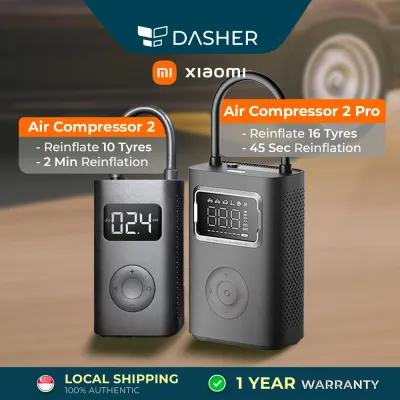
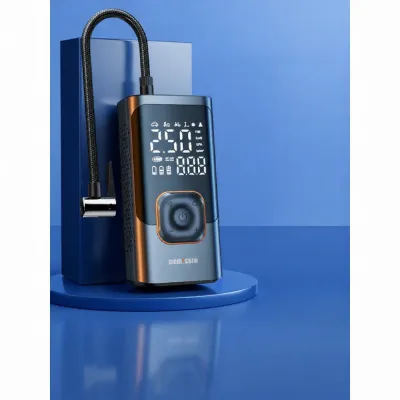
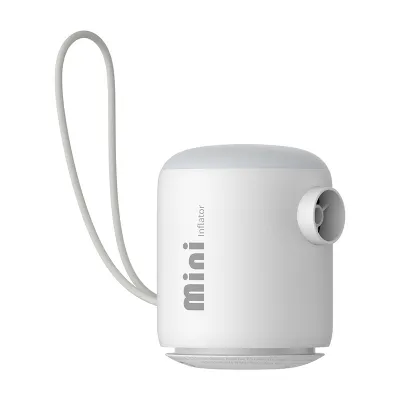
![[SG Stock] Air Pump Car Inflator Compressor Portable Ball Bike Bicycle Rechargeable Basketball Soccer Volleyball Tyre Wheel Tire 12V LED Fast Auto Shut-off Emergency](https://img.lazcdn.com/g/p/cc7d92c566c3860fbbfa1d535cc6f3bb.jpg_400x400q80.jpg_.webp)
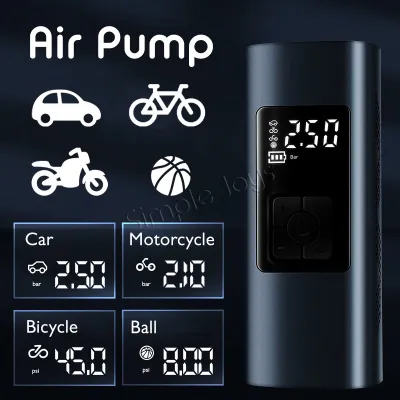
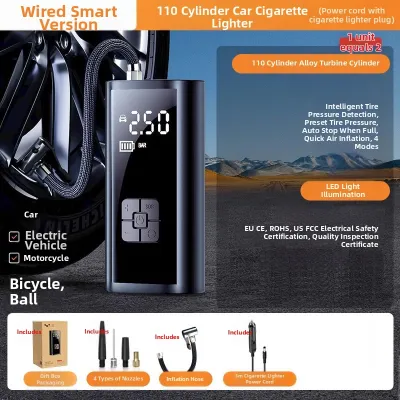
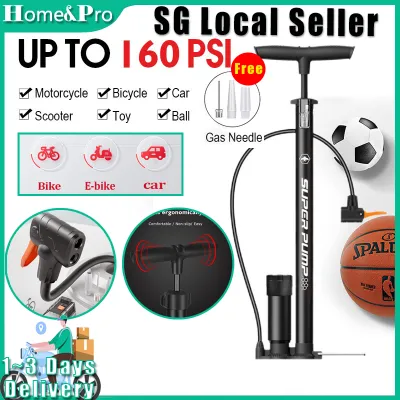
Prices are valid at publication and may change. Please refer to the product page for the latest price.
To find your vehicle’s exact recommended tire pressure, open the driver-side door and locate the printed placard or sticker on the door jamb. This manufacturer label lists the precise cold inflation pressures required for both the front and rear tires. If the sticker is missing or illegible, consult your vehicle’s official owner’s manual. Avoid using the maximum PSI number molded into the tire’s sidewall; this figure represents the maximum pressure the tire can safely hold under maximum load, not the daily operating pressure recommended for your vehicle’s handling and safety.
To ensure your air pump operates reliably, its maximum PSI rating must comfortably exceed your vehicle’s recommended tire pressure. For example, if your vehicle requires 35 PSI, using a pump rated for a maximum of only 40 PSI forces the motor to work near its absolute limit, which can cause rapid overheating and premature wear. Selecting a pump with a maximum rating of 100 to 120 PSI provides a safe buffer, allowing the motor to reach your target pressure efficiently without straining the internal components.
Decoding CFM: How Airflow Affects Inflation Speed
While PSI determines whether an air pump can reach a specific pressure, Cubic Feet per Minute (CFM) determines how quickly it gets there. CFM measures the volume of air the pump’s motor can push into the tire within one minute. A higher CFM rating means a faster inflation process, which directly reduces the amount of time the pump’s motor must run continuously.

The volume of air inside your tires dictates how much CFM you actually need. Standard passenger cars have relatively small tire volumes, meaning a low-CFM pump (often around 0.5 to 1.0 CFM) can inflate a tire from flat to recommended pressure in a reasonable timeframe. However, larger tires found on SUVs, vans, and light trucks hold a significantly larger volume of air. Attempting to fill these larger tires with a low-CFM pump can turn a simple top-up into a lengthy chore, potentially running the pump past its safe operating limits.
Choosing between high-CFM and low-CFM pumps involves weighing several practical trade-offs. High-CFM pumps are typically larger, heavier, and require more robust power sources. Because they draw significant electrical current, many high-CFM models cannot run off a standard 12V cigarette lighter socket and must instead connect directly to the vehicle’s battery terminals using heavy-duty clamps. Low-CFM pumps, on the other hand, are highly portable, easily stored in a glove compartment or trunk, and can safely run on standard 12V cabin outlets, though they require more patience during use.
Key Specifications and Safety Features to Verify
When selecting an air pump, safety features and operational limits are just as important as raw performance specifications. An essential feature to look for is an automatic shutoff function. This mechanism allows you to set your target PSI on a digital display; once the pump reaches this pressure, it automatically stops inflating. This prevents accidental over-inflation, which can damage the tire structure, and protects the pump motor from running indefinitely if left unattended.
Power source compatibility is another critical factor that requires careful verification. Portable air pumps generally run on 12V DC power from your vehicle, 120V AC power from a household wall outlet, or rechargeable lithium-ion batteries. If you choose a 12V DC pump that plugs into your vehicle’s accessory socket, verify the pump’s maximum current draw against your vehicle’s fuse rating, which is typically detailed in the owner’s manual. A pump that draws 15 amps plugged into a 10-amp fused circuit will instantly blow the fuse, leaving you without power.
You must also pay close attention to the manufacturer’s specified duty cycle. The duty cycle is the amount of time a pump can run continuously before it must be turned off to cool down, usually expressed as a ratio or a maximum runtime (such as 10 minutes of use followed by 10 minutes of rest). Exceeding this limit can melt internal seals and permanently damage the motor. Ensure the pump’s duty cycle is long enough to inflate at least one full tire—or ideally all four during a routine pressure check—without requiring frequent, lengthy cooling breaks.
Finally, evaluate the physical design of the hose and connectors. The air hose must be long enough to reach from the power source to all four tires comfortably without putting tension on the power cord or valve stems. Additionally, consider the connector type: screw-on brass chucks provide a secure, leak-free seal but can let some air escape during removal, while quick-connect thumb-lock clamps are faster to attach and detach but must be checked for a tight fit to prevent air loss during inflation.
Frequently Asked Questions (FAQ)
Can I use a low-CFM air pump for large SUV or truck tires?
Yes, a low-CFM pump can eventually inflate a large tire, but it is not recommended for regular use. Because of the high volume of air required, a low-CFM pump will have to run continuously for an extended period, which often exceeds its maximum duty cycle. This can cause the pump to overheat, potentially melting internal components or causing total motor failure before the tire reaches the correct pressure.
What happens if the air pump's max PSI is lower than my tire's requirement?
If the pump’s maximum PSI rating is lower than your tire’s recommended pressure, the pump will not be able to inflate the tire to the correct level. As the pressure inside the tire approaches the pump’s maximum capacity, the pump will struggle, run continuously without transferring more air, and rapidly overheat. This leaves your tire under-inflated and risks permanently damaging the pump’s motor.
Does a higher PSI rating mean the air pump will inflate tires faster?
No, a higher PSI rating does not translate to faster inflation. PSI measures the maximum pressure capability of the pump, whereas CFM measures the volume of airflow. A pump rated at 150 PSI with a low CFM rating of 0.5 will inflate a tire much slower than a pump rated at 100 PSI with a high CFM rating of 1.5. Always look at the CFM rating to determine inflation speed.

Community discussion
Share your experience or ask a question. Comments are reviewed before publication.