
A 15W-50 motorcycle oil is a multi-grade lubricant engineered to deliver robust engine protection under high-temperature, high-load conditions while maintaining reliable flow during initial startups. The designation “15W” defines the oil’s low-temperature flow characteristics, while the “50” indicates its thickness and protective film strength at normal operating temperatures. While premium synthetic formulations, such as a 7100 15w50, are highly sought after for high-performance or hot-climate riding, this viscosity is not a universal upgrade. Choosing the right oil requires matching the lubricant’s specifications to your motorcycle manufacturer’s approved guidelines, your typical riding environment, and your engine’s internal design.
Decoding the 15W-50 Viscosity Rating
To understand how a 15W-50 oil behaves inside your engine, it helps to break down the Society of Automotive Engineers (SAE) J300 viscosity standard. The first part of the rating, “15W,” stands for “Winter” and represents the oil’s low-temperature flow properties. A lower number before the “W” indicates an oil that remains more fluid in freezing temperatures, allowing the oil pump to distribute lubricant quickly during a cold start. A 15W rating means the oil is formulated to flow reliably down to temperatures around -20°C, making it highly suitable for moderate climates and highly effective for tropical regions where freezing temperatures are non-existent.
The second number, “50,” represents the oil’s kinematic viscosity measured at 100°C, which is the standard operating temperature for a fully warmed-up motorcycle engine. A higher number indicates a thicker, more viscous oil film at high temperatures. A 50-weight oil provides a more robust protective barrier between moving metal parts than lighter alternatives like 30-weight or 40-weight oils. This thicker film is crucial for preventing direct metal-on-metal contact when the engine is subjected to extreme heat or heavy mechanical loads.
Products mentioned in this guide
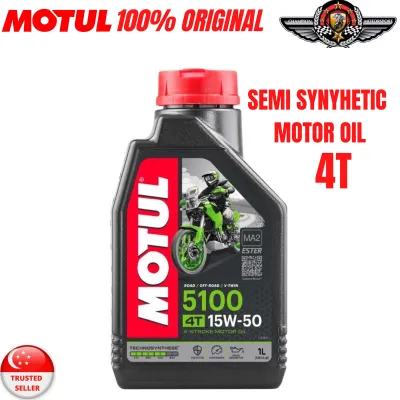
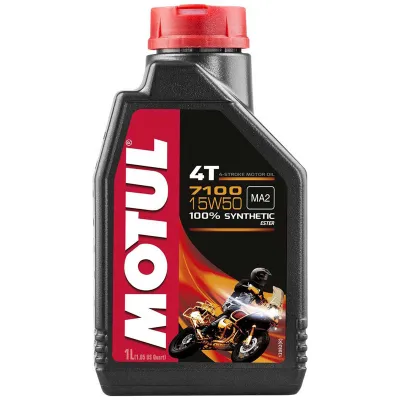
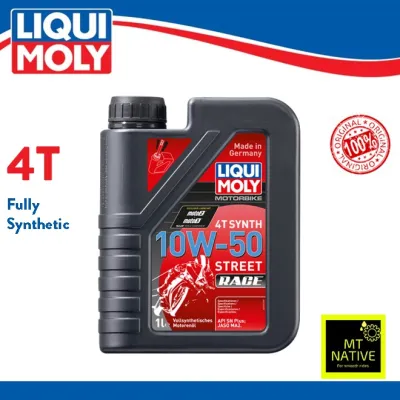
Prices are valid at publication and may change. Please refer to the product page for the latest price.
Modern multi-grade oils achieve this dual-character behavior through advanced refining techniques and viscosity index improvers. These additives expand as the oil heats up, resisting the natural tendency of oil to thin out. This allows a single formulation to flow like a lighter oil during cold starts while maintaining the protective qualities of a heavier oil once the engine reaches its operating temperature, eliminating the need to change oil grades between seasons.
When to Choose a 15W-50 Grade for Your Motorcycle
Selecting a 15W-50 viscosity grade is highly beneficial under specific operating conditions, particularly when riding in hot climates or under heavy engine loads. Air-cooled engines, large-displacement V-twins, and high-revving sports bikes generate substantial internal heat. In tropical environments with dense stop-and-go traffic, engine temperatures can climb rapidly. Under these conditions, a 15W-50 oil maintains its structural integrity and resists thermal breakdown, ensuring that critical components remain fully lubricated.

Engine design and internal clearances also dictate whether a thicker oil is appropriate. Some older motorcycle engines, or specific high-performance architectures, are engineered with wider clearances between bearings and moving parts. These engines rely on a thicker oil film to fill those clearances, maintain proper oil pressure, and cushion internal components against mechanical shock. Using an oil that is too thin in these engines can lead to low oil pressure warnings and accelerated wear.
However, the fundamental rule of motorcycle maintenance is to only use 15W-50 if it is explicitly approved by your motorcycle’s manufacturer. Every engine is designed around a specific range of oil viscosities. If your owner’s manual does not list 15W-50 as an acceptable option for your ambient temperature range, switching to it can cause unnecessary drag, restrict oil flow through narrow passages, and increase internal operating temperatures.
Comparing 15W-50 to Common Alternatives Like 10W-40
When deciding between a 15W-50 oil and a more common grade like 10W-40, the primary trade-offs involve cold-start protection, high-temperature film strength, and engine efficiency. A 10W-40 oil has a lower cold-viscosity rating, meaning it flows more rapidly upon initial startup in cooler morning temperatures. This rapid flow is critical because the majority of engine wear occurs during the first few seconds after startup. In cooler climates, a 10W-40 or 5W-40 oil is generally preferred to ensure rapid lubrication.
At operating temperature, the difference lies in the film thickness. The “50” weight of a 15W-50 oil offers greater film strength under extreme heat compared to a “40” weight. However, this extra thickness introduces slightly more fluid friction, also known as parasitic drag. This drag can result in a minor reduction in fuel economy and a slightly slower engine rev response. For everyday commuting on a modern, liquid-cooled motorcycle designed for 10W-40, the extra protection of a 15W-50 is rarely necessary.
Additionally, because most motorcycles utilize a shared sump where the engine oil also lubricates the gearbox and wet clutch, viscosity directly impacts shift feel. A thicker 15W-50 oil can make gear shifts feel stiffer or more deliberate, especially when the engine is cold. Once the engine warms up, the thicker oil can help smooth out gear changes and reduce transmission noise. However, if the wet clutch is designed for a lighter oil, using an incorrect viscosity can sometimes lead to clutch drag.
How to Verify Compatibility Before Switching Oil
Before purchasing any 15W-50 lubricant, including premium options like a synthetic 7100 15w50 formulation, you must verify that the product meets all technical requirements for your specific motorcycle. Start by consulting your owner’s manual to locate the recommended viscosity chart and the required industry standards. The manual will specify the necessary API (American Petroleum Institute) service category and, most importantly for motorcycles, the JASO (Japanese Automotive Standards Organization) standard.
Most motorcycles with manual transmissions use a wet clutch, which requires an oil that meets JASO MA or JASO MA2 specifications. These standards guarantee that the oil contains the correct frictional properties to prevent the clutch plates from slipping under load. Using a passenger car oil or an oil without the proper JASO certification can ruin the clutch plates and require an expensive replacement. Always check the back label of the oil bottle to confirm these certifications are explicitly printed.
Finally, identify the conditions under which you should avoid switching to a heavier oil. If your engine is currently experiencing minor oil leaks or high oil consumption, switching to a thicker 15W-50 oil is not a proper mechanical fix and can mask underlying issues like worn valve stem seals or piston rings. If you are uncertain about compatibility, or if your motorcycle is still under warranty, consult an authorized service center or a qualified professional mechanic before changing your oil grade.
Frequently Asked Questions (FAQ)
Can I mix 15W-50 with 10W-40 motorcycle oil?
Routine mixing of different oil viscosities is not recommended. While modern high-quality motorcycle oils are generally compatible and will not react chemically, blending them alters the overall viscosity to an unpredictable level and dilutes the specific additive packages designed by each manufacturer. In an emergency situation where your oil level is dangerously low, topping up with any clean motorcycle oil of a different grade is far better than running the engine dry. However, you should perform a complete oil and filter change as soon as possible to restore the correct, uniform viscosity.
Is 15W-50 too thick for cold weather starts?
Yes, in cold climates where temperatures drop below 10°C, a 15W-50 oil can be too thick to flow efficiently during a cold start. The higher low-temperature viscosity can cause slow engine cranking, put extra strain on your starter motor and battery, and delay the time it takes for oil to reach the top of the cylinder head. If you ride in regions with cold winters, it is best to use a lighter oil like 10W-40 or 5W-40 as recommended by your manufacturer. In contrast, if you ride exclusively in tropical climates, the cold-start limit of a 15W oil is never a concern.

Community discussion
Share your experience or ask a question. Comments are reviewed before publication.