
Quick Answer: Which YTX9-BS Battery Type is Right for You?
Choosing the right ytx9-bs battery for your motorcycle is not a one-size-fits-all decision. The optimal choice depends on your riding habits, budget, weight-saving goals, and your motorcycle’s electrical charging system.
To help you decide quickly, use this conditional decision framework:
- Choose AGM (Absorbent Glass Mat) if: You want a direct, maintenance-free, original equipment manufacturer (OEM) equivalent replacement. It fits perfectly in the stock battery tray, works seamlessly with your motorcycle's standard charging system, and offers excellent vibration resistance.
- Choose Lithium (LiFePO4) if: You ride a high-performance or track-oriented motorcycle, want to shave off up to 2 kilograms of weight, require maximum cranking power, and do not mind investing in a dedicated smart charger. You must also verify that your motorcycle's charging system outputs a stable voltage within safe limits.
- Choose Conventional (Wet Cell) if: You are operating on a very strict budget, are comfortable performing regular fluid level checks, and have verified that a compatible conventional alternative matches your battery box dimensions and terminal layout.
For the vast majority of daily commuters navigating the dense, stop-and-go traffic of Singapore, a high-quality AGM battery represents the most practical, reliable, and cost-effective option. It handles the ambient tropical heat and constant starting demands without requiring manual maintenance or specialized charging equipment.
Products mentioned in this guide
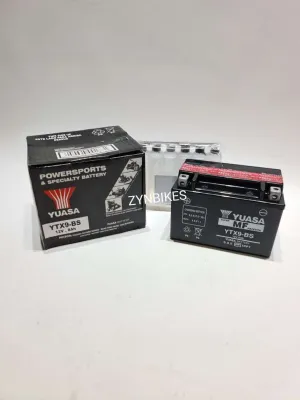
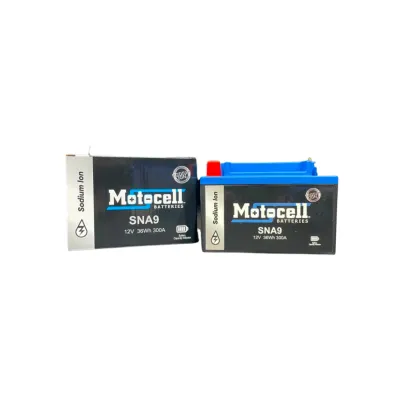
Prices are valid at publication and may change. Please refer to the product page for the latest price.
Understanding YTX9-BS Specifications and Compatibility
To avoid purchasing a battery that does not fit or fails to start your engine, you must understand what the YTX9-BS designation actually means. Originally established by Yuasa, this alphanumeric code defines a highly standardized set of physical and electrical specifications.

In this nomenclature, the “Y” typically denotes the manufacturer standard, “TX” indicates a high-performance, sealed maintenance-free design, “9” represents the performance size class (typically yielding an electrical capacity of 8 Amp-hours to 9 Amp-hours), and “BS” stands for “Bottle Supplied,” meaning the acid electrolyte is packaged separately and added at the time of commissioning.
Physical Dimensions and Terminals
Before purchasing any replacement, you must verify the physical dimensions of your motorcycle’s battery tray. A standard YTX9-BS battery measures approximately 150 mm in length, 87 mm in width, and 105 mm in height.
Because motorcycle battery compartments are engineered with incredibly tight tolerances, even a discrepancy of 2 to 3 millimeters can prevent the hold-down bracket from securing the battery, or cause the seat pan to pinch the terminals. Additionally, you must check the terminal polarity. When looking at the battery with the terminals closest to you, the positive (+) terminal of a YTX9-BS is on the left, and the negative (-) terminal is on the right. Installing a battery with reversed polarity can destroy your motorcycle’s electronic control unit (ECU) and blow critical fuses.
Cold Cranking Amps (CCA)
Although Singapore’s tropical climate eliminates the challenge of freezing winter starts, Cold Cranking Amps remain a vital metric. CCA measures the battery’s ability to deliver a high burst of electrical current to turn over the starter motor.
A higher CCA rating ensures that your engine starts rapidly and cleanly, reducing wear on the starter clutch and preventing voltage drops that can reset your digital instrument cluster. When shopping, look for the rated CCA (typically between 120A and 180A for a YTX9-BS) on the manufacturer’s specification sheet rather than relying solely on the Amp-hour (Ah) capacity.
Verification Step
Always consult your motorcycle’s owner’s manual or examine the label on your existing battery to confirm compatibility before ordering. Common models that utilize this size include various mid-capacity street bikes, adventure motorcycles, and maxi-scooters. Never assume compatibility based solely on engine displacement.
Comparing YTX9-BS Battery Technologies: AGM vs. Lithium vs. Conventional
Evaluating the three primary battery technologies available for the YTX9-BS form factor will help you choose the best match for your motorcycle’s electrical demands and your personal maintenance preferences.
AGM (Absorbent Glass Mat): The Standard Choice
AGM technology represents the modern benchmark for motorcycle starting batteries. Inside an AGM battery, the liquid sulfuric acid electrolyte is completely absorbed into fine fiberglass mats sandwiched between the lead plates. This design makes the battery entirely spill-proof, leak-proof, and highly resistant to the intense vibrations experienced on a motorcycle.
The “BS” (Bottle Supplied) variant requires you to fill the battery with the included acid pack once, after which the battery is permanently sealed. Once sealed, it requires absolutely no top-ups of distilled water. This maintenance-free nature is incredibly convenient for busy riders.
The primary advantage of AGM is its plug-and-play compatibility. It is designed to operate perfectly with the stock stator and regulator-rectifier systems of almost all modern motorcycles. It charges efficiently under normal riding conditions and offers a stable, predictable discharge curve.
The main drawback of AGM is its weight. Weighing around 3 kilograms, it is significantly heavier than modern lithium alternatives. Additionally, lead-acid chemistry is highly vulnerable to sulfation—a process where lead sulfate crystals build up on the plates if the battery is left in a discharged state, leading to permanent capacity loss.
Lithium (LiFePO4): The Performance Upgrade
Lithium iron phosphate (LiFePO4) batteries are the premium alternative to traditional lead-acid options. By replacing heavy lead plates with lightweight lithium chemistry, these batteries offer an incredible weight reduction of up to 70%, often weighing less than 1 kilogram. This reduction in high-mounted weight can noticeably improve a motorcycle’s handling and transition speed through corners.
Every reputable lithium ytx9-bs battery features an integrated Battery Management System (BMS). The BMS is an electronic circuit board inside the casing that monitors individual cell voltages, balances the cells during charging, and protects the battery from over-charging, over-discharging, and short circuits.
The advantages of lithium are compelling: they deliver exceptionally high cranking power, have an extremely low self-discharge rate (allowing the bike to sit for months without losing charge), and can endure up to ten times more charge-discharge cycles than an AGM battery if properly maintained.
However, the safety boundaries and technical requirements of lithium are strict. You must verify that your motorcycle’s charging system operates within a safe voltage range, typically between 14.0V and 14.6V. If your regulator-rectifier fails and spikes above 15.0V, it can destroy the BMS and cause the battery to swell or fail catastrophically. Furthermore, you must never use a standard lead-acid trickle charger that features an automatic desulfation mode, as the high-voltage pulses will ruin the lithium cells. A dedicated lithium-compatible smart charger is mandatory.
Conventional (Wet Cell): The Budget Alternative
Conventional flooded lead-acid batteries, often designated under the “YB” series nomenclature, are the oldest battery technology still in common use. Unlike AGM, the sulfuric acid electrolyte in a conventional battery remains in a free-flowing liquid state around the lead plates.
These batteries feature removable vent caps, allowing you to monitor the internal fluid level. Over time, the heat of charging causes the water in the electrolyte to evaporate, requiring you to periodically open the caps and top up each cell with distilled water to keep the plates submerged.
The sole advantage of conventional batteries is their low initial purchase price, often costing significantly less than an AGM equivalent. They are also relatively forgiving of slight overcharging from older, less precise motorcycle charging systems.
The disadvantages, however, are numerous. They must be mounted strictly upright to prevent highly corrosive sulfuric acid from leaking out of the vent tube and damaging your motorcycle’s frame, swingarm, or paint. They release flammable hydrogen gas during charging, have lower resistance to engine vibrations, and generally suffer from a shorter service life and lower CCA ratings than AGM batteries.
Brand Tiers and Price Expectations
When navigating the market for a ytx9-bs battery, understanding brand tiers will help you balance upfront cost against long-term reliability.
OEM and Premium Aftermarket Brands
Brands like Yuasa, GS Yuasa, and Motobatt sit at the top of the market. Yuasa is the original equipment manufacturer for many major motorcycle brands, meaning their batteries conform to the exact tolerances and quality standards required by the factory. Motobatt offers a unique quad-terminal design that simplifies installation and uses high-density lead plates for superior reliability. Premium lithium brands like Antigravity or Shido offer advanced BMS features, including wireless restart capabilities. These premium options command the highest prices but deliver peace of mind, accurate specification ratings, and the longest overall service life.
Mid-Range and Value Brands
Reputable secondary brands offer an excellent middle ground for daily commuters. These manufacturers produce reliable AGM batteries that meet all safety standards but are priced more competitively. While they may not have the absolute longest lifespan under harsh conditions, they offer excellent value if you maintain them properly. When considering these brands, look for verified user reviews focusing on real-world longevity rather than just initial performance out of the box.
Budget and Unbranded Options
You will frequently encounter extremely cheap, unbranded batteries on general online marketplaces. While the low price is tempting, these batteries carry significant risks. They often feature inflated CCA and capacity ratings, thin lead plates that deteriorate rapidly under vibration, and poor internal welding that can lead to sudden, catastrophic internal failure. Choosing an unbranded battery increases the risk of being stranded on the side of the road with a dead electrical system.
Relative Cost Comparison
To help you budget, consider the relative cost structure of these options. If we establish a mid-range AGM battery as the baseline (1x cost, typically ranging around S$60 to S$90 in the local Singapore market depending on the specific brand and workshop markup), a premium OEM AGM battery will cost approximately 1.3x to 1.5x the baseline.
A high-performance Lithium (LiFePO4) battery will typically cost 2x to 3x the baseline, reflecting its advanced chemistry and integrated electronics. Conversely, a conventional wet cell battery may cost 20% to 30% less than the AGM baseline, though the added maintenance and shorter lifespan often negate these initial savings. Remember to factor in the potential cost of a specialized smart charger (approximately S$50 to S$100) if you choose to upgrade to a lithium system.
Installation, Maintenance, and Safety Checks
Replacing and maintaining your motorcycle battery is a straightforward task, but it requires strict adherence to safety protocols to prevent personal injury or severe electrical damage to your machine.
Safety First
Always wear safety glasses and protective gloves before handling any battery, especially when dealing with older conventional wet cells that may have leaked corrosive acid, or when cleaning white, powdery lead sulfate corrosion from terminal posts. Ensure your motorcycle’s ignition is turned completely off, the key is removed, and the bike is securely resting on its center stand or a stable paddock stand.
Replacement Sequence
When removing the old battery, always disconnect the negative (black, marked with “-“) cable first, followed by the positive (red, marked with “+”) cable. This sequence is critical: if your wrench accidentally touches the motorcycle’s metal frame while loosening the positive terminal with the negative terminal still connected, you will create a massive electrical short circuit that can cause sparks, melt tools, blow the main fuse, or damage the ECU. When installing the new battery, reverse this sequence: connect the positive (+) cable first, and then connect the negative (-) cable.
Terminal Care
Before securing the cables to the new battery, inspect the terminal eyelets on your motorcycle’s wiring harness. If you notice any rust, dirt, or corrosion, clean them thoroughly using a wire brush or fine-grit sandpaper until you see shiny metal. Once the terminals are bolted down tightly, apply a thin layer of dielectric grease or terminal protector spray over the connections. This barrier prevents moisture and oxygen from causing future oxidation, ensuring a consistent, low-resistance electrical connection.
Lithium-Specific Verification
If you are upgrading from an AGM battery to a lithium battery, you must perform a charging system test. Start the motorcycle, let it warm up, and use a digital multimeter set to DC voltage to measure the voltage across the battery terminals while revving the engine to around 4,000 RPM. The reading must stay stable between 14.0V and 14.6V. If the voltage climbs above 14.8V, your regulator-rectifier is faulty and will destroy the lithium battery’s BMS. In this scenario, immediately turn off the engine and consult a qualified professional workshop to repair your charging system before riding.
Storage and Maintenance
Singapore’s persistent tropical heat (frequently exceeding 30°C) accelerates the internal chemical degradation and self-discharge rates of all battery types. If you plan to leave your motorcycle parked or unused for more than two weeks, the constant parasitic draw from the bike’s clock, immobilizer, or aftermarket accessories can drain the battery completely.
To prevent this, connect your battery to a compatible smart maintainer or tender. Ensure the maintainer matches your battery chemistry (AGM or Lithium) to keep the voltage at an optimal storage level without overcharging.
Frequently Asked Questions (FAQ)
Can I use a lithium YTX9-BS battery in an older motorcycle?
You should exercise extreme caution before installing a lithium battery in an older or vintage motorcycle. Many older bikes utilize simple, unregulated, or poorly regulated charging systems that can experience dramatic voltage spikes or fail to output a consistent charging current. These voltage spikes can easily exceed the safe threshold of a lithium battery’s built-in Battery Management System (BMS), leading to premature failure or safety hazards. Before making the switch, use a multimeter to verify that your motorcycle’s charging system voltage remains strictly within the manufacturer-specified limits (usually between 14.0V and 14.6V) throughout the entire RPM range, or consult a professional motorcycle mechanic for an electrical system assessment.
How does Singapore's hot climate affect my motorcycle battery?
Singapore’s hot, humid climate has a significant impact on motorcycle battery health. High ambient temperatures accelerate the internal chemical reactions inside lead-acid and AGM batteries. While this temporarily increases starting power, it also dramatically speeds up internal grid corrosion and water loss, effectively shortening the battery’s overall lifespan. Additionally, heat increases the self-discharge rate, meaning a battery will lose its charge much faster when the motorcycle is parked. To maximize your battery’s life, try to park your motorcycle in shaded areas or underground carparks whenever possible, keep the terminals clean, and connect a smart maintainer if the bike will sit idle for an extended period.
Community discussion
Share your experience or ask a question. Comments are reviewed before publication.