
To select the right Yamalube viscosity grade for your motorcycle, you must match the oil’s flow characteristics with your engine’s design, clutch configuration, and typical riding conditions. For most modern motorcycles on the road today, Yamalube 10W-40 serves as the highly versatile, standard recommendation. However, high-mileage engines or older air-cooled models often require a thicker profile like 20W-50, whereas specific modern fuel-efficient engines might call for a lighter 10W-30 grade.
Choosing the correct viscosity ensures that your engine parts are adequately lubricated from the moment you press the starter button to the peak of a long, hot ride. While viscosity is a critical factor, it is only one part of the lubrication puzzle. To keep your motorcycle running smoothly, you must also look at performance standards like JASO ratings and always cross-reference your selection with your vehicle manufacturer’s official guidelines.
Understanding Motorcycle Oil Viscosity Numbers
Every bottle of Yamalube features a set of numbers and letters, such as 10W-40 or 20W-50, which represent its Society of Automotive Engineers (SAE) viscosity grade. Viscosity is essentially a measure of a fluid’s resistance to flow. A lower viscosity oil flows quickly and easily like water, while a higher viscosity oil is thicker and flows more slowly, resembling syrup.
Products mentioned in this guide
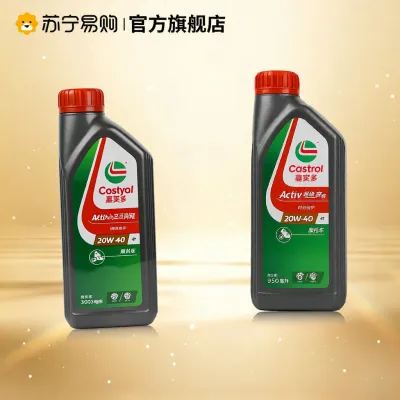
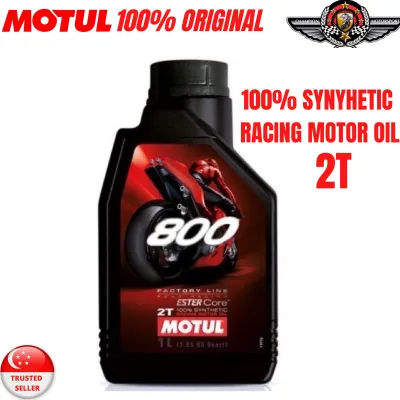
Prices are valid at publication and may change. Please refer to the product page for the latest price.
In a multi-grade motorcycle oil, the dual-number system describes how the fluid behaves across a wide range of temperatures. The first number, followed by the letter “W,” indicates the oil’s cold-flow performance. Contrary to a common misconception among riders, the “W” stands for “Winter,” not weight. A lower winter number, such as 10W, means the oil remains fluid and pumps easily at low startup temperatures, ensuring rapid lubrication to critical engine components immediately after ignition.
The second number in the sequence, such as 40 or 50, represents the oil’s viscosity at normal engine operating temperatures, typically measured at 100°C. This rating indicates the oil’s ability to maintain a robust, protective film over moving parts when the engine is fully warmed up. If this high-temperature viscosity is too low, the oil can thin out excessively, leading to direct metal-on-metal contact and accelerated engine wear.
It is important to remember that viscosity is not a direct measure of oil quality, purity, or overall engine protection. A 20W-50 oil is not inherently better than a 10W-40 oil; it is simply designed for different mechanical clearances and operating environments. The ideal viscosity grade is the one that matches the specific internal clearances and thermal demands engineered into your motorcycle’s engine.
Common Yamalube Viscosity Grades and Their Best Uses
Yamalube formulates several distinct viscosity grades to cater to different engine architectures and riding demands. Understanding these categories helps you narrow down the best choice for your specific machine.

- 10W-40: This is the most versatile and widely used viscosity grade for modern motorcycles. It is engineered to support both liquid-cooled and air-cooled commuter bikes, standard street models, and high-performance sportbikes. Yamalube 10W-40 provides an excellent balance, offering fast oil circulation during initial startup while maintaining a strong, shear-resistant protective barrier when the engine reaches high operating temperatures.
- 20W-50: This thicker grade is primarily designed for older engine designs, high-mileage motorcycles, or large-displacement air-cooled cruisers. These engines often feature wider internal mechanical clearances and run at higher operating temperatures because they lack liquid cooling jackets. The thicker oil film of a 20W-50 grade helps cushion heavy-duty components, seals wider gaps, and prevents oil pressure drops under extreme thermal loads.
- 10W-30 or lower: These lighter viscosity grades are generally reserved for modern, tightly-toleranced engines and smaller scooters designed with fuel efficiency as a priority. Because these engines have highly precise, narrow clearances between moving parts, they require a thinner oil that can flow rapidly without creating excessive internal drag. Using a thicker oil in these engines can restrict flow and reduce fuel economy.
While these general classifications cover most scenarios, they are not universal rules. Engine designs vary significantly between manufacturers, and the definitive choice for your motorcycle must always align with the exact engineering specifications detailed by the manufacturer.
Adapting to Singapore's Tropical Climate and Traffic
Riding in Singapore presents unique environmental challenges that directly influence how motorcycle oil performs inside your engine. The local tropical climate remains consistently warm year-round, with ambient temperatures typically hovering between 27°C and 32°C. Because you will never experience freezing temperatures, extremely low winter grades like 0W or 5W are rarely necessary for cold starts, as the ambient air is already warm enough to keep a 10W or 20W oil highly fluid.
Instead, the primary challenge for local riders is managing extreme heat, which is severely compounded by dense urban traffic. Navigating stop-and-go congestion on major expressways or city streets severely restricts the cooling airflow that your engine relies on. Under these stationary or slow-moving conditions, engine and oil temperatures can spike rapidly, far exceeding the thermal loads experienced during steady highway cruising.
This harsh operating environment makes the high-temperature viscosity rating—the second number in the grade—absolutely critical. An oil with a robust high-temperature rating, such as 40 or 50, resists thinning out under intense thermal stress. It ensures that the oil film remains thick enough to protect your pistons, cylinders, and gearbox gears even when you are idling in midday heat, preventing premature wear and maintaining stable oil pressure.
Beyond Viscosity: Checking JASO Standards and Your Owner's Manual
Selecting the correct viscosity is only half the battle; you must also ensure the oil’s chemical formulation matches your motorcycle’s transmission and clutch design. Before purchasing any Yamalube product, your first step should always be to consult your motorcycle’s Owner’s Manual. This document is the ultimate authority, providing the exact viscosity range, oil capacity, and performance standards required for your engine.
Motorcycles have unique lubrication needs compared to passenger cars because most bikes use a “wet clutch” system, where the engine, transmission, and clutch all share the same oil pool. To address this, the Japanese Automotive Standards Organization (JASO) developed specific standards that you must verify on the back of any Yamalube bottle:
- JASO MA and MA2: These oils are formulated specifically for motorcycles with wet clutches. They contain precise friction characteristics to prevent the clutch plates from slipping under load. JASO MA2 offers even higher friction performance, making it highly suitable for high-torque and sport motorcycles.
- JASO MB: This standard is designed exclusively for automatic scooters that utilize a dry clutch and a continuously variable transmission (CVT). Because the oil does not contact the clutch, JASO MB oils are formulated with friction modifiers to maximize fuel efficiency and reduce internal engine drag.
You must never use standard automotive engine oils in a motorcycle with a wet clutch. Car oils often contain friction-reducing additives designed to maximize fuel economy in passenger vehicles. If introduced into a motorcycle’s wet clutch system, these additives will cause the clutch plates to slip, leading to poor acceleration, severe clutch wear, and eventual transmission failure. Always verify that your chosen Yamalube oil carries the correct JASO certification for your specific drivetrain.
Frequently Asked Questions (FAQ)
Can I mix 10W-40 and 20W-50 Yamalube oils in an emergency?
You should avoid mixing different viscosity grades of Yamalube oils under normal circumstances, as doing so alters the carefully engineered flow and protective properties of the fluid. However, if you find yourself in an emergency where your oil level is dangerously low and the exact grade is unavailable, topping up with a different viscosity is acceptable to prevent running the engine dry. If you must do this, treat it as a temporary fix and plan to perform a complete oil and filter change with the correct single viscosity grade as soon as possible.
Will using a thicker oil like 20W-50 fix an engine that burns oil?
Switching to a thicker oil like 20W-50 may temporarily reduce oil consumption in an aging engine because the thicker fluid is less likely to slip past worn piston rings or valve stem seals. However, this is not a mechanical repair and will not fix the underlying wear. Relying on thicker oil as a permanent solution can lead to poor lubrication during cold starts and increase internal engine drag, which reduces performance and fuel efficiency. If your motorcycle is consistently burning oil, you should seek a professional mechanical inspection to address the root cause.
Community discussion
Share your experience or ask a question. Comments are reviewed before publication.