
Choosing the right brake lever for your Yamaha XMAX depends heavily on your daily riding habits, hand size, and safety priorities. Because the XMAX is a relatively heavy maxi-scooter, managing its braking performance with precision is essential for maintaining control, whether you are navigating tight urban traffic or cruising on long highways. Upgrading your brake levers can significantly improve ergonomics, reduce hand fatigue, and prevent costly damage from accidental drops, but selecting the wrong type can compromise your braking system’s safety.
To find the perfect match, you must weigh the mechanical benefits of standard, adjustable reach, folding, and CNC-machined levers against your primary riding style. City commuters, long-distance tourers, and sporty riders all have distinct ergonomic and leverage requirements. By understanding how each lever design interacts with the XMAX’s hydraulic braking system, you can make an informed decision that enhances both comfort and safety on every journey.
Safety First: Braking System Rules and Installation Boundaries
The braking system on your Yamaha XMAX is your primary safety mechanism, and any modification to it carries inherent risks. A poorly chosen or incorrectly installed brake lever can lead to a catastrophic loss of braking power, sticky levers, or unexpected brake drag. Before purchasing or installing any aftermarket component, you must consult the official Yamaha XMAX service manual for your specific model year to verify torque specifications, pivot pin lubrication requirements, and hydraulic fluid guidelines.
Products mentioned in this guide
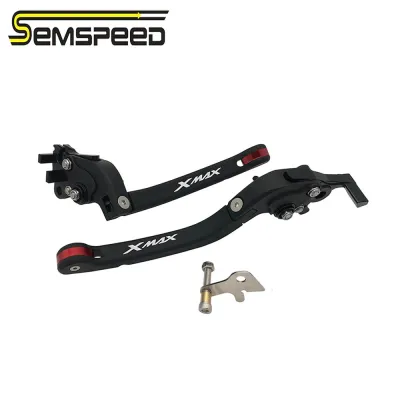
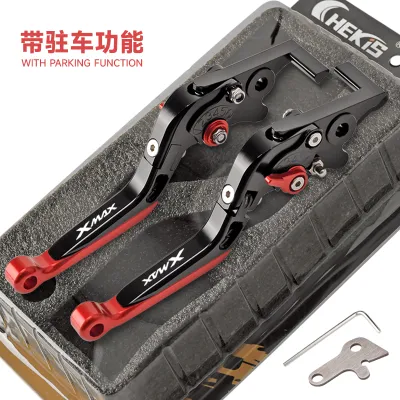
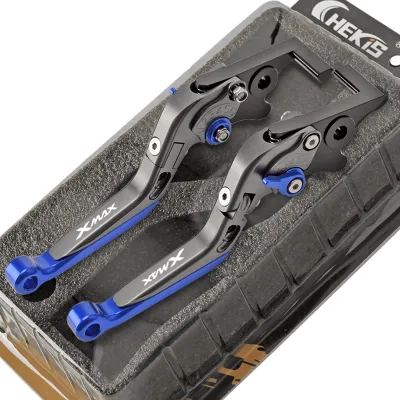
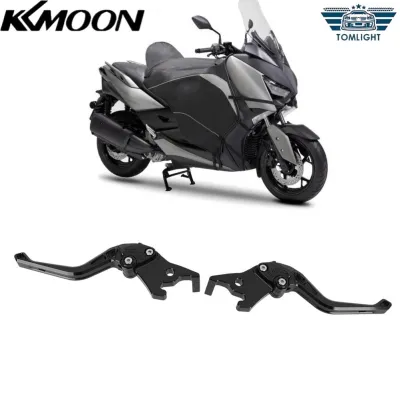
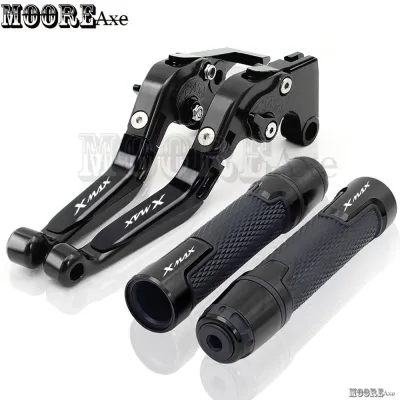
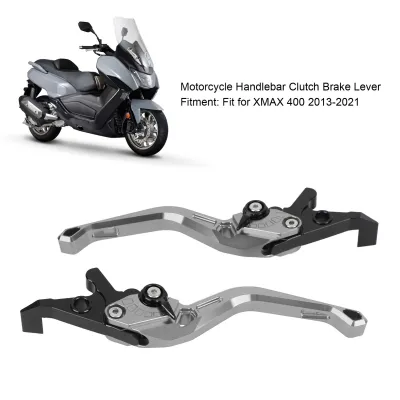
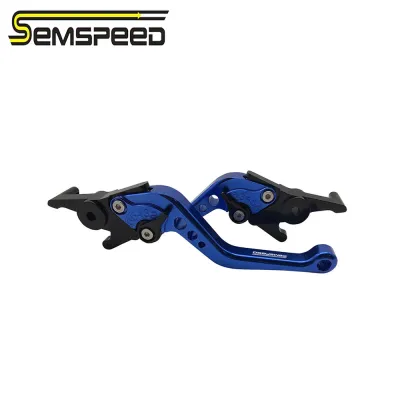
Prices are valid at publication and may change. Please refer to the product page for the latest price.
When undertaking a lever replacement, safety boundaries must be strictly observed. Never squeeze the brake lever while the brake caliper is removed or while the hydraulic system is open. Doing so can push the caliper pistons out of their bores, causing brake fluid leaks, introducing air into the lines, and requiring a complete and complex hydraulic system bleed. Additionally, you must verify that the pivot pin is properly aligned, greased with the manufacturer-recommended lubricant, and torqued to the exact specification to prevent the lever from binding.
If you are unsure about hydraulic line integrity, pivot pin alignment, brake light switch reconnection, or how the lever interacts with the master cylinder piston, stop immediately and seek the assistance of a qualified motorcycle mechanic. Furthermore, aftermarket levers must be carefully checked to ensure they do not interfere with the physical operation of the brake light switch or the ABS (Anti-lock Braking System) sensors. A lever that holds the master cylinder piston slightly compressed can cause the brakes to drag, overheat, and eventually lock up while riding, posing an extreme safety hazard.
Understanding Yamaha XMAX Brake Lever Types
Standard and OEM-Style Levers
Standard and original equipment manufacturer (OEM) style levers serve as the baseline design for the Yamaha XMAX. These levers are engineered to match the factory-specified length and pivot geometry exactly, providing the maximum mechanical leverage intended by Yamaha’s engineers to manage the scooter’s wet weight. Typically manufactured from cast aluminum, OEM-style levers are highly cost-effective and offer a predictable, familiar feel.

However, because cast aluminum is relatively brittle, these levers are prone to snapping completely off rather than bending or folding when subjected to a drop or side impact. This can leave you stranded without operational brakes, making them less ideal for riders who frequently navigate tight spaces where minor tip-overs are common.
Adjustable Reach Levers
Adjustable reach levers feature integrated dials, click-wheels, or stepped adjusters that allow you to alter the physical distance between the handlebar grip and the lever blade. This ergonomic adjustment is highly beneficial for riders with exceptionally small or large hands, as it allows them to position the lever where their fingers can naturally exert the most force without straining.
It is important to note that reach adjustment only changes the starting position of the lever blade; it does not alter the overall length of the lever or its mechanical leverage ratio. When choosing adjustable levers, you must verify that the adjuster mechanism is robust and does not introduce play or compromise the structural rigidity of the lever under hard braking.
Folding and Break-Away Levers
Folding and break-away levers incorporate a mechanical hinge near the pivot point, allowing the lever blade to swing upward or outward in the event of an impact. This design is specifically engineered to prevent the lever from snapping during low-speed drops, parking lot tip-overs, or minor collisions.
For a heavy maxi-scooter like the XMAX, which can be challenging to balance when fully loaded, folding levers offer excellent insurance against being stranded with a broken brake. It is crucial to distinguish true folding levers from rigid “shorty” levers. While some shorty levers are rigid and simply offer a smaller profile, high-quality folding levers maintain a full- or medium-length blade that preserves adequate leverage while offering impact protection.
CNC-Machined and Performance Levers
CNC-machined performance levers are milled from solid blocks of billet aluminum, offering superior material strength, tighter manufacturing tolerances, and a highly precise fit. These premium levers often feature advanced ergonomic shaping, smooth radiused edges that reduce finger pressure points, and durable anodized finishes that resist fading and corrosion.
Some high-end CNC levers also offer adjustable leverage ratios in addition to reach adjustment, allowing you to fine-tune how quickly the brakes engage. While CNC levers provide exceptional aesthetic appeal and a highly rigid, flex-free feel under hard braking, their primary benefit lies in their structural durability and precise mechanical interface with the master cylinder, rather than a fundamental alteration of basic braking physics.
Matching Brake Lever Types to Your Riding Style
City Commuting and Stop-and-Go Traffic
Commuting in highly congested urban environments demands constant brake modulation and exposes your scooter to unique hazards. In stop-and-go traffic, you are frequently filtering through tight lanes, navigating congested parking structures, and stopping at closely spaced traffic lights. For this riding style, folding levers or adjustable reach levers are highly recommended.
Folding levers provide essential protection against the inevitable knocks and minor tip-overs that occur in crowded motorcycle parking lots, ensuring that a simple tip-over does not snap your lever and end your commute. Simultaneously, adjustable reach levers are invaluable for reducing hand fatigue during prolonged stop-and-go riding. By adjusting the lever closer to the grip, you can engage the brakes with a more relaxed hand position, minimizing the strain on your forearm muscles over hours of commuting.
While some riders are tempted by ultra-short “shorty” levers for lane filtering, you should exercise caution. Extremely short levers require a much firmer squeeze because they offer less mechanical leverage, which can rapidly accelerate hand fatigue in heavy traffic. A medium-length folding lever with reach adjustment represents the ideal compromise, offering excellent drop protection, comfortable ergonomics, and sufficient leverage for effortless stops.
Long-Distance Touring and Highway Cruising
For riders who use their Yamaha XMAX for long-distance touring, such as highway cruising across long stretches or taking extended road trips, the priorities shift toward sustained comfort, maximum mechanical leverage, and weather resilience. When riding at highway speeds for hours at a time, your hands must remain relaxed yet ready to perform swift emergency stops.
For touring, standard-length or full-length adjustable reach levers are the superior choice. These levers ensure you retain the maximum mechanical advantage, allowing you to apply full braking force with minimal physical effort, which is critical when your reaction times and muscle strength are tested after hundreds of kilometers on the road.
The physical profile of the lever also plays a significant role in touring comfort. You should look for levers with a wider, flatter front surface and smooth, rounded edges. This design distributes pressure more evenly across your fingers, especially when wearing heavy, padded touring gloves that can dull your tactile feedback. Avoid ultra-short levers entirely for touring applications; they not only reduce your mechanical advantage but can also make high-speed emergency braking feel abrupt, tiring, and difficult to modulate precisely. A full-length, adjustable CNC lever allows you to customize the reach to accommodate thick gloves while ensuring maximum stopping power remains easily accessible.
Aggressive Riding and Sporty Handling
If you enjoy pushing the sporty handling limits of the Yamaha XMAX on twisty roads, your primary focus should be on lever stiffness, precise modulation, and consistent feedback. Sporty riding requires rapid, repeated transitions between throttle and brakes, demanding a lever that responds instantly and predictably to subtle finger inputs.
For this riding style, CNC-machined performance levers are highly recommended. The high rigidity of billet aluminum eliminates the subtle flexing common in cast OEM-style levers, translating your physical squeeze directly into hydraulic pressure with zero wasted movement.
When selecting levers for aggressive riding, look for options that feature high-quality, corrosion-resistant pivot pins and bushings. Any play or wobble in the lever pivot can degrade your braking feel, making it difficult to modulate the brakes smoothly as you trail-brake into corners. If available for your specific XMAX master cylinder setup, levers with adjustable leverage ratios can allow you to fine-tune the initial bite of the brakes to match your preference. While many sporty riders are drawn to vibrant anodized colors and aggressive styling, you must prioritize structural stiffness, ergonomic comfort, and precise mechanical tolerances over purely cosmetic features to ensure safety at higher speeds.
Key Compatibility and Quality Checks Before Buying
Before purchasing any aftermarket brake lever for your Yamaha XMAX, you must perform several critical compatibility and quality checks to ensure a safe, legal, and perfect fit.
- Master Cylinder Compatibility: The Yamaha XMAX has been produced in various engine displacements (such as the 125, 250, 300, and 400) and across multiple design generations, each utilizing distinct master cylinder configurations. You must verify that the aftermarket lever is explicitly designed for your exact model year and engine size. Never assume a lever labeled generally for "Yamaha XMAX" will fit your specific scooter; always match the manufacturer's compatibility list against your original OEM master cylinder part numbers.
- Brake Light Switch Alignment: A critical and frequently overlooked safety aspect is the physical alignment of the brake light switch. The brake lever must feature the exact cutout, tab, or cam profile required to engage and disengage the mechanical or micro-switch that activates your brake tail light. If the aftermarket lever does not actuate this switch correctly, your brake light may remain permanently illuminated or fail to light up at all, creating a severe safety hazard and violating road legality regulations.
- Mirror Mount and Handguard Integration: On many XMAX models, the side mirrors or accessory mounts are integrated directly into or positioned very close to the brake lever brackets. You must check whether the shape and sweep of the aftermarket lever, particularly around the pivot area, interfere with the OEM mirror threads, mirror stems, or aftermarket handguards. Some bulky lever adjusters can rub against these components, restricting the lever's travel and preventing full brake application.
- Material and Finish Quality: Given Singapore's highly humid, tropical climate and frequent exposure to salt air, the material and finish of your brake levers are paramount. Opt for high-quality, marine-grade anodizing or premium billet aluminum construction. Low-grade finishes will quickly fade under intense UV exposure, and cheap steel pivot pins can rust rapidly, leading to binding, stiff lever action, or complete mechanical failure of the pivot mechanism.
Quick Comparison: XMAX Brake Lever Types at a Glance
| Lever Type | Best Riding Style | Primary Advantage | Potential Limitation |
|---|---|---|---|
| Standard / OEM Style | Budget-Conscious / Daily Commuting | Maximum mechanical leverage at a low replacement cost | Brittle cast aluminum can snap easily during minor drops |
| Adjustable Reach | Riders with Small/Large Hands | Customisable grip distance reduces hand fatigue | Adjuster mechanisms can introduce play if poorly manufactured |
| Folding / Break-Away | Urban Commuting & Filtering | Pivots upward/outward to prevent snapping in a tip-over | Slightly heavier and more complex mechanical pivot design |
| CNC Performance | Sporty Riding & Twisties | High rigidity, precise modulation, and premium durability | Higher initial cost and limited impact on basic braking physics |
Frequently Asked Questions (FAQ)
Do I need to bleed the brakes after changing the lever on my XMAX?
If you are only replacing the external lever blade and its associated pivot pin without opening the hydraulic lines or removing the master cylinder, a hydraulic brake bleed is generally not required. However, you must exercise extreme care during the installation process to avoid disturbing the master cylinder piston or reservoir seals. If you notice any fluid leaks, if the lever feels spongy or soft after installation, or if the brake lever pulls all the way to the grip without solid resistance, a full hydraulic system bleed is mandatory to ensure safety.
Are shorty levers safe for everyday riding on a maxi-scooter?
Shorty levers can be safe for riders who naturally use only two fingers for braking and possess sufficient hand strength to compensate for the reduced mechanical advantage. However, because shorty levers are shorter than standard blades, they offer less leverage, requiring you to squeeze significantly harder to achieve the same stopping power. For a heavy maxi-scooter like the Yamaha XMAX, this increased effort can cause rapid hand fatigue during daily commuting and may make emergency stops more difficult for riders with smaller hands or weaker grips.
Can I use adjustable levers with handguards or winter accessories?
Yes, but you must carefully check physical clearances before riding. Some adjustable levers feature bulky adjuster dials, click-wheels, or levers that protrude significantly from the main blade structure. When the reach is set to its widest position, these adjusters can rub against or collide with the inner mounting brackets of handguards, heated grip controllers, or handlebar muffs. Ensure there is complete, unobstructed clearance throughout the lever’s entire range of motion, from fully released to fully squeezed.
Community discussion
Share your experience or ask a question. Comments are reviewed before publication.