
Choosing the right crash protection for your Yamaha MT-03 is a critical decision that directly impacts your motorcycle’s longevity and your financial peace of mind. If you are seeking the absolute highest level of physical defense, full-frame crash bars stand out as the superior choice. These robust steel structures wrap around the upper and lower chassis, distributing impact forces across multiple frame mounting points to safeguard the radiator, engine casings, and fuel tank. However, the ideal option for your motorcycle depends heavily on your daily riding environment, budget, and handling preferences. For riders who primarily navigate dense urban traffic, lightweight frame sliders or mid-tier slip-on engine guards offer a highly practical alternative by preserving the bike’s narrow profile and agile handling.
Yamaha MT-03 Crash Bar Styles: Sliders, Slip-Ons, and Full-Frames
To make an informed decision, you must first understand the structural differences, mounting configurations, and design philosophies behind the three primary crash protection styles available for the Yamaha MT-03. Each style targets a different type of impact and offers a distinct compromise between physical coverage, weight, and aesthetic integration.
Frame Sliders (Bobbins) Frame sliders, often referred to as crash bobbins, represent the most minimalist approach to motorcycle chassis protection. These compact devices typically consist of a high-density plastic or polymer puck—most commonly manufactured from polyoxymethylene (POM), nylon, or polyurethane—mounted to a metal collar. They are designed to bolt directly into the MT-03’s primary engine mount points on the frame. The core engineering principle of a frame slider is to act as a sacrificial contact point during a slide. When the bike falls, the slider keeps the engine casings, frame, and fuel tank shrouds slightly elevated off the ground. The low-friction polymer material allows the motorcycle to slide smoothly along the asphalt, reducing the risk of the frame catching on a road surface imperfection, which could otherwise cause the vehicle to flip and sustain catastrophic structural damage.
Products mentioned in this guide
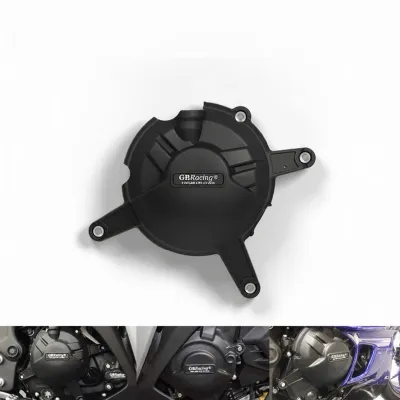
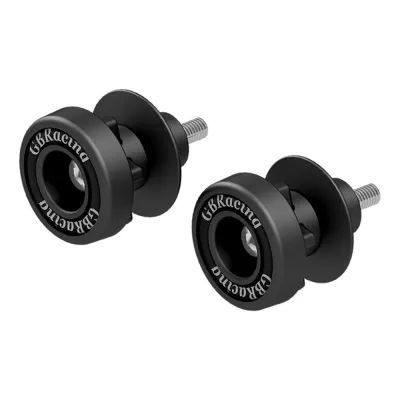
Prices are valid at publication and may change. Please refer to the product page for the latest price.
Slip-On Engine Guards Slip-on engine guards occupy the middle ground between minimalist sliders and full-scale crash cages. These guards are typically constructed from short sections of tubular steel or CNC-machined billet aluminum plates that bolt directly onto the lower engine case mounts or adjacent frame tabs. Unlike full-frame systems, slip-ons do not feature an expansive outer cage that rises up to protect the radiator or upper body panels. Instead, they focus strictly on shielding the highly vulnerable lower engine covers, including the alternator cover on the left side and the clutch cover on the right side. Slip-on guards provide robust, localized impact protection without adding significant visual bulk or widening the motorcycle’s overall profile, making them a popular choice for riders who want targeted structural defense for the engine’s mechanical core.
Full-Frame Crash Bars Full-frame crash bars are comprehensive, heavy-duty tubular steel networks designed to envelop the entire front half of the motorcycle. These systems typically utilize thick-walled steel tubing, often 22mm to 25mm in diameter, to construct a protective cage around the MT-03’s liquid-cooled parallel-twin engine, radiator, and upper fuel tank fairings. The defining safety benefit of a full-frame crash bar is its multi-point mounting strategy. Instead of transferring all impact energy into a single engine bolt, a full-frame cage distributes the force across three or more distinct frame mounting points on each side of the chassis, often connected by a structural cross-brace running beneath the radiator. This structural redundancy ensures that even in a high-energy impact, the localized force is dissipated throughout the entire motorcycle frame, significantly reducing the likelihood of cracked engine cases or bent frame tabs.
Which Crash Bar Style Offers the Best Protection for Your Ride?
Evaluating which style of crash protection is appropriate for your Yamaha MT-03 requires a careful assessment of your riding habits, typical road conditions, and how much weight and visual change you are willing to accept on your machine.

Urban Commuting and Low-Speed Drops For riders navigating highly congested urban environments, such as the dense city streets and tight multi-story parking structures of Singapore, low-speed tip-overs and stationary drops represent the most frequent hazards. In these scenarios, the primary goal of crash protection is to prevent expensive cosmetic damage to the MT-03’s plastic fairings, turn signals, and handlebar levers. Frame sliders or lightweight slip-on guards are highly effective for this type of riding. Their compact design ensures the motorcycle maintains its narrow cross-section, which is vital for safe and agile lane filtering through tight traffic gaps. Bulky full-frame bars can widen the bike’s physical footprint, increasing the risk of accidentally clipping car bumpers or structural pillars in narrow parking bays.
Touring and Highway Riding If your riding profile includes frequent highway commuting or long-distance touring, the physical dynamics of a potential accident change dramatically. A slide at highway speeds involves prolonged friction and high-energy kinetic forces that can quickly grind down a standard plastic frame slider puck, eventually exposing the metal engine casing underneath to abrasive asphalt. Furthermore, high-speed impacts carry a much greater risk of the motorcycle striking roadside barriers, curbs, or other vehicles. Full-frame crash bars provide the robust structural barrier needed to withstand these severe forces. By keeping the entire side of the motorcycle elevated and absorbing the initial impact energy across multiple chassis points, a full-frame system maximizes the chances that your engine, radiator, and frame remain structurally intact after a high-speed incident.
Weight and Handling Trade-offs One of the Yamaha MT-03’s most celebrated characteristics is its lightweight, agile, and highly responsive handling, which makes it an exceptionally fun and approachable naked streetfighter. Installing aftermarket accessories directly impacts this dynamic. A complete set of heavy-duty steel full-frame crash bars can add anywhere from 4 to 8 kilograms of weight to the upper portion of the motorcycle’s chassis. This added mass can raise the bike’s center of gravity, which may subtly slow down steering transitions, make the bike feel heavier when tipping into corners, and slightly alter the front-to-rear weight bias. Conversely, frame sliders and minimalist slip-on guards add negligible weight—usually under 1.5 kilograms—allowing you to preserve the original, nimble handling characteristics engineered by Yamaha.
Aesthetics and Clearance The aesthetic appeal of a naked streetfighter lies in its aggressive, stripped-back, and exposed mechanical design. Full-frame crash bars can dramatically alter this visual identity, giving the MT-03 a more rugged, adventure-oriented, or even utilitarian appearance that some riders feel detracts from its sporty lines. Beyond aesthetics, physical clearance is a critical safety consideration. You must ensure that any installed crash protection does not compromise the motorcycle’s maximum lean angle during cornering. Some lower-quality or overly wide crash bars can scrape against the tarmac during deep leans, which can lift the rear tire and cause a low-side crash. Additionally, ensure the bars do not restrict your legroom or interfere with your shins when reaching for the foot controls.
Critical Compatibility Checks Before Buying an MT-03 Crash Bar
Before purchasing any crash protection system, you must perform several rigorous compatibility and technical checks to guarantee the product will fit your specific motorcycle safely and perform as intended during an impact.
Model Year and Chassis Revisions The Yamaha MT-03 has undergone several design evolutions and chassis updates since its introduction, with a major styling and structural facelift occurring around the 2020 model year. These design updates introduced new radiator shrouds, modified plastic fairings, and subtle changes to the routing of electrical wiring and coolant hoses. Consequently, a crash bar designed specifically for a pre-2020 MT-03 will almost certainly fail to clear the bodywork or align with the mounting brackets of a post-2020 model. Never rely on generic product listings that claim universal compatibility across all production years. Always verify your motorcycle’s exact manufacturing year and consult the crash bar manufacturer’s official compatibility documentation to ensure a precise fit.
Material and Climate Considerations The materials used in your crash protection system must be selected to withstand both impact forces and your local environmental conditions. In humid, tropical climates like Singapore, constant exposure to moisture and salt-laden air can rapidly accelerate corrosion on low-grade metals. If you choose steel crash bars, ensure they are constructed from high-tensile, seamless steel tubing that has been treated with a durable, multi-stage powder coating or electrophoretic deposition (EPD) finish to prevent rust from developing inside and outside the tubes. For frame sliders, verify that the pucks are made from UV-stabilized polymers that will not become brittle or crack after prolonged exposure to intense tropical sunlight. Aluminum components should be high-grade billet (such as 6061-T6 aircraft-grade aluminum) and anodized to resist oxidation.
Interference and Clearance Checks A poorly designed or incorrectly sized crash bar can introduce severe safety hazards by interfering with the motorcycle’s mechanical operations. Before finalizing your purchase, verify that the crash bar specifications guarantee adequate clearance in several critical zones:
- Radiator and Hoses: The bars must not pinch or rub against the delicate aluminum fins of the radiator or any coolant hoses, as engine vibrations can cause these contact points to wear through over time.
- Exhaust Headers: Ensure there is sufficient clearance between the crash bar tubing and the hot exhaust headers to prevent heat damage or clearance issues during engine movement.
- Front Suspension Travel: Under heavy braking, the front forks compress significantly; the crash bar must not interfere with the front fender or the fork legs at full suspension travel.
- Steering Radius: Turn the handlebars completely from lock to lock to confirm that the triple clamps, forks, and control cables do not strike the crash bar structure, as any restriction of the steering radius is highly dangerous.
Mounting Hardware Requirements The structural integrity of any crash bar system is entirely dependent on the quality of its mounting hardware. High-quality kits should always include replacement high-tensile steel bolts (typically grade 8.8 or 10.9) and precision-machined aluminum or steel spacers. You must never reuse the original equipment manufacturer (OEM) engine mount bolts to secure a crash bar. The OEM bolts are precisely tensioned and sized for the stock frame configuration; adding the thickness of a crash bar mounting bracket means the stock bolts will not have sufficient thread engagement into the engine block, which can lead to stripped threads or structural failure under load.
Safe Installation Practices and When to Seek Professional Help
Installing motorcycle crash protection involves working directly with the structural bolts that secure the engine to the frame. To ensure your safety and protect your motorcycle from costly mechanical damage, you must follow strict installation protocols.
Preparation and Support Because many crash bar systems require you to temporarily remove one or more of the primary engine mounting bolts, you must never attempt this installation while the motorcycle is resting on its side stand. Doing so can cause the engine to shift or sag within the frame under its own weight, making it nearly impossible to realign the bolt holes and potentially damaging the frame threads.
- Place the motorcycle securely on a stable paddock stand or center stand on flat, level ground.
- Support the weight of the engine from underneath using a mechanical scissor jack. Place a thick block of wood between the jack and the engine oil pan to distribute the weight evenly and prevent damage to the metal casing.
- Only remove one engine mount bolt at a time, install that section of the crash bar loosely, and then move to the next bolt to minimize any potential engine shifting.
Alignment and Torque Specifications When installing the crash bar brackets and tubes, always thread all bolts in by hand for at least four to five full turns before using any hand tools. This practice ensures that the bolts are properly aligned and prevents catastrophic cross-threading into the engine block’s aluminum threads.
- Leave all mounting bolts slightly loose during the initial assembly phase to allow for minor adjustments and alignment of the tubular structures.
- Once all components are properly aligned and hand-tightened, use a high-quality, calibrated torque wrench to tighten every bolt to the exact torque specifications specified in the Yamaha service manual or the crash bar manufacturer's instructions.
- Apply a medium-strength thread-locking compound (such as blue Loctite) to the bolt threads to prevent them from backing out due to normal engine vibrations.
When to Stop and Consult a Professional Motorcycle chassis work carries a high risk of expensive damage if mistakes are made. You must establish clear boundaries for when to stop the DIY process and seek professional mechanical assistance:
- Thread Resistance: If any bolt encounters stiff resistance while being threaded by hand, stop immediately. Forcing the bolt with a wrench will strip the threads inside the engine block, requiring a costly thread repair insert (such as a HeliCoil).
- Misalignment: If the crash bar mounting brackets do not line up naturally with the frame holes by more than a few millimeters, do not attempt to force them into place using leverage tools, as this can introduce permanent stress into the motorcycle frame.
- Modification Requirements: If the installation instructions specify drilling into the frame, cutting or modifying the plastic fairings, or rerouting critical wiring harnesses, and you do not possess the specialized tools or experience, take the bike to a qualified professional workshop.
- Conflicting Instructions: If the provided installation manual conflicts directly with your motorcycle's actual physical layout, stop and contact the manufacturer or a professional technician to verify compatibility.
Post-Installation Verification Once the installation is complete, perform a thorough, multi-step safety check before taking the motorcycle out onto public roads.
- Static Steering Check: Sit on the bike and turn the handlebars fully to the left and right locks multiple times. Verify that no cables are stretched, no brake lines are pinched, and the handlebars do not touch the crash bar structure.
- Visual Inspection: Check all surrounding bodywork and fairing panels to ensure there are no unnatural gaps, rubbing, or physical tension that could cause the plastics to crack under engine vibration.
- Low-Speed Test Ride: Conduct a brief test ride in a secure, low-speed environment (such as an empty parking lot). Listen carefully for any unusual vibrations, metallic rattling, or buzzing sounds, which indicate a loose bolt or a contact point that requires adjustment. Re-torque all bolts after the first 100 kilometers of riding to account for any initial settling of the hardware.
Frequently Asked Questions (FAQ)
Do frame sliders offer the same protection as full crash bars?
No, frame sliders do not provide the same level of comprehensive protection as full crash bars. Frame sliders are designed as localized, sacrificial contact points that excel at preventing minor cosmetic damage and shielding the engine during low-speed tips or simple slides. However, they cannot distribute heavy impact forces across multiple chassis points like a full-frame cage does. In a high-speed accident or a collision with an obstacle, a frame slider can bend, snap, or transfer concentrated kinetic energy directly into a single engine mount, potentially cracking the engine block. Full-frame crash bars encase vital components like the radiator and upper fairings, offering superior defense against severe structural damage.
Will installing aftermarket crash bars void my Yamaha warranty?
In most jurisdictions, simply installing a high-quality, bolt-on aftermarket accessory like a crash bar will not automatically void your entire Yamaha factory warranty. However, warranty coverage is highly conditional. If an aftermarket crash bar is installed incorrectly, is structurally incompatible with your MT-03, or fails during operation—subsequently causing direct damage to the motorcycle’s frame, engine casings, or electrical system—Yamaha will likely deny warranty claims related to that specific damage. To safeguard your warranty, always choose reputable, certified brands, follow the manufacturer’s exact installation instructions, or have the system installed by an authorized service center.
Can I install MT-03 crash bars myself at home?
Whether you can safely install MT-03 crash bars at home depends entirely on the style of protection you choose and your mechanical experience. Minimalist frame sliders and basic slip-on engine guards are generally DIY-friendly, provided you have a stable paddock stand, a scissor jack to support the engine, and a calibrated torque wrench. However, full-frame crash bars often involve complex mounting sequences, tight clearances around the radiator, and the temporary removal of critical structural engine bolts. If a kit requires modifying your bike’s fairings, rerouting cables, or if you lack a high-quality torque wrench, it is highly recommended to have the installation performed by a qualified professional motorcycle technician to ensure your safety and the structural integrity of your motorcycle.
Community discussion
Share your experience or ask a question. Comments are reviewed before publication.