
Maintaining your motorcycle’s drive chain is one of the most critical DIY tasks you can perform to ensure smooth power delivery, prolong sprocket life, and maintain riding safety. When it comes to lifting the rear wheel of your motorcycle to perform this maintenance, choosing the right Yamaha stand setup is the first decision you must make. The choice between an integrated center stand and an external rear paddock stand depends heavily on your specific Yamaha model, your available workspace, and the depth of maintenance you intend to perform.
For quick, routine chain lubrication, an OEM center stand offers unmatched convenience, provided your bike’s chassis is designed to support one. However, for thorough deep cleaning, sprocket inspections, and precise chain tension adjustments, a rear paddock stand is generally superior because it leaves the rear axle and swingarm completely unobstructed. Understanding the mechanical differences, stability trade-offs, and compatibility limits of each option will help you establish a safe and efficient maintenance routine.
Key Comparison Dimensions for DIY Chain Care
To choose the right lifting method, you must understand how each option performs during hands-on garage work. Chain maintenance is a tactile, repetitive task that requires spinning the wheel, scrubbing links, and applying torque to adjust tension. Evaluating these stands across key operational dimensions ensures you select the tool that matches your mechanical needs and physical workspace.
Products mentioned in this guide
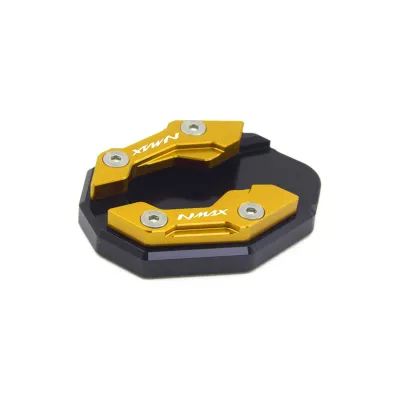
Prices are valid at publication and may change. Please refer to the product page for the latest price.
Rear Wheel Access and Rotation Freedom
When you are cleaning a motorcycle chain, your primary physical requirement is the ability to rotate the rear wheel smoothly and continuously. A rear paddock stand excels significantly in this department. By lifting the bike from the swingarm—typically using spools (bobbins) screwed into the factory-threaded holes of your swingarm—the paddock stand keeps the entire rear axle area free from obstruction. This setup allows you to spin the rear wheel with one hand while using a chain cleaning brush with the other. There are no structural components of the stand blocking your access to the rear sprocket, the chain run, or the wheel rim itself, making it highly efficient to wipe down the links and apply lubricant evenly.
In contrast, an OEM center stand lifts the motorcycle from the middle of the frame, which can introduce physical clearance challenges depending on your specific Yamaha model. While the rear wheel does clear the ground, the center stand’s physical legs and crossbar sit directly beneath the swingarm pivot. This positioning can place metal brackets and the stand’s spring mechanism in close proximity to the lower run of the chain. If you are working on a model with a compact chassis, you may find that your cleaning brushes or hands constantly bump into the deployed center stand. Furthermore, some aftermarket or factory exhaust pipes route directly under the engine, meaning the center stand must fold up around the exhaust, leaving very little finger room to access the front sprocket area or the lower chain guard during a deep clean.
Stability and Safety During Maintenance
Stability is paramount when you are applying physical force to your motorcycle. Cleaning a dirty chain requires vigorous scrubbing with a three-sided brush to remove accumulated road grime, sand, and old grease. If you are using a rear paddock stand, the bike’s stability depends entirely on the quality of the stand’s frame, the alignment of the adapters, and the surface beneath the wheels. While a high-quality paddock stand with wide-set wheels and secure spool hooks is incredibly stable, there is always a minor risk of slippage if the stand is not aligned correctly before lifting. Applying heavy lateral scrubbing force to a bike supported only by a paddock stand on a slick or uneven surface can cause the swingarm to shift on the adapters, which could lead to a catastrophic tip-over.
A factory-installed center stand, however, offers a much more stable and integrated lifting platform. Because it is bolted directly to the motorcycle’s main frame, it distributes the bike’s weight evenly across two wide, solid metal feet. Once deployed on a flat surface, the bike is exceptionally secure. You can scrub the chain, break loose stubborn sprocket bolts, or perform adjustments with minimal risk of the bike sliding off the stand. This built-in stability is particularly advantageous for riders in urban environments, such as Singapore, where DIY maintenance is often performed in shared parking structures or outdoor paved areas. In these scenarios, the self-contained security of a center stand provides peace of mind that a separate, external stand simply cannot match.
Setup Effort and Garage Storage
The ease with which you can lift your bike determines how frequently you will perform routine chain maintenance. A center stand is the ultimate winner in terms of convenience. It is permanently attached to your Yamaha, meaning it is always with you wherever you ride. Deploying it requires no tools, no setup, and very little physical effort once you master the technique of stepping on the tang and pulling the bike backward. When you finish your maintenance, you simply push the bike forward off the stand, and it retracts automatically. For riders who want to quickly apply chain lube after riding through wet weather, the instant availability of a center stand is unmatched.
A paddock stand, on the other hand, requires a multi-step preparation process. You must retrieve the stand from your storage area, wheel it over to the rear of the motorcycle, align the lifting cups or spool hooks with your swingarm, and carefully apply downward leverage on the handle while keeping the motorcycle balanced upright. This process can be intimidating for solo riders, as holding a heavy motorcycle upright with one hand while operating the stand with the other requires practice and confidence. Additionally, paddock stands are bulky metal structures that do not fold down. If you live in a compact apartment or have limited garage storage space, finding a dedicated spot to store a rear paddock stand when it is not in use can be a significant drawback.
Model Compatibility and Mounting Points
Before deciding on a stand, you must verify what your specific Yamaha model can actually support. Many modern sport, naked, and retro-classic Yamahas—such as the MT-07, MT-09, YZF-R7, and XSR700—do not come equipped with center stands from the factory. In many cases, you cannot even install an aftermarket center stand because the under-engine exhaust routing, low-slung catalytic converters, and compact swingarm designs leave no physical space for the mounting brackets or the stand’s retracted path. For these models, a rear paddock stand is not just an alternative; it is the only viable DIY lifting solution.
Conversely, adventure and touring models like the Yamaha Tracer 9 or Ténéré 700 are often designed with factory mounting points for center stands, and some trim levels include them as standard equipment. If your bike has these factory mounting bosses, you can easily purchase and bolt on an OEM center stand. However, you must always consult your owner’s manual or check with an authorized dealer to confirm compatibility. Never attempt to force an aftermarket center stand onto a frame that lacks the dedicated factory mounting lugs, as doing so can compromise ground clearance, interfere with suspension travel, or damage key engine components.
Feature Comparison: Center Stand vs Paddock Stand
To help you visualize the trade-offs between these two lifting methods, the following table summarizes their performance across key maintenance and storage features.

| Feature | OEM Center Stand | Rear Paddock Stand |
|---|---|---|
| Lift Mechanism | Integrated pivot bolted to the frame chassis | External lever frame lifting the rear swingarm |
| Chain/Sprocket Obstruction | Moderate (legs/springs near lower chain run) | None (axle and sprocket fully clear) |
| Wheel Rotation Ease | Good (but requires hand clearance check) | Excellent (unobstructed 360-degree rotation) |
| Setup Time | Instant (deployed with foot lever in seconds) | Manual (requires alignment and lifting effort) |
| Storage Requirement | None (always carried on the motorcycle) | Dedicated floor/wall space in your garage |
| Compatibility | Limited (adventure, touring, and select nakeds) | Universal (most bikes with swingarm spools) |
Note: Before purchasing a paddock stand, always verify the exact swingarm spool thread size and pitch specified in your Yamaha’s documentation. Most modern Yamaha sport and naked bikes require M6 x 1.5mm spools, but aftermarket accessories or older models may vary.
How to Choose the Right Yamaha Stand for Your Motorcycle
Selecting the best lifting solution requires balancing your motorcycle’s design with your maintenance habits and storage constraints. Use the following decision framework to guide your purchase:
Choose a Center Stand if:
- Your Yamaha model has factory mounting points: Models like the Tracer 9, Ténéré 700, or older FZ series often support direct installation of OEM or high-quality aftermarket center stands.
- You primarily perform quick, routine chain lubrication: If your main goal is to quickly apply chain lube every few hundred kilometers, the instant deployment of a center stand is highly efficient.
- You have limited garage storage space: If you live in a high-rise apartment or shared housing with no dedicated garage space, a center stand is always on the bike and requires zero storage.
- You ride long distances: Having a built-in stand allows you to perform emergency chain adjustments or puncture repairs while on road trips far from home.
Choose a Paddock Stand if:
- Your bike lacks center stand mounts: For sport and naked models like the YZF-R1, YZF-R6, YZF-R3, MT-15, MT-03, MT-07, or MT-09, a paddock stand is often the only practical option.
- You perform deep chain cleaning: If you regularly use specialized chain cleaners to strip off old grease and grime, the completely unobstructed rear wheel access of a paddock stand makes the job much easier.
- You need to perform advanced maintenance: Tasks like adjusting chain tension, replacing sprockets, or removing the rear wheel for tire changes are significantly safer and easier when the bike is supported by a paddock stand.
- You have a dedicated garage or storage area: If you have a secure space to store the stand when it is not in use, the bulkiness of a paddock stand is not a major issue.
Verify First if:
- You have aftermarket modifications: If you have installed an aftermarket exhaust system, verify that it does not block the mounting points or the physical swing path of a center stand.
- You are unsure of spool specifications: Always check your owner's manual to confirm the correct spool thread size before buying paddock stand adapters.
- You are performing suspension work: Neither stand is suitable for front suspension disassembly on its own; always consult a professional technician for complex front-end work.
Essential Safety Rules for Lifting Your Motorcycle
Lifting a heavy motorcycle carries inherent risks of injury or property damage if proper safety protocols are not followed. Whether you are using an integrated center stand or an external paddock stand, always adhere to these critical safety guidelines:
Work on a Flat, Level, and Solid Surface: Never attempt to lift your motorcycle on a sloped driveway, wet tiles, or soft ground. The stand’s feet or casters must rest on stable, dry concrete or asphalt to prevent the bike from shifting or sinking. If you are working in a shared parking structure, choose a well-lit, level bay away from moving traffic.
Secure the Front Wheel: When using a rear paddock stand, the front wheel must remain perfectly straight and stationary. Use a front brake lever lock (or a heavy-duty rubber band) to keep the front brake engaged while you lift the rear. This prevents the motorcycle from rolling forward and slipping off the stand’s adapters during the lifting process.
Never Run the Engine in Gear: This is the most critical safety rule for DIY chain maintenance. Never run the engine with the motorcycle in gear while it is supported on a stand to clean or lubricate the chain. Attempting to let the engine spin the wheel while you hold a brush or rag can lead to catastrophic finger injuries if your hand gets drawn into the sprocket. Always keep the ignition off, place the transmission in neutral, and rotate the rear wheel slowly by hand.
Check Product Labels and Manufacturer Instructions: Before applying any solvent, degreaser, or lubricant to your chain, check the product label to ensure it is safe for your specific chain type (such as O-ring, X-ring, or Z-ring chains). Some aggressive solvents can degrade the delicate rubber seals inside the chain links, leading to premature chain failure. If the product instructions conflict with your Yamaha owner’s manual, always prioritize the motorcycle manufacturer’s guidelines or consult a qualified professional mechanic.
Frequently Asked Questions (FAQ)
Can I install an aftermarket center stand on a Yamaha that didn't come with one?
If your Yamaha model was not designed with factory-welded mounting bosses on the frame, you should not attempt to retrofit a center stand. Modifying the frame by welding or drilling compromises its structural integrity, voids your manufacturer warranty, and can create severe safety hazards while riding. For models without factory mounting points, a high-quality rear paddock stand is the only safe and non-destructive lifting solution.
Do I need a front paddock stand to use a rear paddock stand?
For basic chain cleaning, lubrication, and tension adjustments, a rear paddock stand alone is perfectly sufficient. The motorcycle remains highly stable when supported by the rear stand and its own front wheel resting on the ground. A front paddock stand is only necessary if you need to lift both wheels simultaneously, such as for winter storage, front fork maintenance, or front tire replacement. Always ensure the rear stand is securely engaged before attempting to lift the front of the motorcycle.
Community discussion
Share your experience or ask a question. Comments are reviewed before publication.