
Selecting a dash cam for your vehicle in Singapore requires balancing video clarity, heat resilience, and strict local regulations. The Wolfbox MF100 has emerged as a popular candidate in the market, but deciding whether to choose it over other Land Transport Authority (LTA) compliant alternatives depends on a careful evaluation of your specific driving habits, installation preferences, and budget. To make an informed decision, you must look beyond marketing claims and analyze how each device handles the tropical climate, vehicle integration, and legal mounting requirements.
Understanding LTA Compliance Requirements
Before purchasing any dash cam, ensuring it complies with local regulations is essential for road safety and legal operation. The Land Transport Authority (LTA) maintains guidelines to ensure that aftermarket accessories do not compromise driver safety or vehicle integrity.
The primary regulatory concern is the mounting position of the dash cam. Any device attached to the windscreen must not obstruct the driver’s direct line of sight. Typically, the optimal mounting zone is behind the rearview mirror, keeping the camera within the sweep of the windscreen wipers without encroaching on the critical viewing angle of the driver. You should measure the physical dimensions of the Wolfbox MF100 and compare them against your vehicle’s windscreen real estate to ensure it can be positioned safely.
Products mentioned in this guide
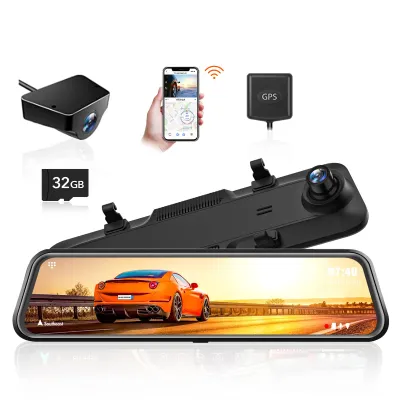
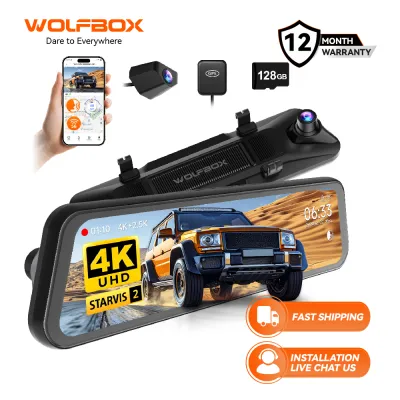
Prices are valid at publication and may change. Please refer to the product page for the latest price.
Another critical compliance factor involves the device’s screen and interface. Under local regulations, active screens that display moving images or distracting graphics while the vehicle is in motion are restricted to prevent driver distraction. When evaluating the Wolfbox MF100 or alternative models, verify if the firmware includes an automatic screen-saver or auto-dimming function. This feature should turn off the live video feed within a few seconds of starting the engine, leaving only a subtle recording indicator active.
To verify compliance claims, do not rely solely on online marketplace listings. Instead, inspect the official product packaging, user manuals, or the manufacturer’s official website for recognized certification marks. Look for compliance documentation indicating that the device meets local radio frequency and electrical safety standards, which ensures the dash cam will not interfere with your vehicle’s onboard diagnostic systems or emergency sensors.
Core Specifications to Evaluate
When comparing the Wolfbox MF100 against other dash cams, technical specifications dictate how well the device performs under challenging lighting conditions. Singapore’s urban environment features a mix of bright tropical sunlight and highly shaded multi-story car parks, requiring a sensor capable of rapid exposure adjustment.

Begin by verifying the native resolution and sensor types listed on the product spec sheet. Some budget models claim high-definition output but achieve this through software upscaling, which distorts fine details like license plates. Look for physical sensor specifications, such as High Dynamic Range (HDR) or Wide Dynamic Range (WDR) capabilities. These technologies allow the camera to capture clear footage when transitioning from bright outdoor roads into dark tunnels or basement parking lots.
The field of view (FOV) is another critical metric that influences footage utility. A wider FOV, typically between 130 and 170 degrees, allows the camera to capture adjacent lanes and pedestrian pathways. However, an excessively wide FOV can introduce a “fish-eye” effect, which distorts distances and makes vehicles appear further away than they actually are. Compare the stated FOV of the Wolfbox MF100 with alternative models, keeping in mind that a balanced FOV of 140 degrees often provides the best compromise between lateral coverage and distance accuracy.
Perhaps the most vital hardware consideration for local drivers is the power storage design. Singapore’s intense heat can cause the interior of a parked car to reach extreme temperatures. Traditional lithium-ion batteries are highly susceptible to swelling, leaking, or failing under these conditions, posing a safety hazard. Supercapacitors, on the other hand, are designed to withstand high temperatures and offer a much longer operational lifespan. Always check the technical specifications of the Wolfbox MF100 and its competitors to confirm they utilize a supercapacitor design rather than a standard battery.
Evaluating Advanced Features and Trade-Offs
Advanced features can significantly enhance the utility of your dash cam, but they also introduce technical trade-offs and additional installation requirements. Parking surveillance is a highly sought-after feature that records incidents while your vehicle is unattended, but it demands careful power management.
To utilize parking mode safely, you must install a dedicated hardwiring kit that connects the dash cam directly to your vehicle’s fuse box. This setup allows the camera to draw power when the ignition is turned off. However, continuous recording can drain your car battery, potentially leaving you stranded. When comparing the Wolfbox MF100 to other brands, check if the hardwiring kit features an adjustable low-voltage cutoff. This safety mechanism automatically shuts down the dash cam if the vehicle’s battery voltage drops below a specific threshold, preserving enough power to start the engine.
Wireless connectivity is another feature that varies widely between models. Dash cams equipped with built-in Wi-Fi allow you to download footage directly to your smartphone via a proprietary app. While convenient, app performance can sometimes be slow or unstable depending on the local wireless environment. For critical situations, retrieving the physical SD card and reading it on a computer remains the most reliable method. Ensure any model you choose supports high-endurance microSD cards capable of continuous write cycles.
Some dash cams also offer GPS logging and Advanced Driver Assistance Systems (ADAS) alerts, such as lane departure warnings. While GPS logging is useful for proving your speed and location in an insurance claim, ADAS alerts can sometimes become repetitive or distracting in dense city traffic. Evaluate whether these alerts can be customized or disabled entirely in the settings menu of the Wolfbox MF100 or alternative models to maintain a calm driving environment.
Installation, Warranty, and Local Support
The total cost of ownership for a dash cam includes not just the purchase price, but also the installation and long-term support. Because modern vehicles feature complex electrical systems and sensitive side-curtain airbags, professional installation is highly recommended over DIY routing.
Improperly routed cables can interfere with airbag deployment or damage interior trim panels. If you decide to hardwire the Wolfbox MF100 or an alternative model for parking mode, consult a qualified automotive technician. A professional installer will ensure that the wiring bypasses safety systems correctly and connects to the appropriate fuses, adhering strictly to your vehicle manufacturer’s electrical guidelines. Professional installation services in Singapore typically range from S$50 to S$150 depending on the complexity of the vehicle’s wiring.
Warranty coverage is another critical factor when choosing between the Wolfbox MF100 and other brands. Dash cams purchased through parallel import channels or unauthorized online sellers may lack local warranty support, requiring you to ship the unit overseas for repairs. Check if the brand has an authorized local distributor in Singapore that offers a comprehensive warranty, ideally covering both parts and labor for at least twelve months.
Having access to a local service center simplifies troubleshooting, firmware updates, and hardware replacements. If a dash cam fails to record or experiences software glitches, a local support team can provide immediate assistance or swap out defective components. Before finalizing your purchase, research the reputation of the local distributor’s customer service to ensure you will not be left without a working camera when you need it most.
Decision Framework: Choosing the Right Dash Cam
To choose the right dash cam, you must align the technical capabilities of the Wolfbox MF100 or its competitors with your driving habits and vehicle configuration. There is no single model that suits every driver, making a conditional approach necessary.
Consider the Wolfbox MF100 if its verified specifications, physical dimensions, and price point align with your budget, and if its mounting bracket is compatible with your windscreen’s angle. It serves as a practical choice for drivers who want reliable daily recording without paying a premium for brand names, provided you verify that its screen auto-dimming features comply with local distraction laws.
Conversely, you may want to choose established alternative brands if you prioritize an extensive local service network, specialized parking mode features, or proprietary cloud connectivity. Drivers who frequently park in unshaded, high-temperature areas should prioritize models with proven supercapacitor reliability and advanced low-voltage protection kits.
Before making any purchase, physically inspect your vehicle’s interior. Ensure that the camera’s dimensions will not block your view, that the mounting mechanism is compatible with your windscreen glass, and that the wiring path does not obstruct any safety systems.
Frequently Asked Questions (FAQ)
Do I need to register my dash cam with the LTA?
Standard consumer dash cams used for personal safety and insurance purposes do not require registration with the Land Transport Authority (LTA). However, they must be installed in a manner that does not obstruct the driver’s view or violate any vehicle modification guidelines. For commercial vehicles or specialized recording equipment, different rules may apply, so it is always wise to consult the latest official transport guidelines if you operate a commercial fleet.
Can a dash cam drain my car battery in Singapore's heat?
Yes, if a dash cam is hardwired for continuous parking mode without proper voltage protection, it can drain your vehicle’s battery, a risk accelerated by high ambient temperatures which naturally degrade battery efficiency. To prevent this, ensure your dash cam uses a supercapacitor rather than a lithium-ion battery, and always install a hardwiring kit equipped with an automatic low-voltage cutoff to protect your car’s electrical system.
Community discussion
Share your experience or ask a question. Comments are reviewed before publication.