
Selecting a wireless electric tyre pump requires matching the device’s technical capabilities to your vehicle’s specific tyre dimensions and pressure requirements. For most passenger cars, a pump with a maximum rating of 120 to 150 PSI (pounds per square inch) and a flow rate of 15 to 25 Litres per minute (L/min) represents the ideal performance range. While a standard sedan tyre only requires around 30 to 35 PSI of cold inflation pressure, choosing a pump with a higher maximum capacity ensures the internal motor does not run at its absolute mechanical limit, reducing wear and preventing premature motor burnout.
The speed at which you can inflate a tyre from flat or top it up during routine maintenance depends entirely on the pump’s flow rate. A low flow rate (under 15 L/min) will struggle with larger tyre volumes, potentially causing the pump to run continuously for too long and trigger thermal shutdown. To make an informed purchase on online marketplaces or local automotive shops, you must evaluate how these specifications translate to your daily driving needs, vehicle type, and safety requirements.
Decoding Maximum PSI: Why Pump Capacity Exceeds Tire Pressure
When shopping for a wireless electric tyre pump, you will frequently see models advertising maximum pressures of 120, 150, or even 180 PSI. This can be confusing when your vehicle’s recommended cold tyre pressure is likely between 30 and 36 PSI. To find your vehicle’s exact requirements, always check the manufacturer’s tyre information placard, typically located on the driver’s side door jamb, inside the fuel filler flap, or within the owner’s manual. Never use the “Max Press” number printed on the tyre’s sidewall, as this represents the maximum pressure the tyre can safely hold under maximum load, not the vehicle’s recommended operating pressure.
Products mentioned in this guide
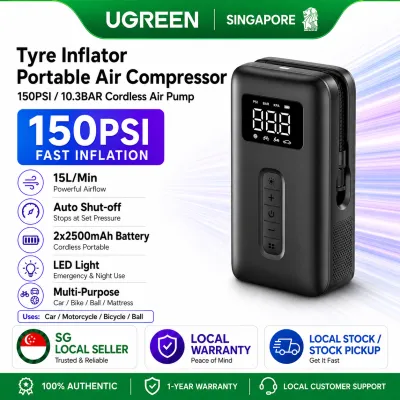
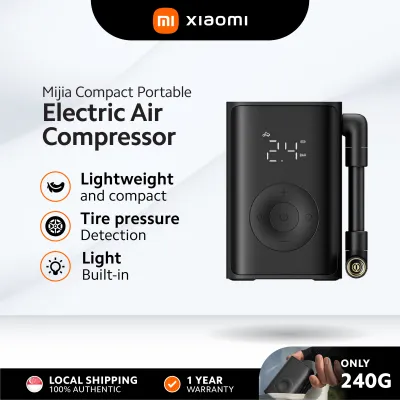
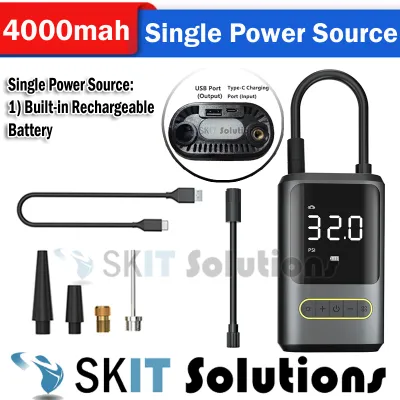
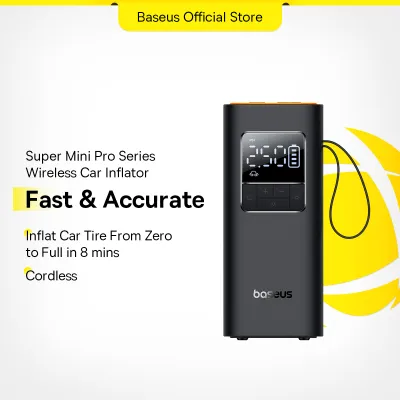
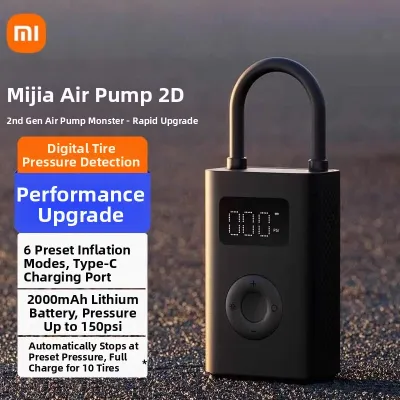
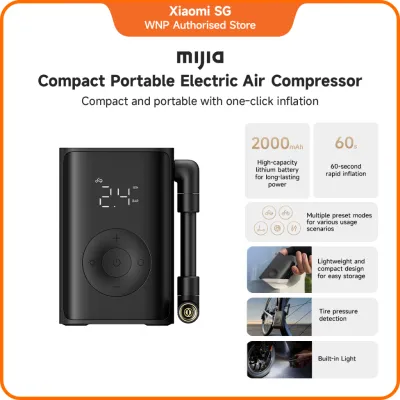
Prices are valid at publication and may change. Please refer to the product page for the latest price.
A wireless pump needs a maximum PSI rating significantly higher than your target tyre pressure for several mechanical reasons. First, operating any electric motor at its maximum capacity causes extreme heat and friction. A pump rated for 150 PSI will compress air to 35 PSI with minimal strain, ensuring a longer operational lifespan. Second, higher-pressure headroom allows the pump’s internal auto-shutoff sensors to operate with greater precision, as the sensor does not have to read pressure at the very limit of its calibrated range.
It is also vital to distinguish between peak pressure claims and continuous working pressure. Many budget-friendly portable inflators advertise high peak PSI numbers to attract buyers, but their small internal cylinders cannot sustain that pressure for more than a few seconds. For reliable emergency use, look for the manufacturer’s continuous working pressure specification, which indicates the pressure the device can safely maintain during a standard inflation cycle. If you are unsure about compatibility with heavy-duty vehicles, consult your vehicle’s documentation or a professional tyre workshop before operating the device.
Flow Rate Explained: How Fast Will It Inflate Your Specific Tires?
Flow rate, measured in Litres per minute (L/min), determines the volume of air the pump can push into the tyre over a given period. While PSI measures the force of the compressed air, flow rate dictates the speed of the process. A pump with a high PSI rating but a low flow rate (such as 10 L/min) will eventually inflate a tyre, but it may take ten to fifteen minutes to complete a single top-up, which is highly impractical during a roadside emergency.

The volume of air inside your tyres depends heavily on your vehicle category. A standard compact hatchback or sedan tyre has a relatively small volume, meaning a modest flow rate of 15 to 20 L/min can easily perform a routine top-up in two to three minutes. Conversely, larger crossover, SUV, or multi-purpose vehicle (MPV) tyres hold a much larger volume of air. For these vehicle classes, a flow rate of 25 to 35 L/min is highly recommended to prevent the inflation process from dragging on and putting excessive thermal stress on the pump.
When evaluating flow rate claims on product listings, look for verified real-world benchmarks rather than raw numbers. Reliable manufacturers usually specify the exact time it takes to inflate a standard tyre size (such as a 195/65 R15 or 205/55 R16) from zero to a standard operating pressure. If a product listing only boasts a high L/min figure without providing concrete inflation times for standard tyre sizes, treat the claim with caution and check user reviews for real-world performance feedback.
Matching Pump Specs to Your Vehicle and Tire Size
To choose the right wireless electric tyre pump, you must first understand your tyre size, which is printed on the sidewall in a standard format such as 215/55 R17. The first number represents the tyre width in millimetres, the second is the aspect ratio (sidewall height as a percentage of width), and the final number is the wheel rim diameter in inches. Larger rim diameters and wider profiles translate to a higher volume of air required to fill the tyre, directly influencing the pump specifications you need.
For compact cars and mid-size sedans running standard tyre sizes (e.g., 15-inch to 17-inch rims), a compact wireless pump with a flow rate of 15 to 20 L/min and a 120 PSI limit is highly sufficient. For larger family SUVs, luxury sedans, or light commercial vans running 18-inch to 20-inch wheels, you should prioritize a heavy-duty wireless pump offering at least 25 to 35 L/min and a 150 PSI limit. This ensures the pump has the mechanical capability to handle the larger air volume without stalling.
Beyond internal specifications, physical compatibility is crucial for seamless operation. Verify that the pump comes with a durable, heat-resistant air hose that is long enough to reach the tyre valve stem comfortably, even if the valve is positioned at the very top of the wheel rotation. If the hose is too short, the pump will hang in the air, placing damaging tension on the valve stem and the hose connection. Additionally, ensure the pump includes the correct valve adapters; while standard car tyres use Schrader valves, having Presta adapters is useful if you also plan to inflate bicycle tyres.
Beyond PSI and Flow: Battery, Duty Cycle, and Auto-Shutoff
A wireless tyre pump’s usability depends heavily on its battery configuration and thermal limits. Most portable inflators run on rechargeable lithium-ion batteries, typically rated between 2,000 mAh and 6,000 mAh. However, battery capacity alone does not tell the whole story; you must also check the operating voltage. A 12V or 11.1V battery system delivers significantly more torque and power to the compressor motor than a basic 7.4V system, allowing the pump to maintain its rated flow rate even as the tyre pressure increases.
The duty cycle is another critical specification that dictates how long the pump can run continuously before it must be switched off to cool down. Many compact wireless pumps have a duty cycle of 5 to 10 minutes, meaning they require a cooling period of equal duration after inflating one or two tyres. Exceeding this duty cycle can lead to permanent internal damage or melt the plastic housing. Always check the manufacturer’s manual for explicit thermal limits and rest instructions before attempting to inflate multiple tyres in succession.
Safety features like auto-shutoff and digital pressure sensors are essential for preventing dangerous over-inflation. A high-quality pump allows you to pre-set your desired target pressure and will automatically stop pumping once that limit is reached. Ensure the sensor has a stated accuracy of at least ±1 PSI to keep your tyres perfectly balanced. Finally, pay attention to storage safety, particularly in Singapore’s tropical climate. Car cabins parked in open-air car parks can reach temperatures exceeding 60°C, which can degrade lithium batteries or cause safety hazards; always store your wireless pump in a cool, shaded area of the vehicle, such as under a seat or in a dedicated storage compartment.
Frequently Asked Questions (FAQ)
Can a wireless tyre pump overheat if I inflate all four tires at once?
Yes, compact wireless tyre pumps can easily overheat if used continuously to inflate all four tyres from flat. Because compressing air generates significant thermal energy, these small devices rely on strict duty cycles—typically requiring a 10-minute cooling break after every 5 to 10 minutes of continuous operation. To prevent permanent motor damage or melting of internal components, always consult the manufacturer’s instructions for safe operating intervals and allow the pump to cool down between tyres.
Does the outside temperature in Singapore affect my tire pressure readings?
Yes, ambient temperature has a direct physical effect on tyre pressure. In Singapore’s hot tropical climate, high outdoor temperatures and heat radiating from asphalt surfaces cause the air inside your tyres to expand, resulting in temporarily elevated pressure readings. To get an accurate baseline, always measure and adjust your tyre pressure when the tyres are cold—ideally after the vehicle has been parked in a shaded area for at least three hours, or driven less than two kilometres.
Community discussion
Share your experience or ask a question. Comments are reviewed before publication.