
Determining whether a car spoiler universal design will fit your vehicle requires evaluating your car’s trunk dimensions, surface curvature, and mounting compatibility before making a purchase. While these aftermarket accessories offer an affordable way to customize your vehicle’s aesthetic, assuming a one-size-fits-all application often leads to installation failures, paint damage, or safety hazards on the road.
By taking precise physical measurements and understanding the structural limitations of your vehicle’s rear panel, you can accurately predict how well a generic spoiler will integrate with your car. This pre-purchase check ensures your modification remains secure, visually appealing, and fully compliant with local road safety regulations.
What "Universal" Actually Means for Spoiler Fitment
In the automotive aftermarket, the term “universal” indicates that a component is designed to adapt to a wide range of vehicles rather than being engineered for a single, specific make and model. Manufacturers achieve this broad compatibility by utilizing simplified geometries and adjustable mounting components. However, “universal” does not mean a guaranteed, drop-in fit for every trunk lid or hatchback on the market.
Products mentioned in this guide
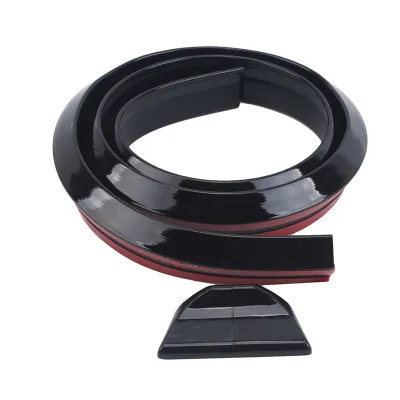
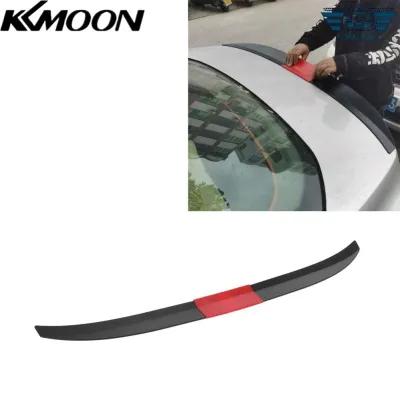
![[pusen1]Universal Car Spoiler Adjustable Rear Trunk Spoiler Lip Roof Tail Wing Accessories](https://img.lazcdn.com/g/p/9ffcc41d4e8b1cafa92f256495e6cc2b.jpg_400x400q80.jpg_.webp)
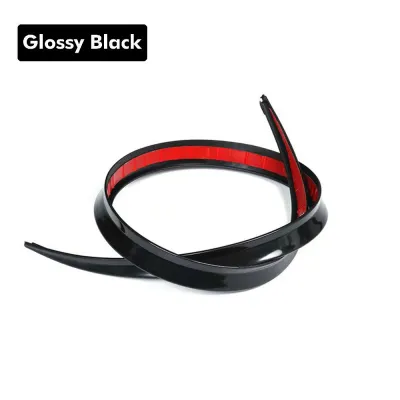
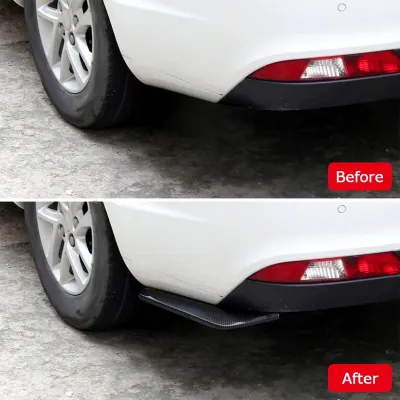
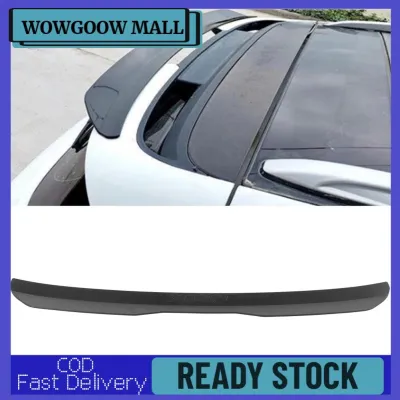
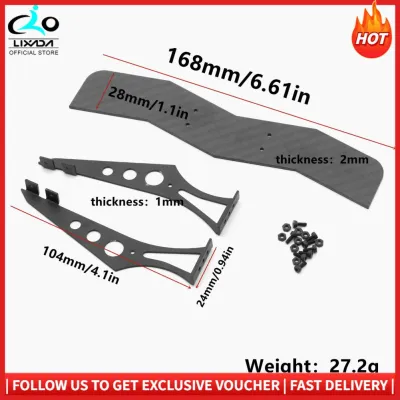
Prices are valid at publication and may change. Please refer to the product page for the latest price.
Most universal spoilers feature a flat or only mildly curved mounting base. Unlike Original Equipment Manufacturer (OEM) parts, which are molded to match the exact body lines and aerodynamic profiles of a specific chassis, a generic spoiler requires you to accommodate these standardized shapes. This structural difference means you must expect some level of compromise during installation.
Achieving a clean look with a universal spoiler often requires physical adjustments, specialized gap-filling weatherstripping, or accepting minor aesthetic trade-offs where the mounting feet meet the bodywork. The primary goal of your pre-purchase diagnostic is to determine whether your car’s specific rear-end design can accommodate this generic shape safely, securely, and without compromising the vehicle’s structural integrity.
Check 1: Measure the Usable Trunk or Hatch Space
Physical measurements are your first line of defense against purchasing an incompatible accessory. Do not rely solely on vehicle compatibility databases on online marketplaces, as these automated systems often categorize trunk lids broadly without accounting for trim variations, facelift models, or aftermarket body panels.

To begin, use a flexible tape measure to find the maximum width and depth of the flattest central area on your trunk lid or hatchback. Avoid measuring areas that slope sharply downward or feature complex body lines, as these sections cannot reliably support a flat mounting bracket.
When reviewing product specifications, compare your measurements against the specific base dimensions—the footprint of the mounting pedestals or the adhesive contact strip—provided by the manufacturer. Do not confuse this with the wing’s total tip-to-tip width. While a slight lateral overhang of the wing tips is common, the mounting feet themselves must sit entirely on a flat, stable, and unobstructed portion of the trunk panel.
Additionally, you must account for the physical operation of your trunk or hatch. Open the trunk fully and measure the clearance between the trailing edge of the lid and the rear windshield or roofline. Ensure that the added height and depth of the spoiler will not cause it to scrape against the glass, roof, or antenna when the trunk is completely open. Leaving a safety margin of at least 3 to 5 centimeters from the panel edges is highly recommended.
Check 2: Assess the Surface Curvature and Contours
Trunk lids are rarely perfectly flat; they are styled with subtle three-dimensional contours, compound curves, and aerodynamic recesses. Because universal spoilers are typically constructed from rigid materials like ABS plastic, fiberglass, or carbon fiber, they cannot bend or flex to match your car’s unique bodywork.
To evaluate your trunk’s surface, perform a simple DIY straight-edge test. Place a long metal ruler, a spirit level, or a stiff piece of cardboard across the exact area where the spoiler’s mounting feet or adhesive strip will sit. This allows you to observe the contact profile from multiple angles.
If your trunk has a single-axis curve—a gentle, uniform arch running from left to right—a universal spoiler with adjustable pedestals or a slightly flexible polyurethane lip can usually accommodate the shape. The mounting hardware or adhesive tape can easily absorb minor variances across a single plane.
However, if your trunk features compound curves (curving both left-to-right and front-to-back simultaneously) or deep styling creases, a rigid universal spoiler will leave highly visible, uneven gaps. Attempting to force a rigid base flat by overtightening mounting bolts or compressing thick layers of adhesive tape is highly dangerous. This practice puts immense physical stress on the trunk panel, which can warp the sheet metal, crack composite body panels, or cause the mounting system to fail under high aerodynamic loads at highway speeds.
Check 3: Evaluate Mounting Methods and Surface Materials
How a spoiler attaches to your vehicle determines its long-term safety, durability, and impact on your car’s resale value. You must evaluate the viability of the two primary installation methods relative to your vehicle’s construction and your personal risk tolerance.
Adhesive Mounting (Double-Sided Tape)
- Requirements: This non-invasive method relies on high-strength, automotive-grade acrylic foam tape. It requires a perfectly flat mounting surface, pristine paintwork free of ceramic coatings or wax, and thorough surface degreasing using isopropyl alcohol.
- Limitations: In hot, humid tropical climates like Singapore, constant exposure to intense sunlight and heavy rain can accelerate the degradation of chemical adhesives. High-pressure car washes can also lift the edges of a poorly bonded spoiler. There is also a risk of pulling the clear coat or paint off the panel if the spoiler is ever removed.
Drilling (Bolts and Screws)
- Permanence: Mechanical fastening provides a highly secure, permanent connection capable of withstanding significant aerodynamic downforce.
- Risks: Drilling into your trunk lid will void the manufacturer's corrosion warranty for that specific panel. It is critical to apply a high-quality rust-prevention primer and silicone sealant to the bare metal edges of the drilled holes to prevent water ingress and subsequent rust. Furthermore, thin plastic or composite hatchbacks may lack the structural strength to support bolts without internal reinforcement plates, leading to cracking over time.
Before committing to any installation method, check your vehicle’s manual for specific warnings regarding exterior modifications, trunk load limits, or material constraints. Trunk lids can be made of steel, aluminum, plastic composites, or carbon fiber, and each material reacts differently to stress and drilling. If you are uncomfortable performing these modifications or unsure of the structural limits, always seek qualified professional installation at an authorized workshop.
Check 4: Verify Rear Visibility and LTA Compliance
In Singapore, vehicle modifications are strictly regulated to ensure road safety for all motorists and pedestrians. Before purchasing any aftermarket aerodynamic accessory, you must verify that it complies with the Land Transport Authority (LTA) guidelines.
First, sit in the driver’s seat and adjust your interior rearview mirror. A universal spoiler must not obstruct your rearward line of sight or create a dangerous blind spot. If the spoiler’s blade or pedestals block your view of the traffic behind you, the modification compromises your safety and will fail vehicle inspections.
Second, LTA guidelines dictate that any aftermarket exterior accessory must be securely installed and must not present any sharp edges, corners, or protrusions that could cause injury to pedestrians or other road users. The spoiler must not extend beyond the lateral or longitudinal dimensions of the vehicle. This means the wing tips must not protrude past the widest part of your car’s bodywork, excluding the side mirrors.
To avoid costly fines, mandatory removal orders, or failing your periodic vehicle inspection, check the official LTA website or consult an authorized inspection center or professional workshop before purchasing or installing a universal spoiler.
Decision Guide: When to Choose a Model-Specific Spoiler Instead
Deciding whether to proceed with a universal spoiler or invest in a model-specific alternative comes down to a few clear criteria. While universal options are highly cost-effective, often ranging from S$30 to S$150 on online marketplaces, they are not always the best choice for every vehicle.
Proceed with a universal spoiler if:
- Your car's trunk lid is relatively flat with minimal compound curvature.
- You are comfortable with minor aesthetic compromises, such as small gaps that can be sealed with weatherstripping.
- You prefer a cost-effective visual upgrade and plan to use a high-quality adhesive mounting method on a well-prepared surface.
Pivot to a model-specific spoiler if:
- Your vehicle's trunk features complex styling lines, sharp creases, or severe compound curves.
- You demand a seamless, flush, factory-grade fitment with zero visible gaps.
- Your trunk lid is made of fragile, unreinforced plastic or composite materials that cannot support the localized stress of a universal mount.
- You want to avoid the risks of drilling into your vehicle's bodywork or dealing with potential adhesive failures.
If you remain undecided, a practical step is to create a full-scale cardboard template based on the manufacturer’s published dimensions. Place this template on your trunk lid to visualize the proportions, check the clearance, and confirm how the mounting feet will align with your car’s body lines.
Frequently Asked Questions (FAQ)
Will a universal spoiler damage my car's paint when removed?
Automotive-grade double-sided tape can generally be removed safely without damaging healthy factory paint. The process typically involves using a heat gun or hair dryer to soften the adhesive, followed by gently slicing through the foam core with a high-strength fishing line or plastic trim removal tools. Any remaining adhesive residue can be cleared using a dedicated, paint-safe adhesive remover. However, if your car’s paint is already peeling, fading, or has undergone a low-quality aftermarket respray, the tension from the adhesive or the removal process may pull the clear coat or paint layers off the panel.
Do I need to declare an aftermarket spoiler to my insurance provider?
Yes, you should declare any aftermarket spoiler to your motor insurance provider in Singapore. Even though a spoiler is primarily an aesthetic or minor aerodynamic modification, insurers classify any non-standard component as a vehicle modification. Failure to declare these changes can be viewed as a non-disclosure of material facts, which could potentially invalidate your policy or lead to a rejected claim in the event of an accident. Always contact your insurer to update your policy details, even if the modification does not result in a premium increase.
Community discussion
Share your experience or ask a question. Comments are reviewed before publication.